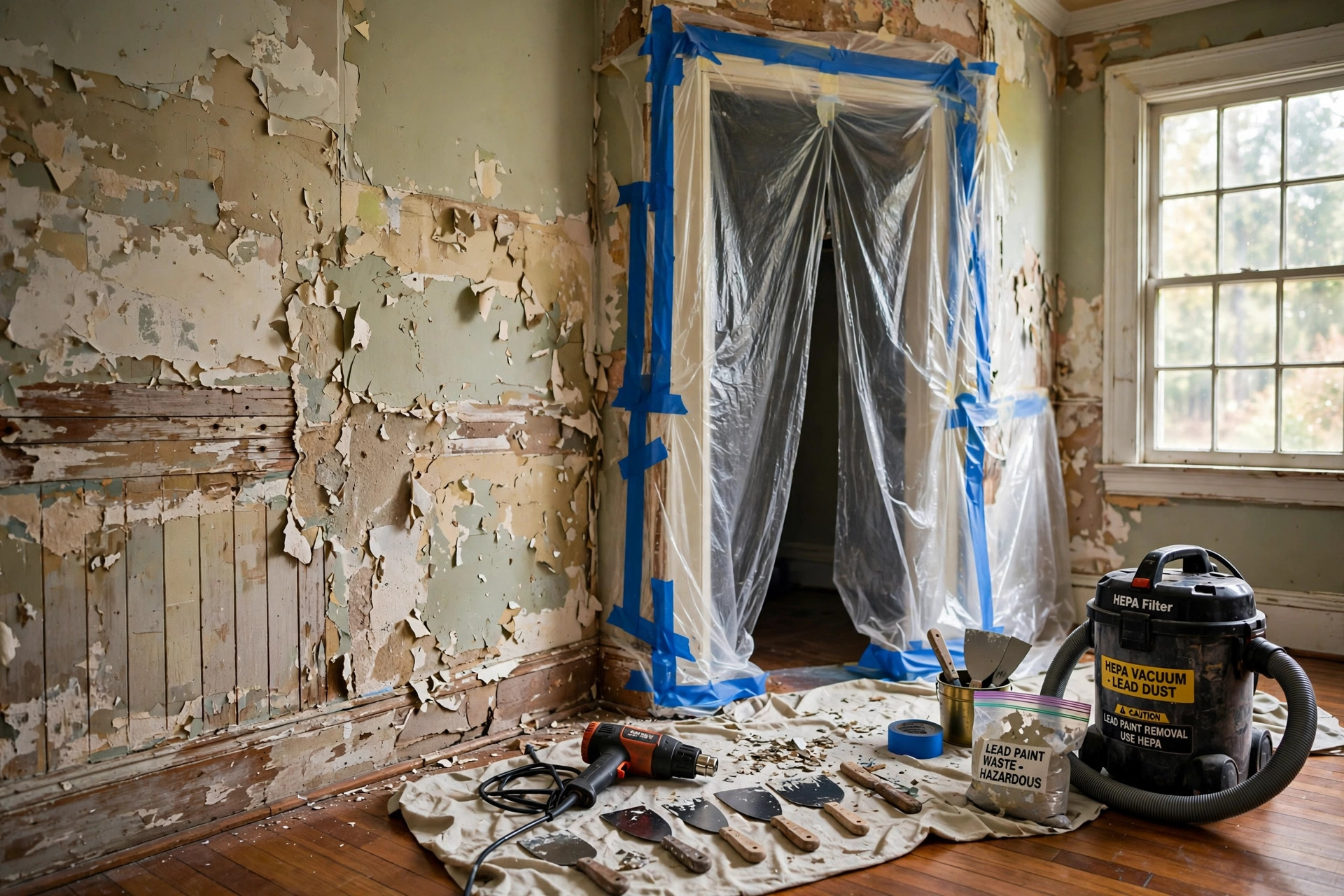

Many homes in the United States still carry lead paint under newer layers of paint. Houses built before 1978 often have lead paint on their walls, doors, windows, and trim. When old paint starts to chip, peel, or break down into dust, it can create a health risk for everyone in the home. Small children face the greatest danger. Because of this, the lead paint removal service cost usa is a number many homeowners want to know before they plan a repair or a remodel.
A lead paint removal service cost usa quote can range from a few hundred dollars for one small area to more than ten thousand dollars for a full house. The final price depends on the size of the job, the removal method, the age of the home, and local labor rates. This guide explains what drives the price, which methods are used, what to ask a contractor, and how to keep your home safe during and after the work.
Why Lead Paint Removal Matters
Lead was added to paint for many years because it made colors brighter and paint tougher. The United States banned lead in house paint in 1978. Any home built before that date may still have lead paint somewhere inside. Layers of newer paint do not always seal the old paint in a safe way. When painted surfaces rub, chip, or are scraped during repairs, tiny lead dust and paint chips enter the air and settle on floors and window sills.
Lead dust is hard to see, and that is part of the danger. Children who play on floors and put their hands in their mouths can take in lead without anyone noticing. Lead can harm the brain, kidneys, and growth of young children. Adults who breathe lead dust for long periods can also suffer health problems. Removing or safely covering lead paint lowers these risks. A licensed removal service follows strict steps to keep dust from spreading through the home. For this reason, many buyers ask for lead work before they close on an older home.
If you are also planning a new look for your home, you may want to read about exterior brick painting service near me cost to compare prices for painting work after the lead is gone.
What Drives Lead Paint Removal Service Cost in the USA: Lead Paint Removal Service Cost Usa
No two homes are the same, so the lead paint removal service cost usa changes from job to job. A single window sash may cost a few hundred dollars, while a whole house can cost many thousands. Below are the main factors that shape the final bill.
Size of the Job
Area is the biggest driver of price. Contractors often quote by square foot or by painted feature. A project that covers a few hundred square feet of wall will cost far less than one that covers every wall, door, and window in a two-story home. Homes with high ceilings, staircases, and many windows take more time and care, and the price goes up with them.
Removal Method
There are several ways to deal with lead paint, and each one has a different price. Full removal by stripping or replacing parts is usually the most costly. Covering the paint with a special coating, called encapsulation, costs less. Some methods take longer and need more skill, which raises labor charges. We explain the methods in the next section so you can see how each one affects cost.
Location and Labor Rates
Labor rates differ by state and by city. Work in a large metro area often costs more than the same work in a small town. Contractors must also carry special licenses and insurance for lead work in many states, and those costs show up in the quote. Travel distance, parking, and local rules about waste removal can add to the total as well.
Common Lead Paint Removal Methods
A licensed contractor will first test the paint to find where the lead is and how much is there. Then the contractor picks the method that fits the surface and your budget. The four main approaches are described below.
Chemical Stripping
Chemical strippers are pastes or liquids spread over the old paint. They soften the paint so it can be scraped off in thick layers. This method works well on detailed wood trim, doors, and moldings where scraping alone is hard. It is slow work and needs careful clean up, so labor costs are higher. Chemical stripping is often used when you want to save the original woodwork in an old home.
Heat Removal
Trained workers can use special low-heat tools to soften paint so it lifts off in sheets. Open-flame torches are never allowed on lead paint because they can release lead fumes and start fires. Heat removal is fast on flat walls and siding, but it takes skill to avoid damage to the surface below. A contractor who uses this method must also control dust and fumes at every step.
Encapsulation
Encapsulation covers the lead paint with a special thick coating that seals it in place. The old paint stays under the new coating and cannot chip or turn into dust. This is the least costly option in most cases. It works best when the old paint is in good shape and firmly stuck to the surface. If the old paint is loose or peeling, encapsulation is not a safe choice on its own.
Component Replacement
Sometimes the cheapest and safest choice is to take out the painted part and put in a new one. Old windows, doors, and trim can be removed and replaced with new units. This removes the lead entirely from that spot. Replacement costs include both the new parts and the labor to install them. For windows, new units can also improve energy use and cut drafts, which adds value beyond the lead work.
Home improvement guides from sites such as This Old House explain how old-house repairs often mix several of these methods on the same project.
Cost and Price Ranges
So what is the typical lead paint removal service cost usa homeowners can expect? Prices vary, but these ranges give a useful starting point for planning.
– Small job, one room or a few features: $300 to $2,000. This covers small areas such as a few windows, one door, or a patch of wall. – Medium job, several rooms: $2,000 to $8,000. This may cover multiple windows and doors or a full set of trim in several rooms. – Large job, full house: $8,000 to $20,000 or more. Older homes with lead paint on nearly every surface fall in this range. – Per square foot: many contractors charge $8 to $20 per square foot for stripping work, while encapsulation may run $4 to $8 per square foot.
Testing adds to the cost as well. A lead inspection with a test kit or lab samples often costs $200 to $500. Some contractors include testing in the project quote, while others bill it on its own. Waste removal is another line item, because lead paint debris must go to a licensed waste site and cannot go in the regular trash.
Get at least three written quotes before you choose. Ask each contractor to list the method, the areas covered, the testing plan, the clean up steps, and the waste removal charge. Quotes that are far below the others may leave out steps that keep your family safe.
For a price comparison on a related type of work, see our guide on wallpaper removal service price comparison usa.
Paint brands such as Sherwin-Williams and Behr publish useful background on paint types and safe painting practices, which can help you plan the repainting that follows lead work.
How to Choose a Lead Paint Removal Service
Lead work is not a job for a general handyman. Federal rules set by the Environmental Protection Agency require special training and certification for firms that disturb lead paint in homes built before 1978. Here is what to check before you hire.
Look for EPA certification. Ask for proof that the firm is certified under the federal lead rules. The Consumer Product Safety Commission also publishes lead safety information that can help you understand what safe work looks like.
Ask about experience. A good contractor has done many lead jobs and can show references. Ask how long they have been doing lead work and whether they have handled homes like yours.
Demand a written plan. The quote should spell out the method for each area, the containment steps, the testing before and after, and the clean up plan. Vague quotes lead to surprises.
Check insurance and licenses. Make sure the firm carries liability insurance and any state licenses for lead abatement. Ask for copies if you are unsure.
Ask about dust control. Safe firms seal off work areas with plastic, use special vacuums with high-efficiency filters, and clean each day before they leave. If a contractor cannot describe these steps, look elsewhere.
Home decor and remodeling outlets such as HGTV and The Spruce offer general guidance on hiring contractors, which pairs well with the lead-specific checks above.
Care and Upkeep After Removal
Once the lead paint is removed or sealed, simple care keeps your home safe for years. Dust your home often with a damp cloth so dust does not build up on sills and floors. Vacuum with a machine that has a high-efficiency filter. Wash hands often, and have small children wash their hands before meals.
Check painted surfaces once or twice a year. Look for chips, cracks, and peeling paint on windows, doors, and trim. Fix any damage at once so bare layers are never exposed for long. If you repaint, choose a quality paint from a maker such as Benjamin Moore, and follow the label directions for surface prep.
If you disturb old paint during later repairs, treat the dust as a hazard until you know it is safe. A do-it-yourself project in an old home can release lead dust just as easily as neglect can. When in doubt, call a certified firm.
Practical advice from Bob Vila covers routine home maintenance that fits well with these lead-safe habits.
If your plans include new trim or molding after the lead work, our guide on crown molding installation cost per linear foot can help you budget for that step.
Safety Rules You Must Follow
Federal law treats lead paint with great care. Firms working in homes built before 1978 must be certified and must follow set work practices, including containment, dust control, and final cleaning checks. They must also give you a lead information pamphlet before work begins. These rules apply even to small paint repairs when lead paint may be disturbed.
Never try to scrape, sand, or burn off lead paint yourself without proper training and gear. Dry scraping and power sanding spread lead dust through the whole house. Open flames can release lead fumes that are even more dangerous. Children, pregnant women, and pets should stay out of the work area until the job is done and the final cleaning is complete.
Some states add their own rules on top of the federal ones. Check your state health or environment agency for local requirements before work starts. Keep all test reports and contractor receipts in a safe place. You will want them when you sell the home or when future work is planned.
Frequently Asked Questions
How much does lead paint removal cost on average in the USA? Most homeowners pay between $2,000 and $10,000 for a typical project. Small jobs can cost under $1,000, while full-house work can pass $15,000. The lead paint removal service cost usa depends on area size, method, and local labor rates.
Is encapsulation cheaper than full removal? Yes, in most cases. Encapsulation often costs half as much as full stripping because it takes less labor and creates less waste. It is only safe when the old paint is firmly attached and in good shape.
Can I remove lead paint myself? It is not advised. Lead dust spreads easily, and safe removal needs special tools, containment, and clean up. Certified firms are trained to keep dust out of the rest of the home. Doing it yourself also risks breaking federal and state rules.
How long does a lead paint removal project take? A single room may take one to three days. A whole house can take one to four weeks depending on the method and the size of the home. Testing and final clearance checks add time at both ends of the job.
Will lead paint removal raise my home value? It often helps. Buyers of older homes care about lead safety, and a documented, certified job removes a worry from the sale. It also lets you repaint and remodel without future lead concerns.
Do I need to leave my home during the work? You do not always need to move out, but you should stay out of the sealed work areas. For large projects, some families choose to stay elsewhere until the final cleaning is done. Ask your contractor what they advise for your specific job.
Retailers such as The Home Depot and Lowe’s carry lead test kits, safety gear, and quality paints that are useful once certified work is finished and you move on to repainting.
A Final Word
The lead paint removal service cost usa is an investment in the health of your family and the value of your home. Prices change with the size of the job, the method used, and where you live, but the steps to a safe result are the same everywhere. Hire a certified firm, get clear written quotes, and insist on proper dust control and final testing. With the lead safely handled, you can move on to the fun part: making your home look the way you want it.
References
Behr. (n.d.). Paints, primers, and stains. https://www.behr.com Benjamin Moore. (n.d.). Paints and stains. https://www.benjaminmoore.com Bob Vila. (n.d.). Home improvement advice. https://www.bobvila.com HGTV. (n.d.). Home and garden ideas. https://www.hgtv.com Lowe’s. (n.d.). Home improvement products. https://www.lowes.com Sherwin-Williams. (n.d.). Paints and coatings. https://www.sherwin-williams.com The Home Depot. (n.d.). Home improvement products. https://www.homedepot.com The Spruce. (n.d.). Home and garden advice. https://www.thespruce.com This Old House. (n.d.). Home renovation guidance. https://www.thisoldhouse.com U.S. Consumer Product Safety Commission. (n.d.). Product safety information. https://www.cpsc.gov U.S. Environmental Protection Agency. (n.d.). Protecting human health and the environment. https://www.epa.gov
Was this guide helpful?

About Emily Rodriguez
The My Garden US editorial team writes practical, in-depth home and garden guides for American homeowners — tested advice, no fluff.
You May Also Like
What Professional Drywall Repair Cost Near Me Means for Homeowners in 2026
January 5, 2026 0 views
Front Door Paint Colors That Sell Homes
April 16, 2026 0 views
Scrubbable Paint for Dining Rooms Reviews: What Actually Works
June 10, 2026 0 views