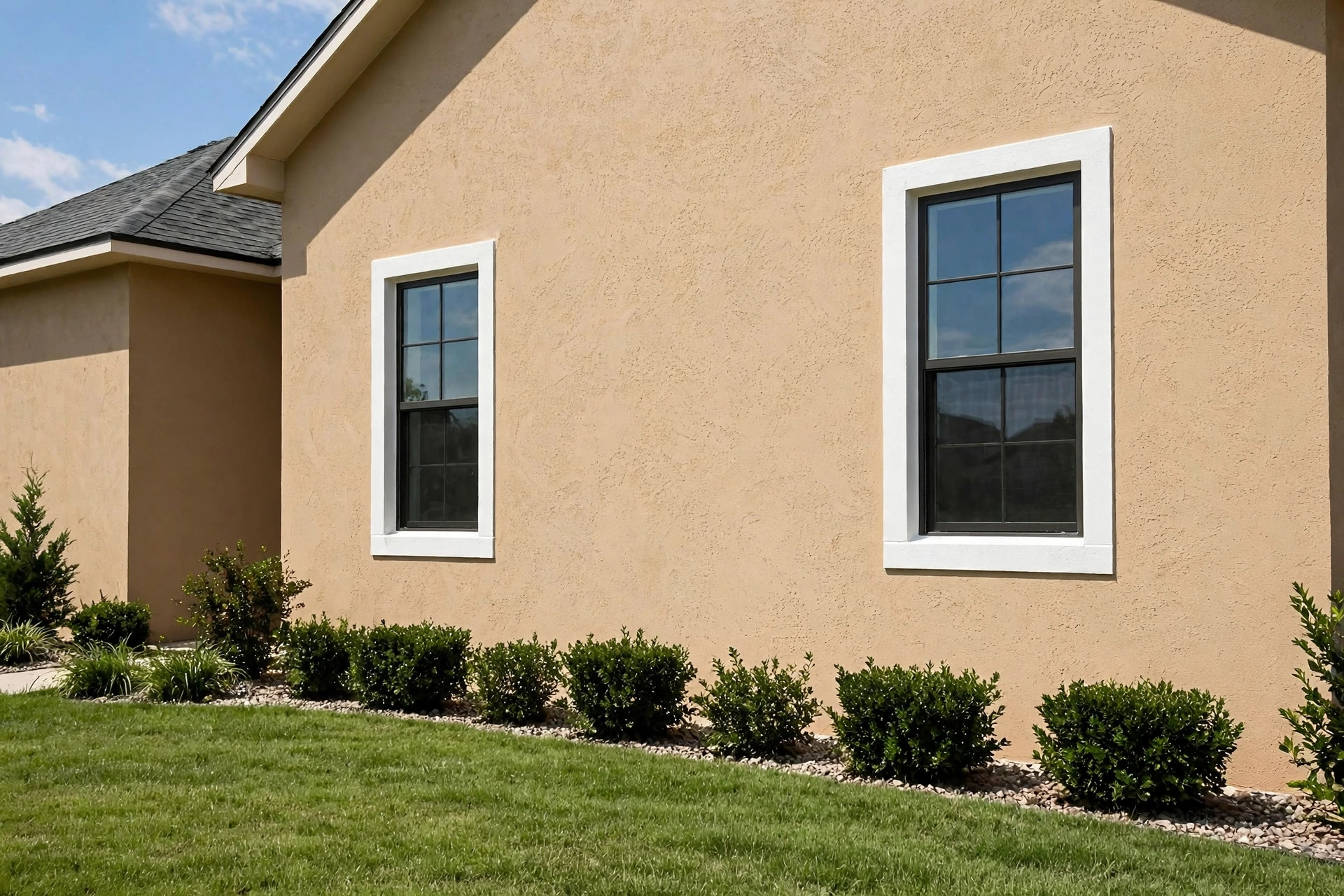

The stucco painting cost per square foot in the USA runs from about one dollar and fifty cents to about six dollars per square foot of painted surface. Most home owners pay between two dollars and fifty cents and four dollars per square foot. A small home with one thousand square feet of wall area may cost around three thousand dollars. A large two story home can cost ten thousand dollars or more. The final price depends on the state of the stucco, the size of the home, the paint that is used, and the painter who does the work. This guide walks through each factor so you can read a bid with a clear mind.
Why Painting Stucco Is Different From Painting Wood Siding
Stucco is a hard plaster skin made of cement, sand, lime, and water. It is common on homes in the South and West, where the sun is strong and the air is dry. Wood siding is smooth and flat. Stucco is rough and full of small pits and ridges. That rough surface changes the work.
First, the painter must use more paint. The little pits drink paint. One gallon covers fewer square feet on stucco than on smooth siding. Second, the surface must be cleaned with care. Loose dirt and old chalky paint can keep new paint from sticking. Third, cracks matter. Stucco cracks with time. A good painter fills the cracks with a flexible filler before the paint goes on. If the cracks are skipped, they show through the new coat within a year. For these reasons, the stucco painting cost per square foot in the USA is often a little higher than the cost of painting smooth siding. A painter who has worked with stucco before is worth the extra charge.
Typical Stucco Painting Cost Per Square Foot USA
Home owners across the country report similar ranges. For a simple one coat job on stucco that is in good shape, the price often falls between one dollar and fifty cents and two dollars and fifty cents per square foot of wall. For the more common two coat job with light repair work, the range is two dollars and fifty cents to four dollars per square foot. For homes that need heavy repair, deep cracks, old flaking paint, or a full coat of primer plus two coats of paint, the price can climb to five or six dollars per square foot.
If you prefer to run the numbers, a best exterior house painting cost estimator for the USA can give you a rough starting point before you call a painter. Estimators are only a guide. A real bid from a local painter is always better.
To see what these rates mean in real money, take a one story home with about one thousand five hundred square feet of exterior wall. At three dollars per square foot, the job would cost about four thousand five hundred dollars. A two story home with three thousand square feet of wall would cost about nine thousand dollars at the same rate. Keep in mind that painters price the wall area, not the floor area of the house.
What Changes the Price
Size and Shape of the Home
Larger homes cost more in total but often cost less per square foot, because the painter can set up once and work for several days. Tall two story walls cost more per square foot than low ranch walls, because ladders, scaffolds, and safety gear slow the work. Homes with many corners, arches, and trim cost more, because the painter must cut in by hand around each edge.
Condition of the Stucco
New stucco in good shape is the cheapest to paint. Old stucco with hairline cracks, water stains, or peeling paint costs more. The painter may need to scrape loose paint, wash away mildew, patch holes, and seal cracks. Some homes need a whole coat of primer first. Heavy repair work can add one to two dollars per square foot to the bid. A home with damaged stucco may also need a mason before the painter can start, and that is a separate cost.
Type of Paint
Stucco needs a paint that can stretch and breathe. Acrylic latex paint made for masonry is the common choice. Elastomeric coatings are thicker and can bridge small cracks, but they cost more per gallon and need more time to apply. Cheap paint may save money on the day of the job but often fades or peels within a few years. A quality masonry paint can last ten to fifteen years on stucco in a dry climate. Paint makers publish data sheets that list coverage rates and how long the finish should last. Sherwin-Williams (sherwin-williams.com) and Behr (behr.com) both carry lines made for masonry and stucco, and Benjamin Moore (benjaminmoore.com) lists coverage and drying times for its exterior acrylics.
Labor and Local Rates
Labor is the largest part of any paint bid. Rates differ by city and state. Painters in large coastal cities often charge more than painters in small inland towns. Licensed and insured crews charge more than a single man with a truck, but they also carry the risk if something goes wrong. Ask if the bid covers full insurance. A bid that looks cheap may leave you with no cover if a ladder breaks a window or a worker is hurt on your land.
One Coat or Two
Two coats last longer and look far better on stucco. One coat may be enough if the home is being painted the same color and the old paint is still sound. If the color is changing, two coats are needed for full cover. Elastomeric coatings sometimes go on as one thick coat over primer, but standard acrylic paint needs two full coats on bare or worn stucco.
Comparing Stucco to Other Exterior Surfaces
Stucco is only one of several common exterior finishes in the United States. Painted brick is another popular choice in older towns, and an exterior brick painting service near me cost search will show bids that often run close to stucco rates, since brick also has a rough face that drinks paint. Wood and fiber cement siding cost a little less to paint per square foot because the surface is smooth and the paint spreads further. Vinyl siding can be painted, but it needs a special paint that bonds to plastic.
Interior work is priced in a different way. A project such as shiplap wall installation cost per square foot is priced for carpentry and finish work inside the home, not for exterior paint. Do not compare interior bids with exterior stucco bids. The materials, tools, and risks are not the same.
How to Choose a Painter for Stucco
Start with three bids. Any fewer and you cannot see the true range in your town. Ask each painter the same questions so the answers can be compared.
Ask how many coats are in the bid and what brand and line of paint will be used. Ask whether primer is included and on which walls. Ask how cracks will be handled and whether caulking around windows and doors is in the price. Ask how long the job will take and how many men will be on site. Ask for proof of license and insurance. A careful painter will walk around the home, note the cracks and stains, and write them into the bid. A painter who gives a price from the car without looking at the walls is a warning sign.
Check past work. Ask for the address of a stucco home the painter did two or three years ago. A paint job that still looks good after a few summers tells you more than any sales talk. Trade sites and home guides offer checklists for hiring a painter. Bob Vila (bobvila.com) and This Old House (thisoldhouse.com) both publish guides on what a sound exterior paint bid should contain.
Cost Saving Tips That Do Not Hurt Quality
Do some of the prep work yourself if the painter allows it. Moving patio furniture, trimming bushes away from the walls, and pulling weeds along the foundation are simple tasks that save the crew time. Do not scrape or power wash the stucco yourself unless you know the right pressure. Too much pressure drives water behind the stucco.
Paint in the right season. Late spring and early fall give mild days and cool nights, which help paint cure well. Painters are also less booked in those weeks than in the peak of summer, so bids may be lower. Avoid painting when rain is due within two days or when the wall is too hot to touch. Paint that dries too fast or gets wet too soon will not last.
Buy the paint yourself only if the painter agrees. Some painters get trade discounts that are better than store prices. Others are glad to let the home owner supply the paint. Big box stores like The Home Depot (homedepot.com) and Lowe’s (lowes.com) stock masonry paints in a wide range of colors, and staff can mix a color to match an old sample.
Pick a light color if you live in a hot climate. Light colors reflect the sun and keep the walls cooler, which helps the paint last longer. Dark colors on stucco fade faster in strong sun and show chalk sooner.
Care and Upkeep After Painting
A painted stucco home needs little care, but a few habits will make the job last. Wash the walls once a year with a garden hose and a soft brush to clear dust and cobwebs. Do not use a hard pressure washer on painted stucco. Keep sprinklers aimed away from the walls. Water that hits the same spot every day will wear the paint and may push moisture into the stucco.
Walk around the home each spring and look for new cracks. Small hairline cracks are normal as a house settles. Seal them with a tube of exterior acrylic caulk before they grow. Check the caulk around windows and doors as well. If you see peeling or bubbling paint, find the cause before you repaint. Peeling often means water is getting in behind the paint from a roof leak or a broken gutter. Paint alone will not fix a water problem.
Most quality paint jobs on stucco last ten to fifteen years. Homes near the sea or in very wet climates may need fresh paint sooner. When the color starts to look dull or the surface chalks off on your hand, it is time to plan the next job. Design sites such as HGTV (hgtv.com) show how new color choices can change the whole look of a stucco home when that time comes.
Safety Notes
Stucco homes built before 1978 may have lead paint on older layers. Sanding or scraping lead paint is a health risk, and federal rules require special handling by certified workers. The EPA (epa.gov) publishes guidance on lead-safe work practices for older homes.
Power washing stucco is also a safety and damage issue. A strong jet can cut into the plaster and force water into the wall, which leads to mold inside the home. If the walls need washing before painting, use a low pressure fan tip or hire a painter who knows the safe setting. Keep ladders on firm level ground and never lean them against gutters. Wear eye protection and a dust mask when scraping or sanding.
Frequently Asked Questions
How much does it cost to paint a stucco house in the USA?
Most home owners pay between two dollars and fifty cents and four dollars per square foot of wall area. A typical one story home costs about four thousand to seven thousand dollars. A larger two story home costs about eight thousand to fourteen thousand dollars. Poor stucco condition or premium elastomeric paint pushes the price higher.
Is one coat enough for stucco?
One coat is enough only when the old paint is in good shape and the color stays the same. For bare stucco, worn paint, or a color change, two coats are the standard. Two coats give better cover and last years longer.
How long does paint last on stucco?
A quality acrylic masonry paint lasts ten to fifteen years in a dry climate. In hot sun the color may fade sooner. In wet or coastal areas the life may drop to seven or ten years. Elastomeric coatings can last longer but cost more up front.
Can I paint stucco myself to save money?
A home owner can paint a small one story stucco wall with a roller and a brush. A full house is harder. The work needs tall ladders, a pressure washer, and knowledge of crack repair. Many do it yourself jobs fail within two years because the prep work was skipped. Weigh the cost of tools and time against a pro bid.
What paint is best for stucco?
Use a 100 percent acrylic latex paint made for masonry and stucco. Elastomeric coatings are best for walls with many small cracks. Avoid cheap flat paint not rated for masonry. It will fade and peel fast on stucco.
When is the best time of year to paint stucco?
Late spring and early fall are best in most of the USA. Daytime highs between fifty and eighty five degrees with low rain risk give the best cure. Do not paint in freezing weather or on walls too hot to touch.
A Short Final Word
The stucco painting cost per square foot in the USA is fair when you know what goes into the bid. Price follows condition, paint quality, and the skill of the crew. Get three written bids, ask about coats and crack repair, and pick the painter who looked at your walls with care. A sound stucco paint job protects the home and keeps it looking fresh for more than a decade.
References
Behr. (n.d.). Paints, primers, and stains. https://www.behr.com Benjamin Moore. (n.d.). Paints and stains. https://www.benjaminmoore.com Bob Vila. (n.d.). Home improvement advice. https://www.bobvila.com HGTV. (n.d.). Home and garden ideas. https://www.hgtv.com Lowe’s. (n.d.). Home improvement products. https://www.lowes.com Sherwin-Williams. (n.d.). Paints and coatings. https://www.sherwin-williams.com The Home Depot. (n.d.). Home improvement products. https://www.homedepot.com This Old House. (n.d.). Home renovation guidance. https://www.thisoldhouse.com U.S. Environmental Protection Agency. (n.d.). Protecting human health and the environment. https://www.epa.gov
Was this guide helpful?

About David Wilson
The My Garden US editorial team writes practical, in-depth home and garden guides for American homeowners — tested advice, no fluff.
You May Also Like
Whitewash vs Limewash Brick Comparison USA
April 24, 2026 0 views
Terracotta Paint Colors for Accent Walls: How to Choose and Paint the Warmest Wall in Your Home
March 6, 2026 0 views
Temporary Wallpaper for Dorm Rooms USA: A Student’s Guide to Removable Wall Decor
September 28, 2026 0 views