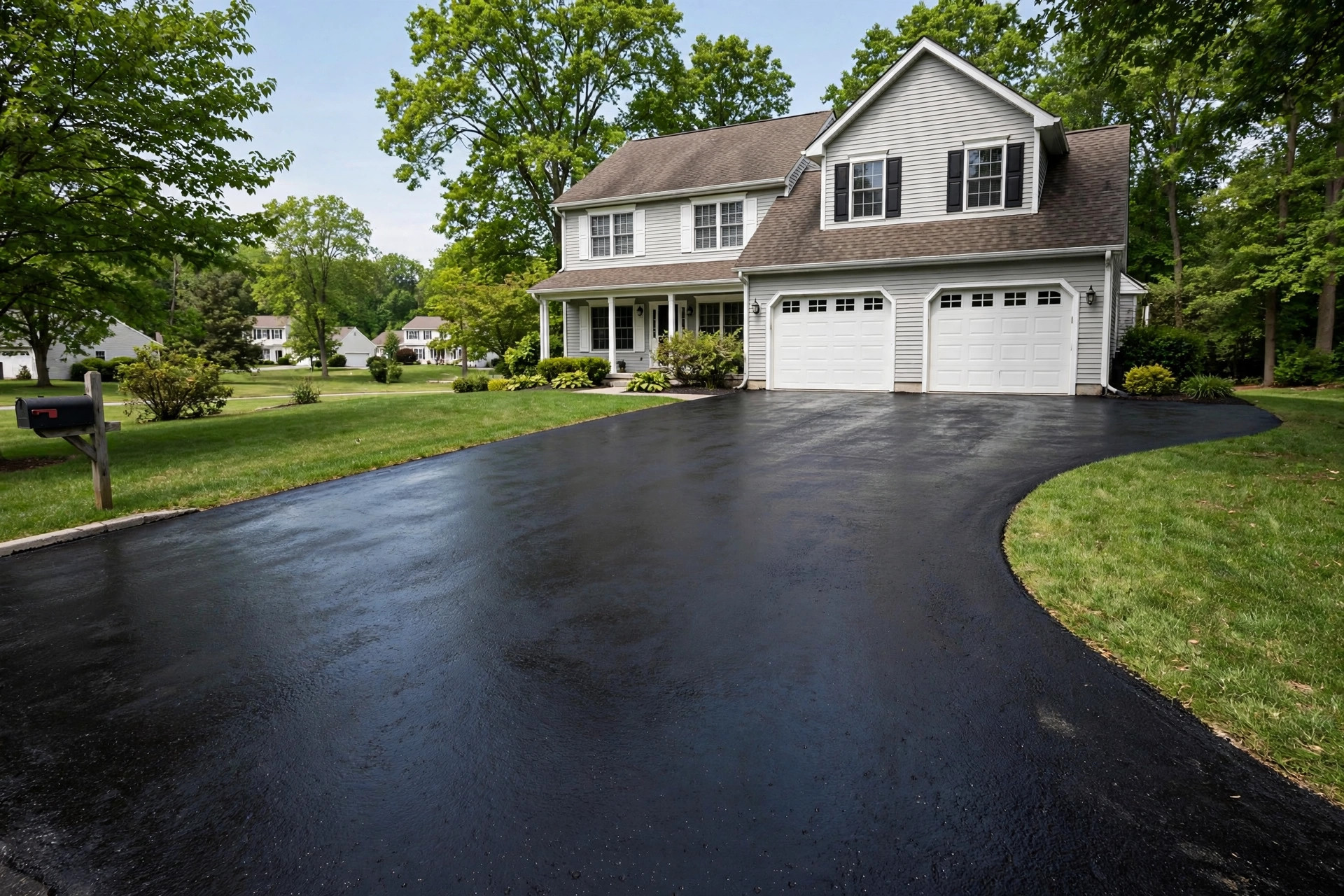

When a homeowner asks about the asphalt driveway sealcoating cost near me, the short answer is that most projects land between two hundred and five hundred dollars for a standard two-car driveway. The exact number depends on the size of the surface, its condition, and where you live. Sealcoating is one of the cheapest ways to protect asphalt. It blocks water, sun, oil, and chemicals. This guide walks through typical prices, what drives them up or down, how to find a fair local contractor, and what to do when the job is done.
Why Sealcoating Your Driveway Matters
An asphalt driveway is built to last about twenty years. Sunlight is its greatest enemy. Ultraviolet rays dry out the binding oils that hold the pavement together. Rain and melting snow push water into small cracks. Oil drips from cars eat through the surface. Salt from winter streets speeds up the damage. Over time the pavement turns gray. Small cracks grow wide. Edges crumble.
Sealcoating lays down a thin protective skin over the asphalt. The coating is made from coal tar or asphalt-based emulsion. It fills tiny pores. It blocks water from soaking in. It slows the drying effect of the sun. It makes oil spills easier to wash off. Most pavers advise a fresh coat every two to three years. The first coat should go on at least one year after a new driveway is paved, once the asphalt has cured.
The financial logic is simple. A new driveway costs several thousand dollars. Sealcoating costs a few hundred. Each round of sealcoat adds years of life. Skipping it means cracks, potholes, and an early full replacement. Homeowners who seal on schedule often get the full twenty years from their pavement.
What Affects Asphalt Driveway Sealcoating Cost Near Me
No two driveways cost the same to seal. Contractors price by square foot, and rates run from about fifteen cents to fifty cents per square foot. Most jobs fall in the middle of that range. A typical two-car driveway measures about six hundred square feet. At twenty-five cents per foot, that job comes to about one hundred fifty dollars in sealant and labor. Prices rise when the surface needs extra work.
The condition of the pavement is the first cost driver. A smooth, crack-free driveway needs only cleaning and two coats of sealant. That is the cheapest job. A driveway with cracks needs filling first. Deep cracks and small potholes need patching. Contractors charge extra for every crack they fill and every hole they patch. Some add twenty to fifty dollars per hour for preparation work. Others fold it into a flat quote.
Driveway size is the second driver. Bigger surfaces need more material and more time. Single-car drives of about three hundred square feet often cost one hundred to two hundred fifty dollars. Two-car drives run two hundred to five hundred. Long rural driveways of two thousand square feet can reach six hundred to a thousand dollars. Contractors sometimes offer lower per-foot rates on large jobs, since the fixed costs of travel and setup spread out.
Location shapes price too. Rates run higher in big cities and in the Northeast and West Coast, where labor costs more. Rural areas in the Midwest and South tend to be cheaper. Asking for the asphalt driveway sealcoating cost near me rather than the national average matters, because local wages and the length of the paving season move prices up or down. In warm states the season runs most of the year, which keeps supply high and prices steady. In cold states the season is short, and contractors book up fast each spring.
Extra services also change the bill. Many contractors offer pressure washing, edging, and weed treatment before sealing. Some include a stripe of edging or a new house number marking for a small fee. If you also want related surface work done, a deck staining cost calculator near me comparison can help you budget other outdoor coating jobs around the house at the same time.
Types of Sealcoating and How to Choose
Three main types of sealcoat are sold in the United States. The oldest is coal tar emulsion. It is dark, tough, and resistant to oil and gas. Many commercial parking lots use it. The second is asphalt emulsion. It is made from the same material as the driveway itself. It bonds well and is favored in states where coal tar is restricted. The third type is a polymer-modified sealer. It adds rubber or plastic polymers for extra strength. It costs more but wears longer.
Some states and towns have banned coal tar sealers over health concerns. Ask which product your contractor plans to use and why. For most homes, asphalt emulsion or a polymer blend is a safe choice. Two thin coats beat one thick coat. A single heavy coat dries slowly and can crack as it cures.
Application method matters less than the quality of the prep. Most residential contractors spray the sealant with a wand, which is fast and gives even coverage. Some brush it on, which works the material deeper into the surface. Either method is fine when the surface is clean. The home improvement guides at This Old House describe how proper cleaning decides most of the result.
Bagged sealcoat from a home center works for do-it-yourself jobs. Major retailers stock both coal tar and asphalt emulsion sealers in five-gallon buckets, as any visit to Home Depot or Lowe’s will show. Behr and other national coating brands sell sealers rated for driveways with simple brush or squeegee application. Sherwin-Williams serves mostly professionals, while Benjamin Moore offers exterior coatings for related concrete and masonry surfaces.
DIY Cost Versus Hiring a Contractor
Doing the job yourself saves labor cost but takes a full day. A five-gallon bucket of sealer covers about three hundred square feet per coat. A six-hundred-square-foot driveway needs two coats, so about four buckets. At twenty-five to forty dollars a bucket, material costs run one hundred to one hundred sixty dollars. Add a squeegee, brushes, crack filler, and cleaner, and the total often lands near two hundred dollars.
A contractor charges for the same material plus travel, setup, and skill. The premium buys speed and a cleaner result. A crew finishes a standard driveway in a few hours. They bring commercial sprayers and high-grade material. They know how to fill cracks so they do not reopen. For driveways with real damage, the contractor route is the wiser spend. The DIY route suits a surface that is already in good shape and simply needs a fresh coat.
A warning for DIY work: weather decides everything. Sealcoat needs air temperature above fifty degrees and two to three dry days in a row. Rain within twenty-four hours can ruin the coat. Hot sun helps it cure. Never seal on a day when rain is forecast.
Typical Price Ranges by Driveway Size
The table below gives rough ranges from contractor quotes gathered across the country. Your local asphalt driveway sealcoating cost near me may sit above or below these numbers.
Single-car driveway, about 300 square feet: one hundred to two hundred fifty dollars with a contractor; about one hundred dollars DIY.
Two-car driveway, about 600 square feet: two hundred to five hundred dollars with a contractor; about one hundred fifty to two hundred dollars DIY.
Three-car driveway, about 1,000 square feet: three hundred to seven hundred dollars with a contractor; about two hundred to three hundred dollars DIY.
Long private drive, about 2,000 square feet: six hundred to one thousand dollars with a contractor; about four hundred dollars DIY.
Crack filling adds roughly one to two dollars per linear foot. Patching small potholes costs about ten to twenty-five dollars each. Pressure washing may add fifty to one hundred dollars when it is not included. Most contractors offer a free on-site estimate, so getting three quotes takes little effort.
Finding a Fair Local Contractor
Start with three quotes. Any contractor who quotes over the phone without seeing the driveway is guessing. A good contractor walks the surface, points out cracks, and explains what the price covers. Ask these questions before you agree.
How long have you been sealing driveways? How will you clean the surface first? Which sealer will you use, and will you apply two coats? Are crack filling and patching included in the price, or billed extra? What is your cure time before I can drive on it? Do you carry insurance?
Read reviews with a careful eye. A pattern of complaints about sealant peeling within a year is a red flag. It usually means the contractor thinned the material or sealed a dirty surface. Ask for the names of two past customers for extra confidence.
Watch out for door-to-door crews. A common scam works like this: a truck crew knocks and says they have leftover sealer from a job nearby and will give you a discount. They spray a thin, watery coat and leave before it dries. Real contractors do not work this way. Get a written quote on paper with the price, the material, and the number of coats.
For broader exterior upkeep, planning other surface work in the same season can save money. Many homeowners compare prices for fence staining service near me prices at the same time they call sealcoating crews, since both jobs need the same dry weather window.
Care and Upkeep After Sealcoating
Stay off the surface for the full cure time. Most products need twenty-four to forty-eight hours before car tires can roll on them. Foot traffic is fine sooner, often within four to six hours. Driving too early leaves tire marks that never wash out.
Keep oil and gas off the fresh coat for the first weeks. Place a mat or tray under cars that drip. Sweep leaves and dirt regularly. Standing water is the enemy, so make sure gutters and downspouts send rain away from the driveway edge. In winter, use sand for traction instead of sharp de-icing salts. Salt shortens the life of any coating.
Inspect the driveway each spring. Look for new cracks wider than a quarter inch and fill them before they widen. Small repairs done early keep the sealcoat intact for its full two to three years. When the surface turns gray again and water stops beading on it, the coating has worn off. That is the sign to schedule the next seal.
Garage floors and concrete pads need their own care routine. If your garage floor is coated too, a look at garage floor epoxy coating kit reviews usa can guide you through keeping that surface in good shape alongside the driveway.
Safety Notes
Sealcoat fumes are strong. Keep children and pets off the driveway until it dries fully. Work in open air and never use sealant indoors or in a closed garage. Wear gloves, long sleeves, and eye protection when handling the product. Read the bucket label before you start. It lists first aid steps and disposal rules.
Dispose of leftover material properly. Do not pour sealant into storm drains or onto soil. Most towns accept leftover sealer at household hazardous waste events. Read the label before rinsing tools.
Parking on a steep slope right after sealing can cause the coating to slide downhill before it cures. If your driveway slopes, ask the contractor about the best product and timing for that surface.
Frequently Asked Questions
How much does asphalt driveway sealcoating cost near me on average? Most homeowners pay between two hundred and five hundred dollars for a standard two-car driveway. That works out to about fifteen to fifty cents per square foot, plus extra for crack filling and patching.
How often should I seal my asphalt driveway? Every two to three years. Seal too often and the layers build up and crack. Wait too long and the asphalt underneath starts to crumble.
Can I seal my own driveway to save money? Yes. A DIY job on a driveway in good shape costs about one hundred fifty to two hundred dollars in material. You need two to three dry days, air temperature above fifty degrees, and a full day of work. Driveways with deep cracks or potholes are better left to a contractor.
How long does sealcoating last? Two to three years under normal weather and traffic. Heavy sun, harsh winters, and frequent car traffic wear it faster. A polymer-modified sealer may last a bit longer.
What time of year is best for sealcoating? Late spring through early fall in most of the country. The air must stay above fifty degrees day and night, and the surface needs two to three dry days to cure.
Does sealcoating fix cracks? No. Sealcoat is a thin skin. It will not bridge wide cracks or fill holes. Cracks must be filled first with crack filler, and holes patched. A contractor should list this prep work in the quote.
A Final Word
Sealcoating is modest money for real protection. Three local quotes take an afternoon to gather and can save you a hundred dollars or more. Choose a contractor who inspects the surface, names the product, and promises two coats. Keep the surface clean, fix cracks early, and seal on schedule. Your driveway will look dark and sharp, and it will outlast every driveway left to the weather. For design ideas on the rest of your home’s exterior, the editors at HGTV, Bob Vila, and The Spruce publish steady guides on curb appeal and surface care.
References
Behr. (n.d.). Paints, primers, and stains. https://www.behr.com Benjamin Moore. (n.d.). Paints and stains. https://www.benjaminmoore.com Bob Vila. (n.d.). Home improvement advice. https://www.bobvila.com HGTV. (n.d.). Home and garden ideas. https://www.hgtv.com Lowe’s. (n.d.). Home improvement products. https://www.lowes.com Sherwin-Williams. (n.d.). Paints and coatings. https://www.sherwin-williams.com The Home Depot. (n.d.). Home improvement products. https://www.homedepot.com The Spruce. (n.d.). Home and garden advice. https://www.thespruce.com This Old House. (n.d.). Home renovation guidance. https://www.thisoldhouse.com
Was this guide helpful?

About Lisa Anderson
The My Garden US editorial team writes practical, in-depth home and garden guides for American homeowners — tested advice, no fluff.
You May Also Like
Wainscoting Installation Service Near Me Reviews: A Homeowner’s Guide
February 23, 2026 0 views
Chalk Paint for Outdoor Furniture Reviews: What Buyers Really Say
April 14, 2026 0 views
Paint Color Consultation Service Online USA: A Plain Guide for Homeowners
April 18, 2026 0 views