
A pool heat pump is one of the cheapest ways to warm swimming water over a long season. Learning how to install pool heat pump equipment the right way matters more than most owners think. A good install gives quiet running, low power bills, and a long life. A poor install gives high bills and breakdowns.
Why a Proper Install Matters
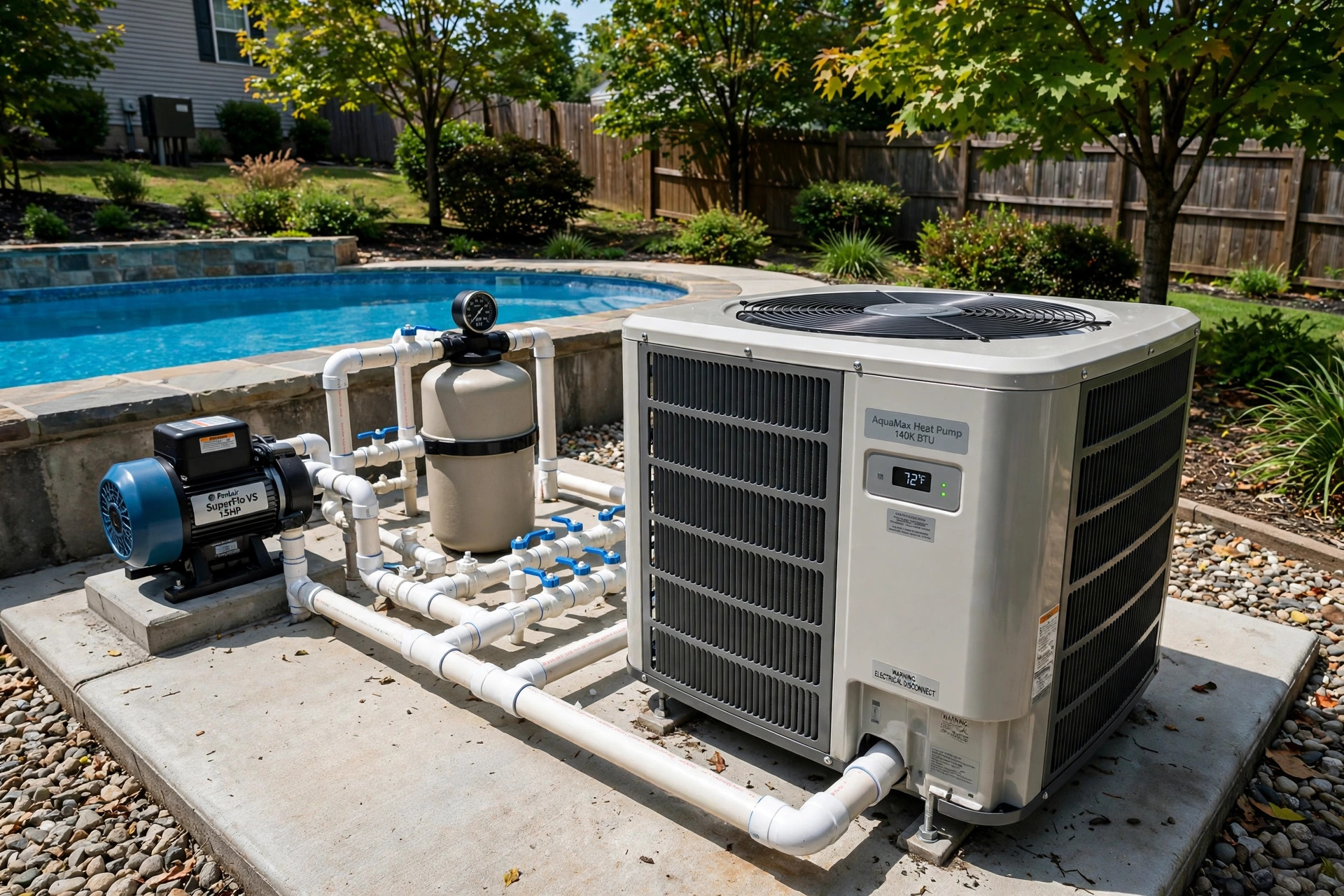
A heat pump does not burn fuel. It moves heat from the air into the water, much like a refrigerator moves heat out of food. That is why it uses far less energy than gas or electric resistance heat. A compressor, a fan, and a heat exchanger do the work. Air passes through the coil, refrigerant picks up the heat, and pool water carries it back to the pool.
The catch is that the machine needs air, space, and steady water flow. Starve it of air and it will ice up. Give it poor plumbing and the water will bypass the heater. Wire it wrong and you risk a shock or a dead compressor. Homeowners who compare a pool heater for above ground pools with units for permanent pools soon learn the same rules apply: location, sizing, and piping decide the result.
Heat pumps shine where the season is long and the air stays above about 50 degrees Fahrenheit. In cold weather they slow down and may stop. They cost more up front than gas but far less to run.
What to Look For Before You Buy: How to Install Pool Heat Pump
Sizing
Sizing is the first job. Too small and the pump runs all day and never warms the pool. Too big and you pay for capacity you never use. Size is measured in BTU per hour. A common home range is 50,000 to 140,000 BTU.
Use a simple rule of thumb first. For a moderate climate, allow about 50 BTU per square foot of pool surface. A 400 square foot pool then points to a unit near 80,000 to 110,000 BTU. Wind, shade, and night heat loss push the number up. A wind screen or a pool cover can cut the needed size by a wide margin.
For a faster rise, use the gallon rule. About 10 to 12 BTU per hour per gallon raises the water one degree per hour. Most homes settle for a slower pace and a mid-size unit. The maker charts give the exact match. Bring your pool volume, target temperature, and coldest swimming month to the chart.
Efficiency Ratings
Pool heat pumps carry a COP rating, the coefficient of performance. A COP of 6 means six units of heat for each unit of power. Most units run from 5 to 7 in mild air, but efficiency drops as air cools. ENERGY STAR listings and maker data help here, as do test notes from independent reviewers such as Consumer Reports.
Power Supply
Heat pumps need a proper electric circuit. Small units may run on 220 to 240 volts with a 30 or 40 amp breaker. Larger units may need 50 or 60 amps. The maker plate states the minimum circuit ampacity and the maximum breaker size. Your panel must have room for the new breaker, and the wire must be sized for the load and the distance. Sort this out before you buy.
Noise
The fan hums like an air conditioner. Most modern units run at 55 to 65 decibels a few feet away, about the level of a normal talk. Place the unit away from patios, bedroom windows, and neighbor fences.
Types and Options
Standard Air-Source Units
Almost all home pool heat pumps are air-source. They pull heat from the outdoor air, cost less, and install in a day.
Inverter and Variable-Speed Units
Inverter models run the compressor at changing speeds. They start soft, run quiet, and hold temperature with less power. They cost more up front, but for pools open six months or more, the savings can pay for the upgrade in a few seasons.
Heat and Cool Models
Some units can cool the pool as well as heat it. In hot states, summer water can climb past 90 degrees. A heat-and-cool unit reverses the cycle and drops the temperature.
Heat Pump vs Gas Heater
The classic choice in any best pool heater for inground pools guide is heat pump or gas. For a pool used often over a long season, the heat pump wins on running cost. For a spa that needs quick heat on a cold night, gas still rules. Spa makers such as Hot Spring and Bullfrog Spas sell equipment that pairs well with this setup.
Planning the Install
Permits and Rules
Many towns ask for a permit for a pool heater. Some ask for an electrical permit only. Call your local building office before work starts.
Picking the Spot
Place the unit on a firm, level pad of concrete, pavers, or thick composite. Keep these clearances:
– At least 24 inches of open air on the intake side. – At least 60 inches above the fan discharge, with no roof or deck over it. – At least 12 to 24 inches from walls on the other sides, per the maker book. – Close to the pool equipment pad to keep pipe and wire runs short. – Away from bedroom windows, patios, and neighbor fences for noise. – Above the flood line, where rain drains away from the unit.
Set the unit within the plumbing loop, after the filter and before any chlorinator. Short runs mean less heat loss and less pipe cost. Many owners put the pad next to the filter pad and bridge them with a short pipe run.
How to Install Pool Heat Pump Equipment, Step by Step
Step 1: Set the Pad
Level the ground, set the pad, and check it with a level in both directions. A tilted pad strains the cabinet and traps water.
Step 2: Place the Unit
Set the heat pump on the pad with intake and discharge sides clear. Never enclose the unit in a shed or box. It needs open air to work.
Step 3: Plan the Plumbing Path
Water should flow from the pool, through the pump and filter, then through the heater, then back to the pool. If you have a salt system or a chemical feeder, the heater goes before it.
Add a bypass loop. A set of three valves lets water skip the heater for service, flow tuning, or hot months. Every good install has one.
Step 4: Cut and Glue the Pipes
Shut off the pump and drain the lines you will cut. Dry-fit every joint first and mark the positions with a pencil. Apply cleaner, then glue, to both the pipe end and the fitting socket. Push the fitting on with a quarter turn and hold for 30 seconds. Keep runs short and straight, and support long runs with hangers so pipes do not sag. Use unions at the unit so the heater can be removed later without cutting pipe.
Step 5: Set the Flow Rate
Each heat pump lists a target flow range, often 30 to 80 gallons per minute. Too little flow and the unit shuts off on low pressure. Too much and the water rushes through too fast to pick up heat. Adjust the bypass valves until the flow sits mid-range. A flow meter helps, and the unit display can show pressure and temperature rise. Owners reading the best pool pump for inground pools guides often find a variable-speed pump pairs well here.
Step 6: Run the Electrical Circuit
This step is for a licensed electrician in most places. Run the proper wire size from the panel to a disconnect box near the unit. The disconnect must be within sight of the unit and at least five feet from the pool edge, per code. Fit the breaker named on the maker plate and bond the unit to the pool bonding grid with the required copper wire. Skip bonding and a fault could put voltage on the pool shell.
Step 7: Wire the Unit
With power off and locked out, open the unit panel. Land the line wires on the marked terminals and connect the ground. Check the breaker size against the maker plate maximum, then close the panel. Do not power up until the plumbing is full and the air is bled out.
Step 8: Fill, Bleed, and Start Up
Open the valves to the heater. Start the pool pump. Bleed air from the filter and from the heater if it has a bleed port. Check every glued joint for drips and fix leaks now, before power goes on.
Now power the unit and set the target temperature, often 80 to 84 degrees for family swimming. Watch the first hour. A smooth fan hum is normal. Rattling, grinding, or loud clicking is not. Walk the pipe run once more and check for wet spots.
Step 9: Tune and Test
Let the pool warm over a day or two and check the temperature morning and night. If the rise is too slow, check the flow rate first, then the unit size against your pool volume. If the unit short-cycles, the flow may be too low or the thermostat may sit in a draft of its own warm exhaust.
Cost and Price
Pool heat pump installation cost has three parts: the unit, the install labor, and the electrical work.
– The unit often runs $2,500 to $6,000 for common home sizes. Inverter models run higher. – Plumbing labor and materials often run $500 to $1,500 for a standard pad-side job. – Electrical work often runs $500 to $2,000, more if the panel needs an upgrade.
Most owners spend $3,500 to $9,000 all in. A simple swap of an existing unit runs less. A long wire run, a panel upgrade, or a tricky pad location pushes it higher. Get two or three written quotes and ask each bidder to list the unit model, BTU size, breaker and wire size, and what is included.
Running cost is where the heat pump earns its keep. At a COP of 6, each dollar of power buys about six dollars of heat. Many owners report $50 to $150 a month in season, far below gas. The U.S. Department of Energy explains heat pump savings in plain terms. Major retailers such as Home Depot and Lowe’s list unit prices and spec sheets for comparison, and pool supply specialists like Leslie’s carry parts for the job.
Care and Upkeep
A heat pump asks for little, but it needs steady care.
– Keep the coil clean. Rinse the outside coil with a gentle hose spray each month in season. Never use a pressure washer. – Keep the air path clear. Trim plants back from the intake. Rake leaves away from the base. – Check the water chemistry. Bad chemistry eats the heat exchanger from the inside. Keep pH between 7.2 and 7.6. Care sites such as Swim University publish simple water balance guides. – Watch the drain. The unit makes condensate water as it runs. The drain should drip freely. If water pools under the unit, clear the drain port. – Winterize in cold states. Drain the heater, blow out the lines, and cut the power before freezing weather. – Service the fan and controls once a year. A tech can check the refrigerant charge and test the capacitors.
Most units last 10 to 15 years with fair care. Low refrigerant, bad wiring, or constant short cycling will kill the compressor early. The install steps above are the best life insurance the unit can get.
Safety
Water and power make a serious pair. Respect both.
– Only a licensed electrician should wire the circuit and the disconnect. – The disconnect must sit within sight of the unit and at least five feet from the water. – Never run the unit with the plumbing dry. The exchanger can overheat fast. – Keep children away from the equipment pad. Hot surfaces and moving fans do not mix with small hands. – The U.S. Consumer Product Safety Commission publishes pool and spa safety guidance every owner should read.
If the unit trips the breaker, do not just reset it and walk away. A trip means a fault. Find the cause first.
FAQ
How long does it take to install a pool heat pump? One day for a two-person crew: half a day for pad and plumbing, a few hours for electrical work and start-up.
Can I install a pool heat pump myself? A handy owner can do the pad, the placement, and the PVC plumbing. The circuit, disconnect, and bonding should go to a licensed electrician.
What size heat pump do I need? Match BTU to your pool volume and climate. A mid-size home pool often needs 80,000 to 110,000 BTU. Use the maker chart with your gallon count and target temperature.
How much does it cost to run? Most owners spend $50 to $150 a month on power in season. A pool cover is the cheapest way to cut the bill.
Do heat pumps work in cold weather? They slow down below about 50 degrees and many stop near 40 to 45 degrees. For a long warm season they are ideal. For winter swimming in a cold state, gas is the better pick.
Where does the heat pump go in the plumbing line? After the filter and pump, before the chlorinator or salt cell. Add a bypass loop with valves for service and flow tuning.
A Final Word
A pool heat pump is a simple machine that rewards a careful install. Size it right. Give it air, level ground, and clean plumbing. Let a licensed electrician handle the power. Keep the coil clean and the water balanced, and it will warm your pool for a decade or more at a fraction of gas cost. The work takes a day. The comfort lasts all season.
References
Bullfrog Spas. (n.d.). Hot tubs and spas. https://www.bullfrogspas.com Consumer Reports. (n.d.). Product reviews and ratings. https://www.consumerreports.org ENERGY STAR. (n.d.). Energy efficient products. https://www.energystar.gov Hot Spring Spas. (n.d.). Hot tubs and spas. https://www.hotspring.com Leslie’s Pool Supplies. (n.d.). Pool supplies and equipment. https://www.lesliespool.com Lowe’s. (n.d.). Home improvement products. https://www.lowes.com Swim University. (n.d.). Pool and hot tub care guides. https://www.swimuniversity.com The Home Depot. (n.d.). Home improvement products. https://www.homedepot.com U.S. Consumer Product Safety Commission. (n.d.). Product safety information. https://www.cpsc.gov U.S. Department of Energy. (n.d.). Energy efficiency and renewable energy. https://www.energy.gov
Was this guide helpful?

About Sarah Mitchell
The My Garden US editorial team writes practical, in-depth home and garden guides for American homeowners — tested advice, no fluff.
You May Also Like
Best Pool Filter for Small Pools: How to Choose the Right One
April 15, 2026 0 views
Best Pool Steps for Above Ground Pools: A Plain Buyer’s Guide
June 27, 2026 0 views
How to Add Salt to a Pool Correctly: A Simple Step-by-Step Guide
January 17, 2026 0 views