Every year, when the cold days end, pool owners face the same task. They must wake the pool from its winter sleep and make it ready for summer. A good pool opening checklist for spring season takes the guesswork out of this work. It turns a large job into small, simple steps. When you follow each step in order, the water stays clear, the equipment lasts longer, and the pool is safe for your family.
Spring is the best time to open a pool. Do not wait until the air is hot. Algae grow fast in warm water, even under a cover. Most experts say to open the pool when daytime temperatures reach 70 degrees on a steady basis. Open too late, and you may find green water. A full pool opening checklist for spring season helps you act in time and avoid that problem.
Why a Pool Opening Checklist Matters
A pool is a big investment. A clear plan protects it. Without a plan, people forget small jobs that lead to big costs. A cracked pipe, a worn pump seal, or a clogged filter can cost hundreds of dollars to fix. A checklist makes sure each part gets checked.
Clear water matters most. Pool water that looks clean may still hold germs. A proper opening routine balances the chemicals that kill those germs. That is the heart of any pool opening checklist for spring season. It also saves money. When the pump, filter, and heater start the season in good shape, they use less power and last more years.
Safety is the last reason, and it is the most important one. A pool that sat closed for months can hide dangers. A loose ladder, a weak fence latch, or a missing drain cover can put swimmers at risk. The United States Consumer Product Safety Commission publishes pool safety rules every homeowner should read before the first swim of the year.
When to Start the Spring Opening: Pool Opening Checklist for Spring Season
Timing is part of the plan. In most of the United States, pool owners open between late March and late May. Watch the weather, not the calendar. Daytime highs near 70 degrees are the signal. If the nights still drop near freezing, you can still open the pool. You can leave the equipment running on a low setting to stop pipes from freezing.
Plan a full day for the work. Two days is better. The water may need two or three days of running and testing before the chemicals reach the right level. Do not rush. A careful pool opening checklist for spring season gives the filter and the chemicals time to do their jobs.
Gather Your Supplies First
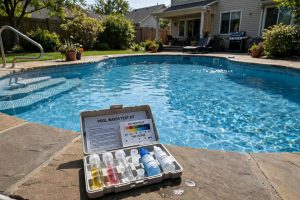
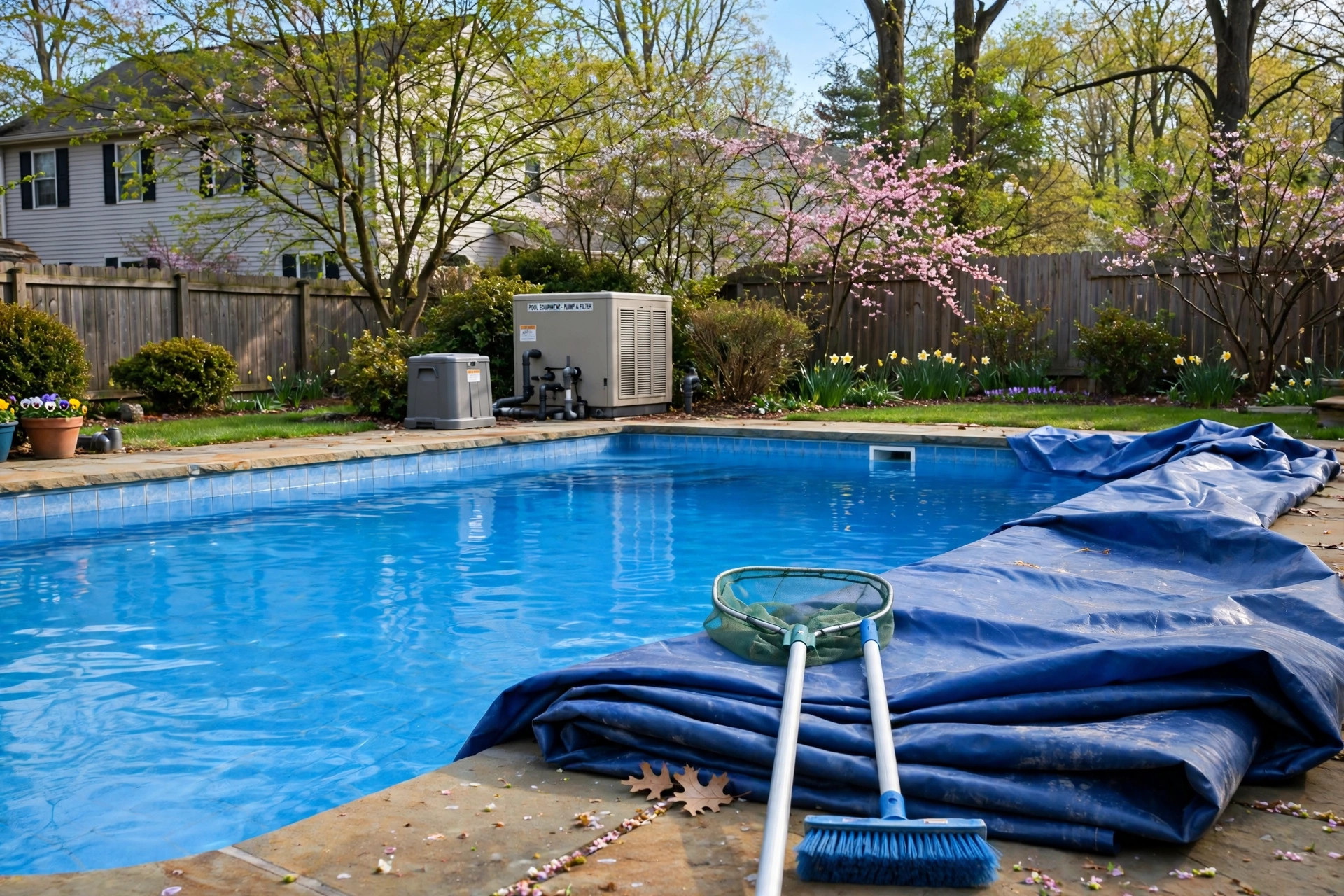
Before you lift the cover, gather what you need. You will need a garden hose, a pool brush, a skimmer net, and a pool vacuum. You will also need test strips or a liquid test kit, shock treatment, chlorine or bromine tablets, pH increaser and decreaser, and algaecide. Stores such as Home Depot carry full lines of pool chemicals and cleaning tools.
Check your test kit. Old test strips give wrong readings. If the strips sat in a warm shed all winter, buy a fresh bottle. Wrong test results are one of the top reasons new pool water stays cloudy. Good testing tools are a must on any pool opening checklist for spring season.
The Step-by-Step Opening Checklist
Follow these steps in order. Each step builds on the one before it.
Step 1: Remove the Winter Cover
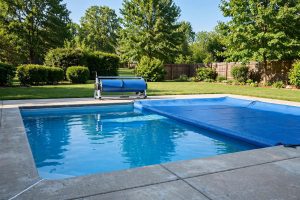
Clear leaves and debris off the cover first. Use a soft broom or a leaf blower. Never drag sharp tools across the cover. If water sits on top of the cover, pump it off with a cover pump or a garden hose siphon. Dirty water on the cover can fall into the pool when you lift it. That adds to the cleanup work.
Fold or roll the cover for storage. Rinse it with the hose. Let it dry fully in the sun. Then fold it and store it in a cool, dry place. If the cover is torn or full of holes, replace it. A weak cover lets dirt and sun reach the water all winter. Guides to cover types and winter care are common at pool supply sites, and our page of best pool cover for winter reviews can help you pick the next one.
Step 2: Top Off the Water and Reconnect Equipment
The water level drops over winter. Add water with the garden hose until it reaches the middle of the skimmer opening. This is the right level for most pumps to prime.
While the hose runs, put the equipment back in place. Reinstall the drain plugs on the pump, filter, and heater. Reconnect the hoses and fittings you removed for winter. Check each O-ring and gasket. A dry or cracked O-ring is a common cause of pump leaks. A little pool lubricant on each O-ring keeps it soft. Spare fittings and seals are easy to find at Pool Warehouse.
Step 3: Clean the Pool
Start with the skimmer baskets and the pump basket. Empty them and rinse them. Then skim the surface with a net to pick up leaves and twigs. Brush the walls and floor from the shallow end toward the deep end. This loosens the film that formed over winter.
Vacuum the floor next. A manual vacuum works, but a robotic cleaner saves time and effort. If the water is green, read our guide on how to clean green pool water fast before you start. Green water needs a different plan than light dirt.
Step 4: Start the Pump and Filter
Prime the pump. Fill the pump basket with water, close the lid, and turn the pump on. Watch it for a few minutes. The pump should catch prime and move water within one or two minutes. If it does not, turn it off and check for air leaks at the fittings.
Backwash a sand or DE filter once the pressure gauge reads high. Rinse cartridge filters with the hose. A clean filter is the key to clear water. Run the pump around the clock for the first two or three days. Continuous running pushes all the water through the filter many times.
Step 5: Test and Balance the Water
This is the most technical part of the pool opening checklist for spring season, but it is simple once you learn the order. Test the water with your kit. Write down each reading. Adjust in this order: total alkalinity first, then pH, then calcium hardness, then sanitizer level.
Aim for these ranges: pH between 7.2 and 7.6, total alkalinity between 80 and 120 parts per million, and calcium hardness between 200 and 400 parts per million. Free chlorine should sit between 1 and 3 parts per million. Make one change at a time. Wait four hours, then test again. Adding many chemicals at once can cloud the water. Step-by-step chemical help is easy to find at Leslie’s Pool, which sells test kits and explains each reading in plain words.
Step 6: Shock the Pool
Shocking the pool means raising the chlorine to a high level for a short time. This kills algae and germs that built up under the cover. Add shock in the evening, when the sun will not burn it off. Use one pound of shock per 10,000 gallons of water as a rough rule. Check the label on your product for exact amounts.
Keep the pump running all night after you shock. Do not swim until the chlorine level drops back to the normal range. Test again in the morning. Repeat the shock if the water is still green. Detailed shock guides with pictures are posted at Swim University.
Step 7: Check the Heater, Lights, and Extras
Turn on the heater and let it run. Listen for strange sounds. A heater that worked last fall may need a cleaning before it runs well this year. Check the pool lights. Replace any bulbs that are out. Test the salt chlorine generator if your pool has one, and clean its cell if it looks coated with scale.
Look at the automatic cleaner, the ladder, the handrails, and the diving board. Tighten loose bolts. A wobbly ladder is not just an annoyance. It is a safety problem. Replace worn tread covers on the steps.
Cost of Opening a Pool in Spring
Most owners spend between 150 and 350 dollars on chemicals and supplies for the spring opening. The exact cost depends on the pool size and how dirty the water is. A very green pool needs more shock and more algaecide, so it costs more to clear.
If you hire a pool service to open the pool, expect to pay 200 to 500 dollars for a basic opening. Full service with chemical balancing and equipment checks can cost more. Doing it yourself saves money, and a good pool opening checklist for spring season makes the job simple enough for most owners. Set aside 50 to 100 dollars more for replacement parts like O-rings, gaskets, or a new skimmer basket.
Care and Upkeep After Opening
The opening is only the start. Keep the good habits going all summer. Test the water two or three times a week. Brush the walls once a week. Empty the skimmer baskets often. Backwash the filter when the pressure gauge rises 8 to 10 pounds above the clean reading.
Run the pump at least 8 hours a day in summer heat. In very hot weather, 10 to 12 hours is better. Trim trees and bushes near the pool to cut down on leaves. Cover the pool with a solar cover at night to hold in heat and keep out debris.
If you also own a spa or hot tub, give it the same spring care. Rinse the spa filter, test the water, and check the cover for cracks. Care guides for spas appear at Hot Spring and Bullfrog Spas, and their tips on water balance work much like pool tips.
Safety Checks Before the First Swim
Safety comes before fun. Walk the whole pool area and check each item on this short list.
Check the fence and the gate. The gate should close and latch by itself. The latch should be high enough that small children cannot reach it. Check the pool alarm if you have one. A good alarm sounds when someone enters the water unexpectedly.
Look at the drain covers. Each main drain must have a cover that is tight and unbroken. Broken drain covers are a serious entrapment risk. Federal rules on safe drain covers are explained on the CPSC pool safety pages.
Make sure rescue gear is in place. Keep a reaching pole and a life ring near the pool. Make sure everyone in the house knows the basic rules: no diving in shallow water, no swimming alone, and no running on the deck. For a full seasonal plan, read our companion guide on how to open pool for summer season, which covers timing and weekly care in more depth.
FAQ: Spring Pool Opening
How long does a spring pool opening take?
Most openings take one full day of work. The water then needs two or three days of filtering and testing before it is ready to swim in. A very green pool can take a week of treatment.
Can I open my pool if nights are still cold?
Yes. Daytime highs near 70 degrees are the main signal. If a late frost comes, run the pump all night. Moving water does not freeze as easily as still water.
Do I need to drain the pool in spring?
No. Do not drain an inground pool in spring. An empty pool can pop out of the ground or crack under pressure from the soil. Clean and treat the water you have. For general how-to help on many pool tasks, The Spruce keeps a large library of plain-language guides.
What if my pool water is green when I open it?
Green water means algae. Shock the pool, run the pump day and night, and brush the walls each day. Keep the chlorine high until the water turns cloudy blue, then milky, then clear. Full steps are in our guide on how to clean green pool water fast.
How much does it cost to open a pool myself?
Plan on 150 to 350 dollars for chemicals and small parts. That is about half the price of a basic professional opening in most markets.
Should I hire a pro for the spring opening?
Hire a pro if the equipment will not start, if pipes leaked over winter, or if the water will not clear after a week of treatment. These are signs of a deeper problem. For routine openings, most owners can do the job with this checklist.
A Short Final Word
A pool opening checklist for spring season turns a big spring job into a set of small wins. Remove the cover. Clean the pool. Start the equipment. Balance the water. Check the safety gear. Each step is simple on its own. Together, they give you a clear, safe pool and a long summer of swimming. Start when the days reach 70 degrees, follow the steps in order, and enjoy the water you worked for.
References
Bullfrog Spas. (n.d.). Hot tubs and spas. https://www.bullfrogspas.com Hot Spring Spas. (n.d.). Hot tubs and spas. https://www.hotspring.com Leslie’s Pool Supplies. (n.d.). Pool supplies and equipment. https://www.lesliespool.com Pool Warehouse. (n.d.). Pool equipment and supplies. https://www.poolwarehouse.com Swim University. (n.d.). Pool and hot tub care guides. https://www.swimuniversity.com The Home Depot. (n.d.). Home improvement products. https://www.homedepot.com The Spruce. (n.d.). Home and garden advice. https://www.thespruce.com U.S. Consumer Product Safety Commission. (n.d.). Product safety information. https://www.cpsc.gov
Was this guide helpful?

About Michael Thompson
The My Garden US editorial team writes practical, in-depth home and garden guides for American homeowners — tested advice, no fluff.