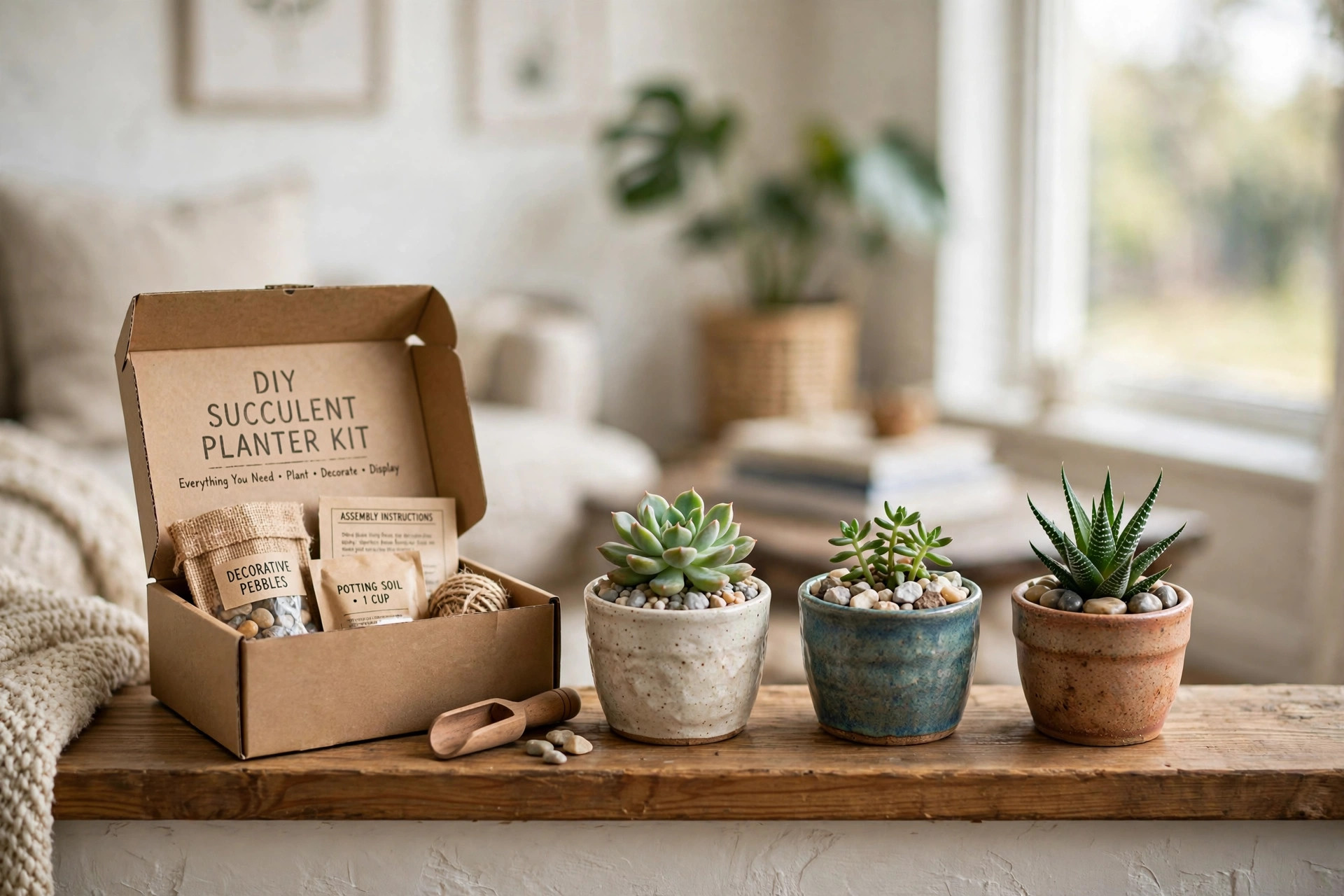

A DIY succulent planter kit for home decor is a simple box of parts. It lets you build a small living garden for your home. Most kits come with pots, soil, small stones, tools, and a guide. You put it all together at your kitchen table. In an hour or less, you have a fresh green piece to set on a shelf or desk. This guide will tell you why these kits have become so popular. It will show you what to look for when you buy one. It will walk you through the types you can find, what they cost, and how to keep your plants alive. It will also cover safety tips and answer common questions.
Why a DIY Succulent Planter Kit for Home Decor Matters
Succulents are small plants with thick leaves. They store water in those leaves. That is why they need so little care. A DIY succulent planter kit for home decor takes that easy care and adds the joy of making something with your own hands. You are not just buying a plant. You are building a small piece of living art.
A Calm Touch in Any Room
A green plant softens a room. Books and plain walls can look cold. A row of small succulents in a neat planter warms the space. Green things have long been said to make people feel calmer. You do not need a big garden for this effect. A kit that fits on a windowsill can do the job.
A Craft That Lasts
Many home crafts fade with time. Paper flowers collect dust. Paintings need a wall. A DIY succulent planter kit for home decor gives you a craft that stays alive. It grows. It changes a little each month. That makes it more than a weekend project. It becomes part of your daily life.
A Good Gift
These kits make fine gifts. The box is small and easy to wrap. The project is fun for almost anyone. A friend can build it on a rainy afternoon. Then the plants keep giving for months. You might also pair it with a diy candle making kit for beginners usa for a full handmade gift set.
What to Look For When You Buy: Diy Succulent Planter Kit for Home Decor
Not all kits are alike. A good kit has quality parts and clear steps. A poor kit leaves you with dead plants and a bad mood. Here is what to check before you buy.
The Plants or Cuttings
Some kits include live plants. Others include seeds. Live plants are easier. You see right away what you are getting. Seeds take weeks to grow and may never sprout. If the kit ships live plants, check the reviews for how they arrive. Plants packed well in damp paper will look fresh. Plants packed loose in a hot box may arrive soft or brown. If you are new to plants, pick a kit with live rosettes or small rooted cuttings.
The Soil Mix
Succulents need fast-draining soil. Regular potting soil holds too much water. That water rots the roots. A good DIY succulent planter kit for home decor includes a gritty mix. It should have sand, perlite, or small pumice stones in it. When you squeeze it, it should fall apart, not clump. If the kit comes with ordinary black soil, plan to buy a cactus mix on your own. Craft stores like Michaels and home centers like Home Depot both carry small bags of cactus soil.
The Containers
Look at the pots. They should have drainage holes in the bottom. Water must be able to leave the pot. A pot with no hole will hold water around the roots. That is the fastest way to kill a succulent. Some kits give pretty pots with no holes. In that case, you can drill a hole or use the pot as an outer cover. A small nursery pot inside a pretty pot works fine. Just take the inner pot out when you water.
The Tools
A basic kit should include small tools. A tiny scoop helps you move soil. Tweezers help you place small plants. A small brush lets you dust soil off the leaves. These tools are simple, but they make the work much easier. Some kits also add decorative stones or moss. These are nice extras. They are not needed, but they make the finished piece look neat.
The Instructions
Clear steps matter most for beginners. The guide should tell you how much soil to use. It should tell you how deep to plant each cutting. It should tell you when to water for the first time. Look at photos of the guide in online listings. If it is one small card with tiny print, the kit may frustrate you. A good guide reads like a recipe. Step one, step two, step three.
Types and Options
Kits come in many shapes. Each type suits a different room and taste. Here are the main ones you will see.
Classic Single Pots
The simplest kit gives you three or four small pots. Each pot gets one or two plants. These are easy to move around. You can spread them through the house. If one plant fails, you only lose one pot.
Trough and Box Planters
Long wooden or metal boxes hold a row of plants. These make a nice centerpiece for a table. They also look good on a wide windowsill. The box style lets you play with layout. You can line the plants in a row or group them in clusters. Many box kits use reclaimed-looking wood. That fits a farmhouse or rustic style.
Geometric Glass Holders
Glass boxes in triangle or diamond shapes are very popular. They look modern. They let you see the layers of soil and stone. These holders have no drainage holes. That makes them harder to use. You must water with great care. A few spoonfuls of water at a time is enough. Many plant lovers use these as display cases and keep the plant in a small hidden pot inside.
Wall Hangers
Some kits are made to hang on a wall. They hold small pockets of plants. These save table space. They also make a bold piece of art. Wall planters dry out faster than pots. The air moves around them more. Plan to check the soil more often.
Fairy Garden Style
These kits add tiny figures, paths, and small houses. You build a mini world around the plants. Kids love these. The plants are the same succulents. If you like this style, a diy terrarium kit for succulents and plants offers a similar build with a glass home.
Cost and Price
A DIY succulent planter kit for home decor is not dear. Most kits sell for ten to forty dollars. The price depends on size and parts.
Budget Kits
Kits under fifteen dollars are common. They usually have three small plastic pots, basic soil, and a few cuttings. These are fine for a first try. The pots are plain. The tools may be missing. You still get the full building experience. For a child or a party craft, these are ideal.
Mid-Range Kits
The twenty to thirty dollar range is the sweet spot. These kits have nicer pots. The pots may be ceramic or painted wood. The soil is usually proper cactus mix. You often get small tools and decorative stones. The plant count is higher. This is the range most gift buyers choose.
Premium Kits
Kits over forty dollars exist. They may include large planters, many plants, and fine tools. Some come in gift-ready boxes. A few include rare succulent types. These are worth it if you want a showpiece. For a first project, they are more than you need. Save the premium kit for when you know you enjoy the craft.
Hidden Costs
The kit price is not always the full price. You may need a spray bottle for water. You may want extra cactus soil. If your home is dark, you may want a small grow light. These extras are cheap. Sites like JOANN often sell these add-ons in the same aisle as the kits.
Care and Upkeep
The build takes an hour. The care takes months. Succulents are easy, but they are not made of plastic. They need light, the right water, and good air.
Light
Light is the most important thing. Succulents love bright light. A south-facing window is best in the United States. An east or west window works too. If the plants start to stretch tall and pale, they need more light. That stretching is called legginess. It means the plant is reaching for the sun. Move it closer to the window. If no window is bright enough, a small grow light fixes the problem. Keep the light on for twelve to fourteen hours a day.
Water
Water less than you think. The thick leaves hold water for weeks. Let the soil dry out fully between waterings. Then soak it well. Water should run out of the drainage hole. Dump any water that sits in the saucer. In winter, most succulents rest. Water them even less then. Once a month may be enough. Overwatering kills more succulents than anything else. When in doubt, wait another week. Guides from The Spruce, Bob Vila, and Burpee all stress this dry-between-waterings rule.
Soil and Repotting
The soil in the kit will last a year or two. After that, it breaks down and holds too much water. Repot into fresh cactus mix when the soil looks tired. Choose a pot only one size larger. Too big a pot holds too much wet soil. Spring is the best time to repot. That is when the plant starts to grow again.
Cleaning
Dust settles on the leaves. A soft brush or a puff of air cleans them. Do not use leaf shine sprays. Those products can block the tiny pores in the leaves. If mealybugs appear, they look like tiny white cotton dots. Dab them with a cotton swab dipped in rubbing alcohol. Check the plant each week so pests never build up.
Seasonal Moves
In summer, many succulents enjoy time outside. Put them in bright shade first. Move them into full sun slowly over a week. A sudden move can burn the leaves. Bring them back inside before the first frost. A sunny windowsill is their winter home.
Safety
These kits are safe for most homes. Still, a few points deserve care.
Sharp Tools
Some kits include small scissors or a craft knife. Keep these away from small children. An adult should handle any cutting. Store the tools with your other craft tools after the build.
Soil Dust
Dry soil mix makes dust. Perlite and pumice dust can irritate the lungs. Pour the soil slowly. Work near an open window if you can. Keep the work area away from food while you build.
Pets and Plants
Many succulents are safe, but not all. Jade plants can upset a dog or cat that chews them. Some echeveria types are fine. If you have pets that chew plants, check each plant type before you place the planter low. The ASPCA keeps plant lists, and a quick search will tell you which types are safe. When in doubt, put the planter on a high shelf.
Glass and Weight
Glass holders can break if they tip. Keep them away from table edges. Wall planters must hang on a strong hook. A planted box can weigh several pounds. Use a wall anchor, not just a nail, for heavy pieces. Advice on safe hanging can be found at Family Handyman, This Old House, and HGTV.
Frequently Asked Questions
How long does the build take?
Most people finish in thirty to sixty minutes. The steps are simple. Fill the pots with soil. Place the plants. Add stones on top. Water lightly. If you are making a large box planter, give yourself ninety minutes. There is no rush. The fun is in the arranging.
Do I need a green thumb?
No. Succulents are among the easiest houseplants. They forgive missed waterings. They do not need misting or fancy food. Follow the light and water rules in this guide and your plants will do well.
How often should I water?
There is no fixed schedule. Check the soil with your finger. If it is dry an inch down, water well. If it is still damp, wait. In a bright warm room, that may mean water every ten to fourteen days. In a cool dark room, it may mean once a month. The season matters too. Plants drink more in summer and less in winter.
Can I keep the planter in a bathroom?
A bathroom with a bright window can work. The steam from showers does not hurt most succulents. But a dark bathroom will starve them of light. If the only bathroom window is small and north-facing, choose another room. Light matters more than humidity.
What if a plant dies?
It happens, even to good growers. Pull the dead plant out. Let the soil dry. Put a new small succulent in its place. Local garden centers sell single small succulents for a few dollars. You can also find them at Dick Blick craft sections and big garden aisles in season. One loss does not ruin the piece.
Can I make my own kit instead of buying one?
Yes. Buy small pots, a bag of cactus mix, and a few succulents. Add a scoop and some stones. The total cost is often close to a kit price. The kit just saves you the shopping trip. If you enjoy hunting for parts, building your own is part of the fun. A diy flower arrangement kit for home decor is another good next project once you finish this one.
A Final Word
A DIY succulent planter kit for home decor is a small project with a long reward. You spend one quiet hour building it. Then you enjoy living green for months or years. The plants ask for little. Bright light and a careful hand with water are enough. Whether the finished piece sits on your desk, brightens a shelf, or goes to a friend as a gift, it carries the mark of your own hands. That is what makes it more than decor. It is a small garden you built yourself.
References
Blick Art Materials. (n.d.). Art and craft supplies. https://www.dickblick.com Bob Vila. (n.d.). Home improvement advice. https://www.bobvila.com Burpee. (n.d.). Seeds, plants, and gardening supplies. https://www.burpee.com Family Handyman. (n.d.). DIY home repair and maintenance. https://www.familyhandyman.com HGTV. (n.d.). Home and garden ideas. https://www.hgtv.com JOANN. (n.d.). Fabric and craft supplies. https://www.joann.com Michaels. (n.d.). Arts and crafts supplies. https://www.michaels.com The Home Depot. (n.d.). Home improvement products. https://www.homedepot.com The Spruce. (n.d.). Home and garden advice. https://www.thespruce.com This Old House. (n.d.). Home renovation guidance. https://www.thisoldhouse.com
Was this guide helpful?

About Sarah Mitchell
The My Garden US editorial team writes practical, in-depth home and garden guides for American homeowners — tested advice, no fluff.
You May Also Like

Best Craft Vinyl for Outdoor Signs Cricut: A Simple Guide
June 23, 2026 0 views
DIY Slime Kit for Kids Crafts Safe USA: A Parent’s Guide
April 3, 2026 0 views
Best Yarn for Crochet Blankets: Soft Picks for USA Crafters
May 14, 2026 0 views