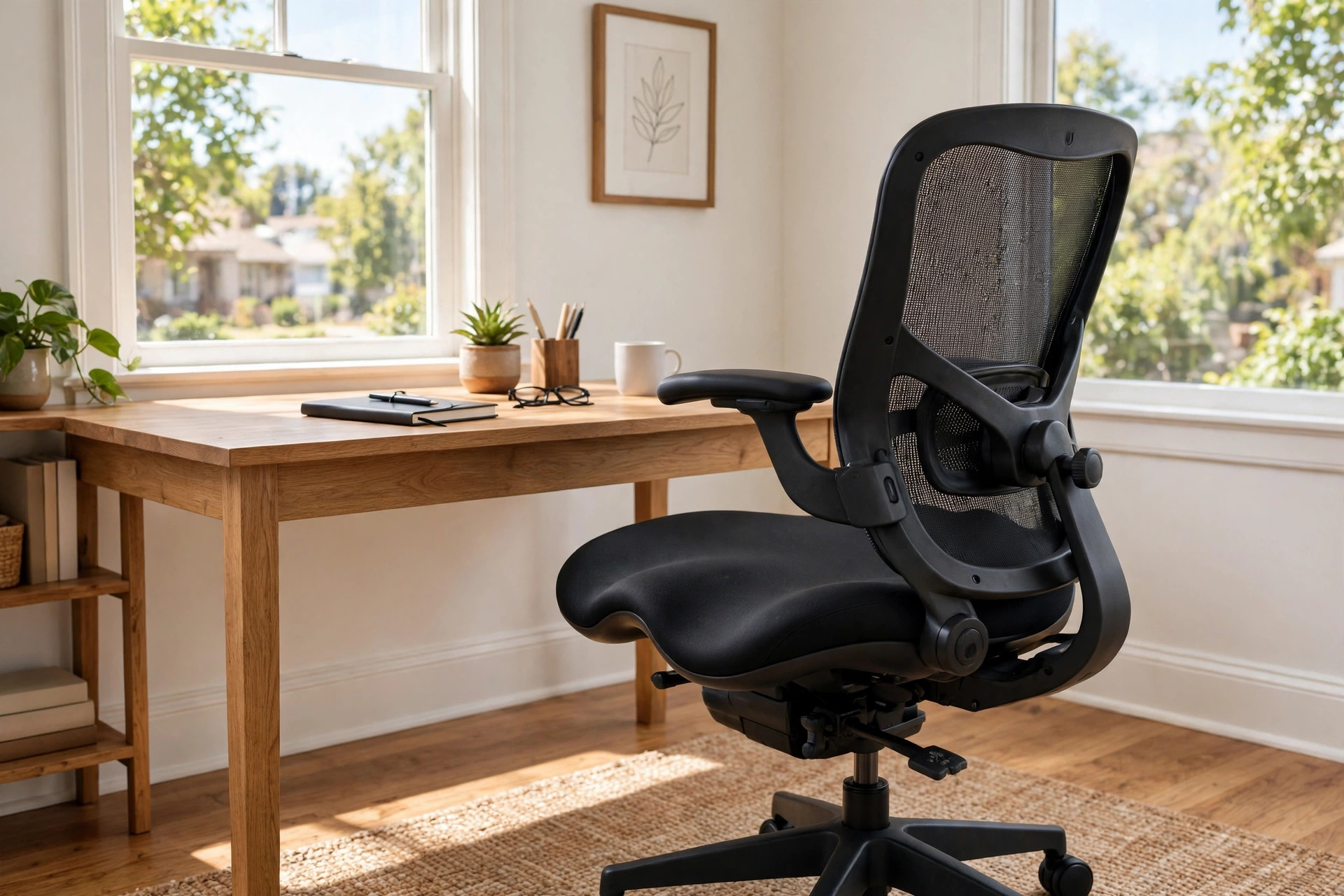

A sore hip can turn a workday into a long trial. Many people sit for eight hours or more at a desk, and the wrong seat can press on the hip joint with every hour that passes. If you work from home, you have the power to change your seat. This guide will help you find the best home office chair for hip pain, one that supports your body instead of fighting it.
Why Your Chair Can Make Hip Pain Worse
Hips carry your weight when you sit. The hip joint is a ball and socket that lets you walk, bend, and turn. When you sit in a poor chair, the seat can push the joint into a bad angle for hours. Pressure builds up on the front of the hip. The muscles around the hip grow tight. The ache that starts in the afternoon may be the result of a seat that does not fit your body.
A flat, hard seat is one of the worst culprits. It gives the hip bones no cushion and no shape to rest on. A seat that is too deep pushes the back of the knees and cuts off blood flow to the legs. A seat that is too high lets the feet dangle, which pulls the hips forward and twists the pelvis. Even a chair that felt fine for short use can cause pain after months of daily work. For anyone who needs an office chair for long hours in a home office, the details of the seat matter more than the look of the chair.
Poor posture adds to the trouble. When you slump, the top of the thigh presses against the seat edge. This edge can pinch soft tissue near the hip. Over time, the body learns the bad posture and keeps it, even when you stand up. A good chair breaks this cycle by holding the body in a neutral position, where the hips, knees, and ankles each rest near a right angle.
What to Look for in a Chair That Eases Hip Pain: Best Home Office Chair for Hip Pain
Shopping for a chair is simpler when you know what matters. Hip pain responds to a few key features. Look for each of these before you buy.
A Contoured Seat Pan
The seat pan is the part you sit on. For hip pain, a contoured seat pan works better than a flat one. A gentle curve holds the thighs and spreads weight across the seat. A waterfall edge, where the front of the seat slopes down, takes pressure off the back of the thighs. This design helps blood flow reach the legs and keeps the hips from bearing the full load. Experts who test seating at companies like Steelcase note that seat shape plays a large role in long-term comfort.
Adjustable Seat Height and Depth
Your feet should rest flat on the floor with your knees at about a 90-degree angle. Only an adjustable seat height lets people of different heights reach that position. Seat depth matters too. You should be able to sit with your back against the backrest and still fit two or three fingers between the seat edge and the back of your knee. A sliding seat lets you set this distance. This is one reason reviewers at Wirecutter and PCMag test adjustability so closely in their chair reviews.
Firm, Responsive Lumbar Support
Lumbar support holds the lower back in its natural curve. When the lower back is held in place, the pelvis stays level, and the hips are less likely to roll back into a slump. Look for a chair with adjustable lumbar support so you can move the support up, down, in, and out. A chair with fixed support may miss your back at the wrong spot, which does little good.
Padding With a Little Give
A seat with dense foam cushions the hip bones without bottoming out. Memory foam can feel soft at first but may trap heat. High-density molded foam holds its shape longer. Mesh office chairs use a stretch fabric seat instead of foam. The mesh spreads weight evenly and stays cool, which many people with hip pain prefer. Guides at The Spruce often list mesh chairs among top picks for all-day sitting.
Armrests That Adjust
Armrests take weight off the shoulders, and that helps the whole body sit taller. When the shoulders relax, the hips tend to follow. Look for armrests that move up, down, in, out, forward, and back. Flip-up arms can also help if you need to tuck the chair under a desk or shift positions often.
Types of Office Chairs for Hip Pain Relief
Not every chair suits every person. Here are the main types worth knowing.
Ergonomic Task Chairs
The ergonomic task chair is the most common choice for home offices. It has a mid or high back, adjustable lumbar support, and many points of adjustment. Makers such as Herman Miller and UPLIFT Desk build chairs around ergonomic research. These chairs cost more, but they give the most control over fit. If your hip pain is tied to long hours at the desk, this type is often the best home office chair for hip pain.
Mesh-Back Chairs
Mesh-back chairs use breathable fabric across the back and sometimes the seat. The mesh flexes with your body and keeps air moving on warm days. Many budget models now include lumbar support and adjustable arms. Shoppers on sites like Wayfair and IKEA will find mesh chairs at lower prices, which makes them a good starting point.
Padded Executive Chairs
Executive chairs use thick foam and a tall back. They look formal and feel plush at first. The padding can help people who find hard seats painful on the hip bones. The trade-off is adjustability. Many executive chairs offer fewer settings than ergonomic task chairs, and thick padding can trap heat.
Kneeling and Saddle Chairs
Kneeling chairs tilt the body forward so the hips rest at a more open angle. This can take pressure off the front of the hip. They are not for everyone, and they take time to get used to. Saddle stools work on a similar idea. People who alternate between sitting and standing often like these as a second seat.
Chairs With Extra-Wide Seats
People with wider hips may need a seat pan that is broader than standard. A wide seat lets the thighs rest without pressing against the chair frame. Look for models marked as big and tall or wide seat if a standard 19-inch seat feels tight.
Cost and Price: What to Expect
Office chairs span a wide price range. Budget chairs run from about 80 to 200 dollars. Many include basic lumbar support and armrests, though adjustability is limited. Mid-range chairs from 200 to 600 dollars add seat depth adjustment, better lumbar systems, and stronger frames. High-end ergonomic chairs from 600 to 1,500 dollars or more offer the most adjustment and often carry long warranties of ten years or more.
A higher price does not always mean more relief. What matters is fit. An ergonomic mesh office chair under 200 dollars that matches your body can beat a costly chair that does not. Testing groups such as Consumer Reports publish comfort and durability ratings that help shoppers compare value across price tiers.
Think about cost per year of use. A chair you keep for ten years costs less per year than a cheap chair you replace every two years. Look for a warranty of at least five years on the frame and moving parts. A long warranty is a sign that the maker trusts the build.
Care and Upkeep
A good chair needs some care to stay supportive. Vacuum fabric seats and backs once a month to keep dust out of the foam and mesh. Wipe leather and vinyl seats with a damp cloth and a mild cleaner. Tighten bolts and screws twice a year, since moving parts loosen with daily use.
Check the gas cylinder now and then. If the chair sinks on its own, the cylinder may be wearing out. Many makers sell replacement cylinders, which cost far less than a new chair. Keep the casters clean as well. Hair and thread wrapped around the wheels can make the chair drag, which forces you to twist your hips to move.
Mesh seats need gentle care. Do not place sharp objects on the mesh, and keep it away from direct sun for long hours, since sun can weaken the fabric. Foam seats recover best when you stand up for a few minutes each hour. These short breaks also help the hips, since standing lets the joint move through its full range.
Safety Notes
A chair should be stable. Look for a five-star base, which spreads weight across five points and resists tipping. Test the tilt lock before you lean back. If the chair wobbles or the lock slips, stop using it and have it serviced.
Set the chair so your feet rest flat on the floor. If your feet cannot reach the floor, add a footrest rather than letting your legs dangle. Dangling legs pull on the hips and strain the lower back.
Take standing breaks every 30 to 60 minutes. No chair, no matter how well designed, replaces movement. Walk around the room, do a few gentle hip stretches, and then sit back down. If hip pain is sharp, sudden, or keeps you from walking, see a doctor before you shop for a chair. A chair can ease strain, but it cannot treat an injury or a joint condition.
Frequently Asked Questions
Can the right chair really help hip pain?
A chair cannot cure a medical condition, but it can remove a daily source of strain. A seat with a contoured pan, waterfall edge, and proper height lets the hips rest in a neutral position. Many people find their afternoon ache fades once the pressure on the joint drops. Pair the chair with short standing breaks for the best result.
Is a soft or firm seat better for hip pain?
Medium-firm with a little give works best for most people. A seat that is too soft lets the hip bones sink to the hard base below. A seat that is too hard presses on the bones with no relief. High-density foam or a well-tensioned mesh seat gives support and cushion at the same time.
How high should my chair be?
Set the height so your feet rest flat on the floor and your knees bend at about a right angle. Your thighs should run level or slope very slightly down toward the knees. If the seat is too high, the front edge presses into the thighs and the hips take the strain.
Should I choose mesh or padded fabric?
Both can work. Mesh spreads weight evenly and stays cool, which suits people who sit for long hours. Padded fabric or leather gives a plusher feel and can cushion tender hip bones. If you run warm or your pain worsens with heat, lean toward mesh. Many buyers compare options across retailers and review sites before they decide.
Do I need a chair with a headrest?
A headrest helps the neck and upper back more than the hips. Still, a supported upper body tends to sit taller, which takes load off the lower body. If you lean back to read or take calls, a headrest is a nice extra. It is not required for hip relief.
What if my hip pain does not improve with a new chair?
Give the new chair two to three weeks of daily use before you judge it. Your body needs time to leave old habits behind. Adjust one setting at a time so you can tell what helps. If pain stays the same or gets worse, see a doctor or a physical therapist. The cause may be medical rather than seating.
A Short Final Word
The best home office chair for hip pain is the one that fits your body and lets you sit in a neutral posture all day. Focus on a contoured seat with a waterfall edge, full adjustability, and steady lumbar support. You may also want to compare it with an ergonomic office chair for back pain, since hip and back strain often travel together. Spend within your budget, check the warranty, and give your body a few weeks to adjust. Your hips will thank you for the care.
References
Consumer Reports. (n.d.). Product reviews and ratings. https://www.consumerreports.org Herman Miller. (n.d.). Office furniture and ergonomic seating. https://www.hermanmiller.com IKEA. (n.d.). Home furnishings. https://www.ikea.com PCMag. (n.d.). Technology product reviews. https://www.pcmag.com Steelcase. (n.d.). Office furniture and workplace research. https://www.steelcase.com The Spruce. (n.d.). Home and garden advice. https://www.thespruce.com UPLIFT Desk. (n.d.). Standing desks and ergonomic office furniture. https://www.uplift-desk.com Wayfair. (n.d.). Furniture and home goods. https://www.wayfair.com Wirecutter. (n.d.). Product reviews from The New York Times. https://www.nytimes.com/wirecutter
Was this guide helpful?

About Michael Thompson
The My Garden US editorial team writes practical, in-depth home and garden guides for American homeowners — tested advice, no fluff.
You May Also Like

Ergonomic Mouse Pad with Gel Wrist Support: A Plain Buyer’s Guide
February 3, 2026 0 views
Quiet Paper Shredder for Home Office Apartment: A Buyer’s Guide
September 8, 2026 0 views
Adjustable Foot Hammock for Under Desk Comfort: A Complete Guide
September 26, 2026 0 views