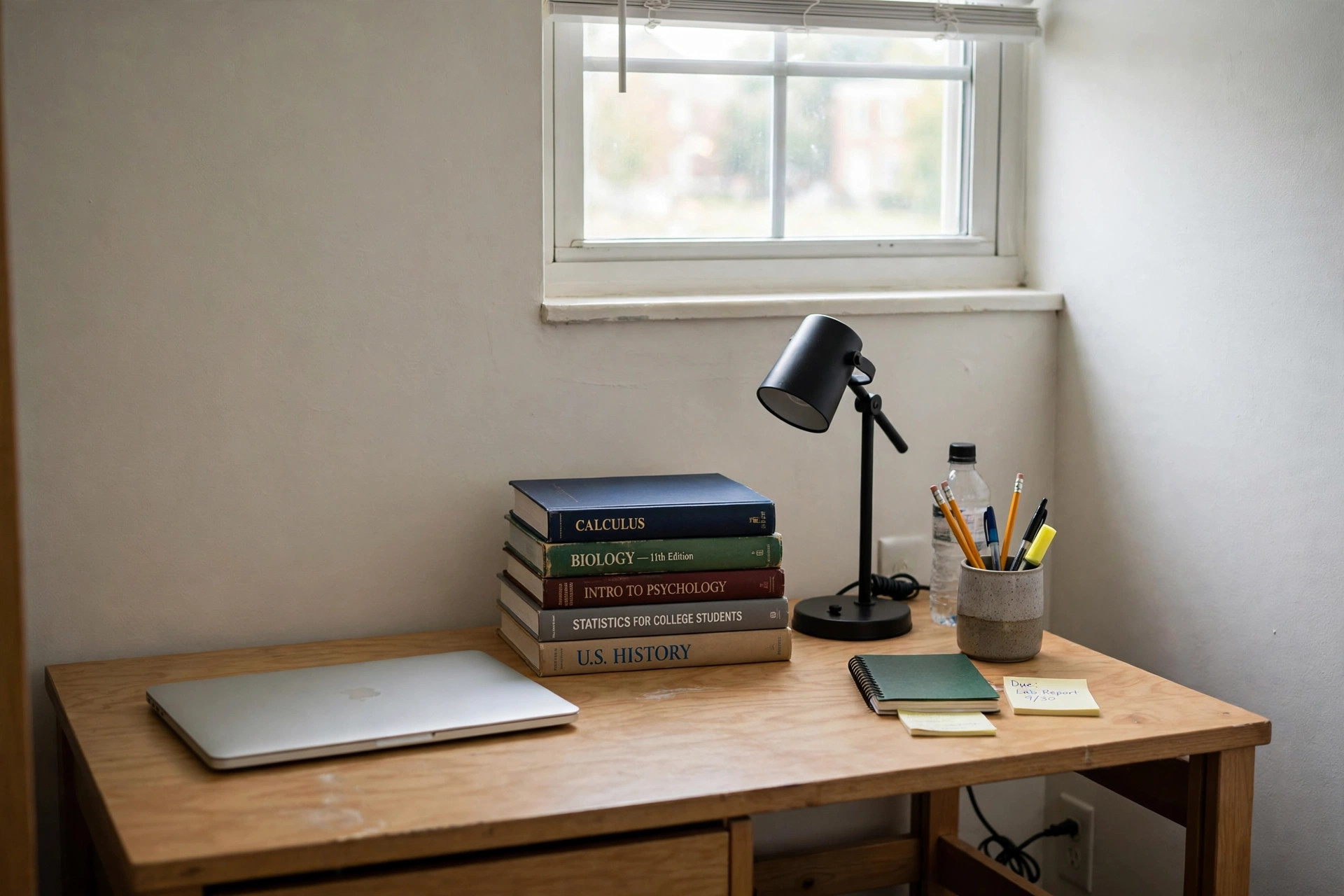

The best home office desk for college students dorm life is one that fits a small room, holds the tools of daily study, and costs a fair price. A dorm room is small. Two students often share it. Floor space is scarce. The desk must do real work every day without crowding the room. This guide looks at size, storage, types, cost, care, and safety. It will help any student or parent choose with care.
Why the Right Desk Matters in a Dorm
A dorm room is more than a bedroom. It is a study hall, a library, and an office in one small square. A student may spend five or six hours a day at the desk. A poor desk brings back pain, clutter, and lost hours. A good desk brings order and focus.
The best home office desk for college students dorm use does three things well. It gives enough surface for a laptop and an open book. It keeps books and papers close at hand. It leaves floor space free so the room still feels open. When a desk meets these three needs, study time grows easier and grades often improve.
Parents buy many dorm desks in late summer. Students buy them after the first week of class when the room feels cramped. Either way, the buyer should think before paying. A short look at the room and a tape measure can save money and trouble later.
What to Look for in a Dorm Desk: Best Home Office Desk for College Students Dorm
Shopping for the best home office desk for college students dorm rooms starts with facts about the room. Measure the wall where the desk will stand. Note the door swing and the bed position. Note where the wall outlets sit. These small facts shape the choice more than any sales talk.
Size and Footprint
Most dorm desks are 30 to 42 inches wide and 20 to 24 inches deep. A width of 36 inches suits most students. It holds a laptop, a notebook, and a small lamp. Depth of 22 inches leaves room for the screen without pushing it too close to the eyes.
Height matters too. A standard desk top stands about 29 to 30 inches from the floor. That height fits most dorm chairs. Shorter students may need a footrest under the desk to keep posture right. Taller students may look at desks with adjustable legs, which some makers now sell at fair prices.
Storage Built In
Storage is gold in a dorm. A desk with two or three drawers can hold pens, paper, chargers, and small tools. A desk with an upper shelf can hold books and keep the work surface clear. Students who read more about space-saving ideas may also like the floating shelf desk for tiny bedroom office, which lifts storage off the floor entirely.
Open cubbies suit students who want books in sight. Closed drawers suit students who want a tidy look. Either plan works if it matches the student’s habit. Buyers should check that drawers slide with ease and that shelves sit level.
Strength and Build
A dorm desk takes daily use for four years. Thin particle board with a weak frame can sag in the middle after a year of heavy books. A steel frame with a solid top lasts longer and costs only a little more.
Weight limits tell the story. A good small desk holds 100 to 200 pounds on its top. That is more than enough for a laptop, a printer, and a stack of books. Buyers should read the weight limit on the box or the maker page before they buy. The IKEA website lists clear load facts for its small desks, which helps a buyer compare models.
Height and Comfort
Comfort decides how long a student can study without pain. The screen should sit at eye level or just below. A low stand or a stack of books under a laptop can raise the screen to the right height. The keyboard should sit at elbow height with the wrists straight.
Some students stand while they study. A sit-stand desk that moves up and down serves both habits. Prices for small adjustable desks have fallen in recent years, so more dorms now hold one. The Uplift Desk site shows how height-adjustable frames work and what they cost.
Types of Desks That Fit a Dorm Room
Compact Writing Desks
The simple writing desk is the classic dorm choice. It has a flat top, four legs, and often one or two drawers. It is light and easy to move on moving day. It fits against any wall. Prices run low, which suits student budgets. The Wayfair site carries many small writing desks in this plain style, with clear size charts for each model.
Corner Desks
A corner desk turns dead space into work space. Many dorm rooms have an unused corner near the bed or the window. A corner desk fits there and frees the main wall. Readers who want ideas for tight rooms can look at the small corner desk with drawers for apartment office, which uses the same corner plan in larger rooms.
Corner desks give a wide L shape of surface. That shape suits students with two screens or with a laptop plus a wide spread of books. The trade is that a corner desk is harder to move, so the student should be sure of the layout first.
Fold-Down and Wall-Mounted Desks
When floor space is truly tight, a wall-mounted desk folds down for study and folds up when done. The floor below stays free for a chair or a storage bin. These desks need a strong wall and proper anchors, so students must check dorm rules before they drill. The wall mounted fold down desk for small spaces article gives more detail on this clever style.
Adjustable and Standing Desks
An adjustable desk moves from sitting height to standing height with a crank or a motor. Health writers often note that short standing breaks help the back and the mood during long study days. A crank model costs less than a motor model and needs no outlet. The Herman Miller site and the Steelcase site both discuss sound posture at a work desk, with advice that applies as well to a dorm room as to an office.
Cost and Price
The best home office desk for college students dorm budgets costs between 60 and 250 dollars in most American stores in 2026. A plain particle-board desk with no drawers may cost 60 to 90 dollars. A steel-frame desk with drawers and a shelf may cost 120 to 180 dollars. A small sit-stand desk may cost 200 to 300 dollars or more.
Parents should weigh price against years of use. A 70 dollar desk that breaks in two years costs more per year than a 140 dollar desk that lasts four. Secondhand desks from campus sales can be good buys, but the buyer should check for wobble and sag before paying. Many home stores list prices and reviews side by side, so the Home Depot site and the Lowes site are useful places to compare small desks and read buyer notes.
Delivery and assembly add cost too. Some desks ship flat and need an hour of assembly with a hex key. Students should check whether tools come in the box. A dorm room has little space for a half-built desk, so a simple design with few parts is a real plus.
Care and Upkeep
A dorm desk needs little care, but a few habits keep it sound for years. Wipe the top with a damp cloth once a week. Keep coffee and drinks in cups with lids, since spills stain wood tops fast. Tighten screws once a semester; dorm desks get bumped and moved, and loose joints cause wobble.
Keep heavy items near the legs, not at the center of a long span, to stop sag. Do not sit or stand on the desk, even to reach a high shelf. A desk built for 150 pounds of gear is not built to hold a person. When moving out in May, take the desk apart in the reverse order of assembly and keep the small parts in a labeled bag for next year.
Safety in a Small Shared Room
Safety rules matter more in a shared dorm than at home. The CPSC site offers plain advice on furniture safety that students should read. A few points stand out for dorm desks.
First, anchor tall desks or hutches to the wall if the dorm allows it. A top-heavy unit can tip when a student leans on it. Second, keep cords tidy. A power strip on the desk top with a cord running across the floor is a trip hazard for a roommate. Cable clips or a short cord channel fix this in minutes.
Third, check the desk for sharp edges and pinch points before daily use, most of all on fold-down models. Fourth, place the desk so the chair does not block the door or the window path. Fire codes in many dorms require a clear path to the door, and the resident adviser can confirm the rule. Good advice on room safety and layout also appears on The Spruce, which covers small-space living in plain terms.
Frequently Asked Questions
What size desk fits a standard dorm room?
A desk 36 inches wide and 22 inches deep fits most dorm rooms. It holds a laptop, a lamp, and books without crowding the floor. Measure the wall first and leave room for the chair to pull back.
Is a standing desk a good idea for a dorm?
It can be, if the budget allows. A small crank-adjustable desk lets a student stand for part of the day, which many find good for the back. Motor models cost more and need an outlet close by. Reviews on Wirecutter compare small standing desks in clear tests.
Should the desk have drawers?
Drawers help in a small room. Two drawers hold school supplies and keep the top clear for work. If the desk has no drawers, a small rolling cart under the top can serve the same role. More ideas for desk gear appear in PCMag roundups of home office setups.
How much should a student spend?
Most students do well spending 80 to 180 dollars. That range buys a stable frame, a solid top, and often drawers. Spending less can work for a single year, but a sturdier desk pays off over four years.
Can two students share one desk?
Sharing is hard in a small room. Two students need two work zones, or study hours will clash. A corner desk can give each student a side, but two small desks on two walls usually work better.
What is the best way to keep a dorm desk tidy?
Give every item a home. Use the drawers for supplies, a shelf for books, and hooks on the side for a bag or headphones. Clear the top each night before bed. A tidy desk at night means a fast start in the morning.
A Short Final Word
The best home office desk for college students dorm rooms is not the fanciest model in the store. It is the one that fits the room, holds the tools of study, and stands firm through four years of daily use. Measure the space, set a fair budget, and choose build quality over looks. With those three steps, any student can find a desk that makes dorm life and study time better.
References
Herman Miller. (n.d.). Office furniture and ergonomic seating. https://www.hermanmiller.com IKEA. (n.d.). Home furnishings. https://www.ikea.com Lowe’s. (n.d.). Home improvement products. https://www.lowes.com PCMag. (n.d.). Technology product reviews. https://www.pcmag.com Steelcase. (n.d.). Office furniture and workplace research. https://www.steelcase.com The Home Depot. (n.d.). Home improvement products. https://www.homedepot.com The Spruce. (n.d.). Home and garden advice. https://www.thespruce.com U.S. Consumer Product Safety Commission. (n.d.). Product safety information. https://www.cpsc.gov UPLIFT Desk. (n.d.). Standing desks and ergonomic office furniture. https://www.uplift-desk.com Wayfair. (n.d.). Furniture and home goods. https://www.wayfair.com Wirecutter. (n.d.). Product reviews from The New York Times. https://www.nytimes.com/wirecutter
Was this guide helpful?

About Emily Rodriguez
The My Garden US editorial team writes practical, in-depth home and garden guides for American homeowners — tested advice, no fluff.
You May Also Like
Home Office Desk Extension for Wider Workspace: A Plain Guide
May 17, 2026 0 views
Small Desk for Bedroom Corner With Shelves: A Complete Buying Guide
February 14, 2026 0 views
Best Standing Desk for Gaming and Work Combo: A Complete Guide
June 21, 2026 0 views