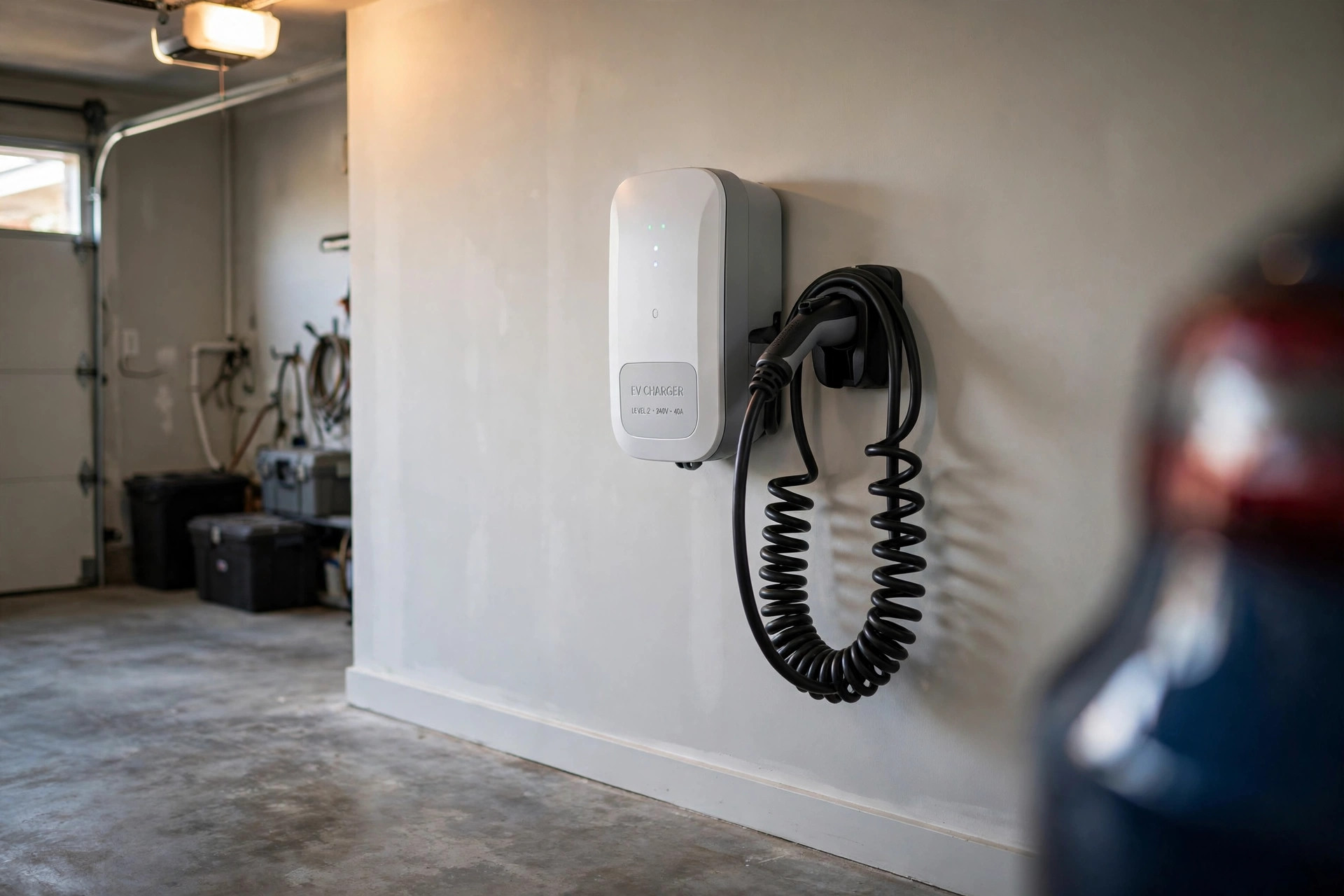

This tesla wall connector vs chargepoint comparison will help you pick the right charger for your home. More Americans now drive electric cars. A good home charger saves time. It also saves money. The two most popular names in home charging are Tesla and ChargePoint. Each one has strong points. Each one has weak points. This guide lays out the facts side by side. It covers power, fit, smart features, cost, install, care, and safety. By the end you will know which unit suits your home.
Why This Comparison Matters
Charging at home is the heart of electric car ownership. Most drivers charge at home most of the time. A Level 2 charger adds 25 to 60 miles of range per hour. A plain wall outlet adds only 3 to 4 miles per hour. The gap is large. A good Level 2 unit can refill a car overnight. That changes how you use the car.
The market has many brands. Two stand out. Tesla makes the Wall Connector. It is slim and simple. It is well known among Tesla drivers. ChargePoint makes the Home Flex. It works with nearly every electric car. It is one of the top selling home chargers in the country. Shoppers often narrow the choice to these two. That is why this comparison matters. A fair look at both saves you from a costly mistake. A charger is a long term purchase. Most units last ten years or more.
Head to Head: The Main Differences: Tesla Wall Connector vs Chargepoint Comparison
The two units look much alike at first. Both mount on a wall. Both connect to a 240 volt circuit. Both charge at Level 2 speed. The real differences sit under the cover. Power output, plug type, app features, and brand fit set them apart.
Charging Power
The Tesla Wall Connector can deliver up to 48 amps on a 60 amp circuit. At 48 amps it adds about 44 miles of range per hour to a Tesla. On lower circuits it can be set to 12 to 48 amps. This lets it fit older home panels.
The ChargePoint Home Flex can deliver up to 50 amps on a 70 amp circuit. At 50 amps it adds about 37 miles of range per hour to most cars. It can also be set from 16 to 50 amps. Both units let you dial the power down. This is useful when your home panel is full.
In plain terms, the Tesla unit has a slight edge in top speed for Tesla cars. The ChargePoint unit has a slight edge in raw amperage. For most drivers the difference is small. A full charge overnight is easy with either unit.
Connector and Compatibility
This is the biggest split in our tesla wall connector vs chargepoint comparison. The Tesla Wall Connector ships with the Tesla plug, now called NACS. It charges all Tesla cars with no adapter. A Universal Wall Connector version adds a built in J1772 adapter. That version can charge non Tesla cars too.
The ChargePoint Home Flex ships with a J1772 plug. J1772 is the standard plug for most non Tesla cars in America. It fits Ford, Chevrolet, Hyundai, Kia, Toyota, and many more. Newer models of the Home Flex also offer an NACS plug option. The U.S. Department of Energy tracks plug standards as they change. The market is moving toward NACS as the common plug.
The rule is simple. If you own a Tesla and plan to keep buying Teslas, the Wall Connector fits like a glove. If you own another brand, or if your next car may be another brand, the ChargePoint unit is the safer bet. Adapter free charging is always smoother.
Smart Features and Apps
Both units connect to WiFi. Both have phone apps. The Tesla app is clean and simple. It shows charging status. It lets you set a schedule. It can limit the charge level. It works with the same app that runs your Tesla car. Many owners like having one app for both.
The ChargePoint app is more detailed. It tracks energy use by day, week, and month. It estimates cost per session. It lets you set schedules and reminders. It can join the wider ChargePoint network. That means the same app can find public chargers on the road. For drivers who want data, ChargePoint gives more of it.
Both apps allow scheduled charging. This matters if your power company offers cheap night rates. A set schedule can cut your charging bill. Reviews from Consumer Reports and CNET praise both apps. ChargePoint tends to win on detail. Tesla tends to win on ease of use.
How to Choose the Right Unit
Start with your car. Write down the make and model. Check the plug it uses. Then think about your next car. Many families buy a second electric car within a few years. A charger that fits both cars is worth more.
Next, check your home panel. Look at the main breaker. Most homes have 100, 150, or 200 amp service. A charger at full power needs a 60 or 70 amp circuit. An electrician can tell you what your panel can take. This step decides how fast either unit can run in your home.
Think about your driving. If you drive 40 miles a day, even a low power setting will do. If you drive 150 miles a day, you want full power. Also think about the future. Batteries are getting bigger. A stronger circuit today may serve you well for years.
If you are still weighing the field, read our best ev charger for home reviews 2026 usa guide. It covers more brands side by side. That broader view may confirm your pick or point you to a third option.
Cost and Price
The Tesla Wall Connector sells for about 450 to 550 dollars. The Universal Wall Connector with the built in adapter costs a bit more. The ChargePoint Home Flex sells for about 550 to 700 dollars. Prices shift with sales and seasons. Check current listings before you buy. Tech sites like PCMag and The Verge track street prices.
The unit price is only part of the cost. Installation is the bigger bill. A simple install near the panel may cost 300 to 600 dollars. A long wire run or a panel upgrade may cost 1,000 to 2,500 dollars. Get two or three quotes from licensed electricians. Our home ev charger installation cost near me guide explains what drives the price.
Do not forget tax credits. Federal and state credits can cut the cost by 30 percent or more. Some power companies offer rebates too. See our ev charger tax credit 2026 for homeowners usa page for the latest rules. A rebate can make the higher priced unit the cheaper choice.
When you add it all up, the total cost of each option is often close. The cheaper unit with a costly install may lose to the pricier unit with a simple install. Run the full math before you decide.
Installation
Both units install in a similar way. An electrician mounts the box on a wall. The electrician runs wire from your panel. The unit is set to the right amperage. Then it is tested with your car. The job takes two to four hours in most homes.
Both units can be hardwired or plugged in. Hardwired means the wire runs straight into the unit. This is the safest setup. It also allows the highest power. Plug in means the unit uses a NEMA 14-50 outlet. This is handy if you may move the charger later. The ChargePoint Home Flex is popular in plug in form. The Tesla Wall Connector is most often hardwired.
Place the charger with care. Keep it close to where the car parks. Keep the cable off the floor. A wall holster keeps the plug clean and dry. Garages are the best spot. If you must mount outside, check the weather rating. Both units are rated for outdoor use. Still, a covered spot lasts longer.
Always use a licensed electrician. Home wiring for a 50 amp load is not a do it yourself job. A bad connection can start a fire. The U.S. Consumer Product Safety Commission warns against unlisted or poorly installed charging gear. Buy a unit with a UL or ETL listing. Have the permit pulled if your town requires one.
Care and Upkeep
Home chargers need little care. Wipe the case with a damp cloth now and then. Check the cable for cuts or cracks each season. Make sure the plug clicks firmly into the car. A loose fit can cause heat.
Keep the software up to date. Both units get updates over WiFi. Updates fix bugs and add features. Turn on auto update in the app if you can. If the charger goes offline, restart your router first. Most app problems are network problems.
Store the cable with care in winter. Cold makes cables stiff. Do not let the plug sit in snow or ice. A simple cable hook keeps things neat. Both brands sell holsters and docks. These small parts extend the life of the unit.
Expect a long life. Most home chargers run ten years or more with no repair. The ENERGY STAR program notes that efficient, well built units hold up well over time. If a unit fails, both companies offer warranties. Tesla offers a four year warranty on the Wall Connector. ChargePoint offers a three year warranty on the Home Flex. Keep your receipt.
Safety
Safety is the top concern with any high power device. Both units have strong safety records. Both have built in ground fault protection. Both shut down if they sense a fault. Both are tested by independent labs.
A few rules keep you safe. Never use a damaged cable. Never charge with an extension cord. Keep water away from the plug. Make sure children do not play with the cable. Mount the unit out of reach of small hands if you can.
Heat is the main warning sign. The plug may feel warm after a long charge. That is normal. It should never feel hot. If it feels hot, stop charging. Call your electrician. Also watch for a burning smell. Cut the breaker and call for help at once.
Outdoor units face more risk from storms. After a bad storm, check the unit before use. Look for water inside the case. Look for loose parts. When in doubt, have a pro inspect it. Safe charging is quiet charging. You should never smell, hear, or see anything odd.
Frequently Asked Questions
Which is faster, the Tesla Wall Connector or the ChargePoint Home Flex? For a Tesla car, the Wall Connector is a touch faster at full power. It delivers up to 48 amps. The Home Flex delivers up to 50 amps, but most cars draw less. In daily use, both refill a car overnight with ease. Speed is rarely the deciding factor.
Can the Tesla Wall Connector charge a non Tesla car? Yes, with the right version. The Universal Wall Connector has a built in adapter for J1772 cars. The standard Wall Connector needs a separate adapter. Check the model before you buy. The plug type is the key detail in this tesla wall connector vs chargepoint comparison.
Can the ChargePoint Home Flex charge a Tesla? Yes. Newer Home Flex models offer an NACS plug that fits Tesla cars. Older J1772 models work with a small adapter. Many Tesla owners use ChargePoint units with no trouble.
Do I need WiFi for the charger to work? No. Both units charge fine with no WiFi. You lose the smart features without it. Schedules, energy tracking, and updates need a connection. Place your router reach in mind when you pick the mounting spot.
Which app is better? It depends on what you want. The Tesla app is simpler. The ChargePoint app shows more data. Drivers who like charts and cost tracking prefer ChargePoint. Drivers who want set and forget prefer Tesla.
Will either unit work with solar panels? Yes. Both units draw power like any home appliance. If your solar system covers your home use, it covers charging too. Some owners set charge times to sunny hours. Talk to your solar installer about panel size and timing.
The Final Word
This tesla wall connector vs chargepoint comparison comes down to fit. Tesla owners who want the simplest setup should pick the Wall Connector. It matches the car. It matches the app. It costs less up front. Drivers with other brands, or mixed brand households, should pick the ChargePoint Home Flex. It fits nearly every car. Its app gives richer data. Its plug options cover the future.
Either way, get a licensed electrician. Claim every rebate and credit. Keep the cable clean and the software fresh. Do that, and your home charger will serve you well for a decade or more.
References
ChargePoint. (n.d.). Home EV charging stations. https://www.chargepoint.com CNET. (n.d.). Technology news and reviews. https://www.cnet.com Consumer Reports. (n.d.). Product reviews and ratings. https://www.consumerreports.org ENERGY STAR. (n.d.). Energy efficient products. https://www.energystar.gov PCMag. (n.d.). Technology product reviews. https://www.pcmag.com Tesla. (n.d.). Wall Connector home charging. https://www.tesla.com The Verge. (n.d.). Technology news and reviews. https://www.theverge.com U.S. Consumer Product Safety Commission. (n.d.). Product safety information. https://www.cpsc.gov U.S. Department of Energy. (n.d.). Energy efficiency and renewable energy. https://www.energy.gov
Was this guide helpful?

About David Wilson
The My Garden US editorial team writes practical, in-depth home and garden guides for American homeowners — tested advice, no fluff.
You May Also Like

Best Smart Bulbs for Recessed Lighting USA
April 16, 2026 0 views
Best Matter Compatible Smart Plug Reviews USA: A Plain Guide for Homeowners
June 11, 2026 0 views
The Best Quiet Garage Door Opener Reviews: A Guide for American Homes
July 31, 2026 0 views