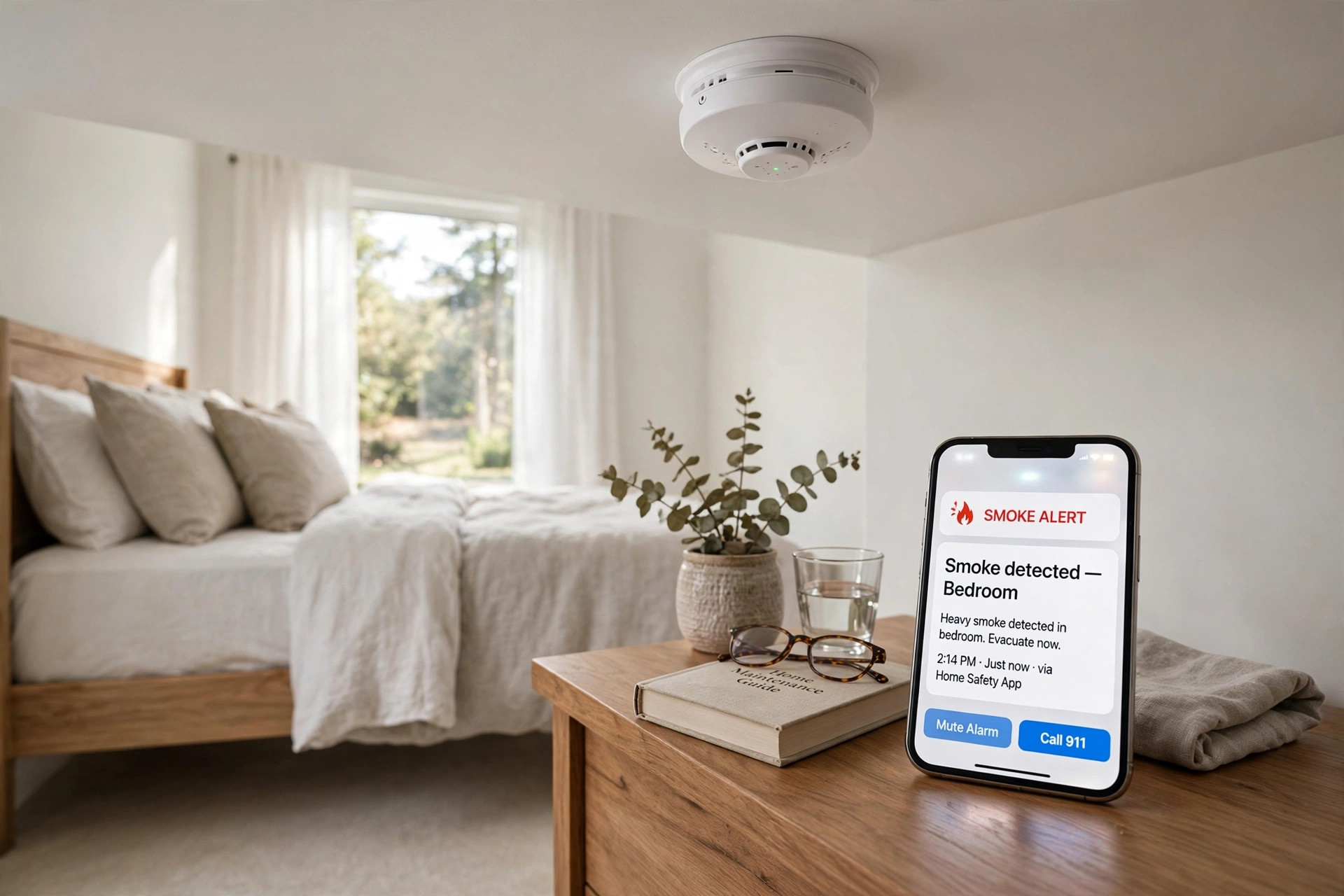

Fire does not wait for office hours. It starts at two in the morning in the laundry room. It starts at noon in the garage when no one is home. A plain alarm shouts to an empty house. A smart one shouts and also sends word to your phone. That is the whole point of the change. This guide to the best smart smoke detector reviews 2026 USA readers are searching for will help you choose one that fits your house and your budget.
Smart smoke detectors look much like ordinary detectors. The round shape is the same. The white color is the same. The difference is the radio inside. The detector joins your home Wi-Fi or a low-power mesh network. When it senses smoke or high heat, it sounds its horn and also pushes an alert to your phone. Some models tell you which room the alarm is in. Some let you silence a false alarm from the couch. Some can shut off a connected furnace or unlock a smart door for the fire crew.
Why It Matters
Most fire deaths in America happen in homes without working smoke alarms. The United States Consumer Product Safety Commission has said for years that working alarms cut the risk of dying in a home fire nearly in half. The problem is not that people buy no alarms. The problem is dead batteries and old sensors. A detector more than ten years old should be replaced. A detector with a weak battery should not be trusted. Smart detectors help with both problems. They run self checks and send you a message when the battery runs low or the sensor fails. You do not have to wait for the yearly chirp at three in the morning to learn something is wrong.
There is another gain. A standard alarm helps only the people inside the house. A smart alarm helps you even when the house is empty. The phone alert can reach you at work or on the road. You can call the fire department. You can call a neighbor. Minutes matter with fire, and a smart detector gives you those minutes back. Reviews of the best smart smoke detector options in 2026 point to this remote warning as the single most valued feature.
What to Look For When You Choose: Best Smart Smoke Detector Reviews 2026 Usa
A detector is a safety tool first and a gadget second. Keep that order in mind. Start with the sensor.
Sensor type
There are two main kinds. Ionization sensors answer fast to flaming fires with small particles. Photoelectric sensors answer fast to smoldering fires with larger particles. Most fire experts now favor photoelectric sensors for the home, or a dual-sensor model that has both. A smart detector with a photoelectric sensor and a heat sensor is a strong pick. The heat sensor adds a second proof of fire and cuts false alarms.
Power source
You will find three kinds. Battery-only models are easy to fit and need no wiring. Hardwired models draw power from the house wiring and keep a battery only for backup. Ten-year sealed battery models need no battery change for a decade. For a home that is already wired for alarms, hardwired smart detectors are the best fit. For renters and older houses, battery models win on ease.
Wireless link
Some detectors use Wi-Fi directly. Others use a hub or a low-power mesh such as Z-Wave or Thread. Wi-Fi models are simpler because they need no hub. Mesh models use less battery power and can be more steady. Think about what you already own. If you have a smart speaker or a home hub, check that the detector speaks to it before you buy.
App and alerts
The app is half the product. Read the app reviews, not just the hardware reviews. A good app shows battery level, sensor state, and alarm history. It lets you name each detector by room. It sends clear alerts that say “smoke in the kitchen,” not just “alarm.” Some apps let you hush a false alarm from the phone. That one feature has saved many a Sunday dinner.
Voice and smart home ties
Many smart detectors work with voice helpers. You can ask about battery state or silence a low-battery chirp with your voice. Some can turn on smart lights when the alarm sounds, so you can see the stairs. Some can unlock a smart lock so the fire crew can enter. These ties are nice to have. They are not a must.
Certifications
Every smoke detector sold in the United States must carry a UL listing. Look for UL 217 on the box. That mark means the detector passed the national safety test. Do not buy an alarm without it, no matter how clever the app is.
Types and Options on the Market
The market for the best smart smoke detector reviews in 2026 falls into three groups.
First are the full smart detectors. These are made from the ground up as smart devices. They have phone apps, remote hush, room names, and self tests. They cost the most. They are the best choice for a new home or a full refresh of old alarms.
Second are the add-on listeners. These small devices sit near your old detectors and listen for the alarm sound. When they hear it, they send an alert to your phone. They cost far less than a full smart detector. They are a fair stopgap, but they do not check battery level or sensor health. They only hear.
Third are the combination units. These sense both smoke and carbon monoxide in one body. Carbon monoxide is a silent killer with no smell and no color. Many homes need both guards. A combo unit saves a ceiling spot and one app slot. The best smart smoke detector reviews 2026 USA buyers write often praise combo units for whole-home cover with fewer devices.
If your house already has a monitored alarm system, ask the company first. Some firms, such as the large home security providers, sell their own smoke sensors that tie into the panel and the monitoring center. A monitored sensor can call for help even when your phone is off. That is a real plus for families who travel.
Cost and Price
Prices in 2026 run in clear bands. A simple smart listener costs about 35 to 50 dollars. A full smart smoke detector costs about 100 to 130 dollars. A smart smoke and carbon monoxide combo costs about 120 to 150 dollars. Hardwired models cost a bit more than battery models. A monitored sensor from a security company may cost less up front but add a monthly fee.
Plan the whole house, not one room. Building codes in most states call for an alarm inside every bedroom, outside each sleeping area, and on every level of the home. A small house may need five or six detectors. A large two-story home may need eight to ten. At 120 dollars each, a full smart set for a big house can run near one thousand dollars. That sounds like a lot until you set it next to the cost of one fire.
There is a cheaper path. Buy smart detectors for the high-risk spots — kitchen hall, laundry room, garage entry — and add listeners to the rest. You still get phone alerts everywhere for far less money. Many insurers now offer smart home insurance discounts for homes with connected safety devices, and an article on smart home insurance discounts explained usa can show how those savings work. Over a few years, the discount can cover much of the cost.
Care and Upkeep
A smart detector needs less care than an old one, but not none. Press the test button once a month. The app will log the test. Vacuum the vents twice a year with a soft brush tool. Dust in the sensing chamber is a common cause of false alarms.
Watch the app for low-battery notes. Sealed ten-year batteries still need the whole unit replaced at the end of ten years. Write the install date on the side of the detector with a marker. When the app says a sensor has failed its self check, believe it and replace the unit that week.
Keep the firmware current. Makers send updates that fix bugs and sharpen detection. Most apps update on their own, but check now and then. A detector with old firmware is still a detector, but you paid for the smart part, so keep it fresh.
Plan for power and network loss. A smart detector still sounds its horn when Wi-Fi is down. The horn needs no internet. But phone alerts need a path out. If your area loses power often, a hardwired unit with battery backup and a mesh link will serve you best.
Safety Rules That Never Change
Smart features do not change the old rules. Put alarms inside every bedroom and outside each sleeping area. Put one on every level, counting the basement. Keep kitchen detectors at least ten feet from the stove to cut cooking false alarms. In the kitchen hall, a photoelectric model gives fewer nuisance trips.
Never paint a detector. Paint blocks the vents. Never hang one in a steamy bathroom or right over a shower door. Steam reads as smoke to a cheap sensor. Replace every detector at the ten-year mark, smart or not. The sensing chamber ages and loses care no matter what the app says.
Make a fire plan and walk it twice a year. Know two ways out of every room. Pick a meeting spot on the lawn. Teach children that the alarm sound means get out and stay out. A smart alert on your phone is a tool. The plan is the rescue.
Renters should note that landlords in most states must provide working alarms, but you can add your own smart listener without changing the wiring. When you move, take the listener with you.
Frequently Asked Questions
Do smart smoke detectors work without Wi-Fi?
Yes. The horn sounds on its own with no network at all. What you lose without Wi-Fi is the phone alert, the remote hush, and the app checks. The core job — making noise in the room — never needs the internet.
How many smart detectors does a house need?
Follow the same count as standard alarms: one inside each bedroom, one outside each sleeping area, and one on every level. A small ranch home may need five. A two-story colonial may need eight or more. Start with the sleeping areas and work outward.
Are smart smoke detectors hard to install?
Battery models take ten minutes and a screwdriver. Hardwired models should match your old wiring, and many buyers fit them in half an hour. If the wiring looks odd or the breaker panel scares you, call an electrician. Safety work is no place for guesswork.
Can I silence a false alarm from my phone?
Many full smart detectors allow a remote hush from the app. The app will still show the event, and the hush lasts only a few minutes. If the smoke is real, the alarm will sound again. Never hush an alarm you have not checked.
Do I need a hub?
It depends on the model. Wi-Fi detectors need no hub. Detectors that use Z-Wave, Zigbee, or Thread need a hub or a smart speaker that speaks that language. Check the box for the words “hub required” before you buy.
How long do they last?
The sensing chamber lasts about ten years, the same as a standard alarm. Sealed-battery models run the full ten years with no battery change. Replaceable-battery models need fresh batteries when the app warns you, often every one to two years.
A Short Final Word
The best smart smoke detector is the one that is fitted, powered, and less than ten years old. Reviews can rank features, but they cannot fit the detector for you. Buy from the bands above, look for the UL 217 mark, test monthly, and replace on time. The phone alert is a fine modern comfort. The horn on the ceiling is still the thing that saves lives.
Homeowners building out a full connected house often compare other devices next. A look at philips hue vs lifx comparison 2026 usa helps with smart lighting that can flash when an alarm sounds, and smart soil moisture sensor reviews usa covers another corner of the connected home. For the detector itself, independent test labs and tech reviewers remain the best second opinion. The Consumer Reports buying guides score smoke detectors on real test data. The CNET smart home team reviews detectors and apps side by side each year. The PCMag editors test setup ease and alert speed. The Verge covers how detectors fit into wider smart home platforms. For monitored safety, the ADT and SimpliSafe sites explain how their smoke sensors tie into a watched system. The Ring alarm line shows how a listener device can join a doorbell and camera setup. The Google Store lists detectors that pair with its speakers and hubs. And the CPSC site posts recalls and plain safety rules every homeowner should read.
References
ADT. (n.d.). Home security and automation. https://www.adt.com CNET. (n.d.). Technology news and reviews. https://www.cnet.com Consumer Reports. (n.d.). Product reviews and ratings. https://www.consumerreports.org Google Store. (n.d.). Smart home devices. https://store.google.com PCMag. (n.d.). Technology product reviews. https://www.pcmag.com Ring. (n.d.). Smart home security devices. https://www.ring.com SimpliSafe. (n.d.). Home security systems. https://www.simplisafe.com The Verge. (n.d.). Technology news and reviews. https://www.theverge.com U.S. Consumer Product Safety Commission. (n.d.). Product safety information. https://www.cpsc.gov
Was this guide helpful?

About Michael Thompson
The My Garden US editorial team writes practical, in-depth home and garden guides for American homeowners — tested advice, no fluff.
You May Also Like

Philips Hue vs LIFX Comparison 2026 USA: Which Smart Bulb Is Right for Your Home
January 2, 2026 0 views
Best Outdoor Smart Plug Reviews 2026 USA: What to Buy
August 15, 2026 0 views
Smart Water Leak Detector Reviews 2026 USA: A Plain Guide to Stopping Leaks Early
January 28, 2026 0 views