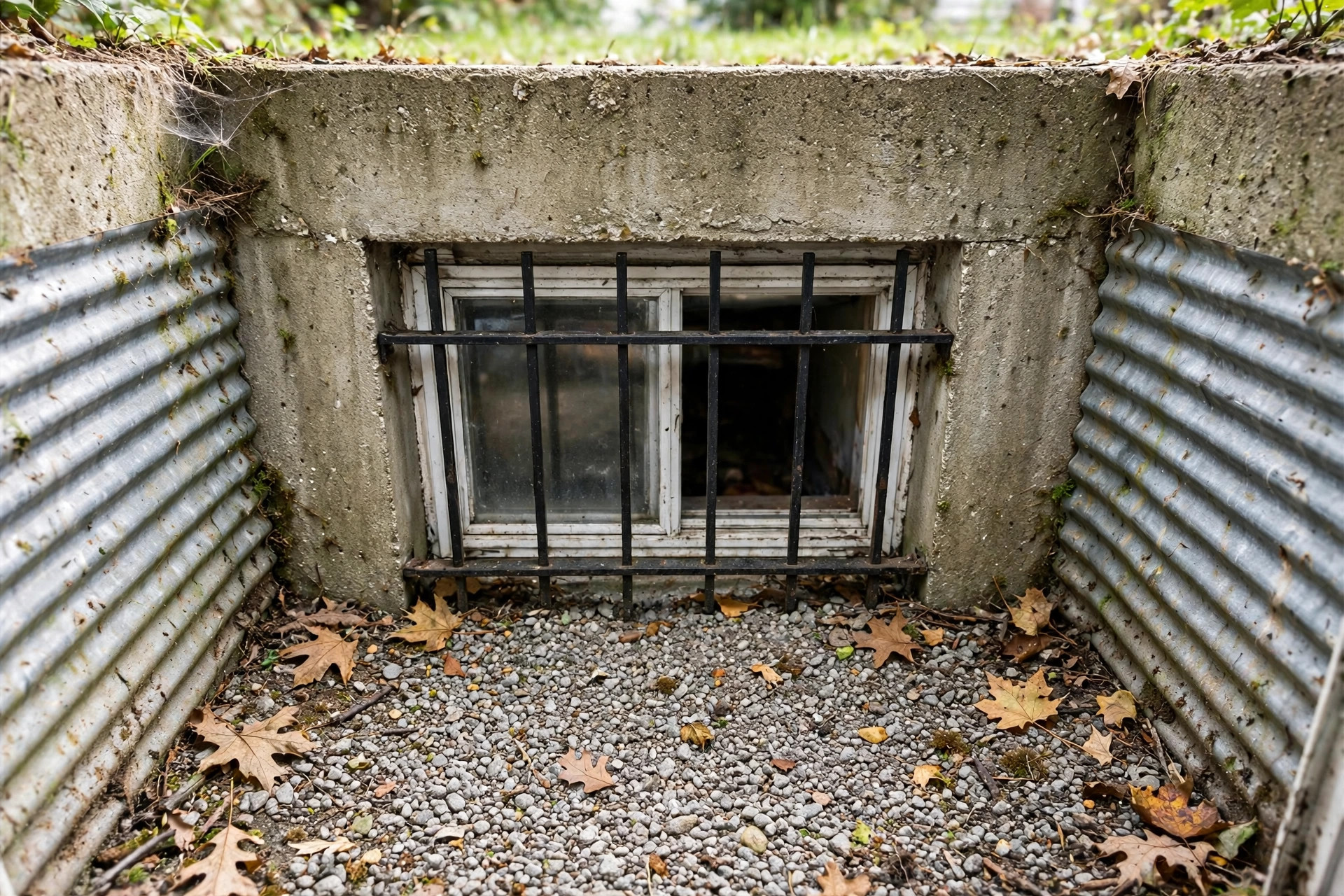

Most break-ins do not begin at the front door. They begin at the lowest point of the house, where the grass meets the foundation. The basement window is small, it is dark, and it is often out of sight from the street. This makes it a favorite target for burglars across the country. For that reason, honest basement window security bars reviews usa buyers can trust are worth reading before any money changes hands. This guide looks at the main types of bars, the materials that matter, the prices you can expect, and the safety rules that keep your family safe. Everything here is written in plain words. No sales talk. No jargon.
Why Basement Windows Deserve Attention
A basement window is different from a window on the first or second floor. It sits close to the ground. In many homes it opens into a window well that gives a person a dry, hidden place to stand and work. A burglar does not need a ladder. He needs a minute or two away from view. Old wooden frames and single-pane glass give way with one sharp blow or a quiet pry.
Police reports in city after city list the basement window as one of the most common points of entry. It is not because the window is large. It is because it is weak and unseen. A few steel bars change that math. They turn a quiet minute of work into a loud, slow, public struggle. Most intruders will not take that risk.
Security bars also protect the window from accident. A lawn mower throws a stone. A branch falls in a storm. A dog knocks loose gravel down the window well. Bars take the hit so the glass does not have to. For a homeowner, that small shield is worth as much as the theft protection.
For full coverage, many buyers pair bars with a monitored alarm. National alarm companies such as ADT and SimpliSafe sell door and window sensors that work well beside physical bars on a basement window.
What to Look for Before You Buy: Basement Window Security Bars Reviews Usa
Reviews of basement window security bars in the United States show that three things separate a good product from a poor one: the steel, the latch, and the fit. Get these right and the rest is detail.
Materials and Gauge
The bars themselves should be solid steel or heavy tubular steel. Tubular steel is a hollow pipe with thick walls. Solid steel is a full rod. Both work well when the steel is thick enough. Look for bars that are at least one half inch thick if they are solid, or sixteen gauge or thicker if they are tubular. Thinner bars can be cut with hand tools. Thicker bars ask for a power saw, which is loud and draws eyes.
The coating matters too. Basements are damp places. A bar with a good powder coat or galvanized finish will not rust through in three summers. Cheap paint flakes off in the first year, and rust follows. Read the reviews for words like rust, flaking, and coating. Buyers in wet states report on this with care.
Quick-Release Latches
This is the most important feature on any bar for a basement window. A quick-release latch lets you open the bars from the inside in seconds, with no key and no tool. If the bedroom in the basement is a sleeping room, the building code in most states calls it an emergency escape window. A fixed bar that never opens can trap a person during a fire. The latch must work even if the power is out. Look for a lever or push bar that a child can work. Test it in the store if you can.
When comparing models online, the buying guides from CNET and PCMag are useful reading on how home-security hardware is rated. Smart-home makers such as Ring and the device line at the Google Store also show how physical bars fit into a wider security plan, a theme The Verge covers in its home-tech reporting.
Fit and Sizing
A bar that almost fits is a bar that fails. Measure the window opening at three points: top, middle, and bottom. Old masonry openings are never perfectly square. Many American reviewers favor adjustable bars because they span a range of widths, often from about twenty inches to about forty inches. For masonry walls, surface mount brackets with lead shields or sleeve anchors hold better than simple screws. Wood-frame windows accept long lag screws into the header and sill. If your windows sit deep in a window well, check that the bars will not block the window from opening inward.
Types of Security Bars You Can Buy
The market offers four main styles. Each has its place.
Fixed bars are the simplest. They bolt into the frame or masonry and do not open. They cost the least and they are the strongest, but they belong only on windows that are not needed for escape. Many reviewers use them on small basement windows high in the wall.
Quick-release bars look like fixed bars but one side swings open on hinges when the inside latch is pulled. They cost more than fixed bars, usually by a third to a half. For basement bedrooms they are not a luxury. They are the right choice.
Adjustable bars telescope in and out to fit a range of openings. They suit renters and people with odd-sized windows. The moving joints are the weak point, so buy a brand that uses through-bolts at the joints rather than simple spring pins.
Decorative bars carry scrollwork or a powder coat in colors such as black, bronze, or white. They cost the most. Reviews note that they look fine on the outside of the house and often satisfy neighborhood rules that ban plain commercial bars. The steel behind the pattern is the same, so do not pay for looks alone. Check the gauge first.
Cost and Price
Prices across the United States follow a clear ladder. Small fixed bars for a single basement window often sell for twenty to forty dollars. A pair of mid-size fixed bars with good coating may run fifty to eighty dollars. Quick-release models with inside latches usually start near seventy dollars and climb past one hundred fifty for wide, heavy units. Decorative powder-coated sets can reach two hundred dollars or more per window.
Installation adds to the bill. A handyman will often charge seventy-five to one hundred fifty dollars per window to drill masonry and set anchors. Some buyers handle the job themselves with a hammer drill and a masonry bit, which cuts the cost to the price of the bars plus fasteners. Read reviews for notes on what comes in the box. Some sets ship with anchors and screws. Some ship with nothing, and the extra trip to the hardware store doubles the day.
Installation: Hire Out or Do It Yourself
Many reviewers in the United States call this a one-afternoon job for a handy homeowner. The steps are the same everywhere. Mark the mounting points through the bar brackets. Drill pilot holes with a masonry bit for concrete or a wood bit for the frame. Set the anchors. Bolt the brackets. Hang the bar. Test the latch from inside.
Three cautions appear in review after review. First, a standard drill will not do the job on concrete block. You need a hammer drill. Second, keep the brackets level. A twisted mount makes the latch bind, and a binding latch is a safety problem. Third, do not overtighten anchors in old brick. Old brick crumbles, and a cracked brick holds nothing.
If you are not sure about your walls, hire the work out. A local handyman or ironworker will know your block, your brick, and your local code. The extra cost is small next to a failed mount.
Care and Upkeep
Steel bars ask for little, but they are not free of care. Once a year, wash them with soap and water and look for chips in the coating. Touch up chips with a matching enamel before rust starts. Oil the hinge pins and the quick-release latch with a light machine oil so the mechanism moves freely. Test the inside latch every season. Have each member of the house practice opening it in the dark, because fires do not wait for daylight.
Window wells deserve the same care. Clear leaves and ice so water drains away from the frame. A plastic dome cover over the well keeps out rain and snow while still letting light through. Just be sure the cover can be lifted from inside if the window is an escape route.
Safety and Code Rules
Security on a basement window must never come at the cost of life safety. Most local building codes require that any basement bedroom have an emergency escape window of a set minimum size, often with a sill no higher than about forty-four inches above the floor. If bars cover that window, the code usually demands an approved release device that works from inside without a key or special knowledge.
Read your local rules before you drill. The window safety guidance published by the Consumer Product Safety Commission is a useful starting point for any homeowner thinking about bars and guards. Consumer Reports has published long histories of product testing that help buyers judge which models hold up over time. When in doubt, call your city or county building office. The call is free, and it settles the matter.
Related Ways to Protect a Basement Window
Bars are the strongest choice, but they are not the only choice. Some homeowners pair them with other layers of defense. Window alarm sensors give a loud warning when glass breaks or a sash opens, which suits renters who cannot drill into masonry. Window security film holds shattered glass in the frame and slows a quick smash-and-grab. Double-hung window locks are a cheap first step for windows that still need to open for air. A layered plan costs little more than bars alone and gives every intruder more than one problem to solve.
Frequently Asked Questions
Do security bars on basement windows really stop break-ins?
They stop most of them. A determined intruder with power tools and time can defeat almost anything, but that kind of intruder is rare in home burglary. Bars remove the quiet, easy entry that burglars count on. Reviews from buyers across the country report that most attempts move on to an easier house.
Will bars make my basement too dark?
Good bars block less light than most people expect. The bars and cross members are thin, and the eye reads past them the way it reads past a screen. If light matters to you, choose a pattern with wider spacing and a light-colored powder coat such as white or bronze. Keep the glass clean, which makes more difference than any bar pattern.
Can renters install basement window bars?
Only with the landlord’s written permission. Bars bolt into the frame or masonry and leave holes when removed. Adjustable pressure-fit models leave fewer marks, and that is why many renters ask about them in reviews. Still, get the agreement in writing before you buy.
How long do steel security bars last?
With a sound powder coat and yearly touch-ups, twenty years is a fair expectation in a dry climate. In damp basements near the coast or in the north, inspect the coating every spring and fall. Rust is the enemy, and caught early it costs a dab of paint. Caught late it costs the bar.
Should the bars go inside or outside the window?
Outside mounting is the common choice in the United States. It protects the glass itself from stones and weather, and it puts the strongest material between the intruder and the house. Inside mounting works too and can look neater, but the glass breaks first in that case. Either way, the quick-release latch must be reachable from inside.
Do I need a permit to install window bars?
In most cities and towns, no permit is needed for bars on existing windows. The exception is work that changes the window opening itself or work in a historic district. Even where no permit is required, the escape-window rules still apply to any basement sleeping room. Check with your local building office when you are unsure.
A Final Word
A basement window is the weakest point in many homes, but it is also one of the cheapest to fix. Thick steel, a good coating, a proper fit, and a quick-release latch cover almost everything that matters. Read several basement window security bars reviews usa homeowners have written before you buy, and pay special attention to notes about rust, latch quality, and what comes in the box. Measure twice, drill once, and test the latch every season. Then get on with life. The window is guarded, and you did the job right.
References
ADT. (n.d.). Home security and automation. https://www.adt.com CNET. (n.d.). Technology news and reviews. https://www.cnet.com Consumer Reports. (n.d.). Product reviews and ratings. https://www.consumerreports.org Google Store. (n.d.). Smart home devices. https://store.google.com PCMag. (n.d.). Technology product reviews. https://www.pcmag.com Ring. (n.d.). Smart home security devices. https://www.ring.com SimpliSafe. (n.d.). Home security systems. https://www.simplisafe.com The Verge. (n.d.). Technology news and reviews. https://www.theverge.com U.S. Consumer Product Safety Commission. (n.d.). Product safety information. https://www.cpsc.gov
Was this guide helpful?

About Robert Taylor
The My Garden US editorial team writes practical, in-depth home and garden guides for American homeowners — tested advice, no fluff.
You May Also Like
Fireproof Safe for Home Reviews 2026 USA: What Buyers Should Know
September 16, 2026 0 views
Motion Sensor Flood Light Reviews 2026 USA: What Really Works
May 15, 2026 0 views
The Best Smart Smoke Detector Reviews 2026 USA: A Plain Guide for Every Home
June 17, 2026 0 views