Introduction
A heated pet mat for outdoor shelter warmth can make a cold night far safer for a dog or cat. When the temperature drops, an ordinary blanket or straw bed loses its power fast. A heated mat holds a steady, gentle warmth that an animal can feel through its fur and paws.
Many pet owners keep their animals in dog houses, sheds, porches, or barn shelters during the winter. These spots are dry and out of the wind, but they are still cold. A heated mat adds the one thing a shelter cannot give on its own: steady heat from below.
This guide explains what a heated pet mat is, why it matters, and how to pick the right one. It covers the main types, typical costs, safe use, and simple care. It also answers common questions from pet owners. If you share your yard with a barn cat, a working dog, or a feral cat colony, this article will help you keep them warm.
Why Warmth Matters in an Outdoor Shelter: Heated Pet Mat for Outdoor Shelter Warmth
Cold is a real threat to pets. Dogs and cats can suffer from hypothermia just as people can. Shivering, stiff muscles, and slow movement are early signs. In bad cases, an animal may become confused, weak, or unable to stand.
Some animals handle cold better than others. Thick-coated northern breeds cope with low temperatures more easily than short-haired breeds. Small dogs, puppies, older animals, and sick animals are at higher risk. Cats that live outdoors in winter face a hard season, and feral cat colonies often lose members to the cold.
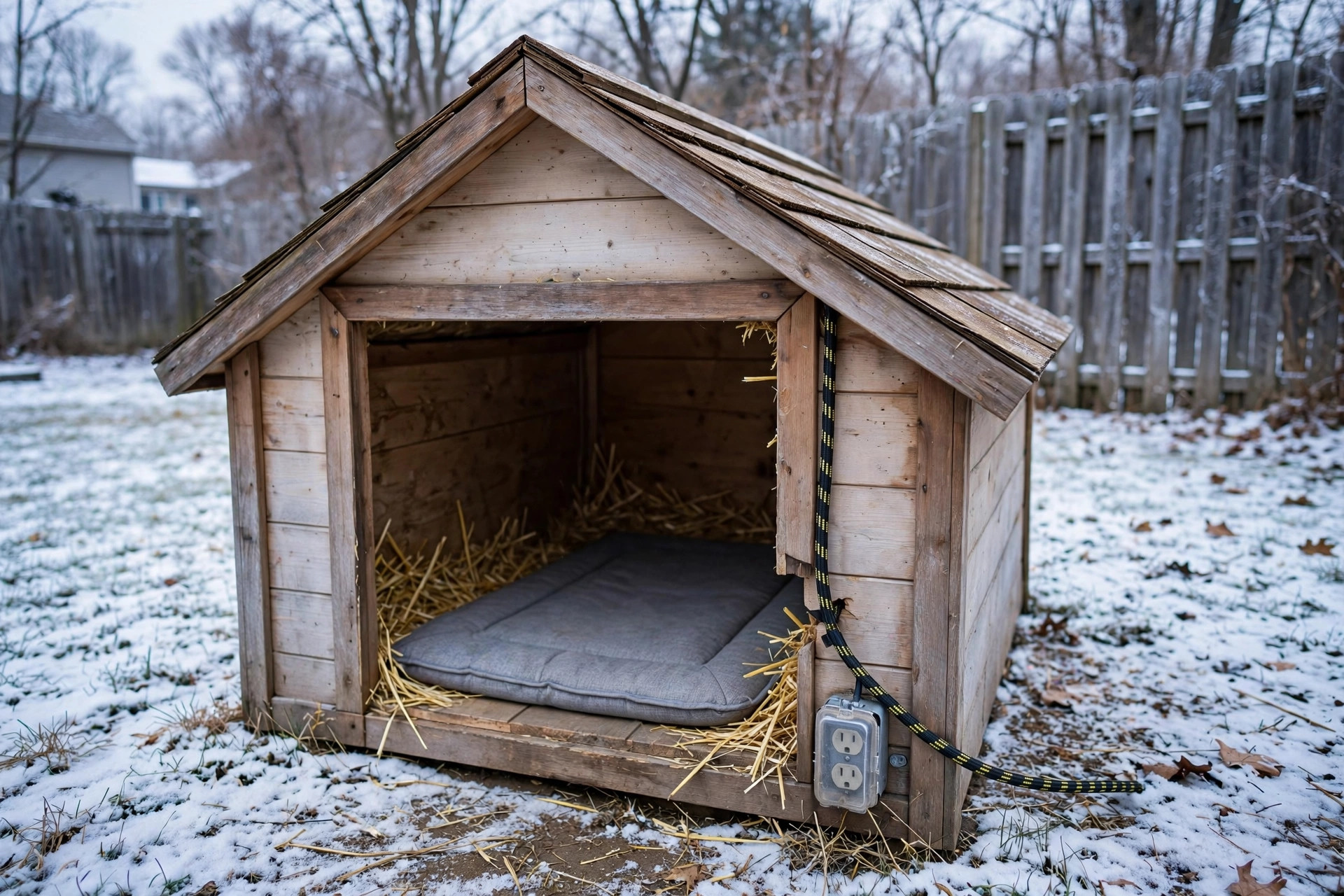
A shelter alone is not enough. A wooden dog house blocks the wind, but its floor stays near the outside temperature. Straw bedding helps, but straw flattens and holds moisture over time. A heated mat warms the floor itself, so the animal rests on a warm surface instead of a cold one. That steady contact heat matters most during the long hours of the night, when no one is awake to check on the animal.
Veterinarians who treat outdoor and working animals often point out that prevention costs less than treatment. A heated mat costs far less than one emergency vet visit for frostbite or hypothermia.
How to Choose the Right Heated Mat
Picking a heated pet mat for outdoor shelter warmth takes a little thought. The mat must fit the shelter, match the animal, and stay safe in damp conditions.
Size and Fit
Measure the floor of the shelter first. The mat should cover the spot where the animal sleeps but leave room around the edges. A mat that is too large bunches up and wastes power. A mat that is too small leaves the animal half on cold floor.
For a single cat, a mat about the size of a small pillow is usually enough. For a medium dog, look for one the size of a bath mat. Large breeds may need a mat close to two feet by three feet. Check the size before you buy, because many mats cannot be folded.
Heat Type: Electric or Self-Warming
Electric mats plug into a standard outlet and use a small heating element. They give the most even warmth and work in deep cold. Many have a thermostat that holds the surface a few degrees above the air temperature.
Self-warming mats have no cord and no power. They use a reflective layer that bounces the animal’s own body heat back to it. They are simple and cheap, but they give less heat in very cold weather.
Power and Cord Safety
If you choose an electric mat, look at the cord. The best mats for outdoor use have a steel-wrapped or chew-resistant cord. A dog that chews a power cord can be hurt badly, so cord protection is not optional.
Check the wattage too. Most pet mats use between 20 and 60 watts, about the same as a small light bulb. That keeps the electric bill low. A mat with a built-in thermostat uses even less, because it cycles off when it is warm enough.
Weather Resistance
The mat should be made for outdoor or garage use. Look for a waterproof cover and a sealed seam. A shelter can get damp from rain, snow melt, or the animal’s wet paws. A mat that is only rated for indoor use can fail in these conditions. Many pet owners compare options through pet supply stores with wide selections and through general outdoor supply retailers.
Types of Heated Pet Mats
Several kinds of heated pet mats are sold today. Each has strengths and limits.
Electric pad with thermostat. This is the most common type. The thermostat keeps the mat a set amount above room temperature, often around 100 to 102 degrees Fahrenheit on the surface. The animal can move off the mat if it feels too warm. These mats work well inside a heated dog house for winter cold climates and in insulated sheds.
Microwaveable heat pad. This pad holds heat for several hours after a few minutes in the microwave. It has no cord, which makes it very safe. The downside is that the heat fades by morning, so it suits mild cold or short nights better than deep winter.
Self-warming reflective mat. This mat needs no power at all. A metalized layer inside reflects body heat upward. It adds real comfort when paired with good bedding, and it costs very little. In bitter cold, though, it cannot replace an electric mat.
Heated bed with raised edges. Some products combine a heated pad with a soft bed that has low walls. The walls cut drafts around the animal while the pad warms from below. These suit porches and covered patios.
Large kennel floor mat. For big dogs or multiple animals, a full-floor kennel mat spreads warmth across the whole shelter floor. These are common in hunting dog kennels and farm settings, where rural and farm pet supplies are easy to find.
Owners of older or stiff animals often pair a heated mat with a softer rest surface. An orthopedic-style support under the warm layer gives comfort and heat in one setup. For senior dogs, a heated pet bed for arthritic older dogs adds cushioning as well as warmth.
Cost and Price
A heated pet mat for outdoor shelter warmth costs between about 25 and 120 dollars, depending on size and features.
Self-warming mats are the cheapest. They often sell for 15 to 35 dollars. Microwaveable pads sit in the same low range, usually 20 to 40 dollars.
Electric mats with thermostats cost more. Small electric mats for cats start near 30 dollars. Medium electric mats for dogs run 40 to 80 dollars. Large kennel-size electric mats can reach 100 to 120 dollars.
Running costs are small. A 40-watt mat that runs all night uses less than half a kilowatt-hour per day. At typical United States electric rates, that is a few dollars per month. A thermostat cuts the cost further by switching the mat off when the shelter is warm enough.
Think of the mat as insurance. One vet visit for cold injury can cost hundreds of dollars. A mat that prevents that visit pays for itself many times over.
Care and Upkeep
A heated mat needs little care, but regular checks keep it safe and working.
Wipe the cover clean when it gets dirty. Most mats have a removable cover that can be hand-washed. Check the seams each month for cracks or peeling. A damaged cover should be replaced, because moisture can reach the heating element inside.
Inspect the cord often. Look for chew marks, fraying, or loose plugs. If the cord is damaged, stop using the mat at once. Do not try to repair an electric heating cord yourself.
Check the warmth with your hand. The mat should feel gently warm, never hot. If it feels hot to your touch, unplug it and replace it. A working thermostat should never let the surface get hot enough to burn.
In spring, clean the mat and store it in a dry place. Coil the cord loosely instead of wrapping it tight, which can strain the wires inside. Many pet owners store winter gear together with other seasonal items, and pet care guides recommend checking all heated products before each winter season.
Safety Rules
Safety comes first with any heated product. Follow these rules every season.
– Use only mats made and rated for pet use. Human heating pads can get too hot for animals. – Place the mat inside a dry shelter, off bare ground if possible. – Keep the cord where the animal cannot chew it. Run it through a cord protector or along the shelter wall. – Never cover the mat with thick blankets. Trapped heat can build up to unsafe levels. – Give the animal a choice. Place the mat so the pet can move off it onto an unheated spot. – Do not use a heated mat for puppies under six weeks old or for animals that cannot move away on their own. – Unplug the mat during storms if your area loses power often, and check it after any outage.
Look for products tested by a recognized safety lab. The Consumer Product Safety Commission publishes general guidance on heated consumer products, and its records are worth a look before you buy.
For feral and community cats, heated mats work best inside a proper shelter. A heated cat house for outdoor feral cats pairs the mat with an insulated box, which holds the warmth around the animal instead of letting it escape.
Frequently Asked Questions
Are heated pet mats safe to leave on all night? Yes, mats made for pets are built to run all night. A thermostat-controlled mat is the safest choice. It holds a steady low temperature and cycles off when it is not needed. Check the cord and cover each week.
Can a heated mat be used in the rain? Only if the mat is rated for outdoor or damp use. The mat should sit inside a shelter that keeps direct rain off it. A waterproof cover helps, but no electric mat should sit in standing water.
Will the mat raise my electric bill a lot? No. Most mats use 20 to 60 watts. Running one all winter typically adds only a few dollars per month to the bill. That is less than the cost of one bag of pet food.
Do cats like heated mats? Most cats love them. Cats seek warm spots by nature. Feral cats may take a few days to trust a new mat. Put it where they already sleep, and they will usually claim it fast.
Can I use straw or blankets with a heated mat? A thin layer of straw over part of the mat is fine and adds comfort. Do not pile thick blankets over the whole mat, because trapped heat can build up. Always leave part of the mat exposed so heat can escape.
What temperature should the mat reach? The surface should feel warm to your hand, roughly 100 to 102 degrees Fahrenheit. It should never feel hot. If it does, unplug it and replace it at once.
Final Word
A heated pet mat for outdoor shelter warmth is a small purchase with a large payoff. It turns a cold shelter into a safe resting place through the hardest months of the year. Choose the right size, pick a safe power type, check it often, and your animals will rest warm all winter long. Good shelter care is steady work, but it is simple work, and a heated mat makes it simpler.
References
American Kennel Club. (n.d.). Dog care and training resources. https://www.akc.org ASPCA. (n.d.). Pet care and animal welfare resources. https://www.aspca.org Chewy. (n.d.). Pet supplies. https://www.chewy.com PetMD. (n.d.). Pet health information. https://www.petmd.com PetSmart. (n.d.). Pet supplies and services. https://www.petsmart.com The Home Depot. (n.d.). Home improvement products. https://www.homedepot.com The Spruce Pets. (n.d.). Pet care guides and product reviews. https://www.thesprucepets.com Tractor Supply Co. (n.d.). Farm and ranch supplies. https://www.tractorsupply.com U.S. Consumer Product Safety Commission. (n.d.). Product safety information. https://www.cpsc.gov
Was this guide helpful?

About Michael Thompson
The My Garden US editorial team writes practical, in-depth home and garden guides for American homeowners — tested advice, no fluff.