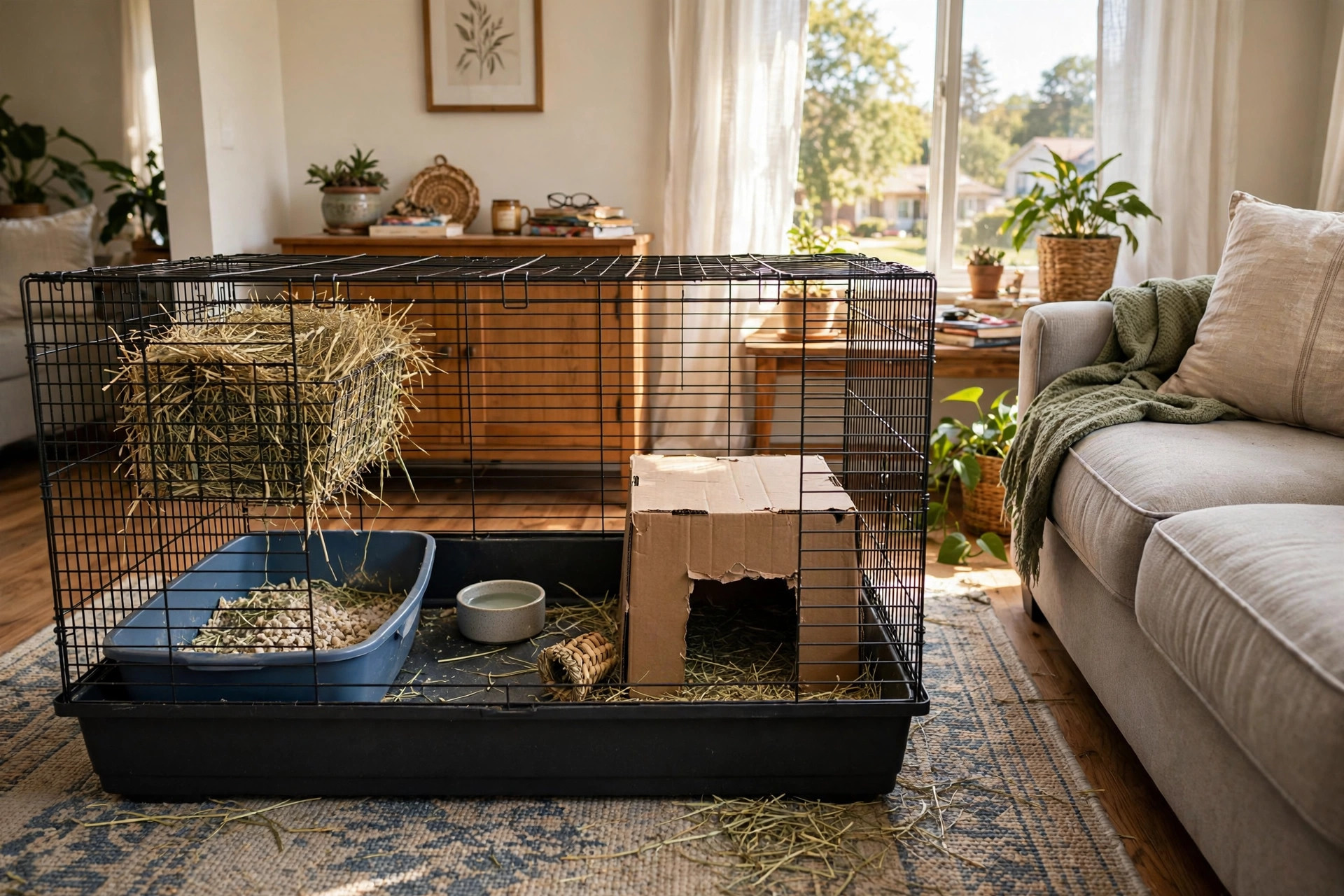

A rabbit that lives in your home needs a place of its own. A quiet corner where it can rest, eat, and feel safe. That is what an indoor rabbit cage large for house bunnies gives you. It is the home base your bunny returns to, even if you let it out for daily exercise. Many new owners start with a small pet-store cage and soon learn it is not enough. House rabbits need space. This guide will help you choose, set up, and care for a large indoor cage that keeps your bunny healthy and happy.
Why a Large Cage Matters for House Bunnies
Rabbits are active animals. In the wild they hop, dig, and run for hours each day. A house bunny keeps much of that same energy. When the cage is too small, the rabbit cannot move in a natural way. It cannot take three full hops in a row. It cannot stand tall on its back legs. Over time, a cramped cage leads to weak bones, sore feet, and a dull spirit.
A large indoor cage solves this. Your bunny can stretch out fully when it sleeps. It can turn around without bumping the walls. It can keep its food, water, and litter area in separate zones, which is how rabbits like things. Studies of rabbit welfare have long held that floor space is the single most important part of a cage. A large cage also makes daily care easier for you, since cleaning takes less effort when waste is not packed into a small tray.
House bunnies that live inside bond closely with their people. They learn your voice. They come when called. A roomy cage in a living area lets the rabbit watch the household go by. It stays part of the family. That social contact matters as much as the space itself.
What to Look for When Choosing a Cage: Indoor Rabbit Cage Large for House Bunnies
Size and Floor Space
Look for the biggest cage your room and budget will allow. A good rule is to buy a cage at least four times the size of your grown rabbit. For a medium rabbit, that means a floor of at least four feet by two feet. Larger breeds need more. Many owners now skip the traditional pet-store cage and build a pen with wire panels instead, since panels give far more space for the same price.
Height matters too. The rabbit must be able to stand upright on its hind legs with its ears up and not touch the top. Most large indoor cages give eighteen to twenty-four inches of height, which suits most breeds.
Floor Type
Solid floors beat wire floors every time. Wire floors hurt a rabbit’s feet and can cause a painful condition called sore hocks. Look for a cage with a solid plastic or metal tray base. If you fall in love with a cage that has a wire floor, cover it with a cut-to-fit board or a thick mat so your bunny always has a flat place to stand.
Doors and Access
You will clean this cage every day. Make sure it has doors big enough for your hands, your litter scoop, and your rabbit to pass through. A large front door is a must. Some cages also have top-opening doors, which help when you lift food dishes in and out. If you plan to attach a wire exercise pen, check that the cage door can stay open and lock in place.
Bar Spacing and Locks
Bar spacing should be narrow enough that the rabbit cannot squeeze its head through. For small breeds, look for gaps under one inch. Also check the latches. Rabbits are clever and can learn to nudge simple locks open. Sliding bolt latches or spring clips hold best.
Materials
Powder-coated steel wire resists rust and chewing. Plastic bases clean fast and hold no odor. Avoid cages with sharp edges or loose wires that a bunny could snag a nail on. If you choose a wooden cage, make sure the wood is untreated and pet-safe, since rabbits chew everything.
Types of Large Indoor Rabbit Cages
Wire Cages with Tray Bases
These are the classic choice. A wire upper section sits on a deep plastic tray. They give good airflow and let you see your bunny from every side. They are light, easy to move, and simple to clean. Prices run from fifty to two hundred dollars, depending on size. You can find a wide range of large rabbit cages for house pets that fit different rooms and budgets.
Modular Panel Pens
Wire storage panels, held together with clips, make a flexible pen. You can shape them into a square, a rectangle, or an L around furniture. They cost little and expand as you wish. Many owners use them as an exercise yard attached to a smaller cage. They are not escape-proof for every rabbit, so check that the panels are tall enough.
Wooden Indoor Hutches
Wooden hutches look like small furniture pieces. They fit well in living rooms and dens. They give the rabbit a dark, den-like spot to hide in, which bunnies love. They cost more, often two to four hundred dollars, and they need regular checks since rabbits chew wood. Line chew-prone edges with metal guards if needed. Wooden designs pair well with cozy small pet hideouts and beds placed inside for extra comfort.
Multi-Level Cages
Some large cages add a second floor with a ramp. The extra level gives more living space without taking more floor room. Young, fit rabbits enjoy ramps. Older or larger rabbits may skip the upper floor. Make sure ramps have a non-slip surface and gentle slope.
Setting Up the Cage for House Bunnies
Place the cage in a quiet room with natural light but no direct sun all day. Keep it away from radiators, drafty windows, and loud speakers. Rabbits handle cool rooms better than hot ones. A room between sixty and seventy degrees suits most house bunnies.
Set the cage on the floor, not on a table. Rabbits feel safest at ground level. Put a washable rug or mat under the cage to protect your flooring and to dampen noise when the rabbit thumps at night.
Inside the cage, set up three zones. Put a litter box in one corner with paper-based litter. Rabbits train fast and most will use a box within days. Put hay in a rack above the litter box, since rabbits like to eat and toilet in the same spot. Place the water bottle or bowl at the opposite end. A heavy ceramic bowl spills less than a light plastic one. Add a hideaway box where the bunny can retreat. A simple cardboard box with a door hole works fine and costs nothing. Scatter a few safe toys, such as a willow ball or a cardboard tube stuffed with hay. For fresh ideas on keeping indoor rabbits entertained, pet-care guides list many safe toy options.
Clean the litter box daily. Change the bedding twice a week. Wipe the tray with a mild vinegar solution each week to stop odor. Rabbits are clean animals, and a fresh cage keeps them calm.
Cost and Price Ranges
A basic large wire cage costs between fifty and one hundred dollars. Mid-range cages with better doors, deeper trays, and stronger wire run one hundred to two hundred dollars. Wooden indoor hutches and large multi-level units can cost two hundred to four hundred dollars or more.
Add to that the cost of setup. A litter box, hay rack, water bowl, hideaway, and first bags of hay and litter may add thirty to sixty dollars. Monthly running costs for hay, litter, and fresh greens run about twenty to forty dollars per rabbit. Buying from trusted pet supply stores often saves money when you stock up on bedding and hay.
Care and Upkeep
Daily care takes about ten minutes. Refill hay and water. Scoop the litter box. Remove any soiled bedding. Watch your bunny for changes in appetite or droppings, since rabbits hide illness well.
Weekly, wash the food and water dishes in hot soapy water. Change all bedding. Check the cage wires for rust or loose ends. Monthly, give the whole cage a deep clean. Move the rabbit to a safe pen, take the cage apart if you can, and wash every surface. Dry it fully before you put the rabbit back.
Rabbits shed in heavy cycles, often in spring and fall. Brush your bunny during sheds to keep loose fur out of the cage and out of its stomach. A clean cage means a healthy gut.
If your house bunny also spends time outside in good weather, you may want to read about outdoor rabbit hutches for cold weather climates and outdoor rabbit runs for grass grazing safety. If you also keep guinea pigs, an outdoor guinea pig hutch for summer garden follows many of the same rules.
Safety for House Rabbits
Keep all electrical cords out of reach. Rabbits chew cords, and a chewed cord can kill. Run cords behind furniture or cover them with hard plastic guards. Keep houseplants out of the rabbit’s area. Many common plants, such as lilies and philodendrons, are toxic to rabbits. The ASPCA plant and pet safety guides list which plants are safe and which are not.
Watch the rabbit around other pets. Dogs and cats may frighten a bunny even through cage bars. If you have a dog, teach it to stay calm near the cage. Never leave a rabbit alone with a dog or cat, even a gentle one. For general pet health and safety guidance, your vet is also a strong resource.
Do not use cedar or pine shavings as bedding. Their fumes harm rabbit lungs. Paper-based litter and plain aspen shavings are safe. Keep cleaning sprays out of the cage. Rinse any surface you spray.
Summer heat is a real danger. Rabbits overheat fast. If your home has no air conditioning, place a frozen water bottle in the cage on hot days so the bunny can lie against it. Fresh, cool water should always be on hand. You can browse seasonal pet care supplies for cooling mats and shade covers.
Frequently Asked Questions
How large should an indoor rabbit cage be?
Buy the largest cage you can fit in your home. A common guide is four times the size of your adult rabbit, with room for three full hops. For most medium rabbits, a floor of four feet by two feet is the minimum worth buying.
Can house bunnies live in a cage all day?
They should not. A cage is a home base, not a full-time prison. Let your bunny out for supervised exercise for at least three to four hours a day in a rabbit-proofed room or pen. The more free time, the happier the rabbit.
Is a wire floor okay for rabbits?
No. Wire floors cause sore hocks and foot injuries. Choose a cage with a solid floor. If your cage has wire, cover it with boards or mats so the rabbit never has to stand on wire.
How often should I clean a large rabbit cage?
Scoop the litter box every day. Change bedding twice a week. Do a full wash of the tray and bars once a week or every two weeks. Clean cages cut odor and keep your bunny healthy.
Do indoor rabbits need a hideaway inside the cage?
Yes. Rabbits are prey animals and feel calm when they can hide. A simple cardboard box or wooden hide gives them a safe spot. Replace cardboard boxes when they get chewed or soiled.
What is the best bedding for an indoor rabbit cage?
Paper-based litter is the top choice. It absorbs well and is safe if chewed. Plain aspen shavings also work. Avoid cedar and pine shavings, and avoid clumping cat litter, which can block a rabbit’s gut.
A Final Word
A large indoor rabbit cage for house bunnies is one of the best purchases a rabbit owner can make. It gives your pet room to move, a place to feel safe, and a base it knows as home. Choose a solid-floor cage with room to spare, set it up with hay, water, a litter box, and a hideaway, and keep it clean. Your bunny will repay you with years of company. Before you buy, compare options and read independent pet product reviews so you pick a cage that lasts.
References
ASPCA. (n.d.). Pet care and animal welfare resources. https://www.aspca.org Chewy. (n.d.). Pet supplies. https://www.chewy.com Petco. (n.d.). Pet supplies and services. https://www.petco.com PetMD. (n.d.). Pet health information. https://www.petmd.com PetSmart. (n.d.). Pet supplies and services. https://www.petsmart.com The Spruce Pets. (n.d.). Pet care guides and product reviews. https://www.thesprucepets.com Walmart. (n.d.). Everyday low prices. https://www.walmart.com Wayfair. (n.d.). Furniture and home goods. https://www.wayfair.com
Was this guide helpful?

About Lisa Anderson
The My Garden US editorial team writes practical, in-depth home and garden guides for American homeowners — tested advice, no fluff.
You May Also Like

The Best Dog Life Vest for Kayaking and Boating: A Complete Guide
March 27, 2026 0 views
Best Litter Genie Refill for Odor Control USA: A Plain Guide for Cat Owners
September 4, 2026 0 views
Best Pet Hair Vacuum for Hardwood Floors: A Simple Buying Guide
June 15, 2026 0 views