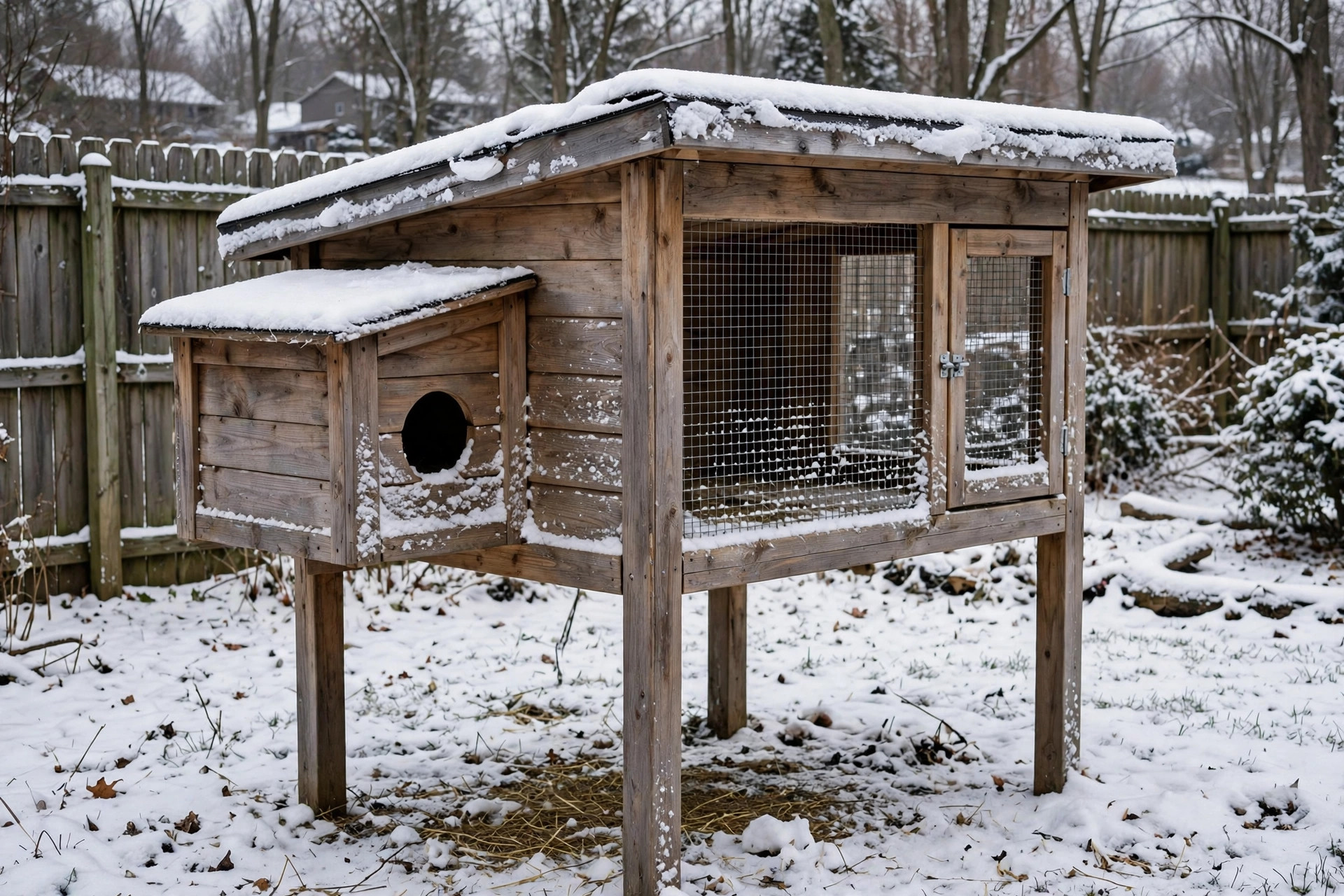

Rabbits are hardy animals. They grow thick coats and handle cool air better than most people think. But a plain summer hutch will not protect them in a hard winter. An outdoor rabbit hutch for cold weather climates is built with a different goal. It must block wind, keep out rain and snow, hold body heat, and stay dry inside. When you choose the right hutch and care for it well, rabbits can live outdoors all year in comfort. This guide explains what matters, what to buy, what it costs, and how to keep your rabbits safe from November to March.
Why a Cold-Climate Hutch Matters
Winter is the hardest season for an outdoor rabbit. Wet fur chills a rabbit fast. Wind strips heat from the body. A frozen water bottle can leave a rabbit with nothing to drink for a whole day. Cold alone rarely harms a healthy rabbit, but cold plus dampness is dangerous.
A good winter hutch works like a warm coat. It gives the rabbit a small sleeping box where its own body heat warms the air. The walls block drafts. The roof sheds snow. The floor stays dry. With this shelter, a rabbit can rest, eat, and drink in safety even when the temperature drops far below freezing.
Cold-weather housing also matters for the owner. A well-planned hutch makes winter chores simple. Water bowls are easy to reach. Bedding is easy to change. Doors open even when frost forms. You will spend less time fighting the weather and more time enjoying your animals.
What to Look for in a Winter Hutch: Outdoor Rabbit Hutch for Cold Weather Climates
Solid Walls and a Raised Design
Choose a hutch made of solid wood, not thin mesh panels. Thick tongue-and-groove boards insulate better than plywood sheets. The hutch should stand on legs at least two feet off the ground. This keeps snow from piling against the walls and keeps the floor dry after rain or melting snow.
A Separate Sleeping Box
The single most important feature is a closed sleeping box inside the hutch. This small room should have walls on all sides and a small entry hole. It traps the rabbit’s body heat and creates a warm pocket of air. Many owners add a second layer of wood or rigid foam board around this box for extra insulation. Pet care sites such as PetMD explain how small animals lose heat, and why a small enclosed space helps them stay warm.
Weatherproof Roof
Look for a sloped roof with an overhang on all sides. Felt, shingles, or metal sheeting all work well. The overhang stops rain from running down the walls. A flat roof will collect snow and leak, so avoid it. Check that roof seams are sealed before winter arrives.
Draft-Free but Ventilated
Rabbits need fresh air, but not wind blowing through their bedding. A winter hutch should have vents near the top of the walls, above the rabbit’s resting level. Warm, damp air rises and escapes through the vents. This stops condensation, which is a hidden danger. Damp bedding chills rabbits and can cause breathing problems.
Easy-Access Doors
You will open the hutch every day in winter, often with gloves on. Doors should be wide, with strong latches that do not freeze shut. Hinged tops on the sleeping box let you change bedding fast without lifting the whole roof.
Size and Space
Give each medium rabbit at least eight square feet of floor space, plus a run area if possible. A run attached to the hutch lets rabbits exercise on clear winter days. For ideas on sizing outdoor animal shelters, retailers like Tractor Supply and Lowe’s show dimensions on their product pages, which helps you compare models side by side.
Types of Cold-Weather Rabbit Hutches
Single Wooden Hutch with Insulated Box
This is the most common choice. It is a wooden box on legs with a sleeping compartment at one end and a wire-fronted run at the other. Good models have a hinged lid, a pull-out tray for cleaning, and solid side walls. They suit one or two rabbits.
Double or Stacked Hutches
Stacked hutches hold two levels of rabbits in one footprint. They save space in a small yard. Each level needs its own sleeping box. Make sure the upper level has a floor that does not drip onto the lower level.
Large Hutch-and-Run Combos
These are long units, sometimes six feet or more, with a fully roofed run. The run gives rabbits room to hop even in winter. Models with a roof over the whole run are best for snowy regions, since the ground inside stays dry.
Converted Sheds and Playhouses
Some owners convert a small garden shed or a child’s playhouse into a rabbit home. A shed gives far more room than any shop-bought hutch. You can add insulation to the walls, a heater-safe water station, and storage for hay and feed. This option costs more and takes more work, but it is the warmest and most flexible choice.
Heated and Insulated Models
A few makers sell hutches with built-in insulation in the walls and floor. These cost more but need fewer add-ons. If you keep rabbits in a region with long, deep winters, the extra cost is often worth it. Shoppers comparing winter pet housing on Chewy or Wayfair can filter for insulated models and read owner reviews about real winter performance.
Cost and Price Guide
Prices vary by size, wood quality, and features. A simple single hutch with a sleeping box often sells for 80 to 150 dollars. A mid-range model with thicker wood, a pull-out tray, and a large run runs 150 to 300 dollars. Large hutch-and-run combos or double units cost 300 to 600 dollars. A converted shed project can run 400 to 1,000 dollars once you add insulation, latches, and wire mesh.
Do not forget winter extras in your budget. Plan for 20 to 40 dollars for deep bedding straw. A heated water bowl costs 25 to 50 dollars. Windbreak panels, tarps, or a hutch cover add another 20 to 60 dollars. Rigid foam insulation boards are cheap, often under 15 dollars, and make a big difference around the sleeping box.
Buying tips help stretch your budget. End-of-summer sales often cut prices on outdoor animal housing. Check big retailers like Home Depot for seasonal deals. Second-hand hutches are common, but inspect them for rot, rusted wire, and chewed wood before you buy. A cheap hutch that leaks is no bargain in January.
Care and Upkeep Through Winter
Bedding
Use deep, dry straw in the sleeping box. Straw traps warm air and stays springy in the cold. Avoid sawdust and wood shavings for the main bed, since they pack down and hold moisture. Change wet bedding often. A rabbit sitting on damp straw will chill fast.
Water
Water is the biggest winter chore. Bowls freeze in a few hours in hard frost. Switch to a heated bowl, or swap frozen bottles for fresh ones twice a day. Check that the spout of a bottle has not iced shut. Place water inside the sheltered part of the hutch, out of the wind.
Food
Rabbits eat more in winter to fuel their body heat. Keep hay available at all times. Hay is both food and bedding, and chewing it keeps them warm from the inside. Offer their normal pellets and fresh greens as usual. Do not cut back on food because they move less.
Daily Checks
Visit the hutch at least twice a day in winter. Look at each rabbit’s ears and feet. Ears should feel cool but not ice cold. Check that bedding is dry and water is liquid. Clear snow from the roof and from the run door. On very windy nights, hang a tarp or a piece of plywood on the windward side as a windbreak.
Cleaning
Pull-out trays make winter cleaning much easier. Line the tray with newspaper for fast changes. Scrub the hutch with a pet-safe cleaner once a month. Let it dry fully before adding fresh bedding, since trapped moisture is the enemy in cold weather.
Owners who heat other outdoor pet shelters in winter often learn tricks that transfer to rabbits. Reading about a heated dog house for winter cold climates or a heated cat house for outdoor feral cats can give you ideas for safe water heating and windbreak placement that work for hutches too.
Safety in Cold Weather
Watch for Frostbite
Ears are the most exposed part of a rabbit. In extreme cold with wind, ear tips can suffer frostbite. If ears look pale, dry, or cracked, move the rabbit to a warmer spot and call a vet. A good windbreak and a dry sleeping box prevent most cases.
Keep Predators Out
Winter makes hungry predators bold. Foxes, raccoons, and stray dogs all test hutches in winter. Use strong wire mesh, not chicken wire, on any open panels. Latches must lock firmly. A determined raccoon can open a simple hook latch. Guides on The Spruce Pets describe common predator-proofing steps for small outdoor pets.
Avoid Unsafe Heaters
Never put a space heater or heat lamp inside a rabbit hutch. They are a fire risk, and rabbits chew cords. If you want extra warmth, add insulation and deep straw instead. A microwavable pet-safe heat pad, placed under bedding and used as directed, is the safest add-on. The ASPCA publishes cold-weather pet safety tips each winter that cover safe heating for all kinds of animals.
Ventilation Matters
It is tempting to seal every gap in the coldest weeks. Do not do it. Rabbits produce moist breath and damp droppings. Without vents, moisture builds up inside and soaks the bedding. Keep upper vents open all winter. Fresh, dry air is as important as warmth.
Plan for Storms
Before a big snowstorm, fill extra hay racks, swap in fresh water, and add an extra layer of straw. Make sure you can reach the hutch through deep snow. A clear path to the hutch is part of winter safety. If a blizzard is forecast, consider moving rabbits into a garage or shed for the worst night. Advice on outdoor shelter placement in storms also applies to structures like an outdoor dog run with roof for backyard, which faces the same wind and snow loads.
Frequently Asked Questions
How cold is too cold for rabbits in a hutch?
Healthy adult rabbits with a dry, draft-free hutch can handle temperatures well below freezing, often down to 20 degrees Fahrenheit or lower. The danger line is not a number on the thermometer. It is dampness, wind, and frozen water. Keep the hutch dry and out of the wind, and most rabbits do fine. Young, old, or sick rabbits are less hardy and may need indoor housing in deep winter.
Should I bring my rabbits inside for the winter?
You do not have to, but you can. A proper cold-weather hutch keeps healthy rabbits safe outdoors. If you do bring them in, do it before the coldest weeks and keep them in a cool room, not a hot one. Moving a rabbit between deep cold and a warm house back and forth is stressful and can cause illness.
What is the best bedding for winter?
Deep straw is the best choice. It insulates, stays fluffy, and is cheap. Pile it six to eight inches deep in the sleeping box so rabbits can burrow in. Hay works too, but rabbits eat it, so you will refill it often. Avoid blankets and towels outdoors, since they soak up moisture and freeze.
How do I stop the water from freezing?
A heated water bowl is the simplest fix. Look for one made for outdoor pets with a chew-proof cord. Without power, swap water twice daily and use a wide bowl instead of a bottle, since bottles freeze faster at the spout. Keep the bowl inside the sheltered part of the hutch.
Can two rabbits share one winter hutch?
Yes, bonded pairs do very well together in winter. They huddle for warmth, which is nature’s own heating system. Give them enough room so each can stretch out, and make sure the sleeping box fits both. Never put unbonded rabbits together to share heat. They may fight, and a fight in a small box can cause real injury.
How often should I clean the hutch in winter?
Do a quick spot clean every day, removing wet bedding and droppings from the sleeping box. Do a full clean with fresh straw once a week. In wet weather, check twice a day, since damp bedding must come out fast. Clean housing is warm housing.
A Short Final Word
An outdoor rabbit hutch for cold weather climates is a simple thing at heart. It is a dry box, out of the wind, with deep straw and fresh water. Get those basics right and your rabbits will thrive through the coldest months. Spend your money on solid wood, a good roof, and a snug sleeping box. Spend your time on daily checks and fresh bedding. The rabbits will do the rest. Winter is long, but with the right hutch it is nothing to fear. Your rabbits can greet spring healthy, warm, and ready for the green grass of the run.
References
ASPCA. (n.d.). Pet care and animal welfare resources. https://www.aspca.org Chewy. (n.d.). Pet supplies. https://www.chewy.com Lowe’s. (n.d.). Home improvement products. https://www.lowes.com PetMD. (n.d.). Pet health information. https://www.petmd.com The Home Depot. (n.d.). Home improvement products. https://www.homedepot.com The Spruce Pets. (n.d.). Pet care guides and product reviews. https://www.thesprucepets.com Tractor Supply Co. (n.d.). Farm and ranch supplies. https://www.tractorsupply.com Wayfair. (n.d.). Furniture and home goods. https://www.wayfair.com
Was this guide helpful?

About Lisa Anderson
The My Garden US editorial team writes practical, in-depth home and garden guides for American homeowners — tested advice, no fluff.
You May Also Like

Cat Scratching Pad for Couch Arm Protection: A Plain Guide for Cat Owners
March 9, 2026 0 views
Dog Raincoat for Large Breeds: A Waterproof USA Buying Guide
June 10, 2026 0 views
Cat Scratching Lounge for Large Cats Sturdy: A Complete Guide
May 23, 2026 0 views