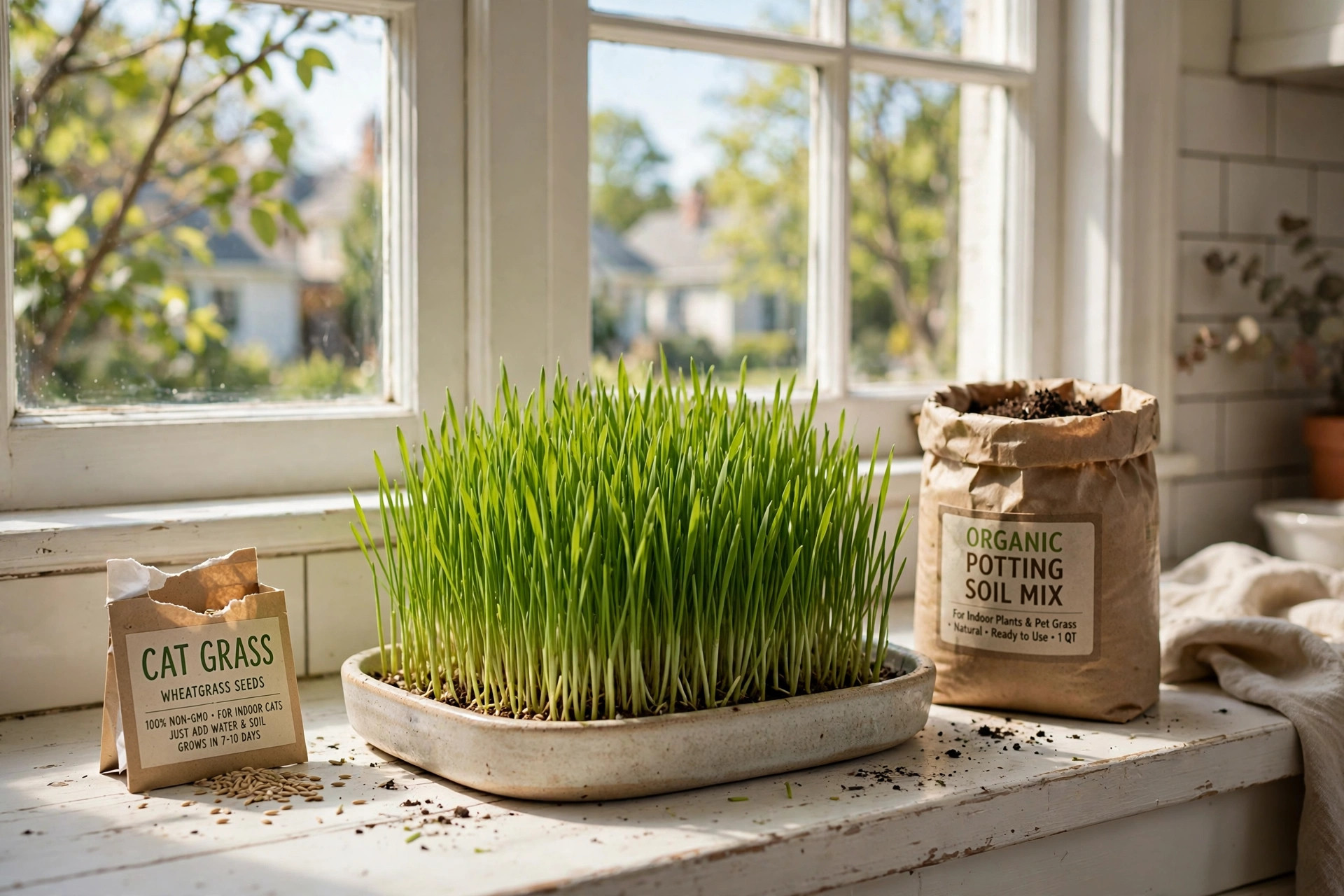

A cat grass growing kit for indoor cats is a simple home project. The kit gives you seeds, soil, and a small tray. You add water and light. In a week or so, green shoots rise. Your cat can chew them any time she likes. This small green patch brings a piece of the outdoors inside. It is a modest gift to a house cat.
Why Indoor Cats Need Greens
Cats that live indoors do not roam the yard. They do not graze on lawns or chew garden plants. Yet many cats still crave a bite of green leaf. In the wild, cats eat small amounts of grass. Pet care guides note that the habit helps move swallowed hair through the stomach. It also gives the cat a simple pleasure during a long day indoors.
An indoor life is safe, but it can be dull. A cat may chew houseplants out of boredom. Many houseplants are poisonous to cats. Animal welfare groups warn owners to check every plant in the home. A tray of cat grass gives the cat a safe plant of her own. She will learn that this is hers to chew. The rest of the home stays untouched.
Grass also adds interest to a cat’s routine. Cats like to sniff, lick, and nibble. The act of grazing can calm a restless animal. It can ease a cat that eats too fast or feels tense. For older cats, a soft green patch near a sunny window becomes a favorite resting spot. The kit is cheap. The effort is small. The gain in comfort is large.
What Comes in a Cat Grass Growing Kit: Cat Grass Growing Kit for Indoor Cats
Most kits hold the same basic parts. A container or tray sits at the base. Some trays have drainage holes. Some do not. A packet of seed comes next. The seeds are usually wheat, oat, barley, or rye. A bag of growing mix follows. The mix is often coconut fiber or light potting soil. Some kits add a small watering can or a mister. A few add plant food.
Pet supply stores sell kits in many sizes. A small kit grows one tray at a time. A large kit may hold three trays for rotation. Refill packs of seed let you start a fresh batch every few weeks. Seed suppliers also sell plain cat grass seed without a tray. You can use any clean dish at home if you prefer. The kit simply makes the first attempt easy.
Quality varies between brands. Cheap kits may use old seed that never sprouts. Better kits print a packing date on the seed packet. Fresh seed sprouts in five to seven days. Old seed may fail or grow thin and weak. Household magazines advise buyers to read the label before they buy. Look for seeds meant for pets, not for lawns. Lawn seed may carry coatings that are unsafe for animals.
How to Choose the Right Kit
The best kit for your home depends on three things. How many cats do you have. How much window space do you own. How often are you willing to replant. One cat needs only a small tray. Two or three cats may eat the grass down to the roots in a day. A rotation of two trays keeps fresh grass ready at all times.
Look at the tray first. It should sit steady and not tip when a cat paws at it. A wide, low tray works better than a tall narrow pot. Wide trays give the grass room to spread. They also make it hard for the cat to knock the whole thing over. Some trays come with a saucer to catch extra water. That keeps your windowsill dry.
Check the seed mix next. Wheat grass is the most common choice. It grows fast and stands tall. Oat grass is softer and sweeter. Many cats prefer it. Barley and rye grow well too. Some kits mix all four. Mixed kits give the cat a choice. Watch which blades she eats first. That tells you what to buy next time.
Seeds
Fresh seed is the heart of the kit. Good seed looks plump and clean. It should have no dust and no odd smell. The packet should name the exact plant. Avoid packets that only say “pet grass” with no detail. Garden guides suggest seed with a germination rate printed on the label. A high rate means most seeds will sprout.
Planter
The planter should be easy to clean. Cats may dig in the soil. A tray you can wash in the sink saves trouble. Plastic trays are light and cheap. Ceramic pots look nicer but break if knocked down. Some owners grow grass in shallow wooden boxes. Wood can mold if it stays wet. Stick with plastic or glazed ceramic for daily use.
Growing Medium
Most kits use soil or coconut fiber. Soil is cheap and holds water well. Coconut fiber is light and clean. Both work for cat grass. Avoid mixes with chemical fertilizer. The label should say safe for pets. Pet health advice sites remind owners that cats chew and swallow parts of the plant. Nothing toxic should touch the roots.
Types of Grass to Grow
Wheat grass is the standard. It sprouts in days and grows tall blades. Indoor cats chew it with ease. It is the grass most kits include. Oat grass is a close second. It has a mild taste. Cats that refuse wheat grass may accept oat grass. Barley grass grows thick and green. It stands up well to heavy chewing.
Rye grass is tougher. It grows fast but has stiffer blades. Some cats like the crunch. Others turn away. Cat breed guides note that each cat has her own taste. There is no harm in trying one type at a time. Keep notes on what your cat eats. That record saves money on future kits.
A few kits offer mixed blends. Blends suit homes with more than one cat. Each cat may choose a different blade. Mixed trays also look fuller and prettier on the sill. If you buy seed in bulk, you can make your own mix. Equal parts wheat and oat is a good start. Rotate in barley when you want variety.
How to Grow Cat Grass Step by Step
Growing the grass is simple. Fill the tray with growing mix to about one inch below the rim. Wet the mix until it is damp but not soaked. Spread the seeds over the top in a thick layer. The seeds can touch each other. They should not pile up in heaps. Press them gently into the damp mix. Cover the tray with the lid if your kit has one. A lid holds in moisture for the first two days.
Set the tray in a warm spot out of direct sun. Seeds sprout best near 65 to 75 degrees. Check daily. Mist the top if it feels dry. In three to five days, white roots and green tips will show. Move the tray to a bright window. The shoots will grow toward the light. Turn the tray once a day so the grass grows straight.
In seven to ten days, the blades stand three to four inches tall. The grass is ready for your cat. Place the tray where the cat can reach it. She will find it on her own. Most cats start to chew within hours. Keep the mix damp while the cat uses it. Water from the bottom if the tray has drainage. Bottom watering keeps the blades dry and clean.
Cost and Price
A basic cat grass growing kit for indoor cats costs little. Small kits run about five to ten dollars. Mid-size kits with two trays run ten to fifteen dollars. Large kits with refill seeds can reach twenty dollars or more. Refill seed packs cost a few dollars each. One refill pack grows many trays.
Growing your own saves money over time. Ready-grown pots at pet supply stores cost about the same as a kit. But they last only a week or two. A kit with refill seed can keep your cat in grass for months. Home advice sites point out that the cost per week drops fast. For a single cat, the yearly cost may stay under thirty dollars.
Look for kits with clear labels and fresh seed. Price alone does not prove quality. A cheap kit with old seed is a waste. A mid-priced kit with a dated seed packet is the better buy. Some garden centers sell plain grass seed in bulk. That is the cheapest route of all. A bag of wheat berries from a garden center grows dozens of trays.
Care and Upkeep
Cat grass is not a plant you keep for months. It is a crop you renew. A tray lasts two to four weeks with daily chewing. When the blades turn yellow or fall flat, it is time to replant. Pull out the old mat of roots. Wash the tray. Start fresh with new seed.
Trim the grass now and then. Long blades fall over and rot at the base. A light trim keeps the tray neat. Use clean scissors. Cut no more than a third of the height. The grass will keep growing from the base. Do not trim down to the soil. The plant needs some leaf to make food.
Watch for mold. Mold grows when the tray stays too wet. It looks like white fuzz on the soil. It can also smell sour. If you see mold, throw the batch out. Wash the tray with soap and hot water. Start again with less water. Water from below helps. It keeps the top of the soil dry. Good air flow helps too. Keep the tray away from cold, damp corners.
Cats with long hair may drag damp soil on their paws. A tray with a narrow rim and a saucer helps. Some owners place the tray inside a larger shallow pan. That catches stray soil. If your cat digs in the tray, try a heavier pot. A cat who digs may need a play session first. A tired cat chews instead of digs.
Safety Tips
Cat grass from a proper kit is safe. Still, take care with a few points. Keep the grass away from other houseplants. Some houseplants drop leaves into the tray. Make sure no dropped leaf lands in the grass. If your cat chews many blades and vomits, do not worry. A little vomit after grazing is common. Pet health advice sites say it often means the grass did its job. But if vomiting repeats or the cat stops eating, call a vet.
Use only seed meant for pet grass or sprouting. Do not use lawn seed. Lawn seed may carry pesticide coatings. Do not use soil from the yard. Yard soil may hold bugs or old chemicals. Keep the tray out of reach of small children who might pull the soil out. Rinse your hands after handling the growing mix.
A cat grass growing kit for indoor cats fits well in a home with other pets. A dog car barrier for suv cargo area safety keeps a dog safe on road trips. A best cat litter box cabinet for hiding litter keeps the cat’s corner tidy. A best pet fence indoor for keeping dogs out keeps the grass tray safe from a curious dog. Each item helps a mixed-pet home run smooth.
Frequently Asked Questions
How long does cat grass take to grow?
Most seeds sprout in three to five days. The grass is ready to eat in seven to ten days. Warmth speeds the process. Cool rooms slow it down. Fresh seed always grows faster than old seed.
How long does one tray last?
A tray lasts two to four weeks. A single cat may keep it alive longer. Two cats may eat it down in days. When the blades yellow or mat flat, start a new tray.
Is cat grass the same as catnip?
No. Cat grass is a cereal grass like wheat or oat. Catnip is a herb in the mint family. Grass is for chewing. Catnip is for sniffing and play. Many cats like both. They are safe to offer side by side.
Can kittens eat cat grass?
Yes. Kittens can chew grass once they eat solid food. Offer a small tray and watch. Most kittens sniff first and nibble later. Keep the tray low so a small kitten can reach it with ease.
Why does my cat vomit after eating grass?
Grass can trigger a light gag. The blades help the cat bring up swallowed hair. This is a normal part of grazing. If the cat vomits often or seems ill, stop the grass and call a vet.
Can I grow cat grass without a kit?
Yes. You need a tray, seed, and growing mix. Garden guides show how to use any clean dish. The kit just saves you a trip to gather the parts. Many owners move to bulk seed after the first kit.
A Final Word
A cat grass growing kit for indoor cats is one of the simplest ways to please a house cat. It costs little. It takes a few minutes of work. It gives the cat a safe green treat each day. Pick fresh seed. Keep the tray clean. Replant when the grass fades. Your cat will thank you with a long, happy chew in the sun.
References
American Kennel Club. (n.d.). Dog care and training resources. https://www.akc.org ASPCA. (n.d.). Pet care and animal welfare resources. https://www.aspca.org Burpee. (n.d.). Seeds, plants, and gardening supplies. https://www.burpee.com Chewy. (n.d.). Pet supplies. https://www.chewy.com Gardening Know How. (n.d.). Gardening guides and plant care. https://www.gardeningknowhow.com Good Housekeeping. (n.d.). Product reviews and home advice. https://www.goodhousekeeping.com PetMD. (n.d.). Pet health information. https://www.petmd.com The Home Depot. (n.d.). Home improvement products. https://www.homedepot.com The Spruce. (n.d.). Home and garden advice. https://www.thespruce.com The Spruce Pets. (n.d.). Pet care guides and product reviews. https://www.thesprucepets.com
Was this guide helpful?

About James Carter
The My Garden US editorial team writes practical, in-depth home and garden guides for American homeowners — tested advice, no fluff.
You May Also Like

Dog Life Jacket for Small Breeds Pool Safety: A Simple Guide for Owners
June 27, 2026 0 views
Best Automatic Ball Launcher for Energetic Dogs
July 18, 2026 0 views
Dog Pen for Garage and Basement Containment: A Practical Guide
July 4, 2026 0 views