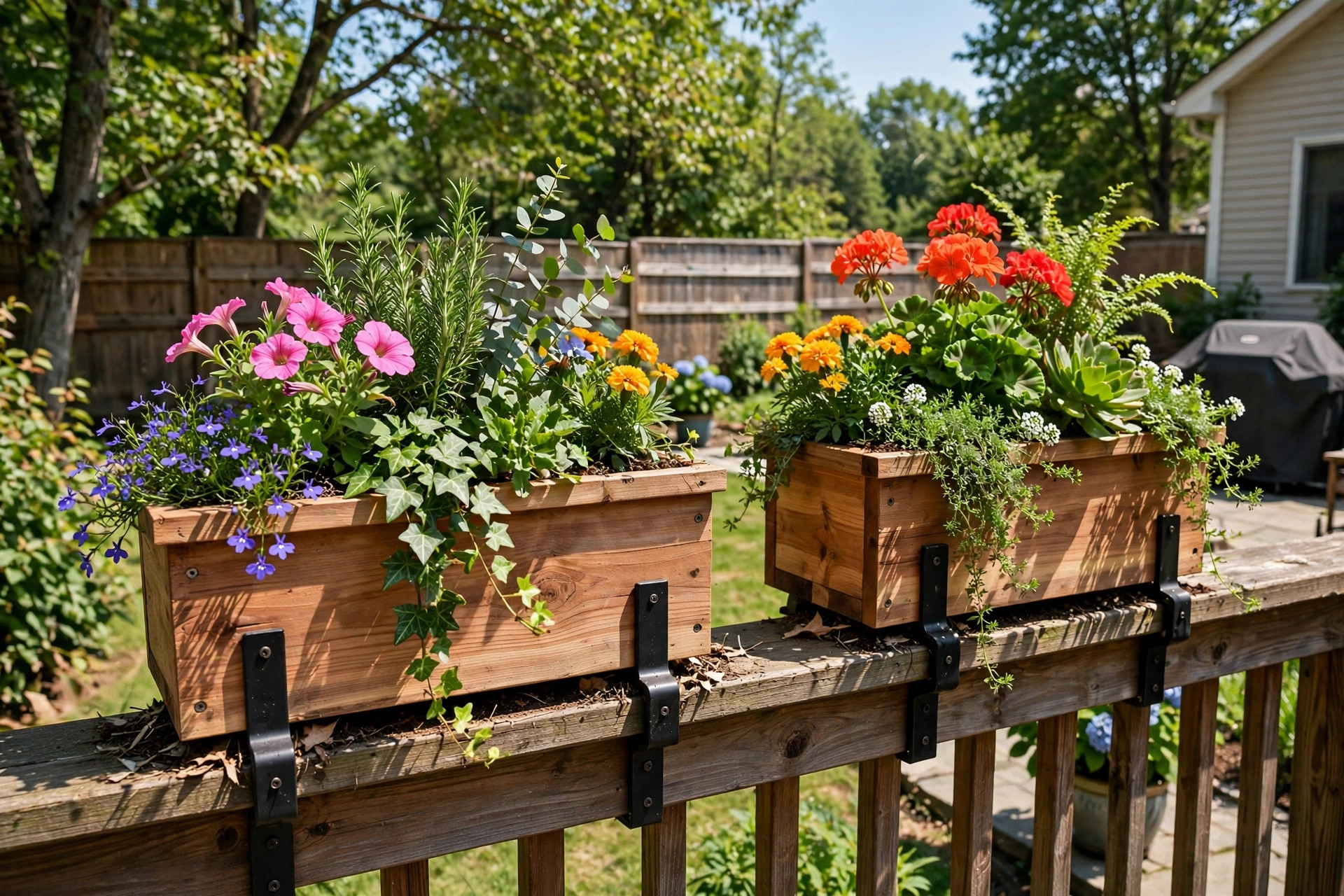

A patio railing is a wasted garden space. Most people walk past it every day and see only a plain rail. Outdoor planter boxes for patio railing change that. They turn the top rail of a deck, porch, or balcony into a row of flowers, herbs, or green plants. No digging is needed. No yard is needed. The boxes hang or sit right on the rail and add color in one afternoon.
This guide explains what to buy, what to avoid, and how to keep the plants alive. It covers sizes, materials, mounting styles, costs, plant choices, and safety. Read it before you spend money and you will make a better choice.
Why Railing Planter Boxes Matter
Small patios need smart ideas. Many homes have a deck or balcony but no soil for a garden. Railing boxes solve that problem. They use space that would sit empty. A plain rail becomes a garden wall.
They also save your back. The boxes sit at waist height. You water, trim, and pick herbs without bending to the ground. Older gardeners often find this a great help.
Flowers on a rail also give privacy. A row of tall plants can block the view from a neighbor. It is cheaper than a fence and looks better too. On a small deck, this screen of green makes the space feel like a room.
Color is another benefit. A wooden deck can look brown and dull. A row of red, pink, and white flowers lifts the whole patio. Guests notice it first. It is one of the cheapest ways to improve outdoor furniture for small balcony ideas and tiny decks alike.
What to Look for Before You Buy: Outdoor Planter Boxes for Patio Railing
Size and Fit
Measure your railing first. Measure the width of the top rail and the length of the rail. Most boxes are 24, 30, or 36 inches long. A box that is too long will tip. A box that is too narrow will wobble.
Check the railing width. Many rails are 2, 4, or 6 inches wide. Brackets and saddle-style boxes fit certain widths. If the fit is wrong, the box will not sit level. Soil and water are heavy, so a poor fit can cause a fall.
Depth matters too. A box that is 8 to 10 inches deep holds enough soil for most flowers. Shallow boxes dry out fast in summer heat. They suit small succulents but not thirsty annuals.
Material
Wood is the classic choice. Cedar and redwood resist rot and insects. They look natural on a wooden deck. Wooden boxes need a sealant every year or two. Even rot-resistant wood lasts longer with oil or stain.
Plastic is light and cheap. It does not rot and needs little care. High-quality plastic boxes can look like wood or stone. Cheap thin plastic can crack in cold winters.
Metal boxes look modern. Galvanized steel and aluminum resist rust. Metal heats up in full sun, which can dry soil fast. A liner or shade helps. Iron boxes are heavy and strong but may rust without paint.
Composite and fiberglass boxes last many years. They are light, strong, and resist weather. They cost more than wood or plastic. For a buyer who wants to set the box and forget it, composite is a sound pick. Large retailers such as The Home Depot and Lowe’s carry many of these materials in their outdoor departments.
Mounting Style
Saddle boxes drape over the top rail like a saddlebag. They need no screws. They suit renters. But they can slip in wind if the fit is loose.
Bracket-mounted boxes hang from the outside of the rail. Metal brackets hook over the top rail and hold the box. These are strong and easy to move. They keep the rail top clear for drinks or elbows.
Screw-mounted boxes attach to the rail with screws or bolts. This is the most secure method. It leaves holes in the rail, so it suits owners rather than renters. Check that your rail can hold the weight before you drill.
Rail clamps are a newer style. Adjustable clamps grip rails of many widths. They are simple to install and move. Home guides at The Spruce often list clamp models among easy options for beginners.
Drainage
Every box needs drain holes. Plants die in standing water. Roots rot when soil stays wet. Look for boxes with holes in the bottom or drill your own.
Place a small tray or saucer under indoor-style boxes to catch drips. Outdoors, let water drip onto the deck. Wood decks may stain from soil water, so a tray can protect the wood. Replace broken trays so the deck stays clean.
Add a layer of gravel or broken pottery at the bottom. This keeps holes open. Use potting mix, not garden soil. Potting mix drains well and is light. Garden soil is too heavy and packs down.
Types of Outdoor Planter Boxes for Patio Railing
Wooden rail boxes are the most common. They come in cedar, pine, and fir. Pine is cheap but rots fast. Cedar costs more and lasts longer. Many wooden boxes include a plastic liner to protect the wood from wet soil.
Coconut fiber and moss-lined boxes have a soft, natural look. A wire frame holds a thick pad of coconut fiber. They drain very well. But they dry out fast in hot sun and need daily water. The fiber wears out in two or three seasons.
Self-watering boxes have a water tank under the soil. A wick pulls water up to the roots. These boxes are great for busy people and hot climates. They cost more but save time. Product tests at Consumer Reports have noted that self-watering designs cut watering work in half.
Metal trough boxes suit a modern patio. They are slim and clean. Aluminum will not rust. Steel needs paint or coating. Pair them with a best outdoor sectional sofa for small patios and the whole deck looks planned.
Plastic window-style boxes are sold everywhere. They are the cheapest option. Many include brackets for rails. They come in white, black, green, and terra-cotta colors. Good ones have thick walls that resist sun damage.
Tiered and double-decker boxes hold two rows of plants. They give more planting room in the same rail space. They are heavier, so check the rail strength first. Furniture makers such as POLYWOOD and modern shops like Article show how outdoor styling trends favor clean, layered looks that these boxes match well.
Cost and Price
Prices vary by size and material. Simple plastic boxes cost 10 to 25 dollars. Wooden cedar boxes run 25 to 60 dollars for a 30-inch box. Metal and composite boxes run 40 to 120 dollars. Self-watering models cost 50 to 100 dollars or more.
Brackets often cost extra. A pair of steel rail brackets may add 15 to 30 dollars. Some boxes include them. Read the product details before you buy.
Soil and plants add to the cost. A 30-inch box needs about one cubic foot of potting mix. That costs 8 to 15 dollars. Annual flowers cost 2 to 5 dollars each. A full box may need 6 to 10 plants. Plan for 30 to 60 dollars per box for soil and plants.
Good deals appear at seasonal sales. Spring is the main season. Late summer sales can cut prices by half. Big retailers such as Wayfair, Frontgate, and IKEA all run patio sales through the warm months, and advice sites like Bob Vila track the best times to buy outdoor goods.
Best Plants for Railing Boxes
Choose plants that fit the box depth and the sun level. A sunny rail needs sun lovers. A shady porch rail needs shade plants. Read the plant tag before you buy.
For full sun, try petunias, geraniums, marigolds, and verbena. These bloom all summer. Sweet potato vine spills over the edge and looks full. Herbs like basil, thyme, and rosemary also love sun and give you fresh leaves for cooking.
For part shade, try impatiens, begonias, and fuchsia. These bloom in softer light. Ferns and ivy give green texture. A mix of one tall plant, two mid plants, and two trailing plants fills a 30-inch box well.
Succulents suit hot, dry rails. Sedum and echeveria need little water. They survive neglect. But they grow slow and give less color than annuals.
Vegetables can work in deep boxes. Lettuce, spinach, and radishes grow fast in spring. Cherry tomatoes need a deep box and a strong rail. Peppers do well too. Use a 10-inch-deep box for vegetables so roots have room.
Care and Upkeep
Water is the main job. Railing boxes dry out faster than ground beds. Wind and sun pull water from small soil volumes. In summer, water once a day. In heat waves, water twice. Check the soil with your finger. If the top inch is dry, water.
Feed plants every two weeks. Small boxes run out of food fast. Use a liquid fertilizer made for flowers or vegetables. Follow the label. Too much fertilizer burns roots.
Deadhead spent flowers. Pinch off dead blooms and the plant makes new ones. Trim trailing vines when they get too long. Pull weeds early. Weeds steal water from your flowers.
In fall, clean out dead plants. Empty annuals into the compost. Scrub the box with soap and water. Store plastic and metal boxes indoors if you can. Wooden boxes can stay out but last longer under cover. A best all weather wicker dining set nearby will need the same fall wipe-down, so do both jobs in one afternoon.
Check brackets and screws each spring. Tighten loose parts. Replace rusted brackets. A box full of wet soil is heavy. A failed bracket can drop the box on the deck or on someone below.
Safety Notes
Weight is the top concern. A 30-inch box with wet soil and plants can weigh 40 to 60 pounds. Make sure your railing can hold it. Most deck rails are built for leaning, not for hanging loads. When in doubt, ask a builder.
Mount boxes on the inside of the rail when possible. If a box falls inward, it lands on the deck. If it falls outward, it can hit a person or car below. This matters most on second-floor balconies.
Keep boxes away from grill heat and walkways. Do not block the handrail. People need a clear grip on stairs. Boxes should never narrow a walkway or stair path.
Use liners with treated wood. Some treated lumber has chemicals that can harm food plants. A plastic liner keeps soil away from the wood. For vegetables and herbs, choose untreated cedar or food-safe boxes.
Watch small children and pets. Some common flowers, like foxglove and oleander, are toxic if eaten. Keep toxic plants out of reach. Store fertilizer and chemicals locked away from kids.
Frequently Asked Questions
How much weight can a patio railing hold? It depends on the rail. A strong wooden deck rail can hold 50 to 100 pounds per section. A thin metal balcony rail may hold less. Spread the weight with two or three small boxes instead of one long heavy box. If the rail shakes or bends, remove the box.
Do railing planter boxes damage the rail? They can. Wooden boxes hold moisture against the rail and may cause rot or stains. Metal brackets can scratch paint. Use a liner, a tray, or a rubber pad between the box and the rail. Check the rail each season for soft spots.
What size box fits a standard deck railing? Most deck rails are 4 to 6 inches wide on top. A saddle box made for a 4-inch rail fits well. Bracket boxes adjust to many widths. Measure your rail and match the product size. Do not force a box onto a rail that is too wide.
Can I grow vegetables in railing planter boxes? Yes, if the box is deep enough. Use a box at least 8 to 10 inches deep. Lettuce, herbs, radishes, and peppers grow well. Give them full sun and water daily. Make sure the box is food-safe and the wood is untreated.
How often should I water railing planters? In summer, once a day is normal. Small boxes in full sun may need water morning and evening. Shade boxes may need water every two days. Always check the soil first. Overwatering rots roots just as fast as drought kills them.
A Short Final Word
Outdoor planter boxes for patio railing are a small project with a big payoff. They cost little, install in an afternoon, and change how a deck looks and feels. Measure your rail, pick a material that suits your weather, and choose plants that match your sun. Water them well and they will pay you back with color all season. A plain rail is a missed chance. Fill it with flowers and enjoy the view.
References
Article. (n.d.). Modern furniture. https://www.article.com Bob Vila. (n.d.). Home improvement advice. https://www.bobvila.com Consumer Reports. (n.d.). Product reviews and ratings. https://www.consumerreports.org Frontgate. (n.d.). Outdoor furniture and decor. https://www.frontgate.com IKEA. (n.d.). Home furnishings. https://www.ikea.com Lowe’s. (n.d.). Home improvement products. https://www.lowes.com Polywood. (n.d.). Outdoor furniture. https://www.polywood.com The Home Depot. (n.d.). Home improvement products. https://www.homedepot.com The Spruce. (n.d.). Home and garden advice. https://www.thespruce.com Wayfair. (n.d.). Furniture and home goods. https://www.wayfair.com
Was this guide helpful?

About Michael Thompson
The My Garden US editorial team writes practical, in-depth home and garden guides for American homeowners — tested advice, no fluff.
You May Also Like

Patio Misting System for Cooling Reviews: What Buyers Should Know
January 6, 2026 0 views
How to Anchor Outdoor Furniture in Wind: A Practical Guide
January 26, 2026 0 views
Outdoor Sectional for L Shaped Patio: A Practical Buying Guide
August 25, 2026 0 views