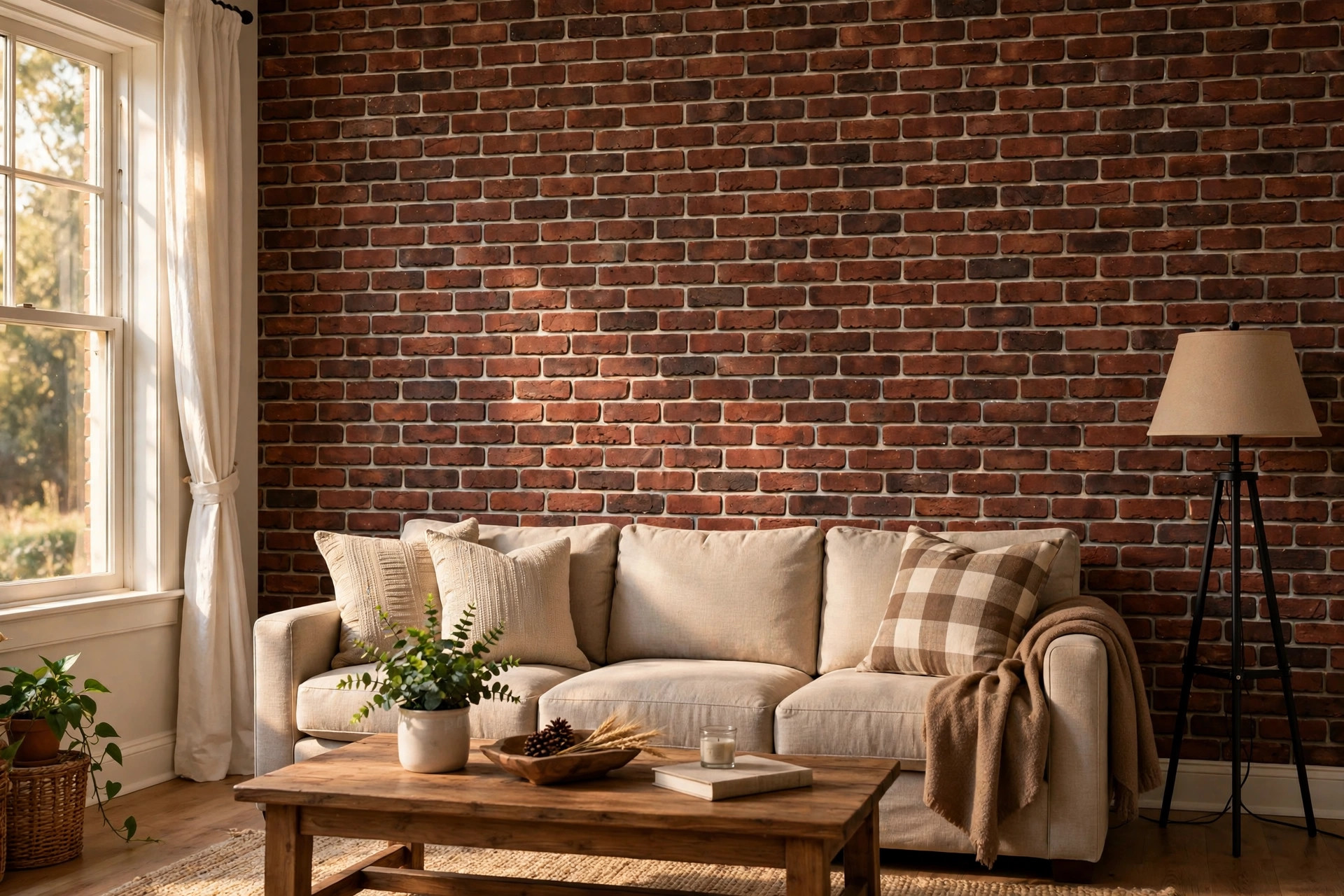

A plain wall can feel cold and unfinished. Many American homeowners now search for faux brick wall panels for sale usa because they want the warm look of real brick without the heavy cost or the long work of a mason. These panels copy the face of real brick. They fit over drywall, wood, or concrete. They can change a room in a single weekend.
This guide will walk through what these panels are, the kinds you can buy, how to pick the right ones, what they cost, and how to keep them in good shape. It will also point you to trusted places where you can read more before you buy.
Why Faux Brick Panels Matter for the American Home
Real brick walls have a charm that few other surfaces can match. The deep red tones, the rough texture, the slight differences from one brick to the next — all of it gives a room a sense of age and craft. Yet a real brick wall is heavy, and it needs a strong footing. It also costs a great deal of money. In many homes, adding real brick is simply not an option.
Faux brick panels solve this problem. They are thin sheets made to look like a section of brick wall. Some are molded from casts of real bricks, so each bump and edge feels true to life. They weigh far less than the real thing, often only a few pounds per panel. A single person can carry and hang them.
The demand for these panels has grown for a clear reason. Home styles such as farmhouse, industrial loft, and rustic lodge all call for brick or wood accents. A guide to accent wall ideas shows how one feature wall can carry a whole room, and faux brick panels serve the same purpose with even more texture. Home design sites like HGTV carry many such ideas for living rooms.
Homeowners also like them because they fit a busy life. There is no dust from cutting stone and no wait for mortar to cure. Most panels go up with screws, nails, or strong adhesive in a matter of hours.
What to Look for When You Shop: Faux Brick Wall Panels for Sale Usa
Before you buy, it helps to know what sets a good panel apart from a poor one. Keep these points in mind as you compare products in stores and online.
Material
Most faux brick panels sold in the United States are made from one of four materials:
– Polyurethane foam. Light and easy to cut. Good for most indoor walls. – PVC plastic. Thin and smooth. Often used in kitchens and baths because it resists water. – Fiber cement. Heavy and tough. Suited to outdoor walls and high heat areas. – Composite wood blends. Mid-weight panels made from wood fibers and resin.
Polyurethane is the most common choice for living rooms and bedrooms. It paints well and hides seams nicely. For a wall near a stove or grill, fiber cement is the safer pick because it holds up to heat.
Realism
Look at the panel in person if you can. A good panel has varied brick tones — some bricks darker, some lighter, just like a real wall. The mortar lines should look hand-set, not printed flat. Run your hand over the surface. Deep relief makes the wall read as real from across the room.
Painters who work with brick often note the same lesson: flat color looks fake, but tone and shadow look true. Paint makers such as Sherwin-Williams publish color guides that show how real brick carries natural variation, and a good faux panel copies that variation on purpose.
Panel Size and Coverage
Panels usually come in sheets of 4 by 8 feet, 2 by 4 feet, or in square tiles. Larger sheets go up faster and have fewer seams. Always check the coverage printed on the box, then add ten percent extra for waste and cuts.
Edge Style
Many panels have interlocking or overlapping edges so one sheet tucks into the next. This design hides the joints and makes the wall look like one long run of brick. Cheaper panels may have straight edges that show clear seams. If a seamless look matters to you, pay for the interlocking style.
Indoor or Outdoor Rating
Not all panels can face the weather. Outdoor-rated panels resist sun, rain, and freeze-thaw cycles. Indoor-only panels may warp or fade outside. Check the product label before you mount anything on a porch or an exterior wall.
Types and Options on the American Market
When you look for faux brick wall panels for sale usa, you will meet several styles. Each has its own look and best use.
Molded Brick-Look Sheets
These are the classic choice. Each sheet is cast from real brick, giving deep texture and true color. They suit living rooms, dining rooms, and home bars. Many buyers start their research with project guides at This Old House to learn how these sheets hang on standard wall framing.
Thin Brick Veneer Panels
These use real thin slices of brick set on a mesh backer. They are not fully fake, but they are sold alongside faux panels in most stores. They weigh more than foam panels but far less than full brick. They look the most real of all, because they are real brick faces. The trade-off is cost and harder cutting.
Peel-and-Stick Brick Tiles
Thin and light, these tiles stick right to a clean wall. They suit renters and small projects like a kitchen backsplash or a study nook. Their texture is flatter than molded panels, so they look best up close in small areas. Reviews of peel and stick wallpaper for bedrooms reviews show how renters weigh easy removal against realism, and the same trade applies here.
Whitewashed and Painted Panels
Some panels come pre-finished in a whitewashed or gray-washed look. This style suits farmhouse and coastal homes where bright walls matter. If you want a custom color, buy unpainted panels and finish them yourself with quality wall paint. Paint makers such as Sherwin-Williams and Behr publish guides on painting textured surfaces so the finish holds over time.
Exterior Siding Panels
Made for outside walls, these thicker panels stand up to storms and sun. They are popular for porch skirting, garage walls, and garden sheds. Retailers like The Home Depot and Lowe’s stock outdoor-rated lines with long warranties.
Cost and Price: What to Expect in 2026
Prices for faux brick wall panels vary with material, size, and brand. Based on current United States retail ranges, here is what most buyers see:
| Panel Type | Typical Price per Square Foot | |—|—| | Foam and polyurethane sheets | $4 to $9 | | PVC panels | $3 to $7 | | Thin brick veneer panels | $7 to $15 | | Peel-and-stick tiles | $2 to $6 | | Outdoor-rated siding panels | $6 to $12 |
A single 10-by-8-foot accent wall needs about 80 square feet of coverage. With foam panels at mid-range prices, the material cost runs from roughly $320 to $720. Add adhesive, caulk, and trim, and most do-it-yourself projects land between $400 and $900.
Hiring a pro adds labor. A handyman or carpenter may charge $200 to $600 for a single wall, depending on the region and the cuts needed around windows and outlets.
To keep costs down, measure twice and order once. Returns on opened boxes are often refused. Similar labor rates appear in guides to shiplap wall installation cost per square foot, since shiplap and brick panels call for the same kind of work. Watch for seasonal sales at big retailers, since wall paneling is often marked down in late winter and early fall.
How to Install Faux Brick Panels
Most homeowners can install these panels themselves with basic tools. The steps below fit most foam and PVC products. Always read the maker’s sheet first, since fastener and adhesive rules differ by brand.
Tools You Will Need
– Tape measure and pencil – Level, 4 feet long – Utility knife or fine-tooth saw – Construction adhesive or panel nails – Caulk gun and paintable caulk – Safety glasses and dust mask
Step by Step
1. Prepare the wall. The wall should be clean, dry, and flat. Fill holes and sand rough spots. Remove outlet covers and switch plates. 2. Plan the layout. Start at the bottom and work up. Stagger the vertical seams so they do not line up from row to row, just like real brick courses. 3. Cut to fit. Measure around outlets, windows, and corners. Cut foam panels with a sharp utility knife. Cut harder panels with a saw, and wear a dust mask. 4. Attach the panels. Apply adhesive to the back in a zigzag pattern, press the panel to the wall, and hold it until it grips. Many installers also drive a few nails or screws for extra hold. 5. Hide the seams. Fill small gaps with paintable caulk. If the panels are unpainted, touch up seams with matching paint so the joints fade. 6. Trim the edges. Add wood trim or corner pieces at the edges of the wall for a finished look.
A full wall often takes one weekend: one day to hang the panels, one day for caulk and paint to dry. Photo guides at The Spruce make the process easier to follow for first-time installers.
Care and Upkeep
Faux brick panels ask for little care, but a few habits will keep them looking sharp for years.
– Dust often. Use a soft brush or a vacuum with a brush head. The rough texture collects dust faster than flat paint. – Clean gently. Wipe with a damp cloth and mild soap. Skip harsh cleaners and scrub pads, which can dull the finish. – Check the seams. Once a year, look at the joints. If caulk has pulled away, fill the gap and touch up the paint. – Watch for moisture. In damp rooms, make sure the panels are rated for humidity. Run a bath fan to stop mold behind the panels. – Repaint when needed. Painted panels can be repainted like any wall. Prime for the panel material first, then add two coats of wall paint.
With fair care, foam and PVC panels last ten to fifteen years indoors. Outdoor-rated panels often carry warranties of twenty years or more.
Safety Notes
Safety is simple with this product, but it should not be skipped.
First, keep panels away from high heat unless they are rated for it. Standard foam panels can melt or give off fumes near a fireplace or a stove. Use fiber cement or real thin brick in hot zones. If your project centers on a fireplace, compare your options with cost guides for a whitewash brick fireplace cost near me search, which often cover heat-safe materials.
Second, check fire ratings. Some panels carry a Class A fire rating, which means they resist flame spread. Building codes in some cities require this rating for wall coverings. Ask the retailer for the rating sheet if you are unsure.
Third, work safe during the job. Wear glasses when cutting. Keep the room aired out when using strong adhesives. Keep small children and pets out of the work area until the adhesive has cured.
Fourth, think about weight on upper walls. Faux panels are light, but on ceilings or high walls, use mechanical fasteners as well as glue so nothing can fall.
Frequently Asked Questions
Do faux brick panels look real?
Good ones do, especially from a few feet away. Panels cast from real brick carry true texture and color shifts. From across a room, most guests will not know the wall is fake. Up close, the secret shows in the uniform backs and light weight. Deep-relief molded panels fool the eye best.
Can I install them over existing drywall?
Yes. Drywall is the most common surface for these panels. The wall must be clean, dry, and sound. If the drywall is damaged or soft from water, repair it first. Panels can also go over plywood, concrete, and tile backer board with the right adhesive.
Are faux brick panels good for kitchens and bathrooms?
They can be, if you choose the right material. PVC panels handle steam and splashes well. Foam panels can work in a half bath with good ventilation. Keep all panels away from direct water spray, and seal the edges with caulk in wet rooms.
How long do faux brick panels last?
Indoors, quality panels last ten to fifteen years or more with basic care. Sun-facing rooms may see some fading after several years. Outdoor-rated panels last longer and often come with long warranties. Repainting every five to seven years keeps the color fresh.
Can renters use faux brick panels?
Peel-and-stick tiles are the best choice for renters. They come off with far less damage than glued panels. Still, test one tile in a hidden spot first, and check your lease.
Where can I buy them in the United States?
You can find faux brick wall panels for sale usa at national home centers, lumber yards, and online retailers. Big stores let you see and touch the panels before you buy. Online shops often carry more colors and styles. When you shop online, order one sample panel first so you can check the color and texture in your own light.
A Short Final Word
Faux brick wall panels give an American home the warmth of real masonry at a fraction of the cost and effort. Choose the right material for your room, measure with care, and take your time with the seams. Whether the wall goes in a living room, a home office, or a covered porch, the result is a surface with depth and character that plain paint cannot match. Start with a small wall, learn the method, and you may soon want brick texture in every room of the house.
See Bob Vila for more detail.
References
Behr. (n.d.). Paints, primers, and stains. https://www.behr.com Bob Vila. (n.d.). Home improvement advice. https://www.bobvila.com HGTV. (n.d.). Home and garden ideas. https://www.hgtv.com Lowe’s. (n.d.). Home improvement products. https://www.lowes.com Sherwin-Williams. (n.d.). Paints and coatings. https://www.sherwin-williams.com The Home Depot. (n.d.). Home improvement products. https://www.homedepot.com The Spruce. (n.d.). Home and garden advice. https://www.thespruce.com This Old House. (n.d.). Home renovation guidance. https://www.thisoldhouse.com
Was this guide helpful?

About David Wilson
The My Garden US editorial team writes practical, in-depth home and garden guides for American homeowners — tested advice, no fluff.
You May Also Like
Best Paint for Closet Doors USA Reviews: What Homeowners Say Works
September 14, 2026 0 views
Skim Coat Drywall Cost Per Square Foot: A Plain Guide for Homeowners
January 10, 2026 0 views
Beadboard Wallpaper vs Real Beadboard: Which One Belongs in Your Home?
March 6, 2026 0 views