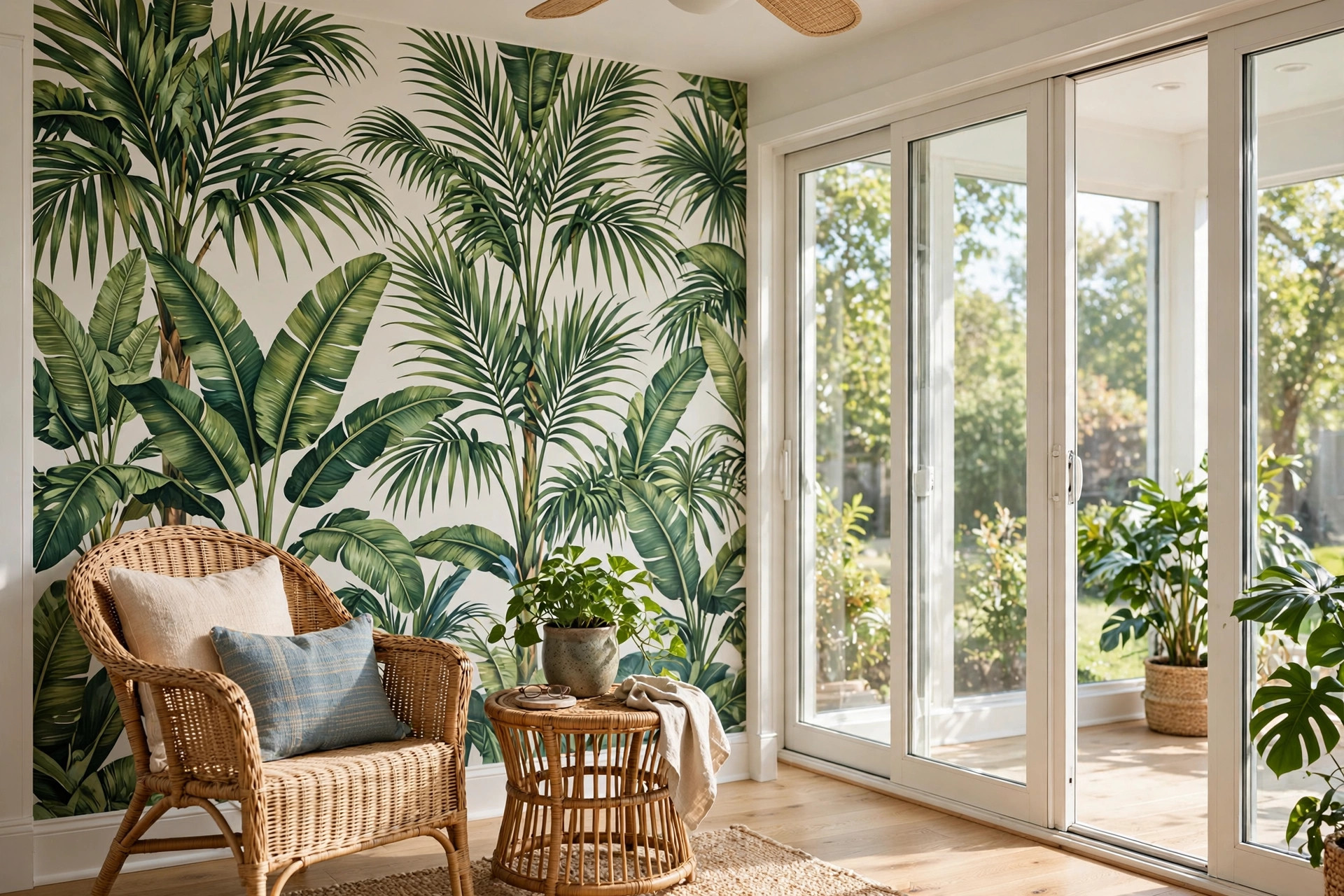

A sunroom is one of the hardest rooms in the house for wallpaper. Light pours in all day. Heat builds up in the afternoon. On cool mornings, glass walls can sweat with moisture. That is why so many buyers search for tropical wallpaper for sunroom reviews usa before they spend a dollar. They want to know which materials stand up to heat and humidity. This guide reads the reviews for you.
Why a Sunroom Is Different from Other Rooms
A sunroom is not a living room and not a porch. It sits between the two. It gets more sun than any room in the house. It swings between hot afternoons and cool nights. Many sunrooms are not heated or cooled like the rest of the house. That makes the air swing from dry to damp in a single day. Paper and paste do not like that. Glue loosens. Edges lift. Colors fade. A tropical print that looks rich in a shop photo can turn pale after one summer in a west-facing sunroom. Reviewers mention this again and again. The happiest buyers are the ones who treated the sunroom like a special case from the start. They picked a material made for heat and light. They prepped the wall with care. They spent a little more on quality. Buyers who treated the job like an ordinary bedroom wall were the ones who came back to write bad reviews. The room decides the rules, not the print.
What to Look for When You Read Reviews: Tropical Wallpaper for Sunroom Reviews Usa
Reviews are useful only if you know what to watch for. A review that says “looks great” tells you nothing. A review that says “still bright after two summers in Texas” tells you a lot. Look for details about the room. South-facing or west-facing rooms get the most punishing light. Look for notes on installation and on the wall surface. Painted drywall holds paper well. Old plaster or rough wood does not. Also look at the date of the review. A review written two years later is the real test.
Light and Fade Resistance
Sun is the main enemy. Ultraviolet light breaks down dyes over time. Vinyl-coated and some non-woven papers resist this better than plain paper. Buyers who picked papers rated for bright rooms report far less fading. Some brands note light resistance on the package. Many do not. When the label is silent, trust reviews from buyers in hot states like Arizona, Florida, and Texas. Their sunrooms get the harshest test. Many reviewers also suggest window film or sheer curtains for the worst hours of the afternoon. A little shade can add years to a print. Color ideas from HGTV can help you choose deep tones that hide minor fading better than pale ones.
Humidity and Steam
Morning condensation is common in sunrooms. It forms on glass and sometimes on walls. Paper with no coating can absorb this moisture. Over time it buckles or grows mold behind the seams. Vinyl-coated and solid vinyl papers handle moisture best. Non-woven papers with good paste also do well. Peel-and-stick papers vary. Some hold fine in damp air. Others lift at the corners within months. Reviewers in humid states give the clearest warnings here. If your sunroom runs damp, give humidity more weight than the print itself. Buyers who picked mildew-resistant bathroom paint for nearby bath areas often apply the same logic here: fight moisture first, choose beauty second.
Types of Tropical Wallpaper for Sunrooms
The reviews sort into four main types. Each has fans and critics. Here is what each one means for a sunroom.
Peel-and-Stick Wallpaper
This is the most reviewed type in the United States. It goes up with no paste. It peels off when you want a change. Buyers love the easy install and the low cost. For sunrooms, the reviews are mixed. In mild climates, peel-and-stick holds well for years. In hot rooms, the adhesive can soften in strong heat. Corners may curl by the second summer. Quality varies a lot between brands. The best-rated ones use thicker film and stronger glue. Cheap ones thin out and stretch. If you rent your home or like to change decor often, this type makes sense. If your sunroom bakes all afternoon, look hard at the heat complaints before you buy. Shops like Wayfair carry a wide range, and their review pages make it easy to filter by durability notes.
Non-Woven Wallpaper
Non-woven paper is made from fibers, not wood pulp. It does not expand when wet. That makes it stable in humid rooms. You paste the wall, not the paper, which many buyers find easier. Reviews for sunrooms are mostly positive. It stays flat. It strips off cleanly when you redo the room. It comes in paste-the-wall vinyl and regular forms. The plain non-woven kinds fade like paper in hard sun, so print choice and window shade still matter. The vinyl-faced kinds hold color much better. Many reviewers call this the safe middle choice: tougher than paper, simpler to hang than vinyl, and kind to the wall underneath.
Vinyl-Coated and Solid Vinyl
Vinyl is the workhorse for tough rooms. Solid vinyl stands up to heat, moisture, and hard sun better than any other type. Vinyl-coated paper is paper with a vinyl skin. It is cheaper and easier to hang than solid vinyl. It resists fading and wipes clean. Reviewers in hot climates rate these highest for sunrooms. The downsides are cost and weight. Vinyl is heavier. It needs good paste and a smooth wall. It also traps moisture behind it if the wall gets wet from a leak, so the wall must be sound and dry first. For a sunroom that gets real weather swings, many long-term reviewers say vinyl was worth every extra dollar.
Fabric and Mural Wallpaper
Some buyers go for fabric-backed prints or large single murals. These give a rich, custom look. Big palm or rainforest murals can turn a plain sunroom into a showpiece. Reviews are glowing when the install goes well. They are painful when it does not. Murals demand a perfect wall and often a pro installer. Fabric holds texture beautifully but costs more than most paper types. For a sunroom, pick fabric rated for light use or add window film. These are best for buyers who want a statement wall and plan to keep it for many years.
How to Choose a Tropical Print
Tropical prints come in many moods. Big banana leaves read bold and modern. Small palm fronds read calm and classic. Monstera and bird-of-paradise prints sit in the middle. Dark jungle prints make a room feel lush but can darken a small sunroom. Light bamboo or fern prints keep the room airy. The reviews show that scale matters more than most buyers expect. A large print suits a big wall. It can overwhelm a small one. A small print suits a cozy nook. Hold a sample against the wall and step back. Look at it morning and evening. Colors change under different light. Many buyers order samples from two or three brands before they commit. This is cheap insurance. Paint stores like Sherwin-Williams and Behr give the same sample advice for paint color, and it holds for paper too. Also think about furniture. If your chairs and cushions are busy, a calm print balances them. If the furniture is plain, a bold print adds life. Reviewers who planned the print with the room were happier than those who fell for a photo online. Decor guides on The Spruce show how print scale and furniture work together in real rooms.
Cost and Price in the USA
Prices vary widely. Peel-and-stick rolls run about 30 to 70 dollars per roll. Non-woven papers run about 40 to 120 dollars per roll. Vinyl-coated papers run about 60 to 150 dollars per roll. Solid vinyl and fabric prints can run 100 to 300 dollars per roll or more. Murals often sell by the panel or by the square foot, commonly 8 to 25 dollars per square foot. A small accent wall may need two to four rolls. A full sunroom may need eight to fifteen. Paste, primer, and tools add 40 to 100 dollars if you do it yourself. A pro installer charges 3 to 7 dollars per square foot in most American cities. Most reviewers say the material cost was less than they feared and the labor was more. If you are new to hanging paper, paying a pro for one day often costs less than redoing a bad job. Home stores like Home Depot and Lowe’s list prices by the roll and by coverage, and cost guides on Bob Vila help you compare true project costs. Buyers comparing paint projects sometimes check painting brick house pros and cons to weigh material costs the same way.
Care and Upkeep
Tropical wallpaper in a sunroom needs light care, not hard work. Dust the walls once a month with a soft dry cloth or a vacuum brush. Vinyl and vinyl-coated papers can take a damp wipe. Use plain water or a drop of mild soap. Wring the cloth well. Never soak the seams. Plain paper and fabric should stay dry. Blot spills at once. Do not scrub. Check the corners and seams twice a year. Heat and humidity work on edges first. If a corner lifts, press it down with a little seam glue before it spreads. Keep an eye out for mold in damp corners. If you see spots, clean them gently and find the moisture source. A dehumidifier in the damp season helps a lot. Reviewers who did this small routine report prints that still look new after five years. Reviewers who ignored the room report edges peeling by year three. Also refresh window film or sheers as they age. Your first line of defense against fading is what stands between the glass and the wall. Maintenance guides on This Old House stress the same point: small regular care beats big repairs.
Safety Notes for Sunrooms
Wallpaper is safe when it is installed well, but a few points matter in a sunroom. First, check the fire rating. Papers sold in the United States should meet basic fire standards. Vinyl papers are naturally slow to burn, but the label should say so. Second, watch the electrics. Do not cover outlets or switches with paper. Trim neatly around them and turn off power when you work near wiring. Third, respect heat sources. Keep paper clear of space heaters, heat lamps, and hot light fixtures. Some sunrooms have strong halogen lights that run very hot. Swap them for cooler LED bulbs. Fourth, think about the paste. Many modern pastes are low in fumes, but ventilate the room while you work anyway. Sunrooms ventilate easily, which helps. Finally, if your sunroom has water damage or rot in the walls, fix that before you paper. Paper over damage hides the problem and can feed mold. Product safety notes from Benjamin Moore make the same point about paint: a sound surface comes first. Buyers who paired bold walls with navy blue paint for kitchen island projects report that prep work took as long as the finish work, and the results lasted.
Frequently Asked Questions
Does tropical wallpaper fade in a sunroom?
It can. Direct sun breaks down dyes over time. Vinyl-coated and solid vinyl papers resist fading best. Peel-and-stick and plain paper fade fastest in hard light. Reviews from hot states show the clearest results. Window film or sheer curtains cut fading a lot. Deep, rich prints hide minor fading better than pale prints.
Can I use peel-and-stick wallpaper in a hot sunroom?
You can, but read the heat complaints first. In mild climates it holds well. In rooms that bake all afternoon, the adhesive can soften and corners may curl. Pick a thick, well-reviewed brand. Make sure the wall is clean, smooth, and fully dry. Some buyers add a thin line of seam glue at the edges in hot rooms.
What is the best type for a humid sunroom?
Solid vinyl or vinyl-coated paper. They shed moisture instead of absorbing it. Non-woven with good paste is a close second. Plain paper and some peel-and-stick types struggle in damp air. If mornings bring condensation on the glass, give moisture resistance top weight in your choice.
How long does sunroom wallpaper last?
With the right material and light care, five to ten years is common in reviews. Vinyl in a shaded sunroom can last longer. Cheap paper in hard sun can look tired in two to three years. Install quality matters as much as the paper. Smooth walls, good paste, and sealed seams add years.
Should I hire a pro to install it?
For murals, fabric, and full rooms, most reviewers say yes. A pro hangs straighter, wastes less paper, and finishes in a day. For one accent wall with peel-and-stick, many buyers do fine on their own. If your walls are rough or out of square, a pro earns the fee fast.
Can I paint over tropical wallpaper later?
Often yes, if the paper is sound and well stuck. Vinyl-coated papers take paint after a light sanding and a bonding primer. Peel-and-stick can be pulled off instead, which is one of its charms. Plain paper may bubble under paint. When in doubt, test a small hidden spot first.
A Short Final Word
Tropical wallpaper can turn a sunroom into the best seat in the house. Match the material to the room, not just to your taste. A tough vinyl in a bold palm print will outlast a pretty paper in harsh sun every time. Read the long-term reviews. Order samples. Prep the wall. Then enjoy the view.
References
Behr. (n.d.). Paints, primers, and stains. https://www.behr.com Benjamin Moore. (n.d.). Paints and stains. https://www.benjaminmoore.com Bob Vila. (n.d.). Home improvement advice. https://www.bobvila.com HGTV. (n.d.). Home and garden ideas. https://www.hgtv.com Lowe’s. (n.d.). Home improvement products. https://www.lowes.com Sherwin-Williams. (n.d.). Paints and coatings. https://www.sherwin-williams.com The Home Depot. (n.d.). Home improvement products. https://www.homedepot.com The Spruce. (n.d.). Home and garden advice. https://www.thespruce.com This Old House. (n.d.). Home renovation guidance. https://www.thisoldhouse.com Wayfair. (n.d.). Furniture and home goods. https://www.wayfair.com
Was this guide helpful?

About Emily Rodriguez
The My Garden US editorial team writes practical, in-depth home and garden guides for American homeowners — tested advice, no fluff.
You May Also Like
The Best Paint for Chain Link Fence USA Homeowners Trust
July 26, 2026 0 views
How to Use a Painting Quote Comparison Checklist for Homeowners
June 13, 2026 0 views
Best Sump Pump Pit Cover Paint USA: A Practical Guide for Basement Owners
April 4, 2026 0 views