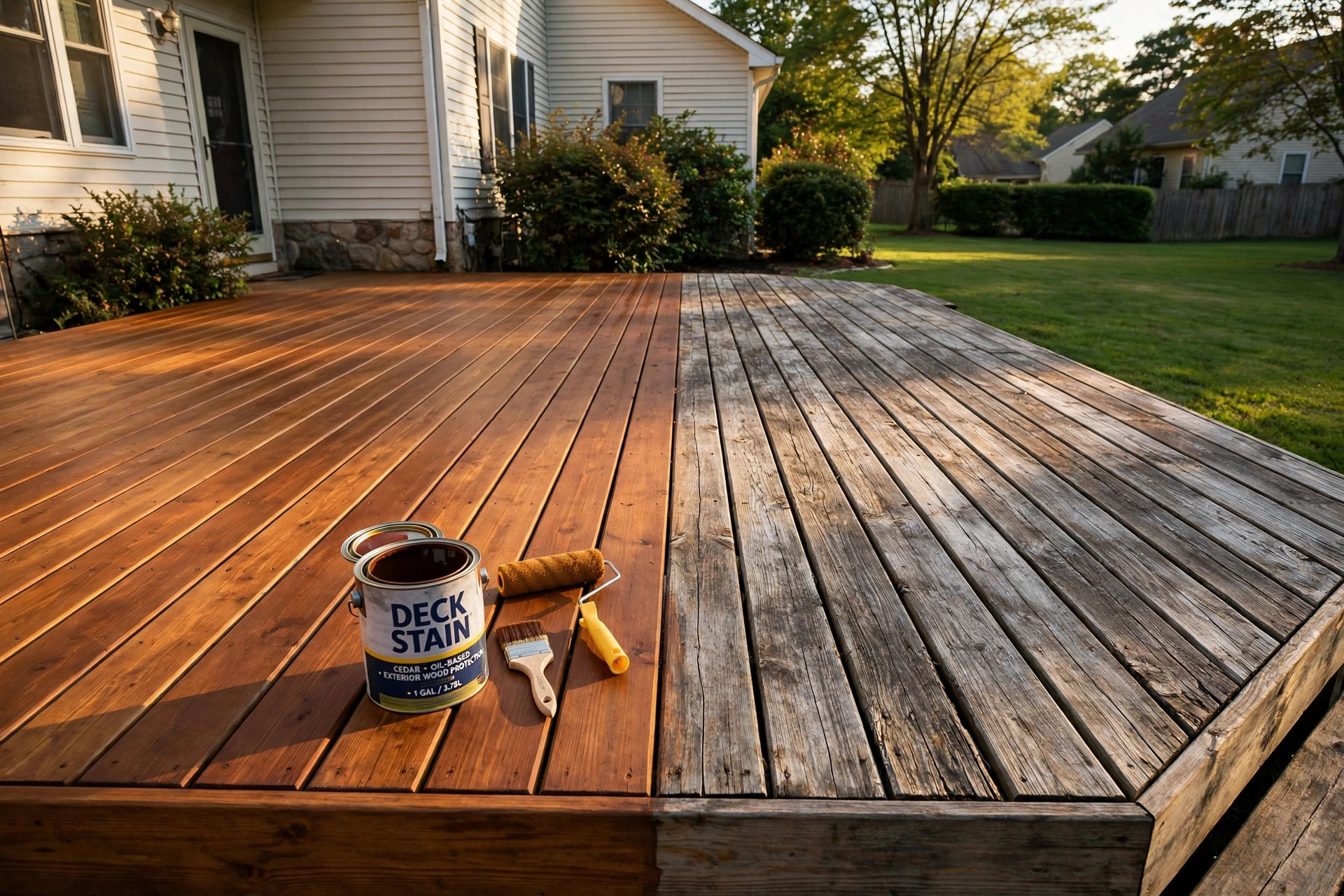
A deck staining cost calculator near me is a simple tool that gives a quick price range for staining a wooden deck. You enter the size of the deck, the type of wood, and its present condition. The tool then gives an estimate of labor and materials. This estimate helps you set a budget before you call a contractor or buy stain for a do-it-yourself job.
Many homeowners use such a calculator to avoid overpaying. A short search for fence staining service prices shows that outdoor woodwork of all kinds follows similar pricing rules. When you know what affects the price, you can plan with confidence. This guide walks through each factor in plain terms.
Why a Deck Staining Cost Calculator Matters
Staining a deck protects the wood from sun, rain, and frost. Bare wood turns gray and splits within a year or two. Stained wood lasts far longer. But the cost of the job is not fixed. It changes with deck size, stain type, and local labor rates. A deck staining cost calculator near me lets you put real numbers on these factors.
A calculator matters because quotes from contractors vary a great deal. One company may quote 800 dollars while another quotes 1,800 dollars for the same deck. When you have your own estimate, you can ask clear questions about the difference. You also avoid surprise charges for prep work like power washing or sanding.
The calculator also helps you decide between doing it yourself and hiring a pro. If the price gap is small, hiring out the work may be worth it. If the gap is large, a weekend project can save real money. Either way, an honest estimate is the right place to start.
What to Look For in a Cost Calculator: Deck Staining Cost Calculator near Me
Not every calculator is built the same. A good one asks for the right details. Here are the points to check.
Deck Size and Shape
The single biggest cost factor is square footage. A small deck of 200 square feet costs far less than a large deck of 800 square feet. Some calculators let you enter length and width. Better ones also count stairs, railings, and built-in benches. Railings take extra time because of the many small surfaces. A guide to porch and patio paint choices notes that these extra details often add 20 to 40 percent to the total time.
Condition of the Wood
New wood needs little prep. Old, gray wood may need power washing, sanding, and repairs. Some calculators ask about age and condition. This matters. A deck that has never been stained costs more to prepare than one that was stained two years ago. If the calculator ignores condition, treat its number as a low guess.
Stain Type and Coats
Transparent stains cost less than solid-color stains. Oil-based stains run higher than water-based ones in most stores. Premium brands charge more per gallon. Most decks need two coats for even color. A calculator that asks about stain type and the number of coats gives a truer picture. Retailers like The Home Depot list stain prices by the gallon, so you can check the math yourself.
Local Labor Rates
Labor rates change from town to town. A calculator that uses your zip code or county gives a closer number than a national average. Ask around or check reviews from Bob Vila to see what local crews charge per square foot. In most parts of the country, labor runs from 1.50 to 4.00 dollars per square foot.
Types of Deck Stain and How They Affect Price
Stain comes in several forms. Each has its own price and its own level of protection.
Transparent and Semi-Transparent Stains
These stains let the wood grain show through. They cost less per gallon, usually 30 to 55 dollars. They also need re-coating more often, about every one to two years. For a homeowner on a budget, this is the lowest cost entry point. Guides from Behr explain the coverage rates for each product line.
Semi-Solid and Solid Stains
Semi-solid stains hide more flaws. Solid stains look almost like paint. Both cost more per gallon, often 45 to 75 dollars. They last longer, up to three or four years between coats. For an older deck with gray spots, a solid stain can save you from the cost of full board replacement. Benjamin Moore publishes clear data on how many square feet each gallon covers.
Oil-Based Versus Water-Based
Oil-based stains soak deep into the wood. They last longer but cost more and take longer to dry. Water-based stains clean up with soap and water. They dry fast and cost a bit less. Many calculators let you pick one or the other. In dry climates, either type works well. In wet climates, oil-based stain often earns its higher price. Advice from This Old House compares both types for decks of many ages.
Premium and Weather-Shield Products
Some brands sell premium lines with extra mildew and fade protection. These can cost 60 to 90 dollars per gallon. They make sense for decks in full sun or near the sea. For a shaded deck in a mild climate, a mid-grade stain is usually enough. Reviewers at The Spruce test how these products hold up over time.
Cost and Price Breakdown
Now the numbers. A deck staining cost calculator near me usually breaks the job into parts. Here is how each part looks in the United States.
Average Price Ranges
Most homeowners pay between 700 and 1,800 dollars for a full professional stain job on a mid-size deck. A small deck of 200 square feet may run 450 to 900 dollars. A large deck of 800 square feet with railings may run 1,800 to 3,500 dollars. These figures include power washing, stain, and labor.
Do-it-yourself costs far less. Stain for a 400-square-foot deck costs 150 to 300 dollars. Add 50 to 100 dollars for brushes, rollers, and sandpaper. A power washer rents for 75 to 100 dollars per day. The total often lands between 300 and 500 dollars. Your labor is the rest of the cost.
What Drives the Price Up
Several factors push the price higher. Badly weathered wood needs sanding, which adds 0.50 to 1.50 dollars per square foot. Rotten boards must be replaced, at 15 to 35 dollars per board for materials plus labor. Railings, lattice, and stairs add many hours of brushwork. Multi-level decks take longer to set up and clean. A calculator that counts these extras gives a fairer number.
What Keeps the Price Down
Fresh prep saves money. If you power wash the deck yourself before the crew arrives, some contractors cut the price. Buying stain during spring sales cuts material costs. Choosing one coat instead of two lowers labor, though the finish wears out sooner. Simple deck shapes with no railings are cheapest of all.
Comparing Quotes With the Calculator
Use the calculator result as a baseline. Ask each contractor what is included. Does the price cover power washing and sanding? How many coats of stain? Which brand? If one bid is far below the calculator range, ask why. Cheap bids sometimes skip prep work. If one bid is far above, ask what extra steps justify it. Honest contractors explain their numbers in plain words.
Care and Upkeep After Staining
A fresh stain job is not the end of the story. Simple care keeps it looking good and pushes the next staining years away.
Clean the deck twice a year. Sweep off leaves and dirt. Wash it with a mild soap and a garden hose. Do not use harsh bleach on new stain. Move planters and mats now and then so the stain wears evenly. These small steps are free and easy.
Check the surface each spring. Splash a cup of water on the boards. If the water beads up, the stain is still working. If it soaks in, the wood is ready for a fresh coat. Most decks need re-staining every two to three years. South-facing decks in hot sun may need it every two years. Shaded decks may go four years between coats.
Touch up high-traffic spots before they wear through. Steps and the path to the door wear fastest. A small can of matching stain handles these fixes in an hour. Keep the leftover stain in a cool, dry place so the color stays true.
For larger projects, a home paint sprayer can speed up re-coating. Sprayers cover large flat decks fast. Brushes still do better work on railings and edges. Many homeowners own both and use each where it fits.
Safety When Staining a Deck
Staining is safe work when you follow basic rules. Stains contain solvents and pigments that irritate skin and lungs. Work outdoors or in strong fresh air. Wear gloves and long sleeves. Wear a mask rated for organic vapors if you use oil-based stain. Keep children and pets away until the stain dries fully.
Read the label before you start. Some products need 24 to 48 hours to cure. Walking on the deck too soon leaves marks. Drying times run longer in damp weather. Plan the job for a stretch of dry days. Lowe’s product pages list drying times for each stain line.
Power washers need care too. The spray can cut skin and strip wood if held too close. Keep the nozzle at least a foot from the boards. Use a wide fan tip, not a pinpoint jet. Test on a hidden spot first. Guides from HGTV show the right stance and distance.
Rags soaked in oil-based stain can catch fire on their own. This is rare but real. Lay used rags flat outdoors to dry. Then throw them away in a metal can with a lid. Never bunch damp oil rags in a pile in the garage.
Dispose of leftover stain the right way. Do not pour it down the drain. Most towns hold paint and stain drop-off days. Sherwin-Williams stores often take back old cans. A quick call to the county office tells you where to go.
Frequently Asked Questions
How much does it cost to stain a deck near me? For a mid-size deck of about 400 square feet, most homeowners pay 700 to 1,800 dollars with a pro, or 300 to 500 dollars doing it themselves. Exact prices depend on your town, the deck condition, and the stain brand. A deck staining cost calculator near me gives a closer range once you enter your zip code and deck size.
Is staining cheaper than painting a deck? Staining is usually cheaper. Stain costs less per gallon than deck paint, and it needs less prep. Paint hides the grain and lasts longer, but it peels and needs scraping later. Stain fades instead of peeling, so re-coating is simpler.
How long does deck stain last? Transparent stains last one to two years. Semi-transparent stains last two to three years. Solid stains last three to four years. Sun, rain, and foot traffic shorten these spans. A shaded deck lasts longer between coats than a deck in full sun.
Can I stain over old stain? Yes, if the old stain is sound. Clean the deck well and test a small spot. If the old stain flakes or peels, sand or strip it first. New stain sticks best to a clean, dry surface. Water-based stain can go over old water-based stain. Oil-based stain can go over old oil-based stain. Mixing types is not wise.
Should I hire a pro or do it myself? Hire a pro if the deck is large, in poor shape, or high off the ground. Pros finish in one to two days and guarantee even coverage. Do it yourself if the deck is small and sound. You save hundreds of dollars and the work is simple. Either way, start with a cost estimate so you know the trade-off.
When is the best time of year to stain a deck? Spring and fall are best. Aim for dry days with temperatures between 50 and 85 degrees. Avoid staining in direct hot sun, which dries the stain too fast. Avoid rain within 24 hours of the job. Check the forecast for a three-day dry window.
A Short Final Word
A deck staining cost calculator near me is worth the few minutes it takes. It turns a vague worry about cost into a clear plan. Measure your deck. Note its condition. Pick a stain type. Then run the numbers. With an honest estimate in hand, you can hire with confidence or tackle the weekend project yourself. A well-stained deck looks better, feels safer underfoot, and lasts many more years. That is money well spent.
References
Behr. (n.d.). Paints, primers, and stains. https://www.behr.com Benjamin Moore. (n.d.). Paints and stains. https://www.benjaminmoore.com Bob Vila. (n.d.). Home improvement advice. https://www.bobvila.com HGTV. (n.d.). Home and garden ideas. https://www.hgtv.com Lowe’s. (n.d.). Home improvement products. https://www.lowes.com Sherwin-Williams. (n.d.). Paints and coatings. https://www.sherwin-williams.com The Home Depot. (n.d.). Home improvement products. https://www.homedepot.com The Spruce. (n.d.). Home and garden advice. https://www.thespruce.com This Old House. (n.d.). Home renovation guidance. https://www.thisoldhouse.com
Was this guide helpful?

About Michael Thompson
The My Garden US editorial team writes practical, in-depth home and garden guides for American homeowners — tested advice, no fluff.