
Why Heirloom Seeds Fit California Homes
Every spring, garden centers across the country fill with seed racks. Shoppers looking for heirloom vegetable seeds california homes usa growers recommend will find more choice than ever before. An heirloom is a variety of plant that has been passed down for many years, often for fifty years or more. Farmers and home gardeners saved the seeds from their best plants, season after season. The result is a vegetable with steady traits and a flavor that many people find rich and full.
California is a fine place for these old varieties. The state has a long growing season, mild winters in most areas, and warm summers that tomatoes, peppers, and squash love. Coastal fog gives lettuce and peas a cool home. Inland heat ripens corn and melons. Because an heirloom seed grows true to type, a gardener in San Diego and a gardener in Sacramento can save seeds from this year’s harvest and plant them next year with fair confidence. That self-reliance is one reason these seeds have grown so popular.
Another reason is taste. Many modern hybrid vegetables were bred to ship well and to look alike on store shelves. Heirlooms were bred for the table. A Brandywine tomato or a French breakfast radish carries a flavor that is hard to find in a supermarket. For families who want their garden to feed them well, that matters.
There is also a simple pleasure in growing something with a story. Some of these varieties came to America with immigrant families. Others were kept alive by small seed companies and home growers. When you plant them, you join that long chain.
What to Look for When You Buy: Heirloom Vegetable Seeds California Homes Usa
Not every packet labeled heirloom is the same. A few checks will help you buy with confidence.
Open-pollinated on the label. True heirlooms are open-pollinated. That means bees, wind, or the gardener’s own hand moves pollen in a natural way. The seeds you save will grow into plants like the parent. If a packet says F1, it is a hybrid. Hybrids can be fine plants, but their seeds do not grow true.
Days to maturity. The packet tells you how many days the plant needs from sowing to harvest. California has a long season, so most varieties will fit. Still, in cooler coastal zones it is wise to pick shorter-season types for heat-loving crops like peppers and eggplant.
Disease resistance. Old varieties can be more open to disease than new ones. Look for notes about resistance to common problems such as fusarium wilt or mosaic virus. In warm parts of the state, soil diseases build up fast. A resistant variety saves much trouble.
Seed age and storage. Seeds lose strength with time. Buy from sellers who stamp a pack date or a “packed for” year. Keep packets in a cool, dry place until planting. A jar in the refrigerator works well.
Zone and planting window. California spans many growing zones, from cool coast to hot desert. Check the back of the packet for planting dates, and match them to your own area. The Old Farmer’s Almanac offers free zone charts and planting calendars that many home gardeners use as a starting point.
If you are new to seed shopping, a guide such as heirloom vegetable seeds for sale usa can help you compare sellers and learn what a fair price looks like before you order.
Types and Options Worth Knowing
The heirloom world is large. These groups cover what most California home gardeners plant.
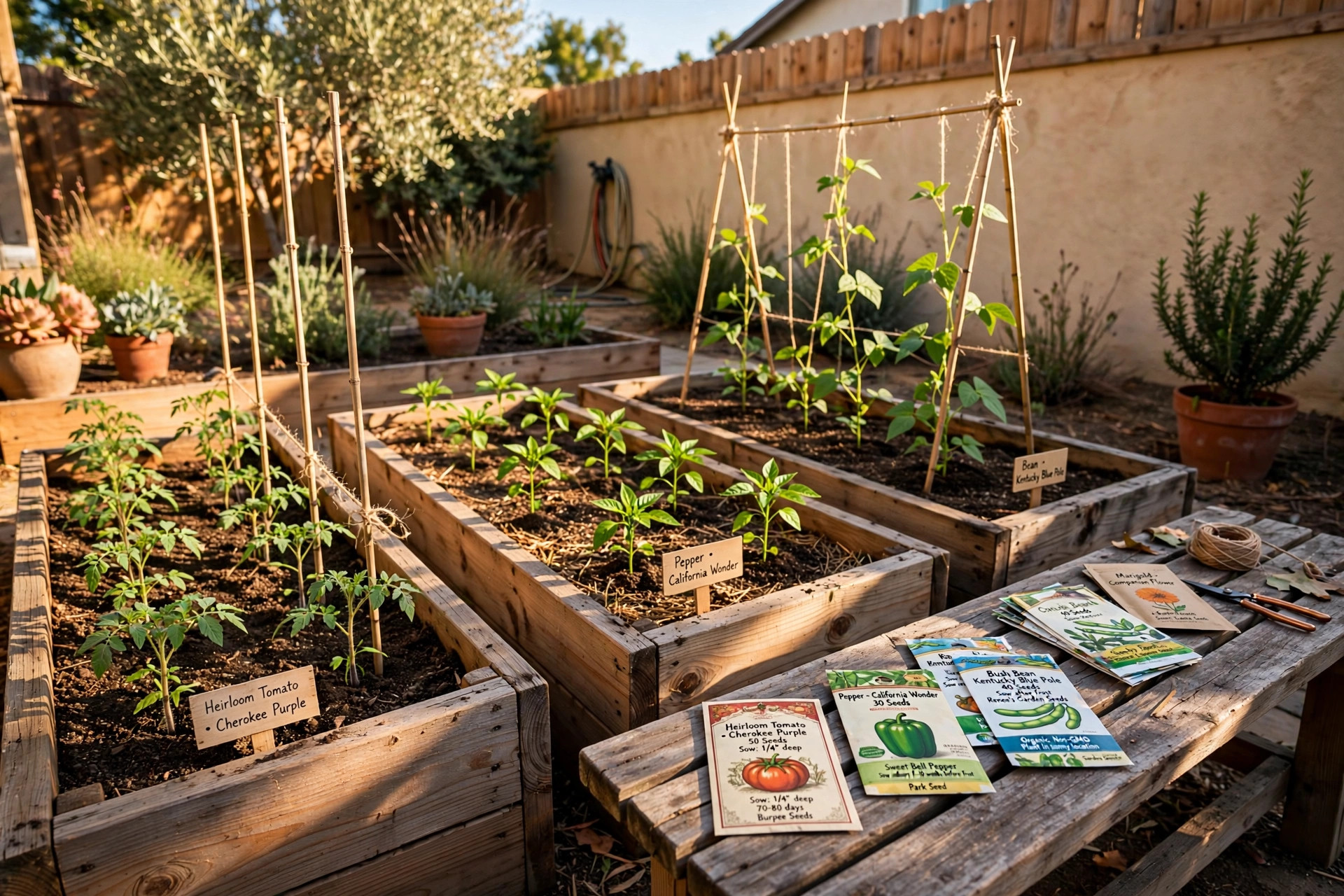
Tomatoes. The king of the heirloom garden. Slicing types like Brandywine, Mortgage Lifter, and Cherokee Purple do well in warm inland valleys. Cherry types such as Matt’s Wild Cherry ripen fast and suit the coast. Give tomatoes full sun and steady water.
Peppers. Both sweet and hot peppers have deep heirloom roots. California Wonder is a classic sweet bell. Anaheim and poblano types thrive in Southern California heat. Peppers want warmth, so wait until nights stay above fifty degrees before setting them out.
Beans. Pole beans like Kentucky Wonder and bush beans like Contender are easy and generous. Beans fix nitrogen in the soil, which helps the plants that follow them. In mild-winter areas you can plant a fall crop too.
Squash and cucumbers. Crookneck, zucchini, and pattypan squash grow fast in warm soil. Lemon cucumber is an old favorite with a mild taste. Give these plants room to spread.
Lettuce and greens. Black-seeded Simpson and Oakleaf are tender heirlooms for spring and fall. In coastal zones you can grow them nearly year round. A little afternoon shade keeps them sweet.
Root crops. French Breakfast radishes, Detroit Dark Red beets, and Scarlet Nantes carrots all have long histories. Loose soil and even moisture give the best roots.
Herbs. Many gardeners pair vegetables with herbs. If you plan to grow basil, thyme, or parsley beside your heirlooms, an organic herb seeds buying guide usa will help you pick varieties that suit your climate.
Warm-Season Vegetables for California
Plant warm-season heirlooms after the last frost date for your area. In much of the state that falls between February and April. Tomatoes, peppers, eggplant, squash, cucumbers, beans, corn, and melons all belong in this group. They need soil that has warmed to at least sixty degrees. A simple soil thermometer, sold at most garden centers, takes the guesswork out of timing.
Cool-Season Vegetables for California
Lettuce, spinach, peas, radishes, carrots, beets, broccoli, and cabbage grow best in cool weather. In coastal and central valley areas, plant them in late winter for spring harvest and again in late summer for fall harvest. In the low desert, winter is the main cool season. These crops bolt, or go to seed, when heat arrives, so timing matters more than with warm-season plants.
Cost and Price
Heirloom seeds are one of the cheapest ways to start a garden. A standard packet holds enough seed for a family plot and often costs between two and six dollars. Larger packets and bulk packs cost more up front but bring the per-seed price down. Rare or newly reintroduced varieties can cost more, sometimes eight to twelve dollars a packet.
Compare the packet count, not just the price. One packet of tomato seed may hold thirty seeds, while a packet of bean seed may hold a hundred. Think about how many plants you truly need. Most home gardeners need far less than they buy.
Shipping adds to mail-order cost, so many growers place one order with a single seller. Seed exchanges and local seed libraries in California towns often give heirloom seeds away for free. Your county extension office can point you to one. University extension programs, such as those supported through NIFA, also publish free growing guides for home gardeners.
Saving your own seed cuts future cost to zero. Let one or two of your best plants go to seed at season’s end. Dry the seeds well, label them, and store them cool and dry. With simple care, tomato and bean seeds stay strong for three to five years.
Starting Seeds and Caring for Plants
Good seed deserves a good start. California gardeners use two main methods: sowing straight in the ground and starting seeds indoors.
Starting Seeds Indoors
Tomatoes, peppers, and eggplant gain weeks of growth when started inside. Fill clean trays or pots with seed-starting mix, not garden soil. Plant seeds at twice their own depth. Keep the mix damp but not wet. Warmth matters more than light at first; the top of a refrigerator or a heat mat keeps seeds near seventy to eighty degrees.
Once seedlings appear, move them to strong light. A sunny window works, but a simple shop light hung a few inches above the plants gives sturdier stems. When seedlings have two sets of true leaves, thin or move them so each has room. If you want help picking containers and lights, a seed starting trays buying guide usa covers the common options and their costs.
Harden plants off before they move outside. Set them in shade for a few hours each day, then bring them in at night. Lengthen their time outside over a week. This slow step keeps tender plants from shock.
Care After Planting
Water. Most vegetables want about one inch of water per week, more in hot inland summers. Water the soil, not the leaves. Morning watering lets leaves dry by night and cuts disease.
Mulch. A two to three inch layer of straw, shredded leaves, or bark keeps soil cool and moist. Mulch also holds down weeds, which saves the gardener hours of work.
Feeding. Work compost into the bed before planting. A side dressing of compost midway through the season feeds heavy crops like tomatoes and squash. Soil tests from your county extension tell you what your ground truly needs.
Support. Stake or cage tomatoes. Trellis pole beans and cucumbers. Good air flow around plants lowers disease, and fruit kept off the ground stays cleaner.
Watch and act early. Walk the garden often. Pull small weeds before they seed. Pick hornworms and aphids by hand when numbers are low. Many problems stay small if caught early. For deeper advice on plant problems, the gardening library at Gardening Know How covers common pests and cures in plain language.
Reputable seed houses describe each variety’s needs on the packet and on their sites. Burpee and Park Seed both sell wide heirloom lines with growing notes. Gurney’s is another old American seller with many vegetable varieties. For gardeners who also buy young plants, Monrovia and Proven Winners list growers and care guides. White Flower Farm offers plants and clear cultural advice. Home and garden editors at The Spruce keep plain growing guides for most common vegetables.
Safety
Gardening is safe work, but a few habits keep it safer.
Store seeds and garden chemicals apart, and keep both away from children and pets. Read every product label before use, even on organic sprays. Wear gloves when handling compost, manure, or soil amendments. Wash hands and harvest well before eating; soil can carry bacteria.
Sun and heat are the main risks in California gardens. Work in the cooler morning hours during summer. Wear a hat, drink water, and rest in shade. Keep tools sharp and clean, and put them away after use so no one steps on a rake or shears.
If you use row cover or netting to guard crops, check it often so birds and small animals do not get trapped. A garden that is safe for people should be safe for the wildlife that visits it.
Frequently Asked Questions
Are heirloom seeds harder to grow than hybrid seeds? No. They need the same sun, water, and soil as any vegetable. Some old varieties face more disease, so pick resistant types and rotate crops. With those two steps, heirlooms grow just as well for most home gardeners.
Can I save seeds from my heirloom plants? Yes, and that is one of their best traits. Let fruit ripen fully on the plant. For tomatoes, ferment the seeds in water for two to three days, rinse, and dry them. For beans and peas, let pods dry on the vine. Store dry seeds in labeled envelopes in a cool place.
How many plants does a family need? A small family can eat well from modest plantings. Four to six tomato plants, a short row of beans, six pepper plants, and a few squash hills fill many tables. Start small. You can always plant more next season.
Do heirloom vegetables grow well in containers? Many do. Cherry tomatoes, peppers, lettuce, radishes, and herbs all suit pots. Use containers at least five gallons for fruiting plants, with drainage holes and good potting mix. Container plants dry fast in California heat, so check water daily in summer.
Where should I buy heirloom vegetable seeds in California? Local nurseries often carry varieties proven in your area. Mail-order seed houses give the widest choice. Seed swaps and seed libraries are free and local. Buy fresh seed each year or two for the strongest germination.
When should I plant in Southern California versus Northern California? Southern California gardeners often plant warm-season crops in March and cool-season crops in fall. Northern California gardeners usually wait until April or May for warm-season crops, with cool-season planting in early spring and late summer. Your county’s frost dates are the true guide.
A Final Word
A packet of heirloom seed is small, but it holds a long history. Choose varieties that fit your zone, give them sun and steady care, and they will repay you with food that tastes like food should. Start with a few kinds you love to eat. Learn their habits. Save seed from your best plants. Year by year, your garden will grow more your own, and the old varieties will keep their place in California home gardens for years to come.
References
Burpee. (n.d.). Seeds, plants, and gardening supplies. https://www.burpee.com Gardening Know How. (n.d.). Gardening guides and plant care. https://www.gardeningknowhow.com Gurney’s Seed & Nursery Co. (n.d.). Seeds, plants, and garden supplies. https://www.gurneys.com Monrovia. (n.d.). Plants for home gardens. https://www.monrovia.com National Institute of Food and Agriculture. (n.d.). Agricultural research and extension. https://www.nifa.usda.gov Park Seed. (n.d.). Seeds, plants, and gardening supplies. https://www.parkseed.com Proven Winners. (n.d.). Plants and gardening inspiration. https://www.provenwinners.com The Old Farmer’s Almanac. (n.d.). Gardening calendars and advice. https://www.almanac.com The Spruce. (n.d.). Home and garden advice. https://www.thespruce.com White Flower Farm. (n.d.). Plants, bulbs, and garden supplies. https://www.whiteflowerfarm.com
Was this guide helpful?

About Lisa Anderson
The My Garden US editorial team writes practical, in-depth home and garden guides for American homeowners — tested advice, no fluff.
You May Also Like
Succulent Variety Packs Deals Near Me: A Full Buying Guide
June 2, 2026 0 views
Heirloom Vegetable Seeds for Florida Homes in the USA
January 29, 2026 0 views
Dahlia Bulbs Bulk for Sale USA: How to Buy, Plant, and Enjoy Big Beds of Blooms
June 29, 2026 0 views