
Introduction
Learning how to aerate lawn without machine is easier than most people think. You do not need a heavy rental aerator to give your grass the air it needs. This guide shows you five proven methods that work for small and medium yards.
Aeration is the process of poking small holes in the soil. These holes let air, water, and food reach the roots of your grass. Over time, soil becomes packed down from foot traffic, rain, and mowing. When soil is packed tight, roots cannot grow deep. Grass turns thin, weak, and pale.
For yards under half an acre, hand methods work just as well. This article will walk you through each step. You will learn why aeration matters, what to check before you begin, and five ways to do the job by hand. You will also learn what it costs, how to care for the lawn after, and how to stay safe while you work.
Why Your Lawn Needs Air: How to Aerate Lawn Without Machine
Grass roots need air to live. The tiny spaces between soil grains hold oxygen. Water moves through those spaces too. When soil is pressed down, these spaces shrink. Air cannot get in. Water runs off instead of soaking down.
This packed condition is called compaction. It is common near sidewalks and driveways where people walk. Clay soils pack down faster than sandy soils. If your lawn feels hard underfoot, it is likely compacted.
The signs of compaction are easy to see. Water pools on the surface after rain. Grass grows thin in patches. The lawn looks tired even when you water and feed it. Weeds move in where grass grows weak. In bad cases, bare spots appear and will not fill in.
Aeration opens the soil back up. The holes break the hard surface layer. Roots can then push deeper into the ground. Deeper roots make grass stronger in hot weather and dry spells. A well-aerated lawn also uses water better. Less water is wasted as runoff.
Cool-season grasses, like fescue and bluegrass, do best with fall aeration. Warm-season grasses, like bermuda and zoysia, do best in late spring or early summer. Aerate when the grass is growing strong so it can heal fast.
Push a long screwdriver into moist soil. If it slides in easily to four inches, your soil is fine. If it is hard to push in, your lawn needs aeration. This quick test tells you where the worst spots are.
What to Look for Before You Start
Before you pick up a tool, take a good look at your yard. A little planning will save you time.
First, check your soil type. Grab a handful of moist soil and squeeze it. Sandy soil falls apart in your hand. Clay soil holds a tight ball shape. Loam soil holds a loose ball that breaks apart with a light poke. Clay soils need aeration more often. Sandy soils need it less.
Second, note the high-traffic areas. These are the paths where people and pets walk every day. The soil near the mailbox, the gate, and the patio gets packed the hardest. Mark these spots. They will need the most work.
Third, check the moisture of the soil. The ground should be moist but not muddy. Dry soil is too hard to poke holes in. Muddy soil will smear and seal shut. The best time is one or two days after a good rain or a deep watering.
Fourth, mow the grass short before you begin. Set your mower one notch lower than normal. Short grass makes it easier to see the soil and push tools into the ground. Clear away leaves, sticks, and toys from the lawn.
Fifth, mark anything buried under the lawn. Sprinkler heads and shallow cables can be damaged by deep holes. If you are not sure where they are, keep your holes shallow in those areas. You can also check lawn dethatcher rental prices near me if you later decide that thatch, not compaction, is your main problem.
Five Ways to Aerate by Hand
Method 1: The Garden Fork
The garden fork is the most common hand tool for aeration. Almost every homeowner owns one. It is cheap, simple, and works well on small areas.
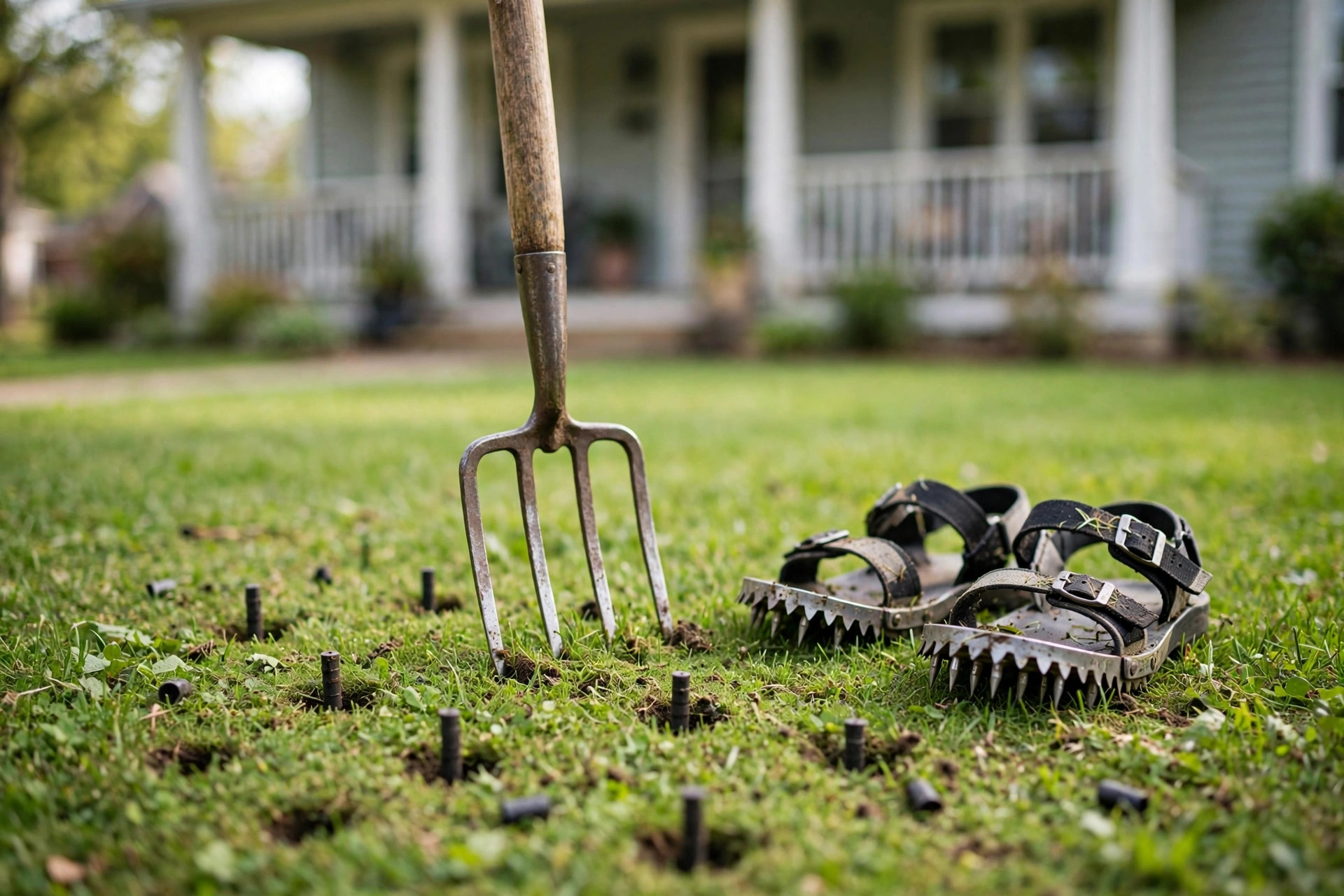
Push the fork straight down into the soil about four inches deep. Rock it back and forth a little to widen the holes. Pull it out and move two to three inches to the side. Repeat across the whole lawn.
Work in rows so you do not miss spots. For a small front yard, this may take one to two hours. Take breaks and drink water as you go.
The garden fork is best for spot treatment. If only part of your lawn is compacted, you can fork just those areas. It is also good around trees and flower beds where a machine cannot reach.
Method 2: Spike Shoes or Sandals
Spike aerator shoes strap onto your regular shoes. They have long metal spikes on the bottom. You simply walk across the lawn. Each step pokes holes in the soil.
These shoes are light and easy to use. They work best on soft, moist soil. On hard, dry ground the spikes may not go deep enough. Walk slowly and let your full weight press the spikes down.
Spike shoes are best for light aeration over a whole lawn. They are not as strong as a fork or a core tool. But they are much faster. Many people use them while doing other yard work, like spreading seed or fertilizer.
Watch your step on slopes and wet ground. The spikes can slip. Take the shoes off before you walk on a deck or driveway.
Method 3: The Manual Core Aerator
A manual core aerator is a hand tool with hollow metal tines. You push it into the ground with your foot. It pulls out small plugs of soil. These plugs sit on the lawn and break down in a few weeks.
Core aeration is better than spike aeration for heavy clay soil. The holes it makes do not close up as fast. The removed plugs also mix fresh soil into the top layer. You can buy a manual core aerator at most garden centers for a fair price.
Push straight down and step on the bar with your full weight. Pull straight up. Tap the tool clean when it fills with soil.
Leave the soil plugs on the lawn. They look messy for a week or two, but they add good soil back to the surface. You can break them up with a rake or let the rain melt them down.
Method 4: The Hollow Tine Hand Tool
A hollow tine hand tool is like a small version of the core aerator. It has one or two hollow tubes on a handle. You push it into the soil by hand and pull out a plug.
This tool is perfect for small problem spots. Use it around the base of a tree, along a path edge, or in a bare patch. It is light and easy to store. Some gardeners use it to plant bulbs too, since it makes neat round holes.
Push the tool in at an angle from two or three sides to open a wider pocket. Drop a little sand or compost into the hole to feed the roots.
Method 5: Natural and Liquid Methods
Liquid aeration products claim to loosen soil with wetting agents. They are sprayed on with a hose. Results vary, so use them as a helper, not a full fix.
A more proven natural method is topdressing with compost. Spread a thin layer of compost, about a quarter inch, over the lawn. Earthworms will pull it down into the soil. Over time, this builds soft, airy soil from the top down.
You can also plant deep-rooted plants like clover or daikon radish in bare spots. Their roots break up hard soil as they grow. When the plants die back, the root holes stay open. This is a slow method, but it costs almost nothing.
Many people combine methods: fork the worst spots, walk the yard in spike shoes, and topdress with compost each fall. This layered approach keeps soil soft year after year.
Cost and Price
Hand aeration is one of the cheapest lawn jobs you can do. A garden fork costs between fifteen and forty dollars at most stores. It lasts for many years. Spike aerator shoes cost between twenty and fifty dollars.
A manual core aerator costs between thirty and eighty dollars. A hollow tine hand tool costs between ten and twenty-five dollars. A bag of compost for topdressing costs between four and ten dollars, depending on size.
Compare this to renting a power core aerator, which often costs seventy-five to one hundred dollars per day. Hiring a lawn service to aerate can cost one hundred fifty to three hundred dollars for an average yard. Doing it by hand saves real money.
The main cost is your time. A small yard may take two to three hours with a garden fork. Plan the job for a cool morning or evening.
If your lawn also needs watering help, you may want to read about affordable lawn sprinkler installation cost estimate before you set your budget for the season.
Care and Upkeep After Aeration
The work does not end when the holes are poked. What you do after aeration decides how well your lawn recovers.
Water the lawn deeply right after you finish. The water will flow into the fresh holes and reach the roots. Keep the soil moist for the next two weeks. New root growth needs steady water.
This is also the best time to overseed. Grass seed falls into the holes and gets good contact with the soil. Choose a seed mix that matches your current grass. Spread it with a hand spreader for even coverage.
Add fertilizer if your soil needs food. Follow the bag rates. More is not better.
If you pulled soil plugs, leave them on the lawn. Let them dry, then break them up with a rake. The crumbled soil fills the holes.
Keep foot traffic light for two to three weeks. Let the grass heal. Do not apply weed killer right after aeration. The open holes can let chemicals reach roots too fast and cause damage.
Mow as normal, but do not cut more than one third of the blade at a time. Sharp blades make clean cuts that heal fast. If you need a trimmer for edges and thick spots, see our guide on top rated string trimmer for thick weeds.
Safety
Hand aeration is safe work, but a few rules will keep it that way.
Wear sturdy closed-toe shoes or boots. Spike shoes go over regular shoes, so wear a firm pair under them. Gloves protect your hands from blisters when you use a fork for a long time.
Drink water often and take breaks in the shade. Pushing a fork into hard soil is real exercise. Stop if your back or arms feel strained.
Watch for buried lines before you poke deep holes. Call your local utility marking service before you dig deeper than six inches. This free service marks gas, water, and electric lines.
Keep children and pets off the lawn while you work. Spike shoes and sharp tools can hurt small feet. Store tools out of reach when you are done.
If you use liquid products, read the label first and follow its safety directions.
Frequently Asked Questions
How often should I aerate my lawn by hand?
Most lawns need aeration once a year. Lawns with heavy clay soil or heavy foot traffic may need it twice a year, in spring and fall. Sandy soils may only need it every two years.
Is hand aeration as good as machine aeration?
For small to medium yards, yes. Hand tools make the same kind of holes a machine makes. A machine is only faster on lawns over half an acre.
What is the best month to aerate without a machine?
For cool-season grass, September and October are best. For warm-season grass, May and June are best. Aerate when the grass is growing fast and the soil is moist. Avoid the heat of midsummer and the cold of late fall.
Can I aerate a lawn that has a sprinkler system?
Yes, but be careful. Mark all sprinkler heads with flags before you start. Keep your holes shallow near the heads and pipes. Most sprinkler lines sit six to twelve inches deep. Hand tools that go four inches deep are usually safe.
Should I dethatch or aerate first?
If your lawn has thick thatch, dethatch first. Aeration holes cannot work well through a thick mat of dead grass. Once the thatch is thin, aerate to open the soil.
Do I need to water before hand aeration?
Yes. Water the lawn deeply one or two days before you start. Moist soil is much easier to poke. The tools slide in with less effort, and the holes hold their shape better. Do not work on soaking wet or muddy ground.
A Final Word
You do not need a machine to give your lawn the air it needs. A garden fork, a pair of spike shoes, or a simple hand tool can do the job well. The work takes some time, but the cost is low and the results are real.
Treat the worst spots first. Water, seed, and feed after you finish. Your grass will grow thicker and greener.
Trusted makers of lawn care tools, like Toro and John Deere, offer guides on lawn care basics on their homepages. Engine and tool makers such as Briggs & Stratton also share upkeep tips for home yard equipment. With the right method and a little care, your lawn can thrive without a single machine pass.
References
Toro. (n.d.). Lawn care equipment and resources. https://www.toro.com Deere & Company. (n.d.). Lawn and garden care. https://www.deere.com Briggs & Stratton. (n.d.). Outdoor power equipment engines. https://www.briggsandstratton.com
Was this guide helpful?

About Sarah Mitchell
The My Garden US editorial team writes practical, in-depth home and garden guides for American homeowners — tested advice, no fluff.
You May Also Like
Robot Lawn Mower for Half Acre Yards: What to Know Before You Buy
September 10, 2026 0 views
Best Lawn Roller Water Filled Reviews: A Practical Buyer’s Guide
September 8, 2026 0 views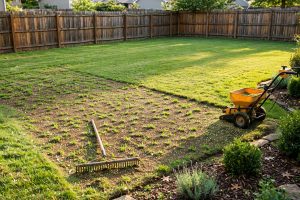
How to Overseed a Bermuda Grass Lawn
June 12, 2026 0 views