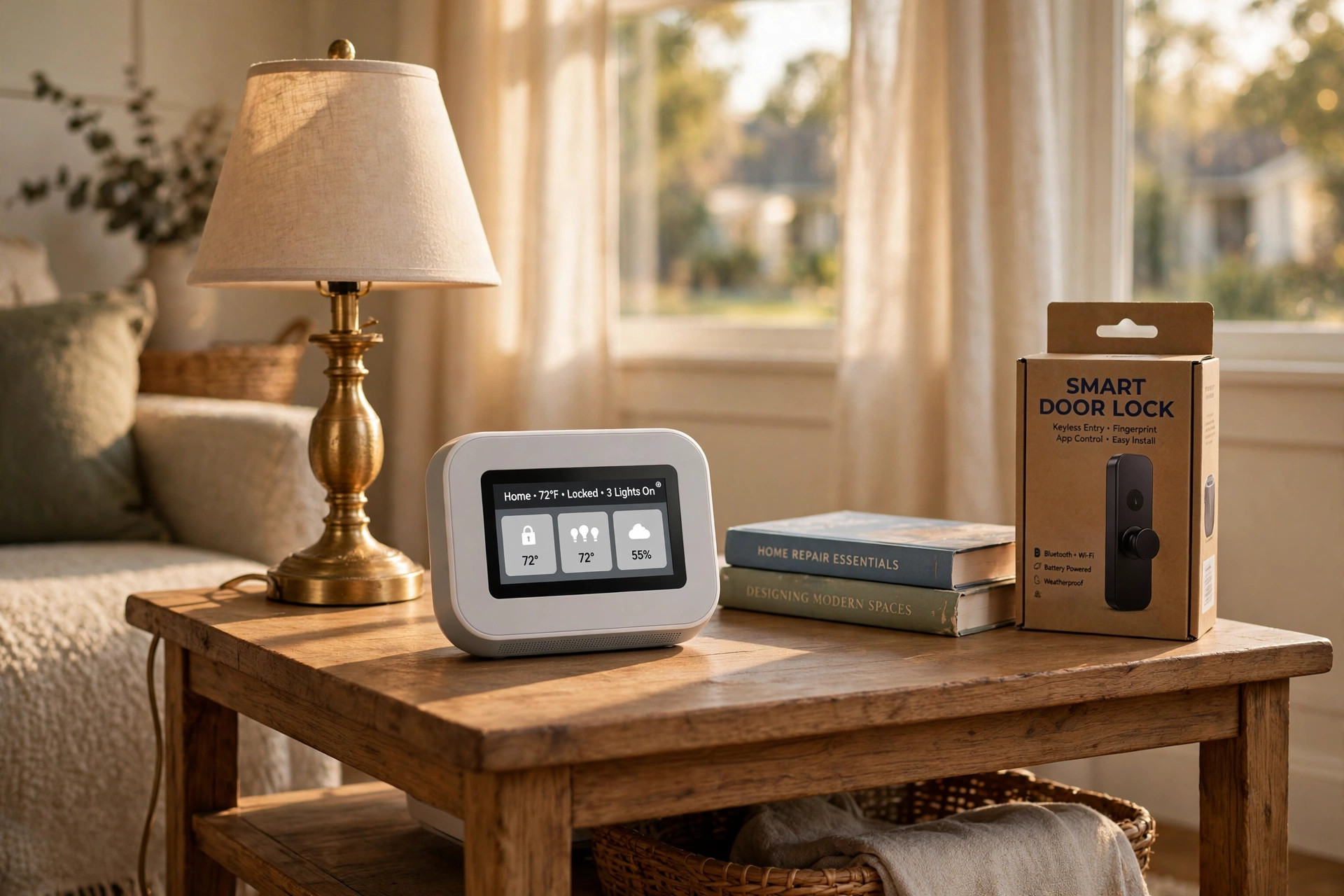
A smart home hub is the brain of the house. It links the locks, lights, sensors, and cameras into one system. This smartthings vs hubitat comparison 2026 usa walks through the two most popular hubs side by side. Samsung SmartThings is the easy cloud option. Hubitat Elevation is the local-first choice for power users. Both work well in 2026, but they suit different kinds of people. The right pick saves time, money, and trouble.
Why a Smart Home Hub Matters
A home can fill with smart devices fast. A lock here, a camera there, a thermostat on the wall. Without a hub, each device talks to its own app. That gets messy. A hub joins them all. One app rules the house. Lights turn on when the door unlocks. The alarm arms when the last person leaves.
The hub also matters for speed. A slow hub makes lights lag. Nobody wants to wait two seconds in a dark hall. It matters for privacy too. Some hubs send every event to the cloud. Others keep it all inside the house. This smartthings vs hubitat comparison 2026 usa weighs these points one by one, so the choice is clear.
How to Choose Between SmartThings and Hubitat: Smartthings vs Hubitat Comparison 2026 Usa
Start with your skill level. SmartThings is built for beginners. Setup takes minutes. The app guides each step. Hubitat is built for tinkerers. It takes more time to set up, but it rewards the effort with speed and control.
Think about where your rules should live. SmartThings runs most automations in the cloud. Hubitat runs them on the box in your home. If the internet goes down, a Hubitat home keeps working. A SmartThings home keeps only basic device control.
Think about cost. SmartThings hardware is cheap, but the cloud does the heavy lifting. Hubitat costs more up front for the hub itself, and then there is no fee. Think about brands too. Both hubs speak Z-Wave, Zigbee, and Wi-Fi. Matter support is strong on both in 2026. Check the lists at SmartThings and Hubitat to see if your devices are covered.
SmartThings in 2026: The Easy Path
SmartThings is Samsung’s smart home platform. The hub is small and affordable. The phone app is clean and simple. Most people finish setup in under an hour. It works with thousands of devices from hundreds of brands.
Where SmartThings Shines
Ease is its best trait. A beginner can add a lock, a sensor, and a camera before lunch. Voice control through Google or Alexa is smooth, and the Google store lists both assistants side by side at Google Store. Samsung also ties its own TVs and appliances into the app. A family that owns Samsung phones and TVs gets a very neat fit.
Where SmartThings Falls Short
The cloud is the weak point. Many automations need the internet to run. If the connection drops, rules stop. Speed can vary. On a good day it is fine. On a bad day there is a lag. Some advanced users also dislike the limits on custom code. The platform is more closed than it used to be.
Hubitat in 2026: The Local Powerhouse
Hubitat Elevation is a hub made in the USA for people who want full control. Everything runs on the box. No cloud is needed for automations. The community is large and helpful. New drivers for odd devices appear often.
Where Hubitat Shines
Speed is the headline. Lights react in a blink because nothing leaves the house. Privacy is the second win. Sensor events stay local. The hub also keeps working when the internet fails. For a security-minded home, that is a big deal.
Where Hubitat Falls Short
The learning curve is real. The interface looks dated next to SmartThings. Rules take study to master. Beginners may feel lost in the first week. Device setup can need custom drivers, which adds work. It is a hub for people who enjoy the craft of automation.
Head to Head: The Key Differences
Speed and Reliability
Hubitat wins here. Local processing beats cloud processing every time. SmartThings has improved its edge drivers, but it still leans on the cloud for many routines. In daily use, Hubitat feels instant. SmartThings feels fast enough most days, with rare slow moments.
Ease of Use
SmartThings wins here. The app is friendlier. Setup is simpler. Help screens are clearer. Hubitat asks more of the user from day one. A non-technical person will be happier with SmartThings in the first month.
Privacy
Hubitat wins. Data stays in the home. SmartThings sends device data to Samsung’s cloud. Both firms publish privacy policies, but local-first is local-first. Readers who care about this can also review the safety notes at CPSC for connected-home guidance.
Device Support
Both are strong in 2026. SmartThings edges ahead on mainstream brands and Matter devices. Hubitat edges ahead on odd, old, and obscure Z-Wave and Zigbee gear. Check both lists before buying.
Voice Assistants
Both work with Alexa and Google. Neither blocks the other. Setup is simple on each. This part of the race is a tie.
Matter and Future-Proofing
Matter is the new open standard for smart home gear. It lets a device work across brands and platforms. Both hubs support Matter in 2026. SmartThings pushed early and deep, and most new Samsung appliances speak it. Hubitat added Matter with care, and the community keeps the list of working devices fresh. If you plan to buy gear for years to come, pick the hub whose Matter list matches your favorite brands. Either way, Matter means less lock-in than the old days of walled gardens.
Cost and Price
The SmartThings hub itself often sells for under one hundred dollars. There is no monthly fee for the basic platform. The cost shows up in the devices, not the hub. A full setup of lock, doorbell, and sensors can run a few hundred dollars. A video doorbell alone can cost one hundred to two hundred dollars. Sensors run twenty to forty dollars each. Plan the room list first, then price the gear.
Hubitat Elevation costs more, usually around one hundred fifty dollars for the hub. There is no fee after that. Over five years, the two paths cost about the same for most homes. Professional monitored security is a separate choice; services like ADT and SimpliSafe charge monthly fees that neither hub includes.
If you plan to grow the system room by room, Hubitat’s one-time price is easy to budget. If you want the lowest cost to start today, SmartThings is cheaper at the door.
Care and Upkeep
Both hubs need small care. Keep the hub on a shelf with good airflow. Plug it into a surge protector. Update the firmware when the app asks. Back up Hubitat’s settings now and then; the box makes this simple.
Batteries in sensors last one to two years. Check them twice a year. Move the hub toward the center of the house for better range. These small steps keep either system healthy for years.
Safety
A smart hub is a computer in your home. Protect it. Use a strong password and two-step sign-in. Keep the firmware current. Put the hub on its own guest network if the router allows it. This limits the damage if one device is hacked.
Smart locks deserve care too. Pair them close to the hub. Test the lock from outside the door. For a deeper look at lock choices, see our guide at /schlage-vs-kwikset-smart-lock-comparison-usa/ and our look at smoke alarm pairings at /nest-protect-vs-first-alert-comparison-usa/. The Consumer Reports smart home section also rates devices for security.
Setting Up Each Hub
SmartThings setup is a phone job. Plug in the hub. Open the app. Tap the plus sign. The app finds nearby devices and walks you through each one. Name each room. Build your first routine, like lights on at sunset. Total time for a starter kit is often under an hour.
Hubitat setup is a computer job at first. Plug in the hub. Open the web page it serves on your home network. Add devices one by one, starting with powered ones like plugs and switches, since they strengthen the mesh. Then write rules in the Rule Machine. Take an evening for this. Read the community guides. Once the rules are set, you will rarely need to touch them again.
For both hubs, place the hub high and central. Thick walls and metal block signals. A small mesh of plug-in repeaters fixes most range woes. This is true for Z-Wave and Zigbee alike.
Which One Should You Buy
Choose SmartThings if you want the easy start. It suits a first smart home, a rental, or a family with mixed tech skills. It suits a home full of Samsung gear. Setup is quick and the app is kind.
Choose Hubitat if you want the fast, private system. It suits a homeowner who enjoys setup and tuning. It suits a house where automations must run even when the internet dies. It suits anyone with a shelf of older Z-Wave gear.
Think about the long run too. A smart home is not a weekend toy. It grows over years. The hub you pick today shapes every device you buy tomorrow. If you like simple tools that just work, SmartThings will not fight you. If you like tools that bend to your will, Hubitat will reward you. Neither choice is wrong. The wrong choice is no hub at all, with a dozen apps and no plan.
Many readers also compare the small battles inside each system. Our /ring-vs-nest-doorbell-comparison-2026-usa/ guide covers video doorbells that pair with either hub. Reviews at PCMag and The Verge test hubs each year and are worth a read before buying.
FAQ
Do SmartThings and Hubitat work with the same devices?
Mostly yes. Both speak Z-Wave, Zigbee, Wi-Fi, and Matter. Mainstream locks, sensors, and lights work on both. Some niche devices work better on one. Check the official device lists before you buy.
Can I move from SmartThings to Hubitat later?
Yes. You will unpair devices from one hub and pair them with the other. It takes an afternoon for a small home. Rules must be rebuilt by hand. Plan for that time.
Does Hubitat need the internet at all?
Only for setup, updates, remote access, and voice control. Daily automations run fine offline. SmartThings needs the internet for most cloud routines.
Which hub is better for renters?
SmartThings is the easier pick for renters. Setup is fast and the app is simple. When you move, you reset the hub and start fresh. Our /nest-protect-vs-first-alert-comparison-usa/ page notes which alarms suit rentals too.
Is there a monthly fee for either hub?
No. Both hubs are free to use after purchase. Costs come from devices and from optional services like video storage or professional monitoring. Ring video plans, for example, are separate from the hub.
Can both hubs work with Alexa and Google Home?
Yes. Both connect to the major voice assistants. Commands like “lock the front door” work on either. Pick the assistant your family already uses.
A Short Final Word
This smartthings vs hubitat comparison 2026 usa ends where it began. There is no single winner. SmartThings is the friendly road. Hubitat is the fast road. Match the hub to the driver. A beginner who wants results today will love SmartThings. A tinkerer who wants speed and privacy will love Hubitat. Either way, a hub turns a pile of gadgets into a real smart home.
Related guides on this site include best video doorbell without subscription usa, ring vs nest doorbell comparison 2026 usa, and best wireless doorbell camera reviews usa.
References
ADT. (n.d.). Home security and automation. https://www.adt.com Consumer Reports. (n.d.). Product reviews and ratings. https://www.consumerreports.org Google Store. (n.d.). Smart home devices. https://store.google.com Hubitat. (n.d.). Hubitat Elevation smart home hub. https://hubitat.com PCMag. (n.d.). Technology product reviews. https://www.pcmag.com Ring. (n.d.). Smart home security devices. https://www.ring.com Samsung SmartThings. (n.d.). SmartThings smart home platform. https://www.smartthings.com SimpliSafe. (n.d.). Home security systems. https://www.simplisafe.com The Verge. (n.d.). Technology news and reviews. https://www.theverge.com U.S. Consumer Product Safety Commission. (n.d.). Product safety information. https://www.cpsc.gov
Was this guide helpful?

About Michael Thompson
The My Garden US editorial team writes practical, in-depth home and garden guides for American homeowners — tested advice, no fluff.