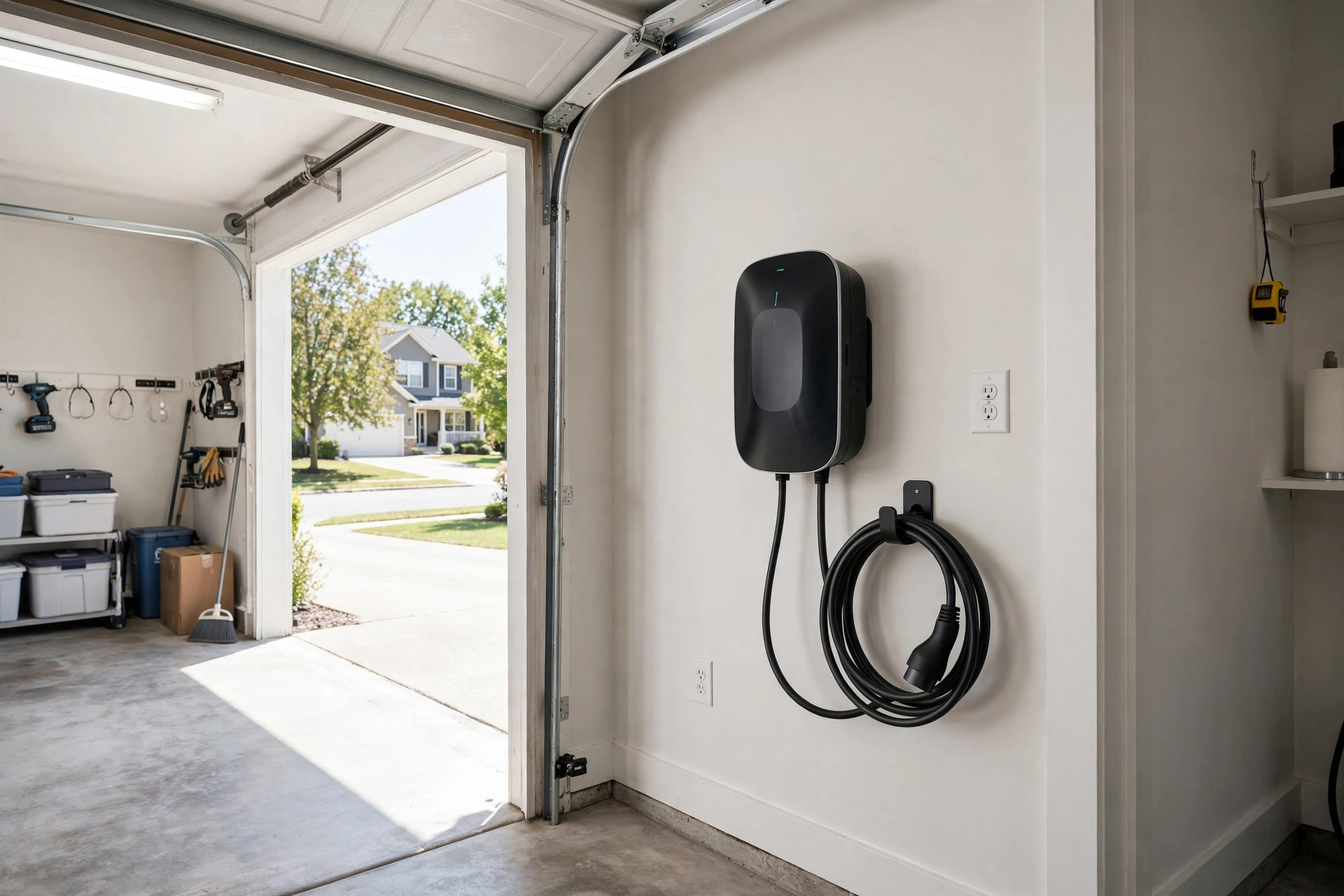

Many American homeowners now keep an electric car in the driveway. The next step, for most of them, is a charger in the garage. A home charging station makes life with an electric car far simpler. But the equipment and the wiring work can cost a good deal of money. That is where the ev charger tax credit 2026 for homeowners usa comes in. This federal credit can cut the cost of buying and installing a home charger, sometimes by a large share.
This guide explains the credit in plain words. It tells you who can claim it, how much it is worth, what equipment counts, and what steps to take. Tax rules change from year to year, so you should check the current forms before you file. But the facts below will give you a clear starting point.
Why the Credit Matters
Electric cars cost less to run than gasoline cars, mile for mile. Home charging is the cheapest way to fill them up. Public fast chargers are fine for road trips, but they cost more per mile and take time out of your day. A home charger lets the car sit and charge while you sleep. You wake up to a full battery, every morning.
The problem is the up-front cost. A good home charging station runs from about three hundred to one thousand dollars. The wiring and the electrician’s labor can add another five hundred to two thousand dollars, more if your panel needs an upgrade. For many families, that total bill makes them wait.
The federal tax credit lowers that bill. It pays back part of the cost through your tax return. When a credit covers hundreds of dollars, the payback time on a home charger shrinks to months instead of years. For a homeowner who drives an electric car daily, the credit often makes the project pay for itself.
Home charging also helps the power grid, since cars charge at night when demand is low. Some power companies even pay homeowners to charge during off-peak hours.
How the EV Charger Tax Credit Works: Ev Charger Tax Credit 2026 for Homeowners Usa
The credit for home charging equipment is part of the federal tax code. It covers electric vehicle supply equipment, which is the formal name for a home charger. It applies to the equipment and to the cost of putting it in place.
The credit is a percentage of what you spent. You add up the cost of the charger and the installation labor, and the credit pays back a set share of that total, up to a limit.
A tax credit lowers the tax you owe; it is not a rebate check. If you owe less tax than the credit is worth, you may not get the full value. Your own tax situation decides how much of the credit you can use.
The credit applies to equipment placed in service during the tax year: the charger must be bought, installed, and working in the year you claim. Keep your receipts and the installer’s invoice; the IRS may ask for proof.
Tax law in this area has changed before, and it can change again. Confirm the exact percentage and cap for 2026 in the current IRS forms before you file.
What Equipment Qualifies
Not every plug counts. The credit covers equipment used to charge an electric car or a plug-in hybrid at your home. The main unit, often called a Level 2 charger, is the center of the claim. It runs on a 240-volt circuit and charges much faster than a standard wall outlet.
Cables, mounts, and connectors that come with the charger count as part of the equipment. The wiring, conduit, and labor that the electrician installs to bring power to the charger also count. If the job needs a new breaker or a small panel upgrade, those costs may be included as part of the installation.
The charger should meet safety standards. Look for units listed by a recognized testing laboratory, and install it according to local building and electrical codes. A permit and an inspection, where your town requires them, protect you and keep the claim clean.
Used or resold equipment is harder to claim; the credit is meant for new equipment placed in service at your home. Keep the purchase receipt that shows the unit is new.
If you are still shopping, a review of the best EV chargers for home in 2026 can help you compare features and prices before you buy.
Who Can Claim the Credit
The credit is aimed at homeowners. You must own the home where the charger is installed, or be the person responsible for the installation at the home. Renters face limits, because the equipment must be installed at a place tied to the taxpayer.
The charger must be at your main home or another home you own in the United States. Vacation homes may qualify, but the rules for second homes can differ. Read the instructions carefully if the charger is not at your main address.
You must be the original user of the equipment. The charger should be new when you place it in service. Businesses have a separate version of this credit, with its own limits and forms; this guide covers the home version only.
Some states add their own rebates or credits on top of the federal one. Check with your utility and your state energy office before you start, so you do not miss a deadline.
How Much the Credit Is Worth
For homeowners, the credit is a share of the total project cost, with a per-home cap. The share and the cap are set by the tax code for each year. For 2026, confirm the exact figures in the current IRS guidance.
A simple example shows how it works. Suppose the charger costs seven hundred dollars and the installation costs one thousand dollars. The total is one thousand seven hundred dollars. If the credit pays thirty percent of the cost, the credit is worth five hundred ten dollars. Your tax bill falls by that amount.
On a larger project, the cap matters. If your panel needs a major upgrade and the total runs to five thousand dollars, the per-home cap may limit the credit to less than the full percentage. Know the cap before you sign the contract.
What Counts Toward the Total
– The charging unit itself – Cables, connectors, and mounting hardware – Wiring and conduit to the charger – A new circuit breaker or disconnect switch – The electrician’s labor – Permit and inspection fees in many cases
What Does Not Count
– The cost of the electric car itself – Gasoline or general home electrical work not tied to the charger – Equipment installed at a home you do not own – Used equipment in most cases
How to Claim the Credit Step by Step
Step 1: Buy Eligible Equipment
Choose a new Level 2 charger from a known maker. Keep the sales receipt showing the date, seller, and model. Independent reviews can help you pick a safe unit: sites like Consumer Reports test home products, and technology outlets such as CNET and PCMag cover charging equipment in detail.
Step 2: Hire a Licensed Electrician
Get the work done by a licensed electrician. Ask for a written quote that separates the charger cost from labor and materials. Your electrician should pull any required permit and schedule the inspection. This protects your home and your claim.
Step 3: Keep Every Record
Save the following in one folder:
– The charger purchase receipt – The electrician’s invoice, with labor and materials listed – The permit and the passed inspection report – The date the charger first went into service
Step 4: Fill Out the Tax Form
Claim the credit on your federal tax return for the year the charger went into service. Enter the total cost of the equipment and installation, apply the credit rate, and respect the cap. If you use tax software, answer the questions about home energy equipment honestly and fully.
Step 5: File and Keep Copies
File your return with the credit included, and keep copies of everything for at least three years after you file.
Smart Chargers and Your Connected Home
Many new chargers are smart devices. They connect to your home Wi-Fi and let you schedule charging, track energy use, and sometimes earn money from your utility. A smart charger turns a simple plug into part of your home’s energy system.
These features pair well with other smart home gear. A connected home can shift heavy loads to cheap night hours. For context on how smart devices fit together, The Verge covers the connected home beat, and store.google.com shows how major platforms group smart home products.
Smart chargers also raise a simple security point. Any device on your home network should have a strong, unique password. Keep the charger’s firmware up to date. The CPSC publishes safety notices on home electrical products, and it is worth checking for recalls on any charger you buy.
Cost and Price Breakdown
Home charging projects vary widely. A simple garage install near the panel may cost under one thousand dollars all in. A long cable run to a detached garage can cost several thousand. The credit applies to the real cost, whatever it is, up to the cap.
Here are rough ranges seen across the country:
– Basic Level 2 charger: 300 to 700 dollars – Premium smart charger: 700 to 1,200 dollars – Simple installation: 400 to 1,000 dollars – Complex installation: 1,000 to 2,500 dollars – Panel upgrade: 1,500 to 4,000 dollars
After the credit, many homeowners see their net cost fall by a third or more. State and utility rebates can push the net cost lower still. For a sense of typical prices in your area, see the guide to home EV charger installation costs. Add the fuel savings of home charging, and the project often pays for itself within two to three years.
A charger also adds to the home. Buyers now ask about EV charging. A clean, permitted install is a small but real selling point, much like a well-planned doorbell wiring job signals a cared-for home.
Care and Upkeep
A home charger needs little care. Once a year, look over the unit and the cable for cracks, fraying, or loose mounts. Keep the plug clean and dry. If the charger lives outdoors, make sure its weather cover is in place.
Do not open the charger case; the high-voltage parts inside are not a do-it-yourself project. If the unit shows an error light, check the manual first, then call the maker or your electrician.
Software matters for smart chargers. Let the app update the firmware when it asks. Updates fix bugs and sometimes add features, such as better scheduling with your utility’s rate plan.
Keep the paperwork with your tax records. If you sell the home, hand the charger manual and the install records to the buyer. It is a small courtesy that builds trust.
Safety
Electricity at 240 volts deserves respect; never install a Level 2 charger yourself. The permit and inspection are not red tape. They are the proof that the work was done right.
Mount the charger where the cable cannot trip anyone, and keep it away from water spray. If the unit is outside, use a model rated for outdoor use. Do not use extension cords with an EV charger.
Watch for recalls. The CPSC lists recalls on electrical equipment, and makers publish safety notices on their sites. Register your charger with the maker so you get recall letters.
If you smell burning or see scorch marks near the outlet or the unit, stop using the charger at once. Turn off the breaker and call an electrician. This is rare, but fast action matters.
Smart home companies take electrical safety seriously across their lines. Ring and SimpliSafe both publish safety guidance for their wired devices, and ADT notes code compliance in its professional installs. The same care applies to your charger.
FAQ
Does the credit cover a standard wall outlet?
No. A regular 120-volt outlet is not eligible equipment. The credit covers dedicated electric vehicle supply equipment, usually a Level 2 charger, plus its installation.
Can I claim the credit if I lease my electric car?
Leasing the car does not block the credit. What matters is that you own the home, bought new charging equipment, and placed it in service at that home. Check the form instructions for details.
What if I installed the charger last year?
You claim the credit for the year the equipment went into service. If that was last year, you may need to amend last year’s return. Do not claim the same cost twice.
Does the credit apply to a charger at my cabin?
Second homes can qualify, but the rules differ from those for a main home. Read the current IRS instructions for property that is not your principal residence.
Can renters claim the credit?
The home version of the credit is written for owners. A renter who pays for a permanent install faces limits. Talk to a tax professional before you spend the money.
Will the credit still exist in 2027?
Tax law changes with new legislation. The credit has been extended before, and it could change again. Claim for 2026 under the 2026 rules, and check again next year.
A Final Word
The ev charger tax credit 2026 for homeowners usa is a simple idea. The country wants more electric cars on the road, and home charging makes those cars practical. The credit pays you back for the charger and the wiring, so the up-front cost hurts less.
The steps are plain. Buy a safe, new charger. Hire a licensed electrician. Keep your receipts. Claim the credit on your return. Done right, a home charger gives you a full battery every morning and lower fuel costs for years. The credit simply makes the start of that road a little easier.
References
ADT. (n.d.). Home security and automation. https://www.adt.com CNET. (n.d.). Technology news and reviews. https://www.cnet.com Consumer Reports. (n.d.). Product reviews and ratings. https://www.consumerreports.org Google Store. (n.d.). Smart home devices. https://store.google.com PCMag. (n.d.). Technology product reviews. https://www.pcmag.com Ring. (n.d.). Smart home security devices. https://www.ring.com SimpliSafe. (n.d.). Home security systems. https://www.simplisafe.com The Verge. (n.d.). Technology news and reviews. https://www.theverge.com U.S. Consumer Product Safety Commission. (n.d.). Product safety information. https://www.cpsc.gov
Was this guide helpful?

About Lisa Anderson
The My Garden US editorial team writes practical, in-depth home and garden guides for American homeowners — tested advice, no fluff.
You May Also Like

Best Smart Floodlight for Backyard USA: A Practical Buyer’s Guide
January 12, 2026 0 views
Schlage vs Kwikset Smart Lock Comparison USA: Which Front Door Lock Is Right for You
January 23, 2026 0 views
Smart Lock for Airbnb Remote Access Reviews: What Hosts Should Know
March 10, 2026 0 views