
A smart lock for airbnb remote access reviews tells one clear story. Hosts who run short-term rentals love keyless entry. Guests arrive at any hour. No one needs to hand off a metal key. The host can unlock the door from a phone while sitting miles away. It sounds simple. In practice, small details matter a great deal. Battery life, lock type, and remote control features decide whether the lock is a help or a headache.
This guide gathers what many hosts report about these locks. It covers why they matter, what to look for, the main types, the cost, care tips, safety notes, and answers to common questions.
Why a Smart Lock Matters for an Airbnb
An Airbnb is not a normal home. Strangers stay in it week after week. Guests arrive late at night. They check out early in the morning. The host may live in another city. In the old days, hosts used lockboxes with a four-digit code. Some still do. But lockboxes have weak points. Codes get shared. Guests forget to scramble the dial. The box can break in bad weather.
A smart lock fixes many of these problems. The host creates a unique code for each guest. The code works only during the booked dates. When the guest leaves, the host turns the code off. There is no metal key to copy or lose.
Reviews from hosts often point to one more gain: fewer trips to the property. In the past, hosts drove over to fix lockouts. Now they solve most entry problems from home. That saves time and gas.
Guests tend to like keyless entry too. They do not need to worry about losing a key at the beach. Parents with children find codes easier than keys. Business travelers who land at midnight walk straight in. Many guest reviews of Airbnbs mention smooth check-in as a plus. A smart lock helps make that smooth check-in happen.
What to Look for When Choosing a Lock: Smart Lock for Airbnb Remote Access Reviews
Smart locks differ more than most buyers expect. The box on the shelf may look alike. The features inside can be very different. These are the points hosts care about most.
Remote access through the internet
Not every smart lock works from far away. Some locks use Bluetooth only. Bluetooth reaches only a few yards. With a Bluetooth-only lock, you must stand near the door to unlock it.
Look for a lock that connects to the internet through Wi-Fi or a small hub. Then the phone app can reach it from anywhere. If the lock needs a separate hub or bridge, add that to the cost.
Guest code management
The lock should let you create many codes and name them. You want one code per guest, with start and end times. This is called scheduled access. Set the code to turn on at check-in time and turn off at checkout.
Also check how many codes the lock can hold. Some hold 25. Some hold 250. A busy rental with back-to-back guests can use many codes in a season.
Door compatibility
Most American front doors use a standard deadbolt hole. But doors vary in thickness. Some locks fit doors from one and three-eighths inches to two inches thick. Measure your door before you buy. A lock that does not fit your door is money wasted.
Battery life and backup power
A smart lock runs on batteries. Most use four AA batteries. Good locks last six months to a year on one set. Cheap locks may die in eight weeks. Pick a lock with some form of backup, like a physical key or an emergency power port. Your guests will thank you.
Integration with rental software
Many hosts use tools that link their booking calendar to the lock. The software makes a code when a booking comes in and sends it to the guest by message. If you plan to use such a tool, check that the lock brand supports it.
Types of Smart Locks for Rentals
There is no single best design. Each type suits a different host.
Keypad deadbolt locks
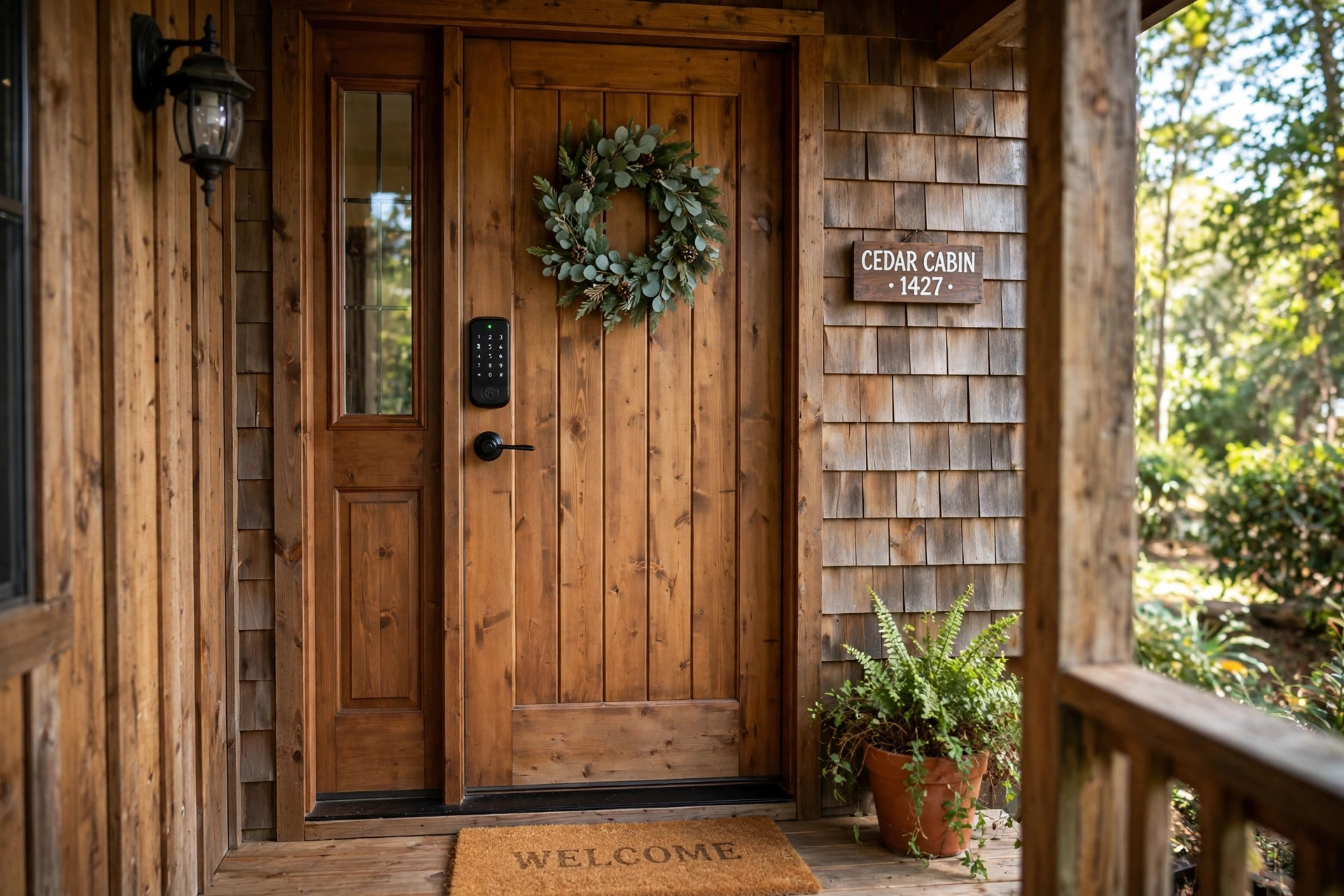
These are the most common choice for rentals. They replace the whole deadbolt. They have number buttons on the front. The guest types a code and turns the lock. They are easy to use. Older guests and children learn them in seconds. Most run on AA batteries and connect by Wi-Fi or through a hub.
Retrofit locks
A retrofit lock keeps your existing deadbolt and key. It fits over the inside turn piece. From outside, the door looks normal. Hosts like these when a landlord will not allow a full lock swap. The weak point is that anyone with an old metal key can still get in, so you may need to change the key cylinder too.
Lever or knob locks with keypads
These suit interior doors or side entries. They work well for a garage door that leads into the house, or for a bedroom door in a shared rental. They are less strong than a full deadbolt. Do not use them as the only lock on a main entry if security is a top concern.
Wi-Fi locks versus hub-based locks
A Wi-Fi lock talks straight to your home router. Setup is simple. The cost is battery life, since Wi-Fi uses more power. A hub-based lock talks to a small plug-in hub, and the hub talks to the router. Battery life is longer, often over a year. But you must buy the hub and keep it plugged in near the door.
Cost and Price Ranges
A smart lock for airbnb remote access reviews often starts with price. Costs fall into three bands.
Budget locks cost about 100 to 150 dollars. They usually have a keypad, Bluetooth, and basic codes. Some lack true remote access. Read the box with care.
Mid-range locks cost about 150 to 250 dollars. This is the sweet spot for most hosts. You get Wi-Fi remote access, scheduled guest codes, decent battery life, and app alerts when the door locks or unlocks. Most host reviews praise locks in this band.
Premium locks cost 250 to 350 dollars or more. They add features like fingerprint readers and built-in door sensors. They are nice to have. For a basic rental, they are often more than you need.
Do not forget the small extra costs. A hub can add 50 to 80 dollars. If you hire a handyman to install the lock, that can be 75 to 150 dollars. Installation is usually a do-it-yourself job with a screwdriver.
Also think about the cost of failure. One bad lockout can lead to a one-star review. One-star reviews cost far more in lost bookings than a good lock costs.
Care and Upkeep
A smart lock is a machine. It needs care like any machine.
Check the batteries on a schedule. Do not wait for the low-battery beep. Set a reminder every four months to check the battery level in the app. Keep spare AA batteries in a drawer inside the rental.
Update the lock software when the app offers it. Updates fix bugs and close security holes. Run updates between guests, not during a stay.
Clean the keypad now and then. Dust and grime can make buttons stick. Wipe it with a soft damp cloth. Do not spray cleaner straight into the lock.
Test guest codes before each arrival. A thirty-second test can stop a midnight phone call.
Keep a spare entry plan. Even the best lock can fail. Leave a lockbox with a metal key hidden on the property as a last resort. Tell guests about it only if the smart lock fails.
Watch the door itself. A smart lock cannot fix a warped door. If the door sticks in summer heat, the motor may strain and fail to turn the bolt. Check that the door closes and latches smoothly in all seasons.
Safety Points Every Host Should Know
A smart lock adds safety, but it also adds new risks. Smart hosts plan for both.
First, change codes between every guest. Never reuse one code for all guests. Never use a code like 1-2-3-4. If a past guest keeps the old code, they could walk back in during the next stay. Scheduled codes that expire on their own remove this risk.
Second, protect your host account. The lock app holds the keys to your rental. Use a strong password. Turn on two-step sign-in if the app offers it. Do not share your main login with cleaners or co-hosts. Most apps let you add them as limited users instead.
Third, know that no lock stops every break-in. A smart lock is as strong as the door and frame around it. A solid deadbolt in a weak wooden frame is not secure.
Fourth, tell guests how entry works before they arrive. Send the code in a message on the day of check-in, not a week early. Include short steps for the keypad. Clear steps cut down on panicked calls.
Fifth, think about power and internet outages. If the Wi-Fi goes down, most locks still accept codes typed on the keypad. Remote unlocking will not work until the internet returns. Make sure your codes are set to work offline.
Consumer safety pages from agencies like the U.S. Consumer Product Safety Commission offer general guidance on home product safety that hosts can apply to locks.
How Hosts Use Remote Access Day to Day
It helps to picture a normal week. A guest books a Friday stay. On Friday morning, the host creates a code, say 4-8-2-9, set to work from 3 p.m. Friday to 11 a.m. Sunday. The guest gets the code by message at noon.
At 9 p.m., the guest lands late. They type the code. The lock opens. The host gets a phone alert: “Front door unlocked.” No key handoff needed.
On Sunday, the cleaner arrives at noon. The host makes a one-time code for the cleaner. The guest’s code already expired at 11 a.m. The door stays managed all week without a single trip.
When something goes wrong, remote access shines. A guest types the code wrong three times and the keypad locks for a minute. The guest calls. The host opens the app and unlocks the door from the couch.
Hosts who read product tests on CNET or tech news on The Verge often learn about new lock features early. In-depth lab reviews from Consumer Reports and buying guides on PCMag can help compare models side by side before you spend.
Connecting the Lock to the Rest of the Smart Home
Many hosts do not stop at the lock. A smart lock works well with other simple devices.
A video doorbell from a brand like Ring shows who is at the door. Pair it with the lock and you can see a guest arrive, then unlock the door for them.
A full home security setup from SimpliSafe or ADT adds sensors and monitoring around the lock. For a high-end rental or a property far from home, this extra layer can be worth the monthly fee.
A home hub from the Google Store can tie the lock into routines, such as locking the door at checkout time. Keep voice unlocking turned off for rentals.
Each device adds one more app to manage. Start with the lock. Add other devices only when the lock is running well.
FAQ
Can I install a smart lock myself? Yes, in most cases. Most locks fit a standard deadbolt hole and need only a screwdriver. The job takes 20 to 40 minutes. Follow the paper guide or the app’s video steps. If your door has an odd size or an old mortise lock, call a locksmith.
Will the lock work if the Wi-Fi goes out? The keypad codes still work, because they are stored in the lock itself. What stops working is remote control from your phone. You cannot unlock from far away until the internet returns.
How do I give each guest their own code? Open the lock app. Add a user or code. Type the digits. Set a start and end date and time. Save. The app will show the code as active only in that window. Delete or let it expire after checkout.
Are smart locks safe from hackers? No connected device is fully safe. Good brands use encrypted signals and regular updates. You lower the risk with a strong app password, two-step sign-in, and installing updates. Avoid no-name locks with no update history.
What happens when the batteries die? Most locks warn you weeks ahead in the app, and many beep at the door. If you ignore the warnings, the lock may fail in the locked position. A backup key or a 9-volt emergency power port gets you in. Check batteries on a schedule and this will rarely happen.
Do I need to tell Airbnb about the lock? Airbnb does not require you to report your lock type. But be honest in your listing. Say the home has keyless entry with a personal code. Guests like to know before they book. Also note the check-in steps in your house manual.
A Short Final Word
A smart lock for airbnb remote access reviews comes down to a few habits. Buy a lock with true remote access. Use a fresh code for every guest. Check the batteries on a schedule. Keep a backup way in. Do these four things and the lock will quietly do its job for years.
For more on smart home gear for rentals, see our guides on best smart light strips for tv reviews usa, smart air purifier with app reviews 2026 usa, and smart outdoor lighting timer reviews usa.
References
ADT. (n.d.). Home security and automation. https://www.adt.com CNET. (n.d.). Technology news and reviews. https://www.cnet.com Consumer Reports. (n.d.). Product reviews and ratings. https://www.consumerreports.org Google Store. (n.d.). Smart home devices. https://store.google.com PCMag. (n.d.). Technology product reviews. https://www.pcmag.com Ring. (n.d.). Smart home security devices. https://www.ring.com SimpliSafe. (n.d.). Home security systems. https://www.simplisafe.com The Verge. (n.d.). Technology news and reviews. https://www.theverge.com U.S. Consumer Product Safety Commission. (n.d.). Product safety information. https://www.cpsc.gov
Was this guide helpful?

About Robert Taylor
The My Garden US editorial team writes practical, in-depth home and garden guides for American homeowners — tested advice, no fluff.
You May Also Like

Best Neighborhood Watch Camera Sharing Apps USA
June 22, 2026 0 views
Smart Home Setup Service Cost USA 2026: A Practical Price Guide
June 19, 2026 0 views
Smart Home for Elderly Parents Checklist USA: A Room-by-Room Guide for Families
May 27, 2026 0 views