
Introduction
The focus keyword of this guide is shower grab bars california homes usa. Many homeowners across the state now see grab bars as a normal part of a safe bathroom. They are no longer linked only to old age or illness. Young families install them too, and so do people who remodel for long-term comfort.
A shower is the most slippery room in any house. Wet tile, soap film, and a sudden change of balance can turn a quick wash into a fall. In California, where homes range from beach condos to hillside houses, bathroom layouts vary a great deal. A well-placed grab bar gives the hand a firm point of hold at the exact moment it is needed.
This guide explains why shower grab bars matter in California homes, how to choose the right bars, what types exist, what they cost, how to care for them, and how to install them safely. It ends with answers to common questions and a short list of references for further reading.
Why Shower Grab Bars Matter in California Homes: Shower Grab Bars California Homes Usa
The Real Risk of Slips
Falls in the bathroom send thousands of Americans to the emergency room every year. The shower is the most common spot. Hot water, soap, and smooth tile make every surface slick. A grab bar breaks the chain of events that leads to a fall. The hand finds support before the foot slips too far.
Aging in Place
California has one of the largest populations of older adults in the country. Many wish to stay in their own homes as they age. Small safety changes make that possible. Grab bars near the shower entry, along the back wall, and near the bench or seat let people bathe with less help. They protect independence as much as they protect the body.
Families and Guests
Bars help more than seniors. Children climb in and out of tubs. Guests use bathrooms they do not know. People recovering from surgery or a sports injury need steady support. A grab bar is a quiet helper that asks for nothing and costs little.
California Building Habits
Many California homes have tile-over-drywall showers, fiberglass tub surrounds, or stone tile. Each surface needs a different mounting method. Older homes built before modern codes may have no wood blocking behind the shower wall. Knowing your wall type before you buy is the first step toward a safe install. Homeowners planning a full walk in shower kits buying guide usa often add bars during the remodel, when the wall is open and blocking can be fixed in place.
How to Choose the Right Grab Bars
Check the Wall Behind the Shower
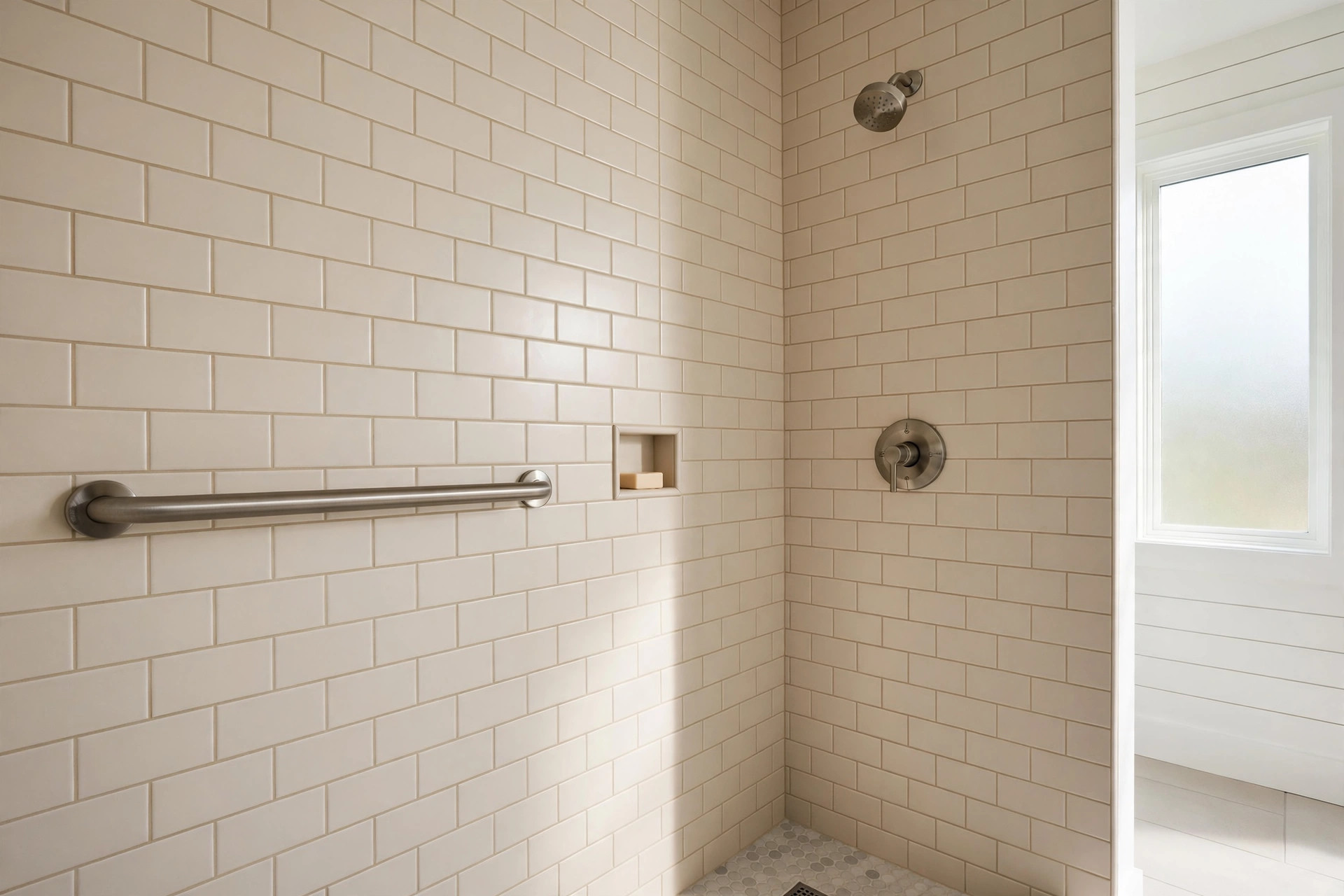
A grab bar is only as strong as what it is fixed to. The best anchors are wood studs or solid blocking. If you can reach the back of the wall during a remodel, add two-by lumber between studs at bar height. For finished walls, use a stud finder to mark stud centers. On fiberglass or acrylic surrounds, toggle anchors rated for the bar can work, but stud mounting is always safer.
Measure the Right Length
Bars come in lengths from 12 inches to 42 inches. A 24-inch bar fits most shower entries. A 32-inch or 36-inch bar suits a long back wall. A short 12-inch bar works near a shower seat. Measure the wall space and the reach of the user before you order. The bar should sit where the hand naturally falls when stepping in or rising from a seat.
Pick the Diameter
Standard bars are 1.25 inches or 1.5 inches in diameter. Most hands grip the 1.25-inch bar with ease. People with arthritis may prefer the slightly wider 1.5-inch size, which spreads pressure across the palm. Test both at a showroom if you can.
Decide on Finish and Look
Brushed nickel and stainless finishes match most modern fixtures and resist fingerprints. Oil-rubbed bronze suits warmer palettes. White or chrome blends into classic tile. Makers such as Kohler offer bars in many finishes, so the safety device can look like part of the design rather than an add-on. A visit to a fixture maker site such as Kohler shows how bars are now styled to match faucets and shower heads.
Know the Weight Rating
A quality bar holds 250 to 500 pounds of pull force. Look for a stated rating and a mark that it meets ADA or ASME standards. Cheap bars with no rating may bend or pull free. The rating should appear on the box and in the product sheet. Retail guides at Home Depot often list the load rating in the specification table.
Types of Shower Grab Bars
Straight Bars
The straight bar is the classic form. It mounts flat to the wall with two or three flanges. It suits entries, back walls, and tub edges. It is simple, strong, and easy to clean.
L-Shaped Bars
An L-shaped bar gives both a horizontal and a vertical grip in one piece. The vertical leg helps when rising from a low seat. The horizontal leg helps when stepping sideways. These bars fit corners well.
Curved and Wave Bars
Curved bars follow the line of the wall or tub rim. Wave bars rise and fall in a gentle S shape, giving the hand several grip points. They look softer and more decorative, which suits homeowners who want safety without a clinical look.
Fold-Down Bars
A fold-down bar hinges at the wall and swings up when not in use. It helps in small showers where a fixed bar would crowd the space. It must lock firmly in the down position. Check the lock each month.
Suction-Cup Assist Bars
Suction bars stick to smooth tile with vacuum pads. They are easy to move and need no tools. But they are not true grab bars. They can pop loose without warning. Use them only as a light steadying aid, never to catch a full fall. They should never replace a screwed-in bar.
Bars With Built-In Shelves or Soap Dishes
Some bars combine a grip rail with a small shelf or hook. These save space in tight showers. Make sure the shelf does not tempt users to pull at an angle the bar was not built for. Delta Faucet and other makers list combination units; browsing maker pages such as Delta Faucet helps compare how these units are rated.
Cost and Price
The Bars Themselves
A plain stainless straight bar costs about 20 to 60 dollars. Designer finishes and wave shapes run 60 to 150 dollars. L-shaped and fold-down bars cost 80 to 200 dollars. Buying two or three bars for one shower is common, so plan the full set, not just one piece.
Professional Installation
A handyman or plumber in California often charges 100 to 250 dollars per bar for a standard install on a tiled wall with studs behind it. The price rises if tile must be drilled with care, if the wall has no studs, or if the plumber must open the wall to add blocking. Getting quotes from two or three local installers is wise. Big-box project pages at Lowe’s give rough labor ranges that help you judge a quote.
Full Remodel Timing
Adding bars during a bathroom remodel costs far less per bar. The wall is open, blocking goes in with ease, and the tile setter works around the flanges. If you plan new frameless shower doors buying guide usa or a full gut, add the blocking and bars to the same work order. It is the cheapest time to do it right.
What Drives the Price Up
Stone tile, glass block, and thick porcelain need special drill bits and more labor. Bars in rare finishes cost more. Fold-down and designer bars cost more than straight bars. In high-cost metro areas of California, labor rates run above the national norm.
Installation: Key Steps
Plan the Layout
Stand in the shower and mime the motions: stepping in, turning, reaching for soap, sitting, standing. Mark with tape where your hand wants support. Common spots are the entry wall at 33 to 36 inches high, the back wall at the same height, and a vertical bar near the seat or bench.
Find Solid Anchors
Use a stud finder and mark every stud. If no stud lines up with your marks, plan to add blocking from behind or use rated hollow-wall anchors made for grab bars. Never mount only to drywall or thin tile with plain screws.
Drill With Care
Use a masonry or diamond bit for tile and stone. Drill slowly with light pressure to avoid cracks. Keep the bit cool with a little water. For fiberglass, a sharp twist bit at low speed prevents chipping. Guides from This Old House walk through tile drilling step by step.
Seal Against Water
Fill each hole with silicone sealant before you set the screw. The seal keeps shower water out of the wall cavity, where it would rot wood and breed mold. Wipe away the excess and let it cure fully before you load the bar.
Test the Bar
After mounting, pull hard on the bar in every direction. It should not flex, twist, or creak. If it moves, stop and remount. A bar that shifts is worse than no bar, because it gives false trust.
Care and Upkeep
Weekly Wipe-Down
Soap scum and hard water dull the finish and make the bar slick. Wipe bars weekly with a soft cloth and mild soap. California’s hard water leaves mineral spots; a mix of water and white vinegar cuts them with ease.
Check the Mounts
Every few months, grip each bar and pull firmly. Look for loose flanges, cracked caulk, or rust at the screw covers. Tighten or reseal at the first sign of movement. A five-minute check beats a costly repair later.
Mind the Finish
Avoid harsh acids and abrasive pads on plated finishes. They strip the coating and invite corrosion. Brushed finishes hide small marks better than polished chrome. Maker care sheets, such as those from American Standard, list which cleaners suit each finish.
Replace When Worn
A bar with deep pitting, a bent tube, or a flange that no longer sits flat should be replaced. Do not wait. Replacement is cheap compared with a fall.
Safety Rules
Bars Are for Balance, Not Acrobatics
Grab bars steady the body. They are not towel hooks, not chin-up bars, and not anchors for a shower caddy full of bottles. Teach every household member to use them for balance only.
Match Bar Height to the User
The standard 33 to 36 inch height suits most adults. Taller or shorter users may need a different height. A vertical bar covers a range of heights with one piece, which helps when several people share the shower.
Light the Shower Well
A bar helps the hand, but the eye needs light too. A dim shower hides puddles and edges. Add a bright, damp-rated light over the shower when you remodel. Pair it with a non-slip mat or textured floor for full protection.
Keep the Floor Clear
Bottles, razors, and toys on the shower floor are trip points. A corner shelf or caddy keeps them off the floor and within reach. Safety is a system: bar, light, clear floor, and steady footing all work together.
Know When to Call a Pro
If your wall is stone slab, glass, or an unknown material, hire a professional. If you are unsure about studs, hire a professional. A bad mount can fail under load and damage the wall. Project advice columns such as Bob Vila stress the same rule: when in doubt, bring in skilled help.
Frequently Asked Questions
Do shower grab bars damage tile?
They need holes, so they change the tile. But a careful installer drills clean holes and seals them well. The small holes are a fair trade for safety. If you fear damage to costly stone, have the tile setter drill during the install.
Can renters install grab bars in California?
Many landlords allow safety bars, and some must allow them as a reasonable change for a tenant with a need. Always get written permission first. Keep the receipt and offer to leave the bars in place or restore the wall when you move.
How many bars does one shower need?
Most showers do well with two: one at the entry and one along the back wall. Add a third near a seat or bench. Walk the space and note where hands reach. More small bars beat one long bar in the wrong spot.
Are suction cup bars safe enough?
They help with light balance on smooth, clean tile. They are not rated to stop a fall. Think of them as a helper, not a guard. For real fall protection, use bars screwed into studs or blocking.
What finish lasts longest in a humid bathroom?
Solid stainless steel and quality brushed nickel hold up well. Chrome over brass also lasts. Cheap plated bars may peel in a few years. Spending a little more on the bar itself pays off over time. Homeowners who also shop for freestanding soaking tubs buying guide usa often match bar finishes to tub fillers for one clean look.
Do grab bars lower home value?
No. Buyers now see them as a smart safety feature. Well-chosen bars in matching finishes look like part of the design. In California’s market, where multigenerational homes are common, they can even help a sale.
Final Word
Shower grab bars are a small change with a large payoff. For California homes, with their mix of old tile, new stone, and varied layouts, the key is simple: mount to solid wood, seal every hole, and place bars where hands truly reach. Choose a finish that suits the room, check the mounts twice a year, and use the bars for balance alone. Do that, and the shower becomes one of the safest rooms in the house. Design inspiration from sources such as HGTV shows that safety and style can share the same wall with ease.
References
American Standard. (n.d.). Bathroom and kitchen products. https://www.americanstandard.com Bob Vila. (n.d.). Home improvement advice. https://www.bobvila.com Delta Faucet. (n.d.). Kitchen and bathroom faucets. https://www.deltafaucet.com HGTV. (n.d.). Home and garden ideas. https://www.hgtv.com Kohler. (n.d.). Bathroom and kitchen fixtures. https://www.kohler.com Lowe’s. (n.d.). Home improvement products. https://www.lowes.com The Home Depot. (n.d.). Home improvement products. https://www.homedepot.com This Old House. (n.d.). Home renovation guidance. https://www.thisoldhouse.com
Was this guide helpful?

About Sarah Mitchell
The My Garden US editorial team writes practical, in-depth home and garden guides for American homeowners — tested advice, no fluff.
You May Also Like
Rain Shower Heads for Florida Homes: A Complete Buying Guide
August 1, 2026 0 views
Brushed Nickel Faucets Texas Homes USA: A Full Buying Guide
September 2, 2026 0 views
Brushed Nickel Faucets: A Reviews and Buying Guide for American Homes
March 21, 2026 0 views