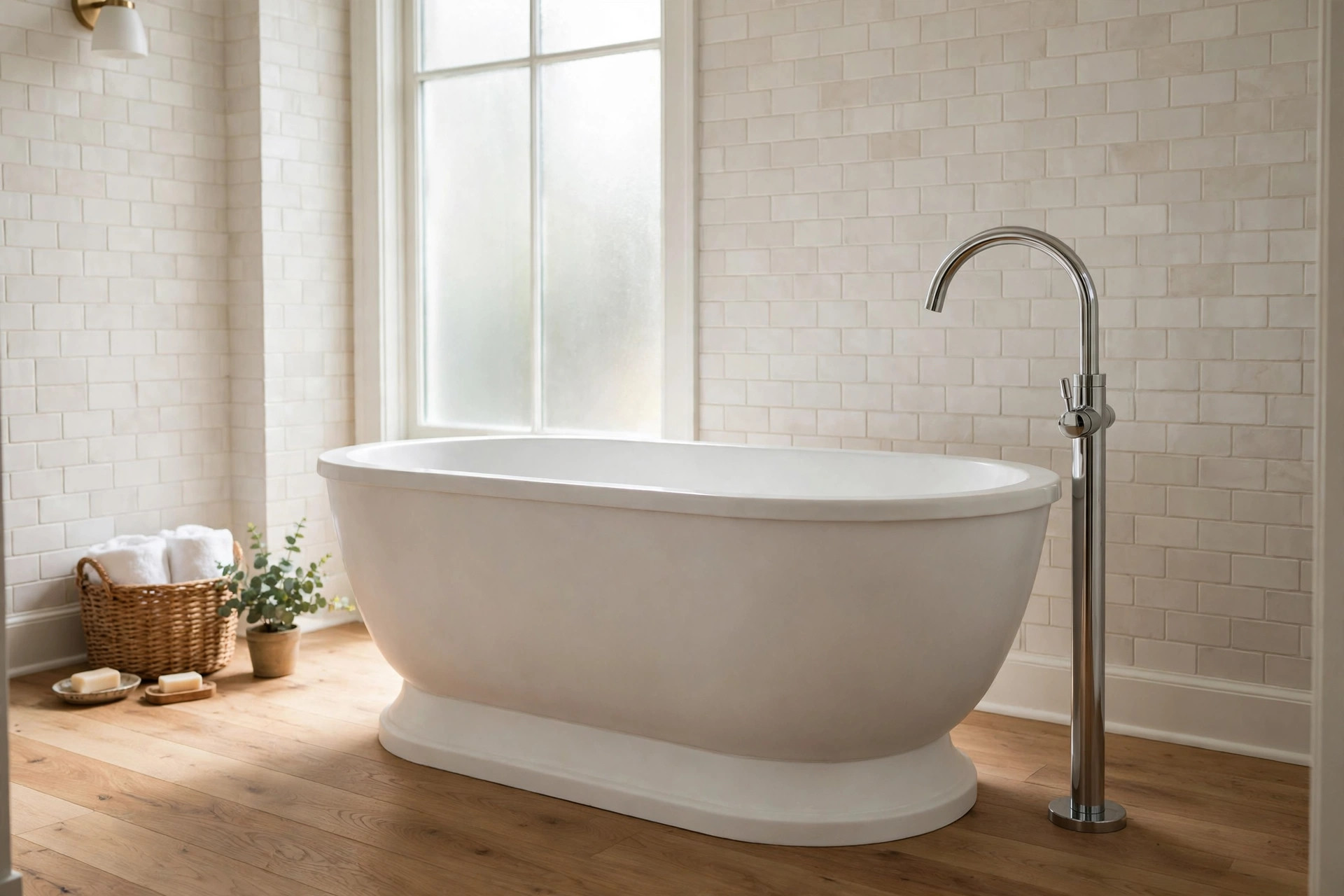

A freestanding soaking tub is a deep, stand-alone bath that sits on its own feet or base. It is not built into a wall or deck. This freestanding soaking tubs buying guide USA will walk you through every point that matters before you buy. A tub is a large purchase. It must fit your floor, your water heater, and your daily habits. A careful buyer reads, measures, and plans before placing an order.
Soaking tubs are made for long, warm baths. They are deeper than common bathtubs. Many hold enough water to cover the body up to the shoulders. Families in many states choose them when they remodel a master bath. Hotels and spas use them too. The shape is elegant. The feel is restful. But the beauty of a tub can hide plain facts about weight, drain size, and water use. This guide lays out those facts in plain terms.
Why a Soaking Tub Matters
A daily bath can ease tired muscles and calm the mind. A deep soaker lets you stretch out and rest. Older, shallow tubs leave much of the body exposed to cool air. A true soaking tub keeps the water high and the warmth in.
A freestanding tub also changes the look of a room. It becomes the heart of the bathroom. Guests notice it first. Real estate agents note it in listings. A well-chosen tub can lift the mood of the whole space.
Still, a tub is not for every home. It uses more water than a shower. It needs a strong floor and a hot water supply to match. Measure first. The sections below explain how.
How to Choose the Right Tub: Freestanding Soaking Tubs Buying Guide Usa
Measure the Room
Start with a tape measure. Record the length and width of the open floor space. Allow room around the tub for cleaning and movement. Most guides call for at least 4 inches of clear space at each end and about 6 inches at the back. Small rooms may only fit a single-ended tub against one wall. Larger rooms can hold a centerpiece tub with space to walk around it.
Note the doorways and stairs. A tub must travel from the curb to the bathroom. Some large tubs will not pass through a narrow hallway or turn. Check the path before you buy.
Check the Floor Strength
A filled soaking tub is heavy. Water weighs about 8 pounds per gallon. A 70-gallon tub holds roughly 560 pounds of water. Add the tub weight and the weight of the bather. The total can pass 800 pounds.
Most homes have wood floors that can bear this load when it rests over floor joists. Slab floors on grade carry it with ease. If the room is on an upper story and the joists are old or spaced wide, a carpenter may need to add support. Ask a builder or engineer when in doubt.
Match the Water Heater
A deep tub may hold 60 to 80 gallons. Many home water heaters hold 40 or 50 gallons. The first fill may use all the hot water in the tank. A second bath soon after may run cool.
Check your heater size and its recovery rate. Some homes add a larger tank or a second unit. Some switch to a tankless heater. Plan this cost into the budget. Nothing spoils a new tub like a cold fill.
Pick a Size and Shape
Tubs come in several forms. Oval tubs are the classic choice. They suit most rooms and most bodies. Rectangular tubs fit corners and modern rooms. Round tubs suit large, open spaces. Corner tubs save wall space.
Standard lengths run from 59 to 72 inches. Longer tubs suit tall bathers. Depths run from 18 to 30 inches of water. Deeper is better for true soaking. Sit in floor models at a showroom when you can. Comfort is personal.
Types and Options
Acrylic Tubs
Acrylic is the most common material for freestanding soaking tubs in the United States. Sheets of acrylic are heated and shaped over a mold, then backed with fiberglass. The result is light, warm to the touch, and kind to the budget.
Acrylic holds heat well. It resists chips and scratches better than many materials. Minor marks can be buffed out. Colors are molded through the sheet, so the finish runs deep. A quality acrylic tub from a maker like Kohler can last for decades with simple care.
The one weakness is flex. Thin, cheap acrylic may feel soft underfoot. Choose a tub with a thick shell and solid feet.
Cast Iron Tubs
Cast iron is the old standard. Molten iron is cast into a mold and coated with porcelain enamel. The result is heavy, hard, and smooth. It holds heat longer than any other material. The enamel shine can last for many years.
The weight is the main drawback. A cast iron soaker may weigh 300 to 500 pounds empty. Delivery and floor support need care. The price is higher too. But for those who want a tub that feels like it will last a lifetime, cast iron stands alone.
Stone and Solid Surface
Stone resin and solid surface tubs are made from crushed stone mixed with resin. They look like carved stone. They feel warm and solid. They hold heat well and resist stains.
These tubs weigh more than acrylic but less than cast iron. Prices sit in the upper range. They suit high-end remodels where the tub is the showpiece of the room.
Copper Tubs
Copper soaking tubs are rare and striking. The metal warms fast and holds heat. It develops a living finish over time. Each tub ages in its own way.
Copper needs gentle cleaning. Harsh chemicals will harm the finish. Prices are high. For a one-of-a-kind bath, few choices match it.
Jets and Air Systems
Some soaking tubs add air jets or water jets. Air systems push warm air through small holes. They make a light fizz in the water. Water jets push streams of water for a stronger massage feel.
Jets add cost and care. The lines must be cleaned on a schedule to stop mold. Many buyers of true soaking tubs skip jets entirely. A deep, quiet bath is pleasure enough.
Cost and Price
Prices in the United States run wide. A basic acrylic freestanding soaking tub may cost from 800 to 1,500 dollars. Mid-range models with thicker shells and better finishes run from 1,500 to 3,500 dollars. High-end cast iron, stone, or copper tubs can cost 4,000 to 10,000 dollars or more.
The tub price is only part of the bill. Add these costs:
– Delivery: large tubs may need special handling, 100 to 400 dollars. – Faucet and drain: a floor-mounted filler can cost 300 to 1,200 dollars. – Plumbing work: new drain and supply lines, 500 to 2,000 dollars. – Floor support: reinforcement of joists, 300 to 1,500 dollars. – Water heater upgrade: if needed, 800 to 3,000 dollars.
Retailers like Home Depot and Lowes list many models with clear prices. Plumbers and showrooms can quote the labor side. Get three quotes before you sign.
What to Look for When Buying
Drain and Overflow
Check the drain location. Center drains suit many freestanding tubs. End drains suit tubs placed near a wall. The drain must line up with the waste pipe below, or the plumber must move it.
An overflow drain is a safety feature. It stops the tub from spilling over the rim if the water runs too long. Not all freestanding tubs include one. Look for it if you want that guard.
Faucet Choices
Freestanding tubs need their own faucet. Common choices are floor-mounted fillers, wall-mounted spouts, and deck-mounted sets on a small rim. Floor-mounted fillers are the most common for true freestanding tubs. They stand on the floor beside the tub and arc over the rim.
Match the faucet finish to the rest of the room. Moen and Delta offer fillers in chrome, brushed nickel, matte black, and more. A brushed nickel finish hides water spots well.
Finish and Color
White is the classic tub color. It fits every style and shows dirt early, which is a plus for cleaning. Some tubs come in black, gray, or cream. Dark colors show water spots and dust more. Pick a finish you are willing to wipe down.
Warranty
A good warranty shows maker confidence. Many acrylic tubs carry a 5 to 10 year warranty. Cast iron and stone tubs may carry 10 to 25 years. Read the terms. Some warranties void if you use harsh cleaners or install the tub wrong.
Installation Basics
A freestanding tub install is simpler than a built-in tub. There is no tile surround to build. But the plumbing must be right.
The plumber sets the drain rough-in before the tub arrives. The tub is set in place and leveled. Feet or a base must sit firm and even. The filler is mounted and tied to hot and cold lines. The drain is sealed. Then the tub is filled and checked for leaks.
Many owners pair a new tub with a wider bath update. A walk-in shower kit can sit beside the tub in a large room. New bathroom sink vanities can match the tub style. Small touches like brushed nickel faucets tie the room together.
Hire a licensed plumber. The cost is worth the peace of mind. Guides at This Old House and Bob Vila explain the steps in plain detail for owners who want to follow along.
Care and Upkeep
A soaking tub asks for gentle, steady care. Wipe it down after each bath. This stops soap scum and mineral rings from forming. Use a soft cloth and a mild, non-abrasive cleaner.
Avoid bleach, ammonia, and scouring powder on acrylic and enamel. They dull the finish over time. For hard water stains, a mix of white vinegar and water works well. Rinse fully after cleaning.
Check the caulk line where the tub meets the floor once a year. Re-caulk if it cracks. Keep the drain clear of hair with a simple strainer. Drain the tub fully after each use. Standing water leaves marks and invites germs.
For stone and copper tubs, follow the maker guide. Copper likes mild soap and soft cloths. Stone resin likes pH-neutral cleaners. The Spruce (The Spruce) keeps updated care guides for each tub material.
Safety
A deep tub holds deep water. Take care with children. Never leave a small child alone in a filled tub. Use a non-slip mat or a tub with a textured floor. Grab bars near the tub help older adults step in and out safely.
Hot water can scald. Set the water heater to 120 degrees Fahrenheit. Test the water with your hand before stepping in. Pregnant women and people with heart conditions should ask a doctor before taking long hot baths.
Keep the floor around the tub dry. Wet tile is slick. A bath mat with a rubber back helps. Maker safety sheets and bath guides from HGTV and American Standard cover safe bath practice in plain terms.
Electrical outlets near water need ground-fault protection. An electrician can check this in minutes. Do not use phones or radios plugged into the wall near a filled tub.
Frequently Asked Questions
How much water does a freestanding soaking tub use?
Most models hold 60 to 80 gallons when filled to the overflow. Smaller tubs may hold 50 gallons. This is two to three times the water of a quick shower. Check your water bill and your heater size before you buy.
Will my floor hold a filled soaking tub?
In most cases, yes, when the load rests over sound joists or a slab. A filled tub plus bather can weigh 700 to 900 pounds. If the bathroom is upstairs and the framing is old, have a builder check it. Added support is a common, low-cost fix.
Are freestanding tubs hard to clean?
The outside of the tub needs a wipe, which built-in tubs do not. But there is no grout or tile surround to scrub. Most owners find total cleaning time about the same. A handheld shower wand makes rinsing easy.
Do I need a special faucet?
Yes. Freestanding tubs need a freestanding or wall-mounted filler. Your old tub faucet will not fit. Floor-mounted fillers are the most common choice. Plan 300 to 1,200 dollars for the fixture plus install labor.
Can I install a freestanding tub on an upper floor?
Yes, with care. Check floor strength, the path to carry the tub up, and the drain tie-in. Cast iron tubs are very heavy and may need a crane or extra hands. Acrylic tubs are lighter and easier to move upstairs.
How long should a soaking tub last?
A quality acrylic tub can last 15 to 25 years. Cast iron and stone tubs can last 30 years or more with fair care. The finish is the first thing to age. Gentle cleaning adds years to any tub.
A Short Final Word
A freestanding soaking tub is a promise of quiet time at the end of the day. Choose it with care. Measure the room. Check the floor and the water heater. Pick a material that fits your budget and your habits. Spend time on the faucet and the drain. Then fill it deep, step in slow, and rest. A good tub pays for itself in calm, night after night.
References
American Standard. (n.d.). Bathroom and kitchen products. https://www.americanstandard.com Bob Vila. (n.d.). Home improvement advice. https://www.bobvila.com Delta Faucet. (n.d.). Kitchen and bathroom faucets. https://www.deltafaucet.com HGTV. (n.d.). Home and garden ideas. https://www.hgtv.com Kohler. (n.d.). Bathroom and kitchen fixtures. https://www.kohler.com Lowe’s. (n.d.). Home improvement products. https://www.lowes.com Moen. (n.d.). Faucets and plumbing fixtures. https://www.moen.com The Home Depot. (n.d.). Home improvement products. https://www.homedepot.com The Spruce. (n.d.). Home and garden advice. https://www.thespruce.com This Old House. (n.d.). Home renovation guidance. https://www.thisoldhouse.com
Was this guide helpful?

About Michael Thompson
The My Garden US editorial team writes practical, in-depth home and garden guides for American homeowners — tested advice, no fluff.
You May Also Like

Double Sink Vanities: Where to Buy in the USA
January 27, 2026 0 views
Brushed Nickel Faucets: A Reviews and Buying Guide for American Homes
March 21, 2026 0 views
Bathroom Vanity Light Bars Reviews Buying Guide USA
February 13, 2026 0 views