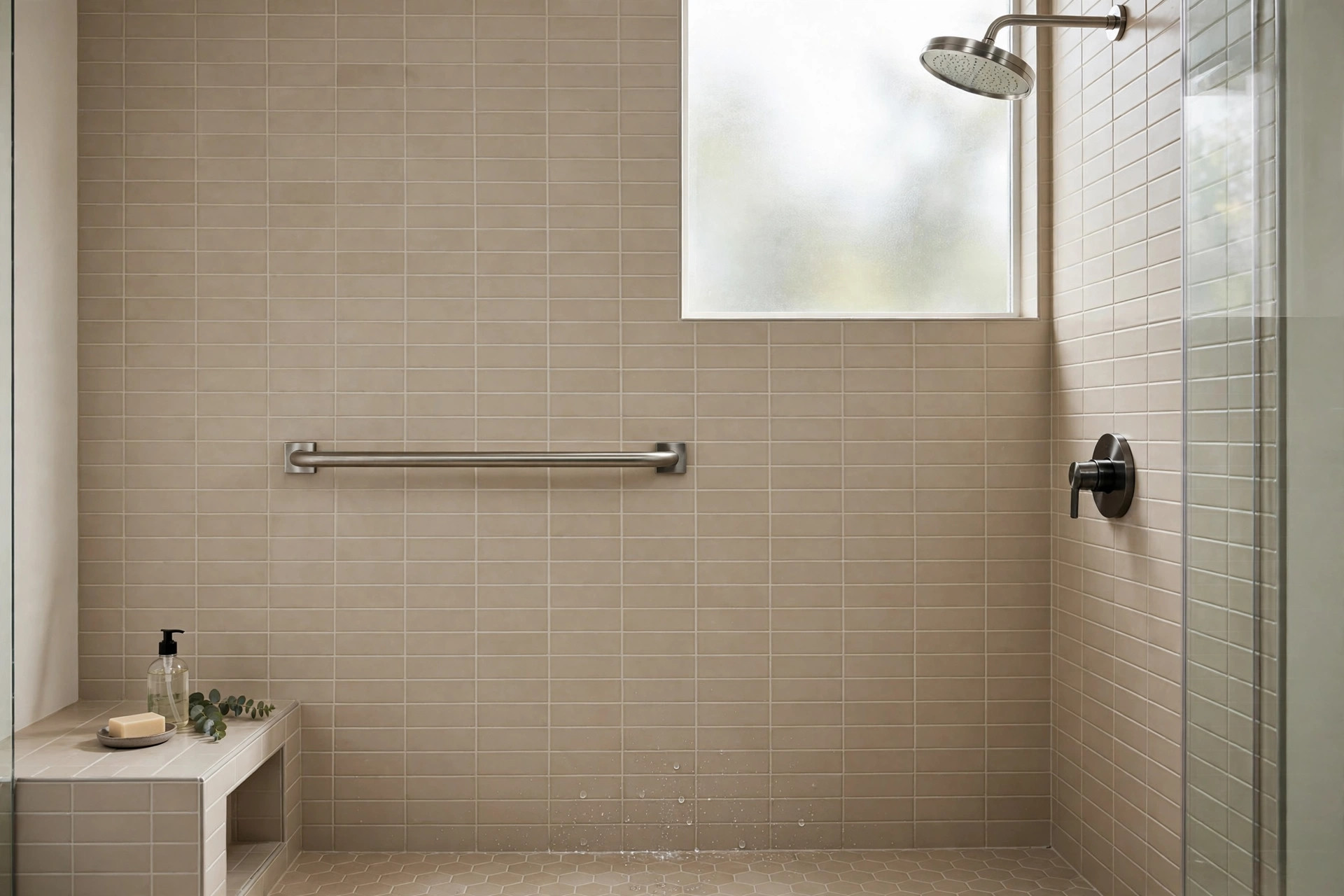

Most people step into the shower without thinking. They turn the water on, adjust the heat, and wash. For millions of Americans, this simple act is one of the most dangerous parts of the day. Wet tile is slick. Soap makes the floor worse. A small slip can lead to a broken hip or a head injury.
A shower grab bar is a simple metal bar fixed to the shower wall. It gives you something solid to hold when you step in, stand still, or step out. This shower grab bars American homes guide explains what these bars are, why they matter, which types fit which homes, and how to install them right. It also covers cost, care, and safety rules every homeowner should know.
Why Shower Grab Bars Matter in American Homes
Falls in the bathroom are common. Older adults face the highest risk, but young people slip too. Children run on wet floors. Pregnant women lose their balance. Anyone with a bad knee or a sore back can fall in a wet tub.
A grab bar does not stop every fall. It gives a person a chance to catch themselves. When a foot slips, a hand can reach for the bar. That one grip often keeps a person on their feet.
American homes come in many styles. Older houses often have tubs with high sides. Newer homes may have walk-in showers. Rental flats may have small stalls. Grab bars work in all of them. They are useful for guests, children, and aging parents too. Many families add them before a problem starts. That is wise planning, not overreaction.
Homeowners who plan a full bath remodel often pair grab bars with other upgrades. A reader looking at larger projects may find our walk-in shower kits buying guide useful, since low-entry kits and grab bars solve many of the same safety problems.
How to Choose the Right Shower Grab Bar: Shower Grab Bars American Homes Guide
Start with the wall. Most American shower walls are tile over drywall, tile over cement board, or fiberglass and acrylic surrounds. Each needs a different mount.
Tile and cement board can hold a screwed-in bar if you hit a wall stud. A stud finder helps you find solid wood behind the wall. Without a stud, use strong toggle bolts rated for the load. A grab bar must hold a person’s full weight in a slip. Thin anchors and short screws are not enough.
Fiberglass and acrylic surrounds need care. Screws can crack them. Some makers sell grab bars made for these walls. Others use suction-cup bars. Suction bars hold only on smooth, flat, non-porous surfaces. They give light support, not full body weight. Read the maker instructions before you trust one.
Bar Diameter and Grip
Most bars are one to one-and-a-half inches in diameter. A bar about one and a quarter inches wide fits most adult hands well. The grip should feel firm, not slippery. Textured or knurled finishes help wet hands hold on. Peened or knurled bars have a rough surface that adds grip in steam.
Bar Length
Straight bars come in many lengths, from 12 inches to 48 inches. Short bars suit small stalls. Longer bars suit tub walls and walk-in showers. Corner bars bend at ninety degrees and cover two walls at once. Choose a length that lets you hold on where you need it: at entry, near the showerhead, and where you stand.
Types of Shower Grab Bars
There are several common designs. Each suits a different need.
Straight Grab Bars
The straight bar is the most common type. It mounts flat against one wall. It comes in stainless steel, chrome, or coated metal. Major fixture makers such as Moen, Kohler, Delta Faucet, and American Standard sell bars that match their faucet finishes. Straight bars work well beside a tub or along the back wall of a shower. They are simple, strong, and easy to clean.
L-Shaped and Corner Bars
An L-shaped bar turns a corner. It gives support on two walls at once. This helps in a tub-shower combo. You can hold one side while stepping over the tub edge, then turn and hold the other side while you stand. Many bathroom planners favor this shape for tight spaces.
Wave and Curved Bars
Curved bars bend outward from the wall. The wave shape gives several grip angles in one bar. Some people find the curve more comfortable for the wrist. The shape also adds a modern look to the bath. Function comes first, but style matters in a home you love.
Fold-Down and Flip-Up Bars
These bars hinge against the wall when not in use. They swing down when needed. They suit small showers where a fixed bar would get in the way. The hinge must lock firmly. Check the lock each month.
Suction-Cup Bars
Suction bars press onto smooth tile or glass. No drilling is needed. This appeals to renters who cannot drill into walls. These bars give balance support only. They are not rated for full body weight. They can lose suction over time. Check them before every use. For a permanent safety fix, a screwed-in bar is better.
Designer and Decorative Bars
Some bars double as towel bars or shower shelves. They look like normal bath hardware but mount to studs. This option suits homeowners who want safety without a hospital look. The price is higher, but the finish blends with other fixtures.
Where to Place Grab Bars
Placement matters as much as the bar itself. A bar in the wrong spot does no good.
For a tub-shower combo, place one vertical bar near the entry. It helps you step over the tub edge. Place a horizontal bar along the back wall where you stand under the water. The horizontal bar should sit about 33 to 36 inches above the tub floor. This height fits most adults.
For a walk-in shower, place a horizontal bar on the side wall at standing height. Add a vertical bar near the door or curtain opening for entry. If a bench seat is present, add a bar beside it to help a person sit and stand.
For a small stall, a short L-shaped bar near the controls often works best. The person can hold it while reaching for the soap or adjusting the water.
Always mount bars into studs or solid blocking when possible. A bar screwed only into drywall will pull out under load. If no stud sits where you need one, open the wall and add wood blocking, or use rated toggle anchors in tile over cement board. A plumber or handyman can do this work in an hour or two. Drilling guides from Bob Vila and This Old House cover tile work step by step, while bath safety basics from The Spruce and design ideas from HGTV help with planning.
If you are replacing a whole shower door at the same time, read our frameless shower doors buying guide first. Door swing and bar placement must not fight each other.
Cost and Price of Shower Grab Bars
Simple stainless steel straight bars cost little. A 12-inch basic bar may cost under twenty dollars. Home centers such as The Home Depot and Lowe’s stock the most common sizes, so you can compare finishes in person. A 36-inch textured bar may cost forty to eighty dollars. Designer bars that look like towel racks can cost one hundred to three hundred dollars.
Installation cost varies. A do-it-yourself install needs only the bar, screws, a drill, and a stud finder. A hired handyman may charge fifty to one hundred fifty dollars per bar, depending on the wall type. Tile walls take more time than fiberglass. Adding wood blocking inside the wall costs more but gives the strongest mount.
Compared with the cost of one hospital visit, grab bars are cheap. Many home insurance plans and aging-in-place programs view them as a smart safety upgrade. Some local programs even help seniors install them for free. Ask your area agency on aging.
Care and Upkeep
Grab bars need little care. Wipe them with a damp cloth and mild soap. Dry them after to stop water spots on chrome. Do not use harsh acids or bleach on metal finishes. Check the mounting screws twice a year. Grab the bar and pull hard. If it moves, tighten or remount it at once.
For textured or knurled bars, use a soft brush to clean soap from the grooves. For suction-cup bars, remove them weekly, clean the cups and the wall, and press them back on. Replace suction bars when the rubber shows cracks.
Keep the shower floor safe too. A non-slip mat or textured floor helps. A handheld showerhead lets a person sit on a bench and wash. Many buyers pair these upgrades with new fixtures; our rain shower heads buying guide covers options that work well with bench seats.
Safety Rules Every Homeowner Should Follow
First, never use a towel bar as a grab bar. Towel bars mount lightly and pull out under weight. They look sturdy but are not.
Second, respect weight limits. Most screwed-in bars hold 250 to 500 pounds when mounted right. Suction bars hold far less. Read the rating on the package.
Third, mount at the right height. Too high and a short person cannot reach it. Too low and it offers no help in a fall. Thirty-three to thirty-six inches above the shower floor suits most adults.
Fourth, check children and guests. Tell guests where the bars are. Children should still be watched in the bath. A bar helps, but it does not replace care.
Fifth, consider the whole bathroom. Grab bars near the toilet help too. Good lighting, a night light, and a dry floor mat add more safety. Safety works best as a system, not a single bar.
Sixth, follow maker instructions. Use the screws and anchors that come with the bar. Drill pilot holes to the right size. Seal around screws in tile with silicone to keep water out of the wall.
Government safety resources offer useful checklists for bath safety. The Consumer Product Safety Commission publishes guidance on home hazards, and energy and water guidance from ENERGY STAR can help when you pair safety work with efficient fixtures.
Frequently Asked Questions
Do I need a professional to install shower grab bars?
Not always. A handy homeowner can install a bar on tile or drywall with a stud finder, drill, and the right anchors. Fiberglass walls and homes with no clear studs are harder. In those cases, a handyman or plumber is worth the cost. The key rule is simple: the bar must hold your full weight. If you are unsure, hire help.
Can renters install grab bars?
It depends on the lease. Many landlords allow small safety upgrades. Suction-cup bars need no holes and suit renters best. For screwed-in bars, ask the landlord first in writing. Some landlords approve the work because it lowers fall risk on their property. Put the answer in writing and keep a copy.
Are suction-cup grab bars safe?
They give balance help but not full fall protection. They suit smooth, flat, non-porous tile or glass. They do not stick to textured tile, grout lines, or fiberglass. Check the suction before each use. They are a bridge solution, not a permanent one. A screwed-in bar is stronger and more reliable.
What is the best height for a shower grab bar?
Most guides suggest 33 to 36 inches above the tub or shower floor for horizontal bars. Vertical bars near the entry can run from about 32 to 38 inches. These heights fit most adults. Taller or shorter users may adjust a few inches. Comfort and reach matter most.
How many grab bars does a shower need?
Most showers need two. One near the entry helps you step in and out. One on the back or side wall helps while you stand and wash. Larger walk-in showers may need three. A tub-shower combo often needs one vertical and one horizontal bar. More is fine if the wall space allows.
Will grab bars hurt my home’s resale value?
Usually not. Buyers see safety features as a plus, especially for aging parents or young children. Designer bars that match the bath fixtures blend in well. A clean, professional install looks like a planned upgrade, not a hospital add-on. Poor do-it-yourself work can look bad, so take care with tile cuts and caulk lines.
A Short Final Word
A shower grab bar is a small bar with a big job. It costs little, installs in an afternoon, and guards every person who uses the bath. Young or old, fit or frail, anyone can slip on a wet floor. This shower grab bars American homes guide has shown the types, the placement rules, the costs, and the care steps. The next step is yours. Pick a bar, find the studs, and mount it right. A safer shower is a better home.
References
American Standard. (n.d.). Bathroom and kitchen products. https://www.americanstandard.com Bob Vila. (n.d.). Home improvement advice. https://www.bobvila.com Delta Faucet. (n.d.). Kitchen and bathroom faucets. https://www.deltafaucet.com HGTV. (n.d.). Home and garden ideas. https://www.hgtv.com Kohler. (n.d.). Bathroom and kitchen fixtures. https://www.kohler.com Lowe’s. (n.d.). Home improvement products. https://www.lowes.com Moen. (n.d.). Faucets and plumbing fixtures. https://www.moen.com The Home Depot. (n.d.). Home improvement products. https://www.homedepot.com The Spruce. (n.d.). Home and garden advice. https://www.thespruce.com This Old House. (n.d.). Home renovation guidance. https://www.thisoldhouse.com
Was this guide helpful?

About Jennifer Lee
The My Garden US editorial team writes practical, in-depth home and garden guides for American homeowners — tested advice, no fluff.
You May Also Like

Heated Floor Kits Where to Buy USA: A Complete Guide
March 5, 2026 0 views
Bathroom Linen Cabinets Texas Homes USA: A Practical Guide
April 18, 2026 0 views
Frameless Shower Doors: A Plain Guide for American Homes
June 1, 2026 0 views