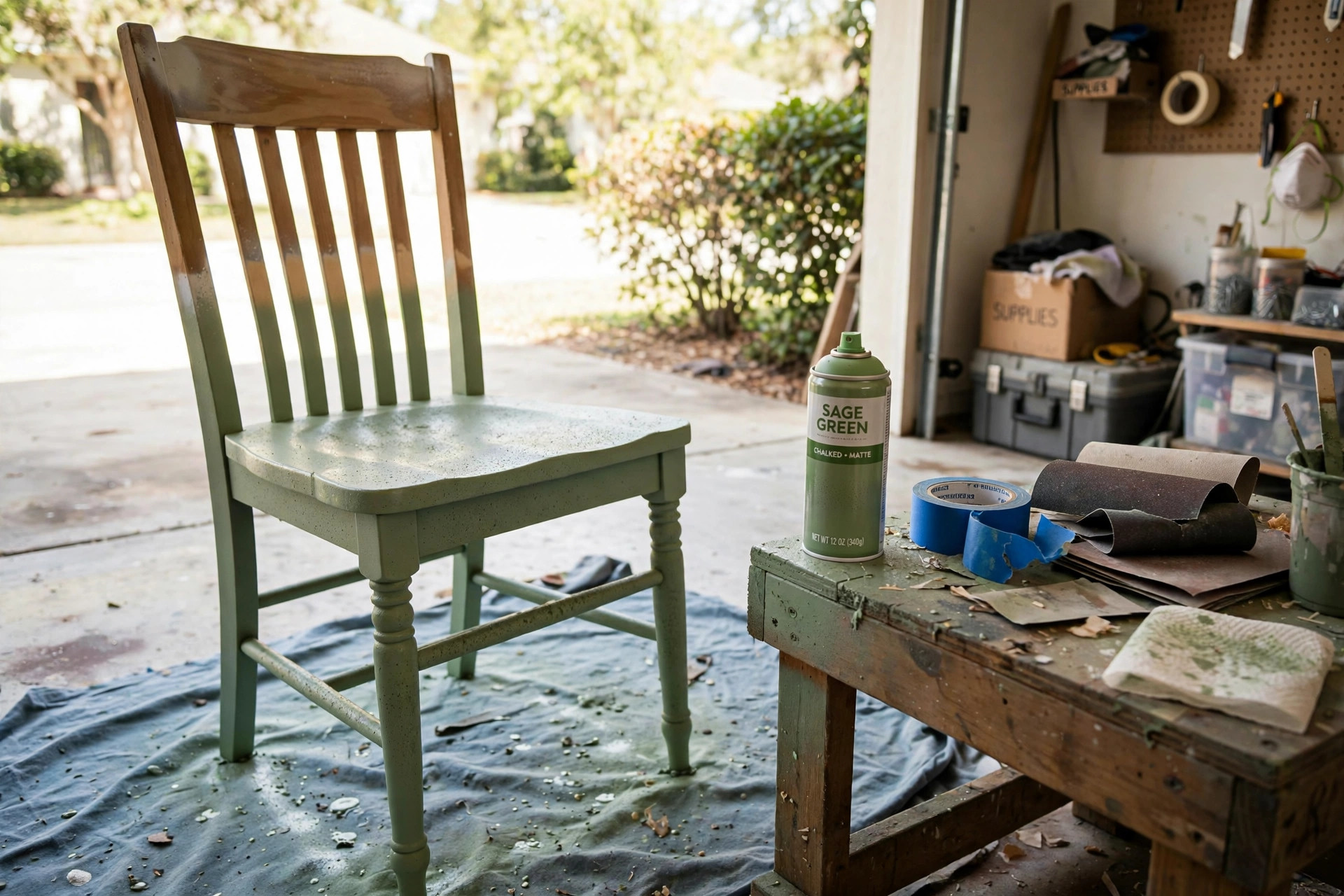

A tired chair can look new again in a single afternoon. That is the promise behind the best spray paint for furniture diy makeover work, and it is a promise the right paint keeps. Old dressers, side tables, bookcases, and bed frames all respond well to a careful spray finish. The cans are cheap. The work is simple. The result can last for years.
Many people avoid refinishing furniture because they think it needs a workshop. It does not. A garage, a patio, or a spare corner with a drop cloth will do. What matters is the paint you choose and the way you prepare the piece.
Why Spray Paint Works for Furniture Makeovers
Brush paint leaves marks. Every stroke can show, and lap lines appear where one section dries before the next begins. Spray paint avoids both problems. It lays down a thin, even mist that levels itself. The result looks like factory work.
Speed is another reason people reach for the can. A chair that takes three hours with a brush takes under one hour with spray. There is no brush to clean between coats. You cap the can and walk away.
Spray paint also reaches where brushes struggle. Chair spindles, table legs, wicker, carved trim, and metal hardware all take paint well when it arrives as a mist. A good bond forms around every curve.
One more benefit matters. Modern spray paints made for furniture often include primer and topcoat in one formula. That cuts a three-step job down to one, with fewer chances for dust or drips.
What to Look For When You Choose: Best Spray Paint for Furniture Diy Makeover
The Surface You Will Paint
Not every can works on every material. Read the label before you buy. Wood is the easiest surface, and most furniture sprays handle it well. Laminate and veneer need a paint that lists plastic or laminate on the can, or a strong primer first. Metal pieces need a formula that blocks rust. If your piece mixes materials, pick a multi-surface spray rated for both.
Paint and Primer in One
A can that says “paint plus primer” saves a full workday. You skip the primer coat and go straight to color. This is the best choice for most makeover work, especially on raw or lightly finished wood. Only if the old finish is glossy, dark, or stained through should you use a separate bonding primer first. Two thin primer coats under the color give the longest life.
Finish Sheen
Sheen changes how the piece looks and how easy it is to clean.
– Flat and matte hide flaws well. They suit farmhouse and vintage styles. – Satin is the safe middle ground. It has a soft glow and wipes clean. – Semi-gloss and gloss look bold and modern. They show every bump, so prep must be perfect. – Chalky matte gives a soft, aged look that many makers seal with wax.
For a first makeover, satin is the best bet. It forgives small errors and suits most rooms.
Durability and Scratch Resistance
Furniture takes abuse. Chairs get dragged and tables hold hot plates. Look for words like “enamel,” “tough,” or “durable finish” on the label. Enamel sprays cure harder than standard sprays and resist chips. If the piece will see heavy use, plan a clear protective topcoat over the color.
Dry Time and Recoat Window
Most sprays dry to the touch in 20 to 60 minutes. Full cure takes 24 to 48 hours. The recoat window matters most. Some paints must be recoated within one hour or after two days. Missing the window can cause wrinkling. Read the back of the can and follow it exactly.
Coverage and Color
One 12-ounce can covers about 20 to 25 square feet with one coat. A small side table needs one can. A dresser needs two or three. Buy all the paint at once so the color matches from batch to batch. Test the shade on cardboard first, since the cap color is only close.
Types of Spray Paint for Furniture
General Purpose Spray
The standard can in any hardware aisle. It comes in hundreds of colors and costs the least. It works well on wood and metal with light prep. For indoor pieces that get normal use, it does the job.
Craft stores carry wide ranges of these everyday sprays, and their shelves are a good place to compare colors side by side. You can browse current color lines through retailers such as Michaels.
Paint and Primer Combos
These are the workhorses of furniture makeovers. They bond to wood, metal, and many plastics without a separate primer. Most brands offer them in satin, gloss, and matte. For a quick flip of a thrift store find, this is the can to grab.
Home improvement stores keep deep stock of these formulas in dozens of shades. Check the current selection at Home Depot, which carries the major paint-plus-primer lines for furniture and decor work.
Chalk-Style Spray
Chalk-style paint gives a soft, powdery finish that suits shabby chic and vintage looks. It needs almost no sanding on most surfaces. A light scuff with sandpaper is usually enough. Seal it with clear wax or a matte sealer, because the finish alone is not tough.
If you enjoy the chalk look, you may also want to read about best chalk paint for furniture diy projects before you decide between brush chalk paint and the spray version.
Enamel Spray
Enamel cures to a hard shell. It resists scratches, water, and heat better than standard sprays. It is the right pick for kitchen chairs, desks, and table tops. Enamel takes longer to cure fully, so give it up to a week before heavy use.
Hardware reviewers and testers regularly compare enamel sprays for hardness and adhesion. Independent test results from Consumer Reports can help you compare brands on durability before you buy.
Metallic and Specialty Finishes
Metallic gold, copper, and hammered finishes turn plain pieces into statement items. These sprays need a smooth base, because metallic particles highlight flaws. Work in thin coats and keep the can moving. They cost more per can, but a little goes far on small accent pieces.
Craft retailers also carry specialty craft sprays for mixed-media projects. The range at JOANN is worth a look for unusual finishes on small decorative pieces.
Clear Sealers and Topcoats
A clear coat protects the color beneath. Use it on high-wear spots like table tops and drawer fronts. Pick a sealer with the same sheen as your color coat so the look stays even.
Cost and Price
Spray paint is one of the cheapest ways to change a room. Most cans cost between four and ten dollars. Here is what a typical makeover costs.
– One to three cans of paint: 8 to 30 dollars – Sandpaper or sanding sponge: 3 to 6 dollars – Tack cloth and painter’s tape: 5 to 8 dollars – Drop cloth or plastic sheeting: 5 to 10 dollars – Respirator mask: 10 to 25 dollars, reusable for years – Clear sealer, optional: 6 to 12 dollars
A single chair often costs under 25 dollars all in. A large dresser runs 40 to 70 dollars. Compare that with new furniture prices, and the savings are clear.
Buying in bulk helps if you plan several pieces. Some stores sell multi-packs of popular colors at a lower price per can. Watch for sales around holidays, when paint aisles often drop prices.
For project walkthroughs and cost-saving tricks, the step-by-step guides at Family Handyman show real makeovers with full material lists, which helps you budget before you start.
How to Prepare the Piece
Good prep is most of the work. Paint covers color, but it cannot cover a dirty or loose surface.
1. Clean the piece. Wash it with warm water and mild soap. Grease from hands builds up on chair arms and drawer pulls. Let it dry fully. 2. Remove hardware. Take off knobs, pulls, and hinges. Bag the screws and label them. 3. Sand lightly. A 120-grit sanding sponge knocks down gloss and rough spots. You do not need to strip to bare wood. Just dull the shine so paint can grip. 4. Fill holes and cracks. Wood filler handles nail holes and dents. Let it dry, then sand it smooth. 5. Wipe away dust. A damp tack cloth picks up every speck. Dust in wet paint becomes bumps. 6. Mask what stays bare. Tape off glass, mirrors, and areas you want to keep natural.
Work in a space with moving air. A garage with the door open is ideal. Lay the drop cloth flat so paint mist lands on cloth, not concrete.
How to Spray for a Smooth Finish
Hold the can 8 to 10 inches from the surface. Start each pass off the edge of the piece, sweep across at steady speed, and stop past the far edge. Overlap each pass by about half. This steady motion is what prevents drips.
Apply thin coats. Three thin coats beat one thick coat every time. Thick coats sag and wrinkle. Wait the recoat time shown on the can between passes.
Shake the can for a full minute before you start, and again every few minutes. If the spray sputters, wipe the nozzle with a rag dampened in mineral spirits.
Paint the undersides and back first. Keep a test board nearby to check the spray pattern before each new can.
Classic how-to advice from This Old House stresses the same point: light passes and patience produce a finish that rivals a spray booth.
Care and Upkeep
Let the paint cure fully before you use the piece. Light use after 24 hours is fine. Full hardness takes two to seven days depending on the paint, with enamels at the long end. Give the piece that time before heavy use.
Clean painted furniture with a soft, damp cloth. Skip harsh cleaners and scrub pads, which dull the finish. For sticky spots, a drop of mild dish soap in water does the job.
Touch up chips quickly. Sand the chip lightly, feather the edges, and spray a light pass from the same can. Mark the can with the piece name and date so future touch-ups match.
Keep furniture out of direct sun when you can. Strong sun fades bright colors over time, even indoors near a window. Felt pads under lamps and vases stop scratches before they start.
The craft paint aisle offers plenty of small brushes for fine touch-up work. A quality set like those in guides to the best craft paint brushes set for acrylics handles edge detail well.
For ongoing care advice and refinishing ideas, the project library at Bob Vila covers furniture upkeep in plain, practical terms.
Safety
Spray paint is safe when you respect it. The mist contains solvents you should not breathe. Always wear a respirator rated for paint vapors, not just a dust mask. Work outdoors or in a well-ventilated garage.
Keep cans away from heat and flame. Spray paint is flammable. Never spray near a pilot light, a heater, or an open flame. Store cans below 120 degrees.
Wear gloves and eye protection. Overspray lands on skin and stings eyes. If paint gets on skin, wash with soap and water right away.
Keep children and pets out of the spray area until the air clears and the surface dries. Read the full warning label on each can. Labels change, and the can in your hand is the final authority.
Related Makeover Ideas
Spray paint is only one tool in the refinishing kit. Many makers pair it with stain, such as a painted base with a stained top. If that look appeals to you, compare options in the guide to best wood stain for diy furniture refinishing.
Fine art suppliers carry specialty primers and sealers that pros use under spray paint. The catalog at Blick Art Materials is a good place to find high-grade sealers and surface prep products.
FAQ
Can I spray paint over varnished furniture?
Yes, with light sanding first. Scuff the varnish with 120-grit paper until the gloss is gone, then wipe off the dust. A paint-plus-primer can bonds well after that. For very slick or dark varnish, add a bonding primer coat for extra grip.
Do I need to sand before spray painting?
Light sanding is enough for most pieces. The goal is to dull the old finish, not to remove it. Bare wood needs only a smooth sanding to 150 grit. Skip sanding only with chalk-style sprays on matte surfaces, and even then a quick scuff helps.
How many coats of spray paint does furniture need?
Plan on two to three thin coats. Two covers most light colors over light bases. Dark bases under light paint may need three. Let each coat dry to the recoat window on the can. A clear topcoat counts as a bonus coat on wear spots.
How long does spray paint last on furniture?
A well-prepped indoor piece lasts five to ten years. High-use items like dining chairs wear faster, around three to five years before touch-ups. Outdoor pieces need paint rated for exterior use and a UV-resistant sealer, and they last two to four years in full sun.
Can I spray paint fabric or upholstery?
Standard spray paint stiffens fabric and cracks with use. It works only on fabric you will rarely touch, like a decorative lampshade. For chair seats, use fabric paint or recover the seat instead.
What is the best temperature for spray painting?
Spray between 50 and 90 degrees Fahrenheit with low humidity. Cold paint goes on thick and orange-peels. Heat makes it dry too fast and rough. If you must work in a garage, bring the cans inside overnight so they spray at room temperature.
Final Word
The best spray paint for furniture diy makeover work is the can that matches your surface, your color, and your patience. Pick a paint-plus-primer formula in a satin sheen, prep the piece well, and spray thin coats. The process is simple and the payoff is real. An old piece gets a second life, and you get furniture that looks like you paid far more than you did.
References
Blick Art Materials. (n.d.). Art and craft supplies. https://www.dickblick.com Bob Vila. (n.d.). Home improvement advice. https://www.bobvila.com Consumer Reports. (n.d.). Product reviews and ratings. https://www.consumerreports.org Family Handyman. (n.d.). DIY home repair and maintenance. https://www.familyhandyman.com JOANN. (n.d.). Fabric and craft supplies. https://www.joann.com Michaels. (n.d.). Arts and crafts supplies. https://www.michaels.com The Home Depot. (n.d.). Home improvement products. https://www.homedepot.com This Old House. (n.d.). Home renovation guidance. https://www.thisoldhouse.com
Was this guide helpful?

About Michael Thompson
The My Garden US editorial team writes practical, in-depth home and garden guides for American homeowners — tested advice, no fluff.
You May Also Like

Macrame Cord Kit for Wall Hanging DIY: A Beginner’s Guide to Handmade Decor
June 30, 2026 0 views
Leather Cord for Jewelry Making Crafts Bulk: A Plain Buying Guide
March 24, 2026 0 views
Knitting Loom Kit for Hats and Scarves Beginners: A Complete Guide
March 15, 2026 0 views