
Introduction
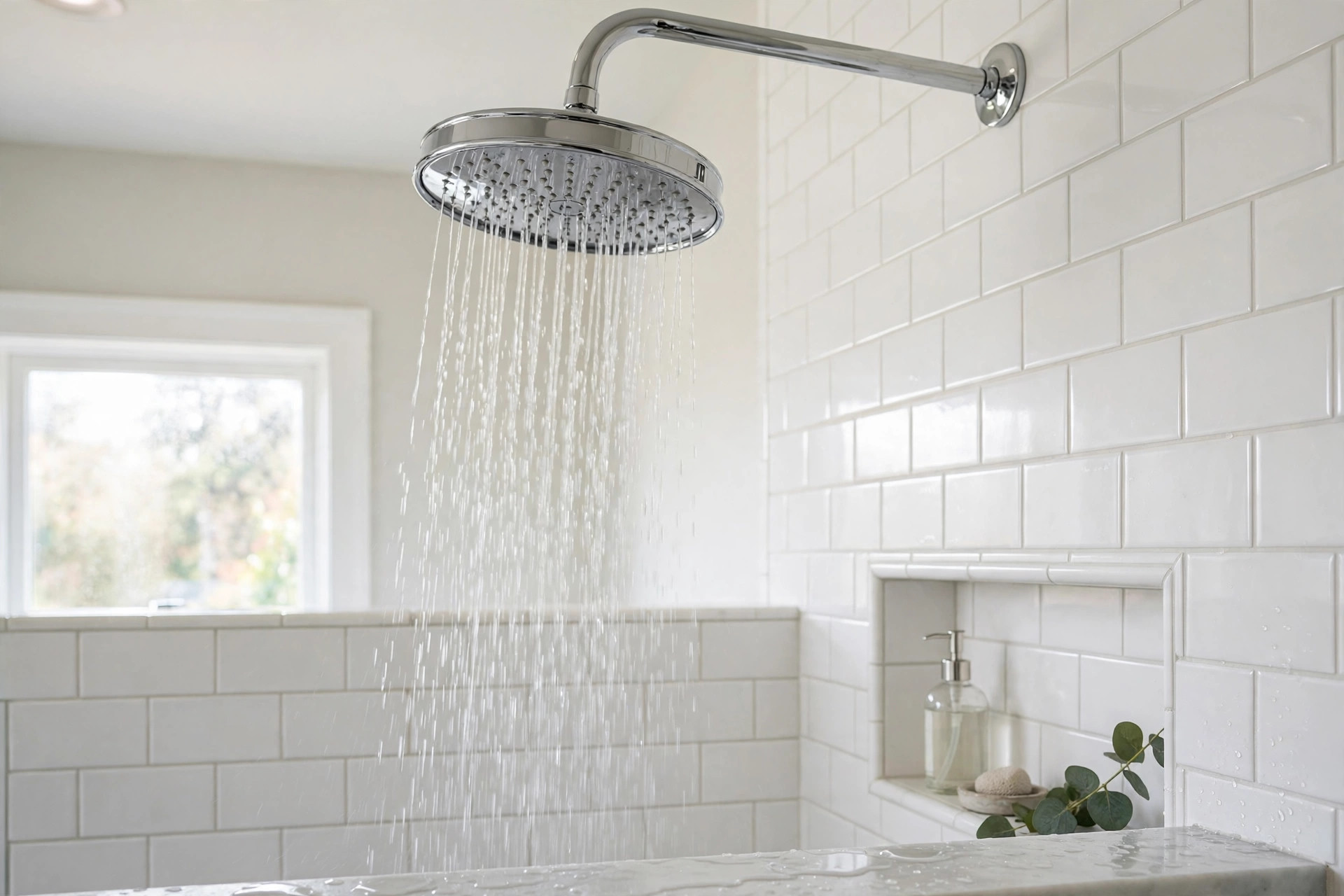
This rain shower heads buying guide usa is written for the homeowner who wants a calm, wide, steady stream of water from above. A rain shower head does not push water at an angle the way a standard wall head does. It hangs above the bather and lets water fall straight down, much like warm rain. The result is a gentler shower that covers the whole body at once.
Rain shower heads have grown common in American homes over the last twenty years. Builders now fit them in new houses. Remodelers add them to old baths. Prices range from under thirty dollars to several hundred. Quality varies just as much. This guide will walk you through the points that matter: size, flow rate, material, mount type, cost, fitting, care, and safety. By the end you should know exactly which head suits your bath and your budget.
Why a Rain Shower Head Is Different: Rain Shower Heads Buying Guide Usa
A normal shower head throws water out in a cone. You move under it to get wet. A rain shower head sends water down in an even sheet across its whole face. You stand still and the water covers you.
This design grew out of European baths in the nineteen eighties. Hotels picked it up first. Guests liked the calm feel, and hotels liked the luxury image. The fashion then moved into private homes. Makers like Kohler and Moen now sell rain heads in every finish they make.
The feel is the main reason people buy one. There is no hard jet. The pressure feels soft on skin and hair. People who wash long hair say the wide stream rinses it faster. People with sore joints say the warm sheet soothes better than a narrow spray.
There is also a practical point. A large head wets the whole body at once, so some users finish sooner and use less water. That depends on the flow rate, which we cover below.
What to Look for Before You Buy
Size and shape
Rain shower heads run from eight inches across to sixteen inches or more. The most common sizes in the United States are ten and twelve inches. An eight inch head fits a small stall. A twelve inch head needs a larger stall or tub surround, or water will fall outside the base.
Shape is mostly a matter of taste. Round heads are the classic form. Square heads suit modern baths. Both work the same way. Check the head’s depth too. Some large heads hang low and may trouble tall users in baths with low ceilings.
Flow rate
Flow rate is measured in gallons per minute, or GPM. Federal rules in the United States limit shower heads to 2.5 GPM. Many states, including California, limit them to 1.8 GPM or less. The box must state the rate.
A 2.5 GPM head gives a full, heavy rain. A 1.8 GPM head feels lighter but still covers well on a large face. Heads below 1.5 GPM may feel thin on a twelve inch face. Match the rate to your home’s water pressure. Well water and old pipes may not drive a big head well. If your pressure is low, pick a smaller head or a model with air-injection nozzles, which mix air into the stream to make it feel stronger.
Number of nozzles
Nozzles are the small rubber tips on the head’s face. More nozzles mean a more even sheet of water. Count matters less than layout. Look for nozzles spread across the whole face with no bare center. Silicone nozzles are best. You can rub them with a finger to knock off lime scale.
Spray settings
Basic rain heads offer one pattern: rain. Many models add settings such as massage, mist, or a mixed rain-plus-massage mode. A lever or dial on the head changes the pattern. Extra settings are nice but not required. The plain rain setting is the one most owners use every day.
Material and finish
Good heads are made of brass, stainless steel, or solid ABS plastic with a metal finish. Cheap thin plastic heads can crack at the neck and lose their finish in a year. Brass and stainless steel last longest. ABS is fine if the walls are thick and the finish is well applied.
Finish should match your other fixtures. Chrome is bright and easy to clean. Brushed nickel hides water spots. Oil rubbed bronze and matte black suit modern baths. Makers such as Delta Faucet and American Standard sell the same head in four or five finishes.
Mount type
A rain head must sit above you and point straight down. There are three ways to mount it.
A wall arm bends up from the wall and holds the head high. This is the most common mount. It suits baths with eight foot ceilings.
A ceiling mount drops straight from the ceiling. It looks clean and modern. It needs access above the ceiling to run the pipe.
An exposed pipe or shower column rises from the tub filler to hold the head overhead. This suits remodels where you cannot open the wall.
Measure your ceiling height before you buy. The head should hang seven to eight feet above the floor of the shower. Lower than that and tall users will bump it.
Types of Rain Shower Heads
Wall-mount rain heads are the standard form. They screw onto a wall arm with a standard half inch thread. Most American arms use this thread, so fitting is simple.
Ceiling-mount rain heads need a straight drop pipe from the ceiling. They give the truest rain feel because nothing angles the head. They are popular in new builds and full remodels.
Handheld rain combos pair a large rain head with a smaller hand shower on a hose. The hand unit helps rinse the stall and wash pets. This is a good pick for families.
Dual rain heads split the supply to two heads or to a rain head plus a body spray. They need strong pressure and a larger supply line. In a typical older home they may disappoint.
Filtered rain heads hold a small filter in the neck or handle. The filter cuts chlorine and sediment. People on well water or hard city water like them. You must change the filter cartridge on schedule or the flow will slow.
What Rain Shower Heads Cost in the United States
Prices in 2026 run roughly as follows. These are retail ranges seen at large stores such as The Home Depot and Lowe’s.
A basic eight inch ABS head with a chrome finish costs twenty five to fifty dollars. It will work well for a few years.
A mid range ten to twelve inch head in brass or stainless steel costs sixty to one hundred fifty dollars. This is the sweet spot for most buyers. Finish and build are solid.
A premium twelve to sixteen inch head with multiple spray settings costs one hundred fifty to four hundred dollars. Designer brands charge more for finish and name.
Ceiling drop pipes, longer wall arms, and trim kits add twenty to eighty dollars. A plumber will charge one hundred fifty to four hundred dollars to fit a head that needs new pipe in the wall. A simple swap onto an existing arm is a do-it-yourself job that takes twenty minutes.
Fitting a Rain Shower Head
Most rain heads fit a standard half inch pipe thread. To swap an old head, unscrew it with a wrench, clean the threads, wrap them with Teflon tape, and screw on the new head by hand plus a quarter turn. Home guides at This Old House and The Spruce show the steps with photos.
A wall arm swap is the next step up. You pull the old arm from the wall, wrap the new arm’s threads, and set it in place. Keep the arm level so the head points straight down.
Ceiling mounts and new pipe runs are plumber work. The pipe must be anchored firmly. A twelve inch head full of water is heavy. A loose pipe will sag and leak inside the ceiling.
Check the shower valve too. Old two-handle valves work fine. Single-handle pressure-balance valves work fine. If your valve is very old, have the plumber check that it can pass enough water for a big head.
Care and Upkeep
Rain heads need little care, but hard water will clog nozzles over time. Once a month, rub the silicone nozzles with your fingers while the water runs. This breaks up scale.
Every three to six months, soak the head in white vinegar. Fill a plastic bag with vinegar, tie it over the head so the face sits in the liquid, and leave it for an hour. Rinse well. Do not use harsh acids or bleach on plated finishes. They will strip the coating.
Wipe the finish with a soft cloth after showers in hard-water areas. Avoid abrasive pads. If a finish starts to peel, the head’s plating was thin. There is no good repair. Replace the head.
Check the washer inside the neck once a year. A worn washer causes drips at the joint. Washers cost pennies and take a minute to change.
Filtered heads need cartridge changes every two to three months, or as the maker directs. Mark the date on the cartridge with a pen so you do not forget.
Safety and Water Rules
Hot water can scald. Set your water heater to one hundred twenty degrees Fahrenheit. This is the level safety agencies advise for homes. Test the shower before stepping fully under a new head, because the wide stream covers more skin at once.
Grab bars matter more with a rain head, not less. The calm water and closed eyes make slips easy. If you are pairing a rain head with a walk-in design, read a walk in shower kits buying guide before you plan the base. A matching frameless shower doors buying guide will help you size the enclosure so water stays inside.
Mind local water law. Some cities and states cap flow below the federal limit. The box will carry a mark showing the states where the model may be sold. Buy the model rated for your state.
Ventilation is the quiet partner of any shower upgrade. A big rain head puts more steam in the air. Run the bath fan during the shower and for twenty minutes after. A quiet exhaust fans buying guide will help you pick a fan you will actually leave on. Advice sites such as Bob Vila and HGTV cover bath ventilation in plain terms.
Frequently Asked Questions
Will a rain shower head work with low water pressure?
It can, but choose with care. Pick an eight or ten inch head rather than a twelve inch one. Look for a 2.5 GPM model if your state allows it. Air-injection heads feel stronger on weak pressure. If pressure is very low, fix the supply first. No head can make up for a half-closed valve or clogged pipes.
Can I fit a rain shower head on my own?
Yes, if it screws onto your current wall arm. That is a twenty-minute job with a wrench and Teflon tape. You need a plumber when the job calls for a new arm set in the wall, a ceiling drop, or new pipe. Do not open a tiled wall unless you know how to seal it again.
Do rain shower heads use more water?
Not always. A 2.5 GPM rain head uses the same water as a 2.5 GPM standard head. Because the wide stream covers you faster, many people shower for less time. Low-flow rain heads at 1.8 GPM use markedly less water than old 2.5 GPM heads. Your habits decide the bill more than the head does.
What size rain shower head should I buy?
For a standard thirty-two inch square stall, buy an eight or ten inch head. For a larger stall or a tub shower, a ten or twelve inch head works well. Measure the stall first. Water that falls outside the base will rot floors and feed mold.
Are expensive rain shower heads worth it?
Up to a point. The jump from a twenty-five dollar head to an eighty dollar head buys real gains in material, finish, and nozzle quality. Past two hundred dollars you pay mostly for brand and finish. A mid-range brass or stainless head from a known maker is the best value for most homes.
How long does a rain shower head last?
A good brass or stainless steel head lasts ten to fifteen years with basic care. A cheap thin-plastic head may last two to four years. Hard water shortens life. Regular vinegar soaks and nozzle rubbing will add years to any head.
A Short Final Word
A rain shower head is a simple upgrade that changes the feel of the daily shower. Buy the right size for your stall. Match the flow rate to your pressure and your state law. Choose brass or stainless steel in a finish that matches your bath. Mount it high enough and keep it clean. Do those five things and the head will serve you well for a decade or more.
References
American Standard. (n.d.). Bathroom and kitchen products. https://www.americanstandard.com Bob Vila. (n.d.). Home improvement advice. https://www.bobvila.com Delta Faucet. (n.d.). Kitchen and bathroom faucets. https://www.deltafaucet.com HGTV. (n.d.). Home and garden ideas. https://www.hgtv.com Kohler. (n.d.). Bathroom and kitchen fixtures. https://www.kohler.com Lowe’s. (n.d.). Home improvement products. https://www.lowes.com Moen. (n.d.). Faucets and plumbing fixtures. https://www.moen.com The Home Depot. (n.d.). Home improvement products. https://www.homedepot.com The Spruce. (n.d.). Home and garden advice. https://www.thespruce.com This Old House. (n.d.). Home renovation guidance. https://www.thisoldhouse.com
Was this guide helpful?

About David Wilson
The My Garden US editorial team writes practical, in-depth home and garden guides for American homeowners — tested advice, no fluff.
You May Also Like

Rain Shower Heads for Texas Homes: A Full Buyer’s Guide
February 11, 2026 0 views
Rain Shower Heads California Homes USA: A Complete Buying and Installation Guide
April 1, 2026 0 views
Bathroom Wall Tiles California Homes USA: A Plain Buying and Care Guide
February 17, 2026 0 views