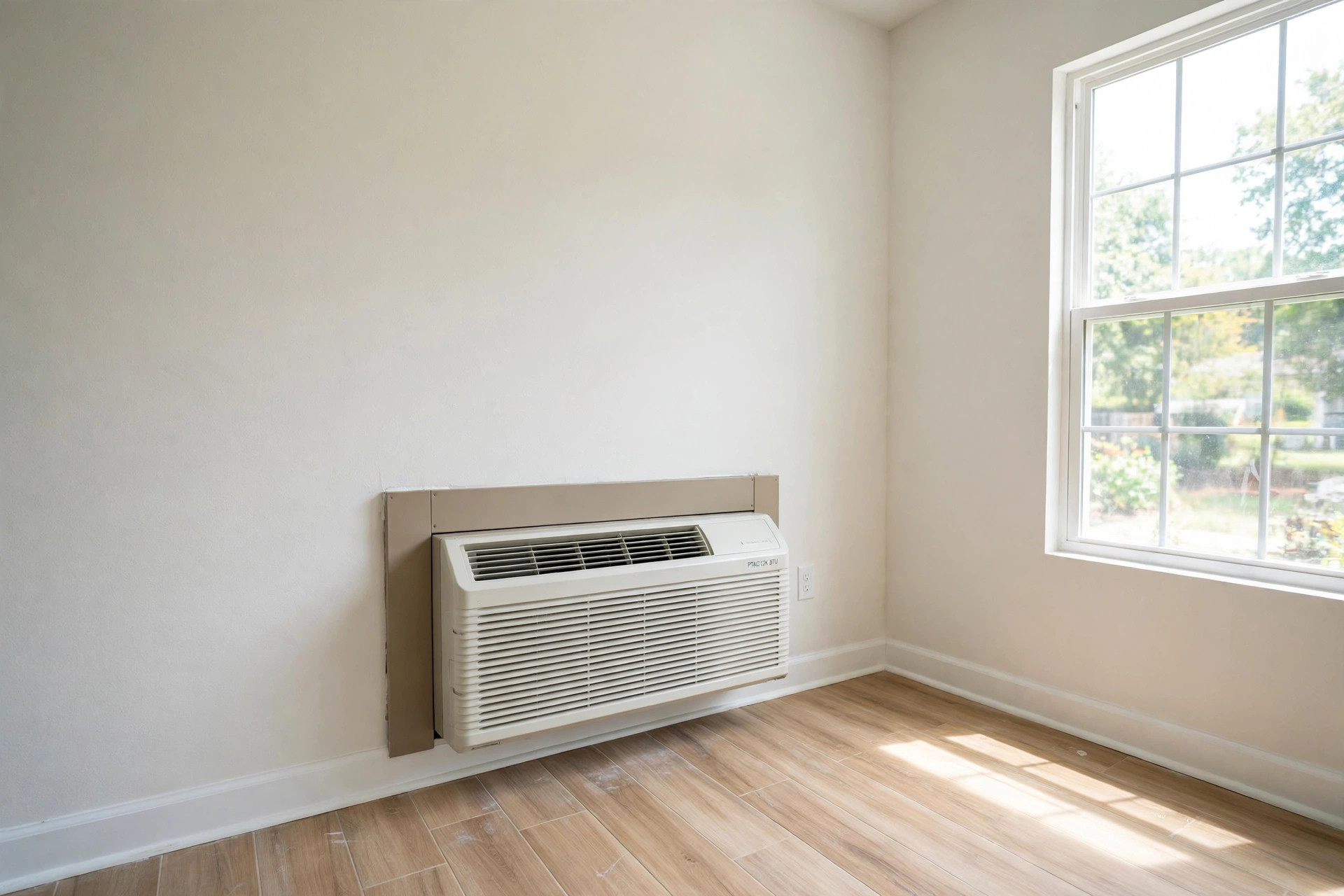

Adding a room to a house is a happy event. It brings more space for the family. It also brings a new problem. The old furnace or air conditioner may not reach the new room. The ducts may be too small or too far. A ptac unit for home addition reviews usa search can help solve it. PTAC stands for packaged terminal air conditioner. It is a box that sits in an outside wall. It heats and cools one room. It does not need ducts. Many home owners read ptac unit for home addition reviews usa before they buy. These reviews compare brands, sizes, and features. This guide will walk through the same points. It will help you pick the right unit for your new room.
Why a PTAC Unit Fits a Home Addition
A home addition changes the size of the house. The old heating system was sized for the old house. When you add a room, the old system must work harder. It may not push enough air to the far room. Running new ducts can cost several thousand dollars. It may require cutting into walls and floors.
A PTAC unit avoids that work. It goes right into the wall of the new room. The rest of the house is not touched. Installers can often finish the job in one day. This is why many contractors suggest a PTAC for a small addition. It is simple. It is direct. It gives the new room its own control.
The new room also gets its own thermostat. If the addition is a guest room that sits empty most weeks, the unit can stay off or low. That can save money on the power bill.
What to Look For When Reading Reviews: Ptac Unit for Home Addition Reviews Usa
Reviews of PTAC units use many terms. It helps to know what they mean. The first term is BTU. BTU stands for British Thermal Unit. It measures heating or cooling power. A larger room needs a higher BTU. Most reviews list the BTU for both heating and cooling, and the two numbers are often different.
The next term is voltage. PTAC units come in 208/230 volt and 265/277 volt models. Most homes in America use the 208/230 volt type. Check what your home wiring can support. An electrician can tell you in a short visit.
The third term is the sleeve size. The sleeve is the metal box in the wall that holds the unit. Most PTAC sleeves are 42 inches wide and 16 inches tall. Measure the opening before you buy. Reviews often note which sleeve the unit fits. A unit that does not fit the sleeve cannot be installed.
Look also for the energy efficiency numbers. For cooling, the key number is EER. Higher EER means lower power use. For heat pump models, look at COP. Higher COP means the heat pump gives more heat per watt of power. Reviews on sites like ENERGY STAR list models that meet its bar for efficiency. The maker sheets list them too.
Noise level is another point reviews cover. PTAC units sit in the room. They are louder than a central system in a far closet. If the addition is a bedroom, pick a quieter model. If it is a workshop, noise matters less.
Types of PTAC Units
PTAC units fall into a few groups. The first group is electric heat models. These cool with a compressor and heat with an electric coil. They are simple and low in price. They cost more to run in cold places because electric heat uses much power.
The second group is heat pump models. These cool like a standard PTAC. For heat, they run the compressor in reverse and move heat from the outside air into the room. This uses far less power than an electric coil. Most heat pump models also have a backup electric coil for very cold days. Reviews often praise heat pump models for rooms in mild climates. For a full picture of how these pumps perform, see our guide on air source heat pump pros and cons usa.
The third group is gas heat models. These are rare in homes and more common in hotels. A gas model needs a gas line to the unit, which adds cost. Most home additions will use electric heat or a heat pump.
Some units offer extra features. Many have a fan-only mode for mild days. Many have a timer so the room is warm or cool when you arrive. Some have a dehumidify mode that helps in damp summers. A few have a remote control. Think about which extras you will truly use. A simple unit with fewer parts can be more reliable.
Sizing the Unit for Your Room
Size matters more than brand. A unit that is too small will run all day and still leave the room cold or warm. A unit that is too large will cool the room fast, then shut off, then start again. This short cycling wastes power. It also fails to pull moisture from the air. The room can feel damp even when it is cool.
To pick a size, start with the room area. Measure length times width. A common rule is 20 BTU of cooling per square foot. A 300 square foot room needs about 6,000 BTU of cooling. A 500 square foot room needs about 10,000 BTU. Then adjust. Add BTU if the room has many windows, tall ceilings, or hot sun in the afternoon. Subtract a little if the room is shaded or well insulated.
Heating size matters too. In a mild state, the heat pump side of the unit can handle most days. In a cold state, the backup electric heat must carry the load. Check the heating BTU of the model. Make sure it can warm the room on a cold night. An honest heating and cooling guide from the U.S. Department of Energy explains how sizing math works for all types of systems.
If you are not sure, ask a local HVAC contractor. Many will do a quick load calculation for a small fee. This is worth the money. A right-sized unit lasts longer and costs less to run.
Cost and Price
The price of a PTAC unit has two parts. The first part is the unit itself. The second part is the install. A basic electric heat PTAC often sells for 700 to 1,200 dollars. A heat pump model often sells for 1,100 to 1,900 dollars. Prices move with brand, BTU, and features. Big makers like Carrier, Trane, Lennox, Rheem, and Goodman all sell PTAC or similar packaged units.
The install cost is separate. A new wall sleeve install needs a hole cut in the wall. The sleeve must be level and sealed. An electrician must run a new circuit from the panel. The total install often runs 500 to 1,500 dollars. If the wall already has a sleeve, the cost drops a lot. The old unit slides out and the new one slides in.
Running costs depend on power prices and climate. A heat pump model in a mild state may add 30 to 60 dollars a month in the heating season. An electric heat model in a cold state can add much more. Reviews sometimes include real power bills from owners. Those numbers are the most honest guide. ENERGY STAR rated models can trim the monthly cost.
There are also small extra costs. A new sleeve costs 100 to 200 dollars. A wall thermostat costs 50 to 150 dollars. A weather seal kit costs a few dollars. Add these to your budget.
Installation Steps
Most owners hire a pro for the install. The installer cuts a hole in an outside wall and sets the sleeve level, tilting it a hair to the outside so water drains out. The sleeve is sealed with caulk and flashing to keep rain out. An electrician runs a new circuit and adds a breaker. The unit slides into the sleeve and plugs in. Then heat, cool, and fan modes are tested.
The job often takes three to six hours. Plan the work before the room is fully finished. It is easier to cut the wall before the final paint and trim go up. Do not skip the permits. Many towns require a permit for new electric circuits. The fee is small, and it protects you if there is ever an insurance claim.
Care and Upkeep
A PTAC unit needs little care, but it needs some. The filter is the main item. Most units have a washable filter behind the front grille. Wash it every month in the busy season. A dirty filter blocks air flow. The unit works harder and cools less. This is the single most common cause of poor performance.
Clean the coils once or twice a year. Dust builds up on the inside and outside coils. A soft brush and a coil cleaner from the store will do the job. Turn off the power first.
Check the drain. PTAC units make water when they cool. The water should flow out through the sleeve to the outside. If water drips inside the room, the sleeve may not be tilted right. Clear any blockage in the drain path.
At the start of each season, run a test. Switch to heat and let it run ten minutes. Switch to cool and let it run ten minutes. Listen for odd sounds. Grinding or loud rattling means a part is loose or worn. Call a tech before the hot or cold weather arrives.
Covers help in the off season. A fitted outdoor cover keeps rain and snow off the back grille. Remove the cover before you start the unit. Home guides at Family Handyman and This Old House show these simple care steps with photos.
Safety
Safety starts with the electric circuit. A PTAC needs its own dedicated circuit. Do not share the circuit with other big loads. The breaker must match the unit rating. An undersized breaker will trip. An oversized breaker is a fire risk. Let a licensed electrician do this part.
Keep the area around the unit clear. Do not push furniture against the front grille. Air must flow in and out. Keep curtains at least a foot away. Do not set papers or cloth on top of the unit.
Outside, keep the back grille clear. Trim bushes back at least two feet. Do not stack boxes against the outside wall. Good air flow keeps the unit safe and efficient.
If the unit smells like burning, turn it off at the breaker. Do not keep running it. Call a technician. The same rule holds for sparks or smoke. These are rare events, but they demand a fast response.
For rooms where children play, add a grille guard. Some makers sell a lockable cover for the controls. This stops small hands from changing settings or poking the grille.
PTAC Units and Whole-Home Systems
Some owners ask if a PTAC can replace the main system. For most homes, the answer is no. A PTAC heats and cools one room well. It cannot push air down a hall to far rooms. It is a room solution, not a house solution.
A better plan is to pair the PTAC with the main system. Let the main system serve the old rooms. Let the PTAC serve the addition. This split plan is common and works well.
If the addition is large, say over 800 square feet, consider a ductless mini split. It is quieter and often more efficient. Our guide on air source heat pump pros and cons usa covers heat pumps in more depth. If the addition includes a kitchen, venting matters too. See our best ductless range hood reviews 2026 usa for that side of the project. Good insulation also cuts the load. Read our closed cell vs open cell foam comparison usa before you insulate the new walls.
Frequently Asked Questions
How long does a PTAC unit last? Most last 10 to 15 years with basic care. Clean filters and coils add years. Units that run all day wear out faster.
Can I install a PTAC unit myself? A handy owner can swap a unit into an existing sleeve. Cutting a new hole and running a new circuit is pro work. The electric part needs a licensed electrician.
Are PTAC units loud? They make some noise because the fan and compressor sit in the room. Newer models are quieter than old ones. For a bedroom, look for models under 50 decibels on low fan.
Do PTAC units work in very cold weather? Heat pump models work well down to about 35 to 40 degrees outside. Below that, the backup electric heat takes over. The room stays warm, but the power bill rises.
What size PTAC do I need for a 400 square foot addition? Start with about 8,000 BTU of cooling. Adjust up for big windows or hot sun. Check the heating BTU too. A local contractor can confirm the math.
How much does it cost to run a PTAC each month? A heat pump model in a mild climate may cost 30 to 60 dollars a month in season. An electric heat model in a cold snap can cost double. Clean filters keep the number down.
A Final Word
A ptac unit for home addition reviews usa search gives you real owner voices. Read several reviews, not just one. Look for patterns. If many owners praise a model for quiet running, believe it. If many complain about weak heat, believe that too. Match the unit to your room size, your climate, and your budget. Hire a pro for the electric work. Keep the filter clean. Do these simple things and your new room will stay comfortable for years.
References
Carrier. (n.d.). Heating and cooling systems. https://www.carrier.com ENERGY STAR. (n.d.). Energy efficient products. https://www.energystar.gov Family Handyman. (n.d.). DIY home repair and maintenance. https://www.familyhandyman.com Goodman. (n.d.). Heating and cooling equipment. https://www.goodmanmfg.com Lennox. (n.d.). Heating and cooling systems. https://www.lennox.com Rheem. (n.d.). Heating, cooling, and water heating. https://www.rheem.com This Old House. (n.d.). Home renovation guidance. https://www.thisoldhouse.com Trane. (n.d.). Heating and air conditioning. https://www.trane.com U.S. Department of Energy. (n.d.). Energy efficiency and renewable energy. https://www.energy.gov
Was this guide helpful?

About James Carter
The My Garden US editorial team writes practical, in-depth home and garden guides for American homeowners — tested advice, no fluff.
You May Also Like
Mini Split for Garage Heating and Cooling: A Practical Guide for Homeowners
July 29, 2026 0 views
Best Geothermal Installers Near Me Reviews: A Homeowner’s Guide
February 2, 2026 0 views
Electric Baseboard Heat Cost Per Month in the USA
July 30, 2026 0 views