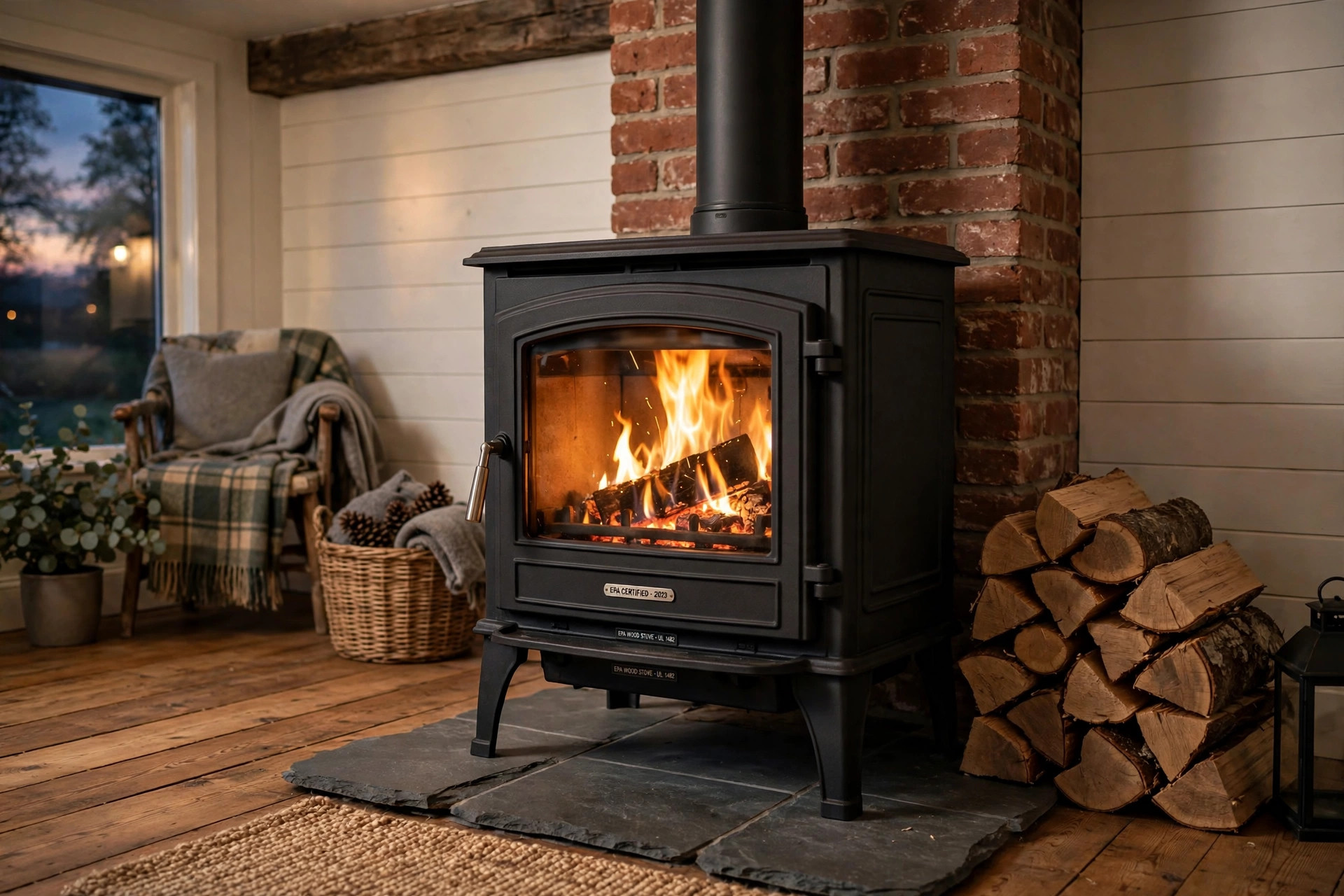

A wood stove can warm a home for less money than many other kinds of heat. It can also cut smoke in your neighborhood and keep your chimney safer. That is why epa certified wood stove reviews 2026 usa matter so much to shoppers this year. Buyers want a stove that meets the current federal rules and still gives steady heat on cold nights.
The Environmental Protection Agency sets limits on how much smoke and fine particle matter a new wood stove may release. Every new stove sold in the United States must pass a certified laboratory test. Models that pass earn a label that shows their tested efficiency and their particle emissions. These EPA certified wood stove reviews 2026 usa explain what that label means, which features are worth paying for, and how the main types of stoves compare.
Why EPA Certification Matters
Old wood stoves could pour thick smoke out of the chimney. That smoke carried fine particles deep into lungs. It also meant wasted fuel. Much of the heat went up the flue as unburned wood gas.
EPA certification changed that. Since the first federal standards, engineers have redesigned fireboxes, air paths, and baffles. Modern certified stoves reburn the gases that used to escape as smoke. The result is more heat from each log and far less pollution.
The current standard limits particle emissions to 2.0 grams per hour for new wood stoves and fireplace inserts. That is a strict test. When you see the EPA label on a stove, you know an independent lab measured its emissions and its efficiency. Shoppers who read epa certified wood stove reviews 2026 usa before buying tend to choose models that burn cleaner and use less wood over the life of the stove.
There is also a legal reason to care. Many states and local air districts will not allow the sale or installation of a non-certified stove. Some areas offer rebates when you replace an old smoke dragon with a certified model. Checking the U.S. EPA list of certified wood stoves is a smart first step before you shop.
Certification also affects resale and insurance. Home inspectors and insurance agents like to see a proper label on the back of the stove. It shows the unit meets modern safety and emission rules.
What to Look for When You Choose a Stove: Epa Certified Wood Stove Reviews 2026 Usa
Heat Output and Firebox Size
Stoves are rated by the square feet they can heat. A small cabin stove may cover 800 to 1,200 square feet. A large model may heat 2,000 square feet or more. Match the rating to your home. An oversized stove will force you to run small, smoky fires. An undersized stove will leave rooms cold.
Firebox size controls burn time. A larger firebox holds more wood and burns longer between loads. If you want overnight heat, look for a model that claims an eight to ten hour burn on a full load of hardwood.
Efficiency Rating
EPA certified stoves list a tested efficiency, often between 70 and 85 percent. Higher efficiency means more of the wood turns into room heat instead of chimney waste. The ENERGY STAR program recognizes the most efficient models.
Emissions
Look for the grams-per-hour figure on the label. Lower is better. The best models test under 1.0 gram per hour. All pass the 2.0 gram limit. In reviews, compare this number side by side. It is one of the most honest measures of a stove.
Construction and Materials
Cast iron stoves hold heat long after the fire dies down. Steel plate stoves heat up faster and cost less. Soapstone panels store heat and release it slowly. Each material has fans. The right choice depends on how you plan to use the stove.
Air Controls
Simple stoves have one air lever. More advanced models add a second control for the secondary burn. A few offer automatic air adjustment. Simple controls are easier for new users. They also fail less often.
Clearances and Size
Measure your hearth. Every stove lists the minimum distance to walls and furniture. Smaller clearances give you more placement options. Heat shields on the stove can shrink the required clearance.
Types and Options
Non-Catalytic Stoves
Most certified stoves sold today are non-catalytic. They use carefully placed air tubes and an insulated firebox to reburn smoke. They are simple to run. There is no costly part to replace. Most buyers in these epa certified wood stove reviews 2026 usa choose this type.
Non-catalytic stoves work best with hot, fast fires. They shine when you burn them at medium to high output. At very low settings, they may smoke more. Still, for most homes they are the practical pick.
Catalytic Stoves
Catalytic stoves pass smoke through a coated ceramic comb. The combustor burns the smoke at lower temperatures. This allows long, slow, steady burns. A good catalytic stove can run twelve hours or more on one load.
The trade-off is upkeep. The combustor wears out and must be replaced every five to seven years. The stove also costs more up front. If you want overnight heat and even temperatures, a catalytic model is worth a look.
Hybrid Stoves
Hybrid stoves combine both systems. They use secondary air tubes plus a small catalytic element. They aim for the cleanest burn and the longest burn time in one box. They are newer to the market and usually sit at the top of the price range.
Cook Stoves and Small Room Stoves
Wood cook stoves heat the room and cook food on a flat top. Small room stoves fit cabins, workshops, and tiny homes. Both types must still meet EPA standards. Read the label before you buy. The U.S. Department of Energy offers plain guides on wood heat basics.
Cost and Price
A certified wood stove itself can cost from 800 dollars for a basic steel model to 4,000 dollars or more for a large cast iron or hybrid unit. That is only part of the bill. Installation often costs as much as the stove.
A proper chimney system is the biggest extra cost. Class A insulated chimney pipe runs 100 to 200 dollars per foot installed. A straight vertical run is cheapest and drafts best. Every bend adds cost and hurts draft.
Hearth protection is next. The stove must sit on a non-combustible pad that extends past the door and sides. Prefab hearth pads start near 200 dollars. A custom tile hearth costs more.
Labor for a full install often lands between 1,500 and 3,000 dollars. A total project of 3,500 to 8,000 dollars is normal for a house install. That sounds steep, but wood heat can pay back. A cord of hardwood holds about as much heat as 150 gallons of heating oil. In cold regions, a stove can cut fuel bills by hundreds of dollars a year.
When you read epa certified wood stove reviews 2026 usa, note which models include fans and thermostats. A blower spreads heat into the room. It adds 100 to 300 dollars but makes a big difference in a large space.
Check for rebates. Some states and utilities offer cash back for certified stoves. The federal tax credit picture changes year to year, so check current rules before you buy. Guidance from Consumer Reports and retailer buying guides at Lowe’s can help you set a realistic budget.
Care and Upkeep
A certified stove rewards simple care. Burn only dry, seasoned firewood. Wood should dry for at least six months, better for a full year. Split logs dry faster. A moisture meter is cheap and takes the guesswork out. Aim for wood under 20 percent moisture.
Never burn trash, painted wood, or pressure-treated lumber. These release poisons and can ruin a catalytic combustor. They also foul the chimney fast.
Empty the ash pan often, but leave a thin bed of ash in a non-catalytic firebox. It insulates the coals and helps the next fire start.
Check the door gasket once a year. Close the door on a dollar bill. If the bill slides out with no grip, the gasket needs replacement. A leaky door lets in extra air and wastes heat.
Inspect the baffle boards and air tubes each fall. Replace cracked parts before the heating season. If you own a catalytic stove, check the combustor for cracks and test its light-off temperature. Keep a log of when you installed it so you know when the five to seven year life is up.
The chimney needs attention too. Even clean stoves leave some creosote. Have the flue swept by a certified sweep at least once a year, more if you burn a lot. A chimney fire is loud and scary. Regular sweeping is cheap insurance. Practical upkeep tips from This Old House and Family Handyman walk through the yearly routine step by step.
Store firewood off the ground and cover the top of the pile. Keep the pile a short walk from the door but not against the house. Dry wood burns hotter, smokes less, and keeps your glass clear.
Safety
Wood heat is safe when the install follows the rules. The stove manual lists exact clearances. Follow them to the inch. Do not guess. Combustible walls need the listed air gap, and the gap must stay open at top and bottom so air can flow.
Use only the chimney type the maker allows. Never vent a stove into an old unlined masonry flue without a proper stainless liner. The liner must be sized to the stove collar.
Keep a working smoke alarm and a carbon monoxide alarm on every floor. Test them monthly. CO has no smell. A blocked flue or a downdraft can push it into the room.
Keep furniture, curtains, and firewood at least three feet from the stove. Use a metal container with a tight lid for ashes. Store it outside, away from the house, until the ashes are stone cold. Hot coals can stay alive for days.
Let the stove cool before you open it for service. Wear gloves when you handle hot parts. Teach children that the stove is hot even when the fire looks dead.
Check local rules before install. Some towns require a permit and an inspection. A permitted install protects you if you ever sell the house or file an insurance claim. Safety guidance from the U.S. Consumer Product Safety Commission covers heaters and home fire risk in plain terms.
Frequently Asked Questions
How long do EPA certified wood stoves last? A well-kept steel or cast iron stove lasts 20 to 30 years. Firebrick, gaskets, and baffles wear out sooner and need replacement. Catalytic combustors last five to seven years. With yearly service, the body of the stove often outlives the house it heats.
What does the EPA label tell me? The label shows the model name, the tested efficiency, and the particle emissions in grams per hour. It also lists the heat output range. This data comes from a certified lab test, not from the maker. It is the most trusted source when you compare models.
Can I install a wood stove myself? Many owners do the hearth and stove placement themselves, but the chimney work should meet code. In most places a permit and an inspection are required. If you are new to this, hire a certified installer. A bad install can cause a house fire. The money you save is not worth the risk.
How much wood will I burn in a winter? A full-time stove in a cold climate can use three to five cords a year. A part-time stove for evening heat may use one to two cords. Your climate, your house insulation, and how warm you like it all change the number. Start with dry hardwood for the most heat per cord.
Are pellet stoves also EPA certified? Yes. Pellet stoves follow their own EPA rules. They burn compressed wood pellets and feed themselves from a hopper. They need electricity to run. They burn very clean but cost more to buy and need pellet storage.
Do I need a chimney liner for an old fireplace? If you set a stove or an insert into an old masonry fireplace, you almost always need a stainless steel liner sized to the stove. The old flue is usually too big. An oversized flue cools the smoke and builds creosote fast. A proper liner makes the stove draft right and burn clean.
A Final Word
These epa certified wood stove reviews 2026 usa point to one clear lesson. Buy the stove that fits your house, burn dry wood, and keep the chimney clean. Do those three things and a certified stove will give you warm rooms, lower fuel bills, and cleaner air for decades.
Take your time shopping. Compare the grams-per-hour numbers. Read the manuals before you buy, not after. Ask the dealer about parts and service. A stove is a long-term partner in your home. Choose it with the same care you would give any big purchase.
For more ways to cut heating costs, see our guides on the furnace maintenance checklist for fall usa, the best duct cleaning service cost near me, and the best outdoor ceiling fan for patio usa.
References
Consumer Reports. (n.d.). Product reviews and ratings. https://www.consumerreports.org ENERGY STAR. (n.d.). Energy efficient products. https://www.energystar.gov Family Handyman. (n.d.). DIY home repair and maintenance. https://www.familyhandyman.com Lowe’s. (n.d.). Home improvement products. https://www.lowes.com This Old House. (n.d.). Home renovation guidance. https://www.thisoldhouse.com U.S. Consumer Product Safety Commission. (n.d.). Product safety information. https://www.cpsc.gov U.S. Department of Energy. (n.d.). Energy efficiency and renewable energy. https://www.energy.gov U.S. Environmental Protection Agency. (n.d.). Protecting human health and the environment. https://www.epa.gov
Was this guide helpful?

About Michael Thompson
The My Garden US editorial team writes practical, in-depth home and garden guides for American homeowners — tested advice, no fluff.
You May Also Like
Duct Sealing Cost With Aeroseal Near Me: A Plain Guide for Homeowners
September 27, 2026 0 views
A Guide to Ceiling Fan Direction for Summer in the USA
March 8, 2026 0 views
Solar Pool Heater Reviews for USA Homes: A Simple Guide
September 6, 2026 0 views