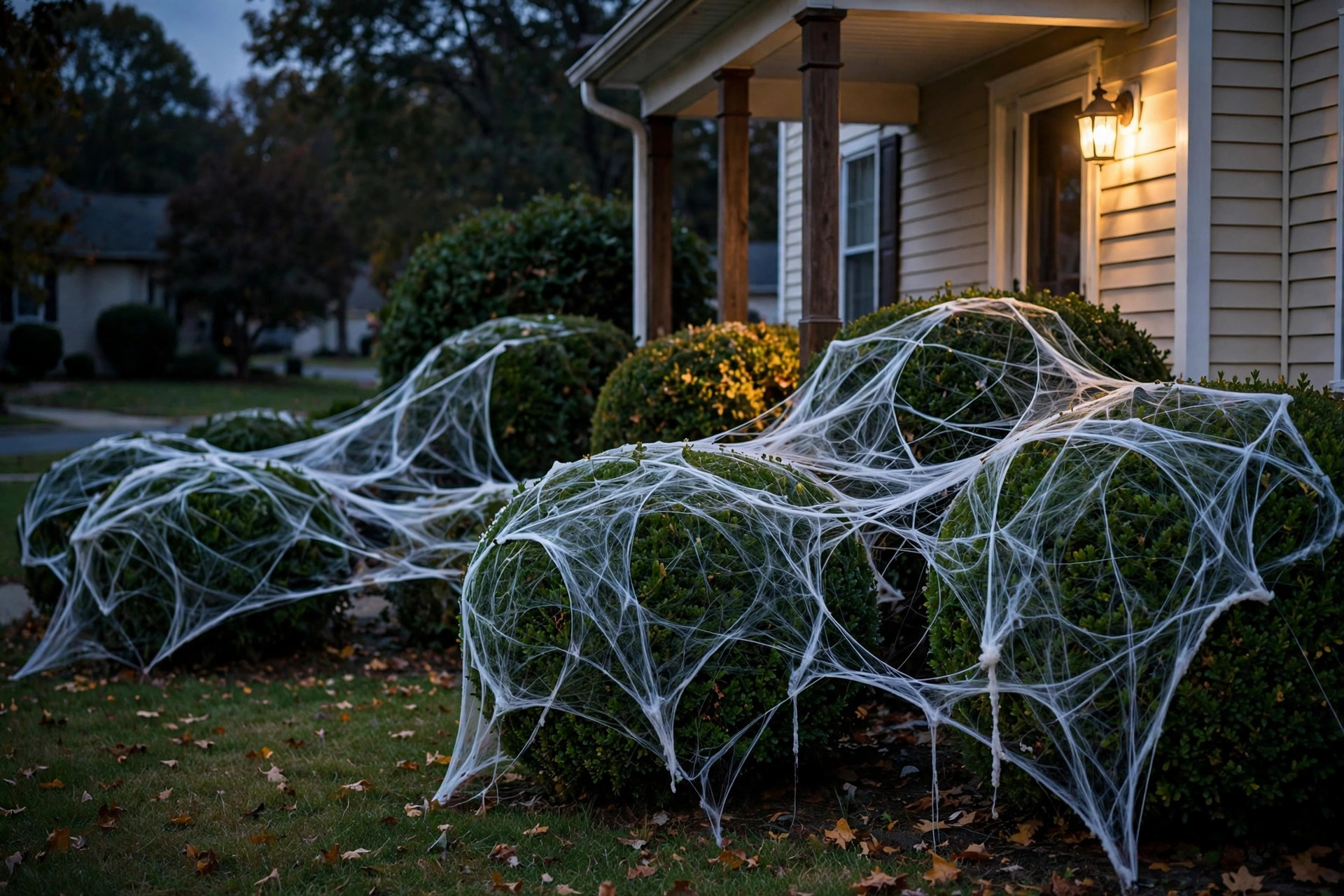
Every October, plain green bushes stand along American front walks. They look the same year after year. The best Halloween spider webs for yard bushes change that in minutes. A stretched web turns a quiet hedge into a scene from a ghost story. Kids stop and stare. Drivers slow down. Neighbors ask where you bought it.
This guide shows you how to pick the best Halloween spider webs for yard bushes, how to hang them, and how to keep them safe for pets, kids, and wildlife. You will also learn the types of webs, what they cost, and how to store them for next year.
Why Spider Webs Work So Well on Bushes
Bushes are the perfect shape for spider webs. They are round, soft, and full of small branches. The branches act as natural anchor points. When you stretch a web across them, it catches light from the street and from porch lamps. The thin fibers glow at dusk. That is when the effect looks best.
Webs also cover a large area for very little money. One bag of stretch web can cover a medium hedge. A few dollars of material can give you the biggest decoration on the block. Few scary yard decorations deliver this much impact per dollar.
Spider webs fit every theme. They work with ghosts, witches, pumpkins, and monsters. They also work on their own. A bare web on a dark bush needs no other prop to look spooky.
What to Look for When You Choose: Best Halloween Spider Webs for Yard Bushes
Size and Coverage
Check the size on the package before you buy. Webs are sold by how far they stretch, not by how big they look in the bag. A one ounce bag of stretch web usually covers about 200 square feet. That is enough for one medium bush or one corner of a hedge.
Measure your bushes first. Walk the yard with a tape measure. Note the width of each shrub. Buy a little more than you think you need. It is better to have extra web than to stop halfway through a hedge.
For very large hedges, buy the bulk packs sold by seasonal retailers such as Home Depot or Lowe’s. These packs cost less per ounce than the small bags at craft stores like Michaels or JOANN.
Material and Quality
Most stretch webs are made of thin polyester or nylon fiber. Good web pulls apart without snapping. Cheap web tears in your hands and falls apart in the first rain.
Read package reviews when you shop online at places like Wayfair. Look for words like strong, stretchy, and thick. Avoid packs where buyers complain about holes before they even open the bag.
Stretch and Cling
The best webs cling to branches on their own. The fibers are slightly tacky. They catch on bark and leaves with a light press. This saves you from using pins or tape on every strand.
If your bushes are smooth and waxy, like holly, the web may slip. In that case, push small twigs into the web to hold it, or tie the corners with clear fishing line.
Color
White is the classic color. It shows up best at night under porch lights. Gray looks more natural in daylight. Black webs can look striking against a light colored house.
Glow in the dark webs exist, but the glow is weak. They charge under light and fade after an hour or two. A better plan is to aim a small spotlight at white webs. The result is brighter and lasts all night.
Weather Resistance
October weather is rough in much of the country. Rain, wind, and frost are all possible before Halloween. Webs rated for outdoor use handle this better. The Spruce decorating guides often note that outdoor rated webs hold their shape longer in wet weather.
No web survives a heavy storm with grace. If strong wind is forecast, take the webs down for the night. A soaked web sags and looks sad instead of spooky.
Types of Spider Webs for Yard Bushes
Stretch Web Kits
Stretch web is the most common type. It comes as a compact ball of fiber in a bag. You pull it apart with your hands until it becomes a thin net. Then you drape it over the bush.
Stretch web gives the most natural look. It is also the cheapest option. Most kits include one or two plastic spiders. You can add your own for a better effect.
This type suits bushes of any shape. You control how thin or thick the web gets as you stretch it. Thin webs look real. Thick webs show up better from the street.
Round Webs With a Spider
Round webs come pre made in a circle or triangle shape. They have spokes and rings like a real spider web. You hang them between two bushes or across a single wide shrub.
These webs take no skill to hang. They look tidy and neat. They are a good pick if you do not like the messy work of stretching fiber.
The downside is size. Most round webs are three to four feet across. A large hedge may need several of them. That can cost more than one bag of stretch web.
Giant Webs
Giant webs stretch up to 15 or 20 feet. They are made for large hedges and whole rows of shrubs. The fiber is thicker than standard web so it spans wide gaps.
These webs make a bold statement. They work well as the centerpiece of a yard haunt. Pair them with halloween inflatables for the front yard for a full scene.
Giant webs need solid anchors. Tie them to fence posts, tree trunks, or heavy stakes. A loose giant web will blow away in the first gust.
Spider Web Fabric or Netting
Web netting comes as a flat mesh fabric. It does not stretch like fiber web. You cut it to size and drape it over bushes. It looks like a ghostly sheet with web holes.
Netting is the easiest type to reuse. It does not tangle the way fiber does. You fold it and put it back in the bag. It is a good choice if you hate detangling.
Netting looks less real than stretch web. It reads more as decoration than as a spider’s work. For many yards, that is perfectly fine.
Cost and Price Guide
Spider webs are one of the cheapest Halloween decorations you can buy. A standard one ounce bag of stretch web costs between three and six dollars at most stores. That bag covers one medium bush.
Round webs cost five to twelve dollars each, depending on size. Giant webs run ten to twenty dollars. Web netting costs eight to fifteen dollars for a large sheet.
A full yard of webs for three to five bushes usually costs under 25 dollars. Add spiders at two to five dollars each for the best look. Big plastic spiders make a huge difference. A plain web looks nice. A web with a two foot spider looks great.
Seasonal sales cut these prices fast. Prices drop in the last week of October. But selection gets thin. Buy early in the season if you want a specific type.
How to Hang Webs on Bushes Step by Step
Start with clean, dry bushes. Trim any dead branches first. Dead wood pokes through the web in ugly spikes.
Pull the web ball apart slowly. Work with dry hands. Wet hands make the fiber stick to your skin instead of the bush. Pull the fibers out in thin sheets, not thick ropes.
Lay the first sheet across the top of the bush. Let it drape down both sides. Press the fibers gently into the branches. The tacky fibers will catch and hold.
Work from top to bottom. Add more sheets as you go. Overlap the edges so there are no bare gaps. Step back every few minutes and look from the street. That is the view that matters.
Add spiders last. Place them where people will see them. The top of the bush and the front edge work best. For extra scare, hang one spider from a single thread so it dangles in the walkway. A fog machine for yard haunt effect nearby makes the whole scene feel alive.
Secure loose corners with clear fishing line. Tie the line to a branch or a ground stake. This stops the wind from lifting the web off the bush.
Do this work in daylight. Hanging webs in the dark leads to tangles and bare spots. Give yourself an hour for a medium hedge.
Care and Storage
Webs last longer when they stay dry. After rain, shake the water off gently. Do not wring the fiber. Wringing breaks the strands and ruins the stretch.
Take webs down before the first hard frost if you can. Frost makes fibers brittle. Brittle webs tear when you remove them.
Stretch web is hard to reuse. It tangles into a ball the moment you pull it off. Most people treat it as one season decor. At a few dollars a bag, that is a fair deal.
Netting and round webs are different. Fold them flat. Put them in a bag with the spiders. Store them in a dry garage or closet. They will be ready next October.
Label your storage bags. Write the bush or area on the bag with a marker. Next year you will hang them in minutes instead of guessing sizes.
Safety for Kids, Pets, and Wildlife
Spider webs look like fun to touch. Kids will grab them. That is fine for the web, but remind small children not to wrap the fiber around their necks. Long strands can be a tangling hazard for toddlers.
Keep webs away from walkways at eye level. A visitor who walks into a web face first will not be amused. Hang webs on bushes set back from the path, or keep the front side of the bush web free.
Pets are a bigger concern. Dogs love to bite at webs. Most web fiber is not toxic, but it can upset a dog’s stomach if eaten. Cats may bat at hanging spiders. Put small spiders high where pets cannot reach them.
Wildlife safety matters most at night. Birds and bats can get tangled in outdoor decorations. The U.S. Consumer Product Safety Commission offers general guidance on safe holiday decorating. As a rule, take down loose hanging strands each night if birds roost nearby. Never leave webs up past mid November. Late season webs catch migrating birds.
Use battery LED lights instead of candles near webs. Web fiber is flammable. Keep all heat sources far from the bushes.
Frequently Asked Questions
How long do Halloween spider webs last outdoors?
A stretch web lasts two to four weeks outdoors in fair weather. Rain and wind shorten its life. Netting and round webs can last the whole season. Take webs down during storms to make them last longer.
Will spider webs damage my bushes?
No. Web fiber is light and soft. It does not cut bark or strip leaves. Remove the web gently after Halloween. Pull slowly so you do not snap small twigs. Rinse the bush with a hose to clear loose fibers.
What is the best spider web for large yard bushes?
Stretch web in bulk packs is best for large bushes. It covers wide areas for low cost. Giant web kits are the next best pick. They span 15 to 20 feet and need fewer anchor points than several small webs.
How do I keep spider webs from blowing away?
Anchor the corners with clear fishing line tied to branches or stakes. Press the fibers deep into the bush so branches catch them. On windy nights, it is safest to take the webs down and rehang them in the morning.
Can I reuse Halloween spider webs next year?
Stretch fiber web is hard to reuse. It tangles when you remove it. Netting and round webs store well and can be used for years. Save your spiders too. They are the most expensive part and last a long time.
Are Halloween spider webs safe for pets?
Most webs are made of non toxic fiber, but they are not meant to be eaten. Dogs may chew them and get an upset stomach. Keep webs out of reach of curious pets. Watch cats around hanging spiders with strings.
A Final Word
The best Halloween spider webs for yard bushes are the ones you actually hang. Do not wait for the perfect product. A cheap bag of stretch web, hung with care on a Saturday afternoon, beats an expensive kit still in the box. Measure your bushes, buy a little extra, and hang in daylight. Add one big spider. Step back and enjoy it. Your street will notice. For more seasonal ideas, browse decorating features from HGTV, Country Living, and Bob Vila. Happy haunting.
References
Bob Vila. (n.d.). Home improvement advice. https://www.bobvila.com Country Living. (n.d.). Country home and lifestyle. https://www.countryliving.com HGTV. (n.d.). Home and garden ideas. https://www.hgtv.com JOANN. (n.d.). Fabric and craft supplies. https://www.joann.com Lowe’s. (n.d.). Home improvement products. https://www.lowes.com Michaels. (n.d.). Arts and crafts supplies. https://www.michaels.com The Home Depot. (n.d.). Home improvement products. https://www.homedepot.com The Spruce. (n.d.). Home and garden advice. https://www.thespruce.com U.S. Consumer Product Safety Commission. (n.d.). Product safety information. https://www.cpsc.gov Wayfair. (n.d.). Furniture and home goods. https://www.wayfair.com
Was this guide helpful?

About James Carter
The My Garden US editorial team writes practical, in-depth home and garden guides for American homeowners — tested advice, no fluff.