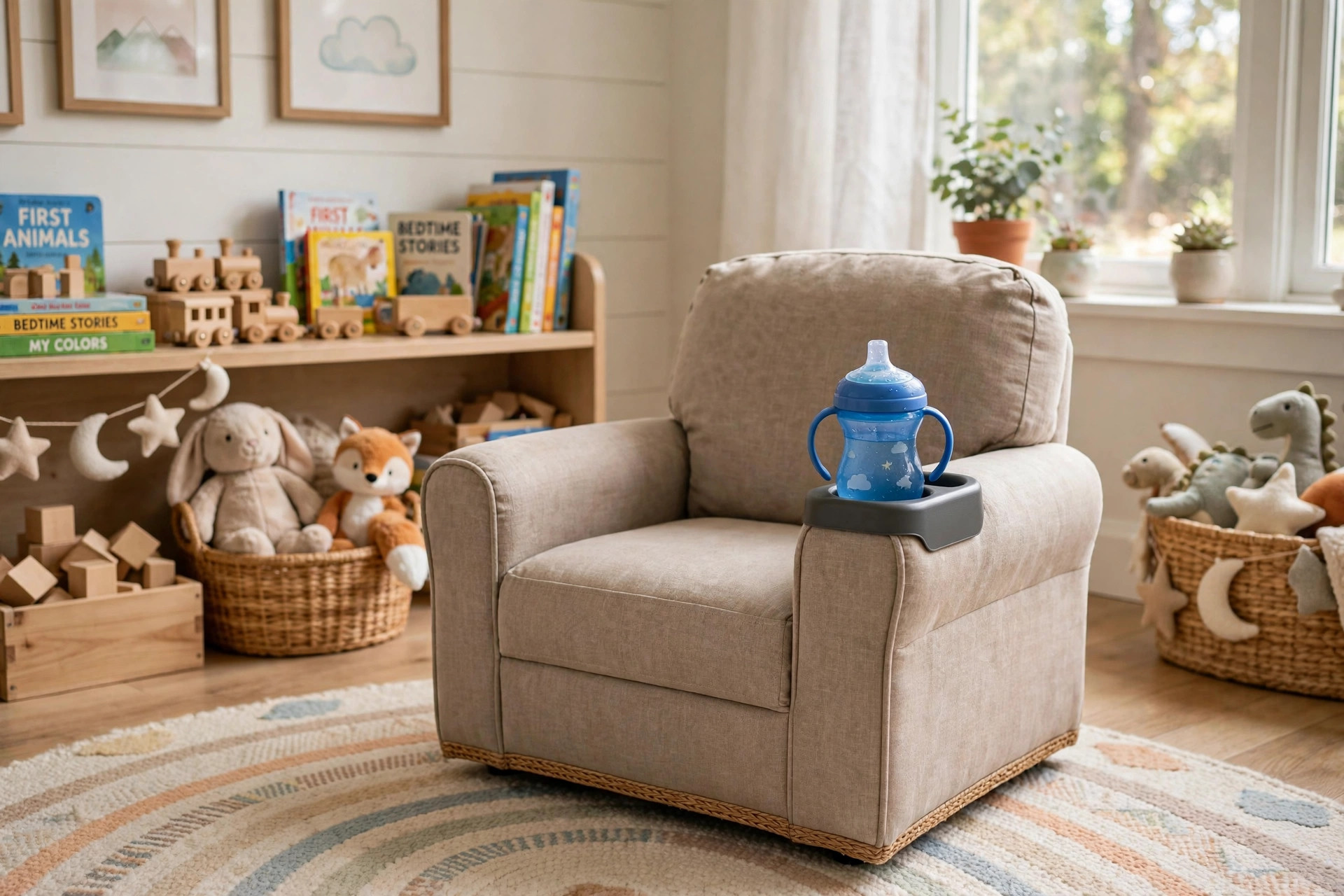

Every child reaches an age when the family sofa no longer fits. Legs dangle. Cups tip over. Crumbs end up in every crack. A toddler chair with cup holder for snacks answers this stage of life in a simple way. It is a small chair, built to a child’s size, with a round holder on one side for a sippy cup, a juice box, or a small snack cup. The child sits down, places a drink in the holder, and feels like a grown person at the family table.
Parents bought small chairs in the late twentieth century too, but the cup holder is a newer touch. It keeps drinks upright and off the floor. It gives a toddler a place for a snack without climbing on adult furniture. This guide covers what the chair is, why it matters, what to look for when buying, the main types, what to pay, how to care for it, how to keep it safe, and the questions parents ask most.
Why a Toddler Chair With Cup Holder for Snacks Matters
A child between the ages of one and four wants to copy what adults do. Adults sit in chairs with armrests. They set their coffee on a side table. A small chair with a cup holder lets a toddler copy that pattern in a way that fits a small body. The child learns to sit in one place for a snack, to hold a cup, and to put it back in its slot.
There is also a practical side. Snack time is calmer when the child has a set place to sit. Spills drop when the cup has a home instead of balancing on a book.
A toddler chair also supports posture. Adult furniture forces a small child to perch at the edge with feet off the floor. A child-sized seat lets feet rest flat or near the floor, which is the right base for chewing and swallowing. Pediatric guidance often notes that a steady seat makes mealtime and snack time easier for young children, and resources such as healthychildren.org give plain guidance on feeding habits for this age group.
What to Look for When Choosing One: Toddler Chair with Cup Holder for Snacks
Shopping for children’s furniture can feel like a maze. The list below narrows it to the points that count most for a toddler chair with cup holder for snacks.
Size and seat height. Measure the child or go by age ranges on the box. Most toddler chairs suit ages 18 months to 4 years. The seat should be low enough that the child’s feet can touch the floor or nearly touch it. A seat that is too high tips the child forward when reaching for the cup holder.
Weight capacity. Check the listed limit. Many small chairs hold 50 to 100 pounds. A higher limit means the chair will last through the preschool years and survive an occasional older sibling test-sit.
Stability. A wide base beats a narrow one. The chair should not rock or tip when the child leans to one side to grab a snack. Push it gently in the store or read reviews about wobble before you buy.
Cup holder size and shape. Holders come as fabric pockets, plastic rings, or molded slots in the armrest. A ring that grips the cup works better than a loose pouch for open cups. Make sure the holder fits the cups your child actually uses. Some are sized for standard sippy cups only.
Materials. Common choices are wood, plastic, and upholstered frames. Hard plastic wipes clean in seconds. Wood looks nicer in a living room and lasts longer. Upholstered chairs feel soft but soak up spills, so look for removable, washable covers.
Finish and safety. Paints and finishes should be non-toxic and lead-free. Edges should be rounded, with no sharp corners or pinch points where small fingers could get caught.
Ease of cleaning. Snack chairs get messy. Cracker dust, yogurt, and juice find every seam. Chairs with smooth surfaces and few crevices clean fastest. Removable covers that go in the washing machine are a strong plus.
Portability. Some families move the chair from the living room to the porch. Light chairs with no sharp legs are easier to carry and kinder to floors.
Guides on children’s furniture from outlets like The Spruce often walk through these same checks in plain language, which helps first-time buyers compare models.
Types and Options
Not all toddler chairs with cup holders look the same. The main types each suit a different home.
Plastic molded chairs. One-piece plastic, often with armrests and a molded cup slot. Light, cheap, and easy to wipe clean. They stack for storage. The trade-off is style; they look like playroom furniture.
Upholstered armchairs. Mini versions of adult club chairs. They often include a cup holder in the armrest. They feel cozy and look good in a living room. They cost more and need more cleaning care. Many come with washable slipcovers.
Wooden chairs with tray or holder. Solid wood chairs, sometimes rocking, with a cup ring mounted on the side. They are sturdy and attractive. They weigh more, which adds stability but makes moving them harder.
Bean bag chairs with cup holders. Soft, floor-level seats with a small holder stitched or clipped on the side. Children love sinking into them. They offer little back support and can be hard for a wobbly two-year-old to climb out of.
Foldable travel chairs. Lightweight fabric-and-frame chairs that fold flat, like small camping chairs. Many include a mesh cup holder. They suit grandparents’ houses, picnics, and travel. They are less sturdy than fixed chairs.
Chair-and-table sets. Some sets pair a small table with one or two chairs that include cup holders. These work well for snack time, coloring, and puzzles in one station.
Retailers that carry children’s lines, such as IKEA, Wayfair, and Pottery Barn Kids, show the full range of these styles with measurements listed, which makes side-by-side comparison easier.
Cost and Price
Prices for a toddler chair with cup holder for snacks range widely, and price usually tracks with material and brand.
Budget range: 20 to 40 dollars. Basic plastic molded chairs and foldable fabric chairs live here. They do the job and clean easily. Expect simpler padding and plain colors.
Mid range: 40 to 90 dollars. This covers most upholstered toddler armchairs and wooden chairs with holders. You get better fabric, firmer foam, and sturdier frames.
Premium range: 90 to 160 dollars and up. Designer kids’ chairs, solid hardwood models, and sets with matching tables reach this level. You pay for better joinery, nicer fabric, and longer life.
A few pricing notes help. First, buying two chairs often costs less per chair than buying one. Second, check what is included: some “chairs” in listings are covers only, or the cup holder insert sells separately. Third, watch for sales around back-to-school and holiday weekends, when children’s furniture often drops 20 to 30 percent.
Independent testing groups such as Consumer Reports publish buying guidance for children’s products, and family sites like What to Expect round up parent-tested picks by price band.
Care and Upkeep
A snack chair earns its keep only if it stays clean and sound. A short routine keeps it that way.
Wipe the chair down after snack time. A damp cloth handles most crumbs and smears. For sticky juice, use warm water with a drop of mild dish soap, then rinse the cloth and wipe again. Avoid harsh cleaners on painted wood or printed fabric; they can strip color.
Wash removable covers on a regular cycle. Check the care label first. Most slipcovers handle machine washing, but hot water can shrink them. Let covers air dry or use low heat.
Vacuum crevices weekly. Crumbs gather where the seat meets the back and around the cup holder. A crevice tool or an old toothbrush reaches these spots.
Check screws and joints monthly. Wooden chairs loosen with rocking and climbing. Tighten what has worked loose. For plastic chairs, look for stress cracks near the legs and armrests; a cracked chair should be retired.
Treat the cup holder as its own zone. Pouches and rings trap dried milk and juice. Pull fabric pouches out if they detach, and soak them. Scrub plastic rings with a bottle brush.
Store the chair sensibly. Keep it out of long direct sun, which fades fabric and can make plastic brittle. If the chair lives on a porch, bring it in during rain.
Housekeeping resources like Good Housekeeping and Bob Vila offer cleaning timetables for household furniture that adapt well to children’s pieces.
Safety
Small children and furniture need a careful match. The points below cover the main risks.
Tip-over. The biggest risk is the chair tipping with the child in it. Choose a wide, stable base. Teach the child not to stand on the chair or lean far over the side. Place the chair away from stairs, sharp table corners, and hot stoves.
Cup holder placement. The holder should sit where the child can reach it without twisting hard. A holder that forces a big lean to one side invites tipping. Test the reach with the child’s usual cup before the first snack.
Hot drinks. Never put hot drinks in a toddler’s cup holder. The holder is for milk, water, juice, and cool snacks only. This sounds obvious, but grandparents and visitors sometimes forget.
Small parts. Check for loose buttons, caps, or decorative pieces that could come off. Anything smaller than a toilet paper tube is a choking hazard for children under three.
Recalls and standards. Children’s furniture sold in the United States should meet federal safety standards. The U.S. Consumer Product Safety Commission posts recalls for children’s chairs and furniture; a quick check of the model name before buying is good practice, and worth repeating if the chair is bought secondhand.
Secondhand chairs. Used chairs can be fine, but inspect them closely. Look for cracked frames, missing screws, peeling paint (which may contain lead in very old pieces), and mold in fabric. Wash or replace covers before use.
Supervision. A chair is not a babysitter. Keep young toddlers in sight during snack time, especially when the chair is new and the child is still learning how to sit in it.
Setting Up a Snack Corner
Many families find the chair works best as part of a small station. Place the toddler chair near the family seating area so the child feels included. Add a low side table or a small rug to mark the spot. Keep a washable mat under the chair to catch crumbs.
Stock the corner with what the child needs: a few cups that fit the holder, a small plate, and a bib. Keep extras out of reach so the child asks instead of grabbing.
This station pairs well with other nursery pieces. A waterproof crib mattress protects the crib during the same messy years, a nursery hamper keeps stained clothes sorted, and a crib with changing table keeps the nursery organized while the snack corner handles the living room.
Frequently Asked Questions
At what age can a child use a toddler chair with a cup holder? Most children are ready between 18 months and 2 years, when they can climb into a low seat and sit upright without help. Check the maker’s age range. Very young toddlers should always have an adult nearby.
Will the cup holder fit a sippy cup? Most holders fit standard sippy cups and small juice boxes. Measure your cup’s diameter and compare it with the holder size in the listing. Molded rings tend to grip better than fabric pouches.
Are these chairs safe for a child who climbs a lot? A sturdy, wide-based chair is safer than a light one for climbers, but no chair is climb-proof. Teach the child that the chair is for sitting. If the child stands on it often, move the chair to a supervised area until the habit passes.
How do I clean dried milk out of a fabric cup pouch? Detach the pouch if you can and soak it in warm soapy water for 15 minutes, then scrub with a soft brush and rinse. If the pouch does not detach, work the soapy cloth into the fabric and rinse by dabbing with a clean damp cloth. Let it dry fully to avoid mildew.
Can the chair be used outdoors? Plastic and treated-wood chairs handle outdoor use well. Upholstered chairs do not; sun and rain will ruin the fabric. Foldable fabric chairs work for outings but should come inside afterward.
Is it worth buying a matching set instead of one chair? If two children are close in age, a set avoids fights and often costs less per seat. For one child, a single chair plus a small table is usually enough.
A Final Word
A toddler chair with cup holder for snacks is a small purchase that pays back daily. It gives a young child a seat of their own, keeps drinks upright, and makes snack time calmer for everyone. Choose a stable, right-sized chair with a holder that fits your child’s cups, keep it clean, and watch for the normal wear that comes with daily use. Few pieces of children’s furniture get used as hard or loved as much.
References
American Academy of Pediatrics. (n.d.). HealthyChildren.org. https://www.healthychildren.org Bob Vila. (n.d.). Home improvement advice. https://www.bobvila.com Consumer Reports. (n.d.). Product reviews and ratings. https://www.consumerreports.org Good Housekeeping. (n.d.). Product reviews and home advice. https://www.goodhousekeeping.com IKEA. (n.d.). Home furnishings. https://www.ikea.com Pottery Barn Kids. (n.d.). Kids furniture and decor. https://www.potterybarnkids.com The Spruce. (n.d.). Home and garden advice. https://www.thespruce.com U.S. Consumer Product Safety Commission. (n.d.). Product safety information. https://www.cpsc.gov Wayfair. (n.d.). Furniture and home goods. https://www.wayfair.com What to Expect. (n.d.). Pregnancy and parenting guidance. https://www.whattoexpect.com
Was this guide helpful?

About David Wilson
The My Garden US editorial team writes practical, in-depth home and garden guides for American homeowners — tested advice, no fluff.
You May Also Like
Nursery Glider Chair for Feeding Twins Comfort: A Full Guide
August 30, 2026 0 views
The Best Kids Desk Lamp for Eye Protection: A Parent’s Guide
July 11, 2026 0 views
Kids Vanity Set with Mirror for Girls Room: A Parent’s Buying Guide
April 19, 2026 0 views