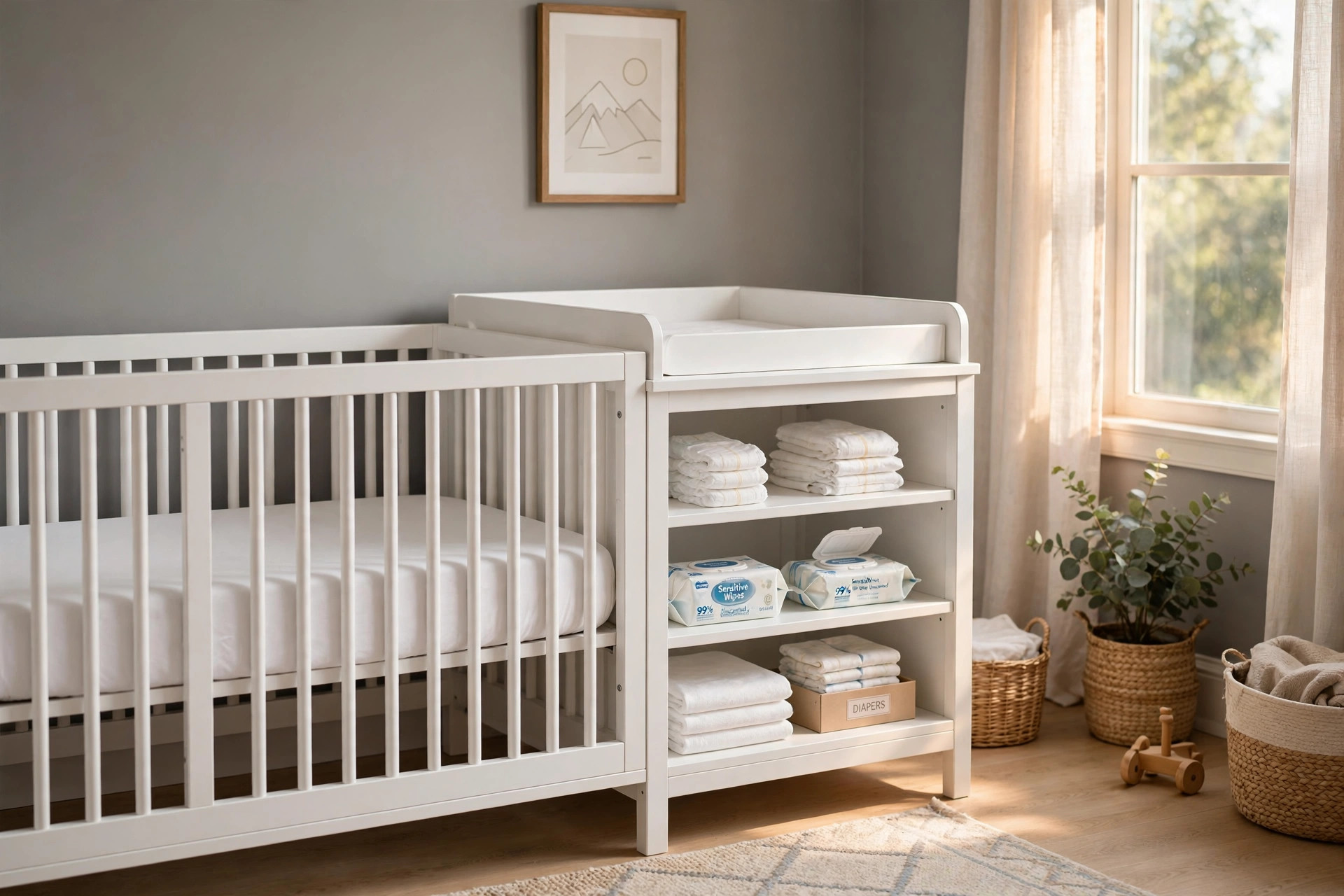

A nursery crib with changing table attached is one of the most practical pieces of furniture a new parent can buy. It joins the two things a baby needs most in the first year: a safe place to sleep and a steady place to be changed. Instead of buying two separate pieces of furniture, parents get one solid unit that does both jobs. For small rooms, small apartments, and shared bedrooms, this single piece can make the whole nursery work.
The idea is simple. One side of the unit is a full-size crib with rails and a mattress support. The other side is a raised changing surface with a guard rail around three sides and shelves or drawers underneath. Everything a parent needs for a diaper change — diapers, wipes, cream, a fresh set of clothes — sits within arm’s reach. The baby goes from the crib to the changing table and back without the parent crossing the room.
Sales of these combo units have grown in recent years. More families live in smaller homes, and more parents set up the nursery in a corner of their own bedroom. A best convertible crib for small nursery room is another smart answer to tight space, but the attached changing table goes one step further by removing a second piece of furniture entirely.
Why This Combination Matters
New parents change diapers many times a day. In the first months, ten to twelve changes in twenty-four hours is normal. When the crib and the changing table are far apart, the parent walks back and forth carrying a newborn. When they are joined, the routine becomes one smooth motion.
Space is the other reason. A standard crib is about fifty-two inches long and twenty-eight inches wide. A separate changing table adds roughly another thirty-six inches of width to the room. Many nurseries are nine or ten feet across. Two big pieces can crowd the room and leave no place for a chair or a dresser. One combo unit takes the place of both. The floor that is saved can hold a small glider, a hamper, or simply open space to walk safely in the dark.
Money matters too. A decent crib and a decent changing table bought separately can cost more than one well-built combo unit. The attached design also means the changing table does not need its own legs and frame, so the maker uses less material. Many parents find they can spend the savings on a better mattress or a nursery dresser changing table combo for small space if the room still needs storage.
What to Look for When You Choose One: Nursery Crib with Changing Table Attached
Build quality and materials
A combo unit carries weight in two places: the mattress and the changing surface with its supplies. Look for solid wood or heavy engineered wood. The frame should feel firm when you shake it gently in the store. Joints should be tight, with metal hardware rather than plastic pins. The finish should be smooth and free of chips, because babies chew on rails once they can stand.
Check the weight rating on the changing side. Most makers rate the changing surface for babies up to thirty or thirty-five pounds. The shelves below should hold their load without bowing. Open shelves are handy for quick grabs, but drawers keep clutter out of sight and keep small items away from curious hands later on.
Size and fit
Measure the room before you shop. Write down the length and width of the wall where the unit will stand, and note the door swing and window position. Combo units are longer than a plain crib. A typical model runs seventy to seventy-four inches from end to end. Bring a tape measure to the store, or check the listed dimensions on the retailer’s page. Reviewers on sites like Consumer Reports often note whether the listed measurements matched the real thing.
Think ahead as well. Some combo units are convertible. The crib side can later become a toddler bed, and the changing table side can detach and serve as a nightstand or a small dresser. A convertible design costs more at first but can serve the child for five or six years. That long life makes the price easier to accept.
Mattress fit and rail height
Safety rules say the mattress must fit snugly in the crib. If you can fit more than two fingers between the mattress and the crib side, the gap is too wide. A gap can trap a baby’s head or limbs. Most combo units take a standard-size crib mattress, fifty-two inches by twenty-seven and a half inches. Buy the mattress from a known brand, and test the fit before the baby arrives.
Rail height matters for a different reason. Federal rules require the top of the rail to sit at least twenty-six inches above the mattress support at its lowest setting. On many cribs the mattress support can be raised for newborns and lowered as the baby grows and learns to pull up. The changing side has its own guard rail, usually three to six inches high around three sides. This rail keeps a rolling baby from sliding off during a change, but it is not a substitute for keeping one hand on the baby at all times.
Types and Options on the Market
Classic and convertible styles
The most common style puts the changing table at one end of the crib, sharing the same frame. The changer usually has one or two open shelves below and sometimes a small drawer. The guard rail runs along the outer edge and the back. This style is simple, sturdy, and often the lowest in price.
A convertible combo is built to change as the child grows. The crib converts to a toddler bed and then to a daybed or a full-size bed with extra rails. The changing table often detaches to become a separate nightstand. These models cost more but can serve the child for five or six years, much like a kids dresser with changing top for nursery that stays useful after diaper days end.
Styles and finishes
Makers offer these units in white, gray, natural wood, espresso, and two-tone finishes. White remains the most popular because it suits any bedding and any wall color. Gray hides dust and small marks better than white. Natural wood shows the grain and fits a warm, classic nursery. Pick a finish that matches the other furniture you plan to buy, since replacing one piece later to match can be hard.
Cost and Price
Prices for a nursery crib with changing table attached fall into three bands. Budget models sell for about two hundred fifty to four hundred dollars. They are usually made of engineered wood with a veneer finish and serve well for the first two or three years.
Mid-range models cost about four hundred to seven hundred dollars. Most are solid wood with a smooth painted or stained finish, and many convert to a toddler bed. This is the band where most parents find the best balance of price and life.
High-end models run seven hundred to twelve hundred dollars and above. They use hardwoods such as oak or beech, carry long warranties, and often convert all the way to a full-size bed. The changing table may have soft-close drawers and a contoured changing pad included. Shoppers can compare models and prices at large retailers such as IKEA and Wayfair, or browse nursery specialists like Pottery Barn Kids.
Watch for extra costs. A changing pad, a waterproof pad cover, and a standard crib mattress are often sold separately and can add one hundred fifty to three hundred dollars. Some units include the pad but not the mattress. Read the listing closely before you compare prices.
Care and Upkeep
A combo unit needs little care, but a few habits keep it safe and clean for years.
Wipe the changing surface after each use with a damp cloth and a mild soap. Dry it after wiping so moisture does not seep into seams. Wash the changing pad cover often, and keep a spare so the table is never out of service.
Tighten the bolts and screws every few months. Wood shifts with heat and humidity, and a unit that felt rock solid in winter may develop a small wobble by summer. A quick check with the included wrench takes five minutes.
Keep the finish in good shape by cleaning with a soft cloth and avoiding harsh cleaners. Bleach and strong sprays can dull paint. For sticky spots, warm water and a drop of dish soap are enough. Once the baby starts teething, a rail cover can protect the top rail from bite marks.
Plan the storage below the changing table with care. Heavy items, such as a pack of diapers, belong on the lowest shelf. Keep powders, creams, and small items in a basket or a drawer so they do not slide off the edge. As the baby grows into a toddler, move anything the child should not touch to a higher place.
Safety Comes First
The crib side must meet the safety standards set by the U.S. Consumer Product Safety Commission. Slats must be no more than two and three-eighths inches apart, so a baby’s head cannot pass through. Corner posts must not rise more than one-sixteenth of an inch above the rail, so clothing cannot catch. Drop-side rails, which once slid down, have been banned for years. If you buy a used combo unit, check that it has fixed sides and was made after the current rules took effect.
Pediatric guidance from groups like HealthyChildren.org is clear about sleep. The baby should sleep on the back, on a firm mattress, with a fitted sheet and nothing else in the crib. No pillows, no blankets, no bumpers, no toys. This rule holds for the crib side of a combo unit exactly as it does for any crib.
The changing side has its own risks. Never leave a baby alone on the changing table, not for a second. Babies roll sooner than parents expect. Keep one hand on the baby during every change. Use the safety strap on the changing pad if the pad has one, but know that the strap is a backup, not a guard. Keep diapers, wipes, and cream within reach so you never have to step away mid-change.
Anchoring deserves a note. A combo unit is long and top-heavy on the changing side when the shelves are full. If the unit feels like it could tip, fasten it to the wall with the anti-tip strap that most makers include. This is even more important once the baby becomes a toddler and starts climbing.
Parents who want a second opinion on a model can read parent reviews and expert buying guides at The Spruce and What to Expect, and they can check safety ratings at Consumer Reports. Design ideas for the rest of the room appear at Apartment Therapy.
Frequently Asked Questions
How long can my baby use the changing table side?
Most changing tables are rated up to thirty or thirty-five pounds, which covers most babies through the first year and often into the second. Stop using the changing surface when the baby reaches the weight limit or can climb off it, whichever comes first. Many parents move changes to the floor or a low dresser once the baby becomes very active.
Does the unit take a standard crib mattress?
Most full-size combo units take a standard crib mattress, fifty-two inches by twenty-seven and a half inches. Mini crib combos need a smaller mattress. Always measure the inside of the crib frame and test the fit. The two-finger rule is the test to trust.
Can the changing table be removed later?
On many models, yes. Convertible combos are designed so the changing table detaches and becomes a nightstand or a small dresser once diaper days end. Fixed combos do not separate. Check the product description before you buy if this matters to you.
Is it hard to assemble?
Most units take one to two hours with two adults. The instructions are long but clear. Lay out all the parts first and count the hardware. A power driver speeds the work, but finish the last turns by hand so you do not strip the screws. If the box arrives damaged, check every part before you start.
Should I buy new or used?
New is the safer choice for a crib. Safety rules have changed over the years, and a used unit may miss parts or carry a recall you do not know about. If you buy used, check the model number against the recall list at the U.S. Consumer Product Safety Commission, make sure all hardware is present, and confirm the sides are fixed and the slats are close together.
What bedding do I need for the crib side?
You need a firm standard crib mattress and two or three fitted sheets. That is all. Skip the quilt, the bumper, and the pillow until the child is older. A wearable blanket, sometimes called a sleep sack, keeps the baby warm without loose fabric in the crib.
A Short Final Word
A nursery crib with changing table attached is a sensible answer to the two hardest problems new parents face: too little space and too little time. It puts sleep and changing in one place, keeps supplies close, and often costs less than two separate pieces. Choose a sturdy build, check the safety rules, measure your room, and buy the mattress to fit. With those steps done, this one piece of furniture will carry your family through the busy first years with ease.
References
American Academy of Pediatrics. (n.d.). HealthyChildren.org. https://www.healthychildren.org Apartment Therapy. (n.d.). Home design ideas and inspiration. https://www.apartmenttherapy.com Consumer Reports. (n.d.). Product reviews and ratings. https://www.consumerreports.org IKEA. (n.d.). Home furnishings. https://www.ikea.com Pottery Barn Kids. (n.d.). Kids furniture and decor. https://www.potterybarnkids.com The Spruce. (n.d.). Home and garden advice. https://www.thespruce.com U.S. Consumer Product Safety Commission. (n.d.). Product safety information. https://www.cpsc.gov Wayfair. (n.d.). Furniture and home goods. https://www.wayfair.com What to Expect. (n.d.). Pregnancy and parenting guidance. https://www.whattoexpect.com
Was this guide helpful?

About James Carter
The My Garden US editorial team writes practical, in-depth home and garden guides for American homeowners — tested advice, no fluff.
You May Also Like

Crib Mobile Projector With Lullaby Music: A Complete Guide for New Parents
April 3, 2026 0 views
A Toddler Table with Storage Bins Underneath Brings Order to Playtime
June 28, 2026 0 views
A Toddler Bedding Set with Curtains Matching: A Calm Room for Your Little One
May 11, 2026 0 views