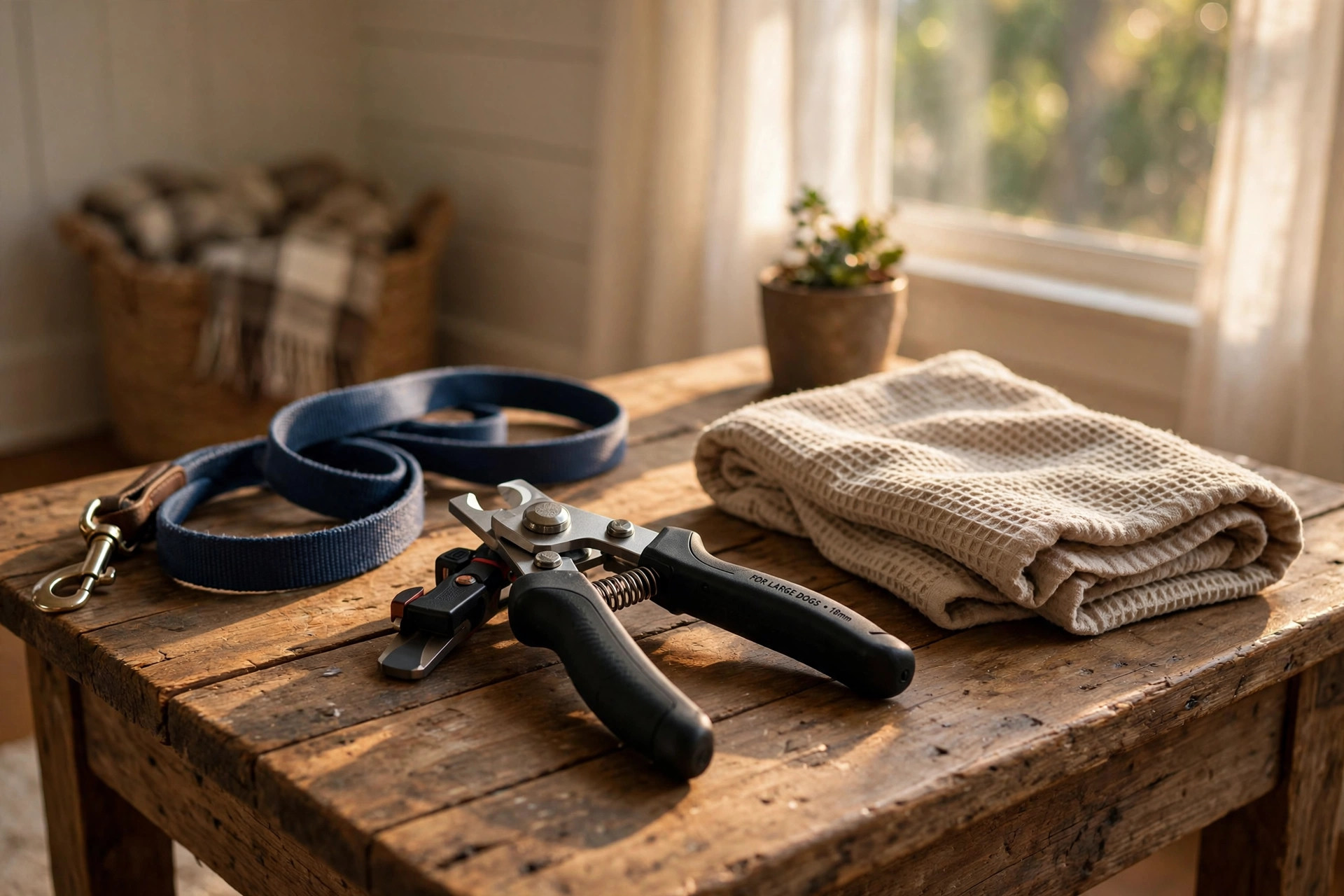

Finding the best pet nail clippers for large dog nails is a task many owners put off. The nails of a large dog are thick, hard, and dark. Cheap clippers slip, crush, or cut unevenly. A good pair of clippers does the job with one clean cut and keeps the dog calm. This guide explains what to buy, how to use it, and how to stay safe.
Why Trimming Matters for Large Dogs
Long nails change the way a dog walks. When the nails hit the floor, the toes tilt back and the weight shifts. Over time this causes sore joints and a stiff gait. Large breeds such as Labrador retrievers, German shepherds, and golden retrievers carry much weight on their feet. For them, overgrown nails are more than a cosmetic problem. They lead to real pain.
Long nails also break. A heavy dog that runs on pavement or rough ground can snap a nail on a crack or a root. A broken nail bleeds a great deal and may need a trip to the vet. Regular trimming keeps the quick, which is the blood vessel inside the nail, pushed back and short. When the quick stays short, each trim is faster and safer.
Many owners skip trimming because the dog resists it. A better tool helps here. The best pet nail clippers for large dog nails feel solid in the hand and cut without force. When the tool works well, the dog feels less pressure and learns to accept the routine.
What to Look For in Large Dog Nail Clippers: Best Pet Nail Clippers for Large Dog Nails
Strength comes first. The blades must slice through nails as thick as a pencil. Look for stainless steel blades with a honed edge. Stainless steel holds its edge longer than plain steel and resists rust.
The handle matters almost as much. Trimming a large dog means cutting sixteen nails, and sometimes the dog pulls away mid-cut. A non-slip grip keeps the tool steady. Rubber-coated or textured handles work best. The handle should also fit the hand with room to spare. Small handles force the fingers into a cramp and make the cut shaky.
A safety guard is a small metal plate behind the blade. It limits how much nail fits into the cutter at one time. For beginners it is worth having. It does not remove all risk, but it reduces the chance of cutting the quick.
Check the spring and lock. A coil spring that pushes the handles apart saves effort between cuts. A blade lock lets the clippers close flat for storage. Both parts should feel smooth. If the spring is stiff or the lock slips, the tool will fight the user.
Size labels help. Some clippers are sold in sizes such as small, medium, and large. For dogs over forty pounds, buy the largest size offered. The American Kennel Club publishes grooming standards for each breed that can guide the choice of tools (akc.org).
Types of Nail Clippers and How They Work
Three main styles serve large dogs. Each has its strengths and its limits.
Scissor or Plier Style
Scissor-style clippers look like heavy pliers. Two handles open the blades, and the blades come together when the handles close. This is the most common choice for large dogs. The wide blade opening takes in thick nails, and the long handles give strong leverage. Most groomers keep a pair of scissor clippers at the table. They are simple, sturdy, and easy to clean.
Guillotine Style
Guillotine clippers have a ring at one end. The nail goes through the ring, and a blade slides across to cut it. They work well on small and medium dogs. For large dogs, the ring is often too small for the thickest nails, and the sliding blade can dull fast. They are quiet and easy to hold, but they rank lower for heavy breeds.
Nail Grinders
A nail grinder is a small rotary tool with a rough drum. It files the nail down instead of cutting it. Many dogs accept grinding more calmly than clipping because there is no sudden snap. Grinding leaves a smooth edge that does not scratch furniture or legs. The trade is time. Grinding all sixteen nails of a large dog takes longer than clipping, and the tool makes noise that can frighten a nervous dog. Some owners clip most of the length, then smooth the edges with a grinder.
Shops such as Chewy and PetSmart carry all three styles, so owners can compare blade width and handle size side by side before buying.
How Much Do Large Dog Nail Clippers Cost
Prices for the best pet nail clippers for large dog nails stay within a modest range. Basic scissor clippers with rubber grips cost between ten and twenty dollars. These cut well for many years when kept sharp. Mid-range models with better steel and softer grips run from twenty to thirty-five dollars. Professional-grade clippers used by groomers sell for thirty-five to sixty dollars.
Guillotine clippers are cheaper. Most sell for eight to fifteen dollars. Nail grinders cost more because they run on a motor. A cordless grinder with a rechargeable battery sells for twenty-five to fifty dollars. Replacement grinding drums add a few dollars a year.
There is no need to buy the most expensive tool on the shelf. A mid-range pair with sharp blades and a firm grip serves most large dogs. Spend extra only when the first pair fails or the blades dull too fast. Reviews on Consumer Reports are not needed for this category, but pet retailers such as Petco list owner ratings that show how each model holds up after months of use.
Keeping Your Clippers Sharp and Clean
Blades dull with use. A dull blade crushes the nail instead of cutting it. That crushing hurts the dog and makes the nail splinter. Test the blade on a piece of thick cardboard now and then. If the cut is ragged, the blade needs work.
Most clippers do not sharpen well at home. A sharpening stone can help if the blade comes apart, but many models are riveted shut. When sharpening is not practical, replace the tool. Replacing a worn pair every year or two costs little and keeps trims safe.
Clean the blades after each use. Wipe them with a cloth damp with rubbing alcohol. This removes nail dust and kills germs. Dry the tool fully before storage so rust cannot form on the joints. A drop of clipper oil on the pivot keeps the action smooth.
Store the clippers in a dry place with the blade locked shut. Keep them out of reach of children. A blade sharp enough to cut dog nails can cut skin too.
Inspect the whole tool once a month. Look for loose screws, a bent guard, or a cracked handle. A small problem found early costs nothing to fix. The same problem ignored for months can ruin the blades or slip at the worst moment. When the spring weakens and the handles no longer open on their own, the tool has served its time and should be retired.
Pairing nail care with the rest of the dog’s routine helps. A tired dog stands still longer, so many owners trim after a walk with a strong leash such as a best no pull dog harness for strong pullers. Older dogs with stiff joints may rest easier afterward on a best orthopedic dog bed for senior large dogs. And when travel day comes, a dog ramp for suv and high bed access saves the dog from jumping on freshly trimmed nails.
Safety Tips for Trimming Large Dog Nails
Trim in bright light. On dark nails the quick is hard to see, so light helps. Work one paw at a time. Hold the paw firm but gentle. Cut at a slight angle that follows the natural curve of the nail.
Take small bites. Cut a thin slice off the tip first. Look at the cut surface. If it is pale and dry, cut a little more. When the center shows a small gray or pink dot, stop. That dot marks the start of the quick. This slow method takes longer but keeps the dog safe.
Keep styptic powder close by. This powder stops bleeding fast if a nail gets cut too short. Press it against the tip of the nail and hold for a few seconds. Every pet first-aid guide, including resources from PetMD, lists styptic powder as an essential grooming supply.
Do not trim after a bath. Wet nails are softer, but they also swell, and the quick is harder to judge. Trim dry nails only.
Stay calm. Dogs read the mood of the owner. If the owner is tense, the dog grows tense. If the dog pulls away or shows fear, stop and try again later. Treats between paws turn the session into a reward. The ASPCA offers step-by-step guidance on building a dog’s comfort with grooming over time.
For owners who hire help, services listed on Rover and supply guides on The Spruce Pets can point toward local groomers when home trimming proves too hard.
Frequently Asked Questions
How often should I trim my large dog’s nails?
Most large dogs need a trim every three to four weeks. Dogs that walk on concrete wear their nails down faster and may need less trimming. Check the nails weekly. If they click on hard floors or touch the ground when the dog stands, it is time.
What if my dog’s nails are black and I cannot see the quick?
Cut in thin slices and watch the cut surface. The nail shows a lighter, flaky ring near the tip and a darker center near the quick. Stop when a small gray or pink dot appears in the center. When in doubt, stop early. A second session in a week can take off more.
Is it better to clip or grind large dog nails?
Both work. Clipping is faster and needs no power. Grinding is gentler and leaves a smooth edge. Many owners do both. They clip the bulk of the nail, then use a grinder to round the tip. Let the dog’s temper decide. A dog that fears the snap of the blade may accept a grinder.
What should I do if I cut the quick and the nail bleeds?
Do not panic. Press styptic powder or a bar of soap into the nail tip and hold gentle pressure for one to two minutes. The bleeding stops in most cases. If it continues beyond ten minutes, call the veterinarian. The dog will forgive the slip, but move slower next time.
Can I use human nail clippers on my large dog?
No. Human clippers are too small and too weak for thick dog nails. They crack the nail and leave sharp edges. They also strain the hand. Buy clippers made for dogs of this size. The Home Depot pet aisle and most pet shops stock large-dog models.
At what age should I start trimming my puppy’s nails?
Start young, even for large breeds. Touch the paws and nails from the first weeks at home. Clip just the tips while the puppy is calm and sleepy. Early handling builds a habit that lasts for years.
A Final Word
The best pet nail clippers for large dog nails are not the fanciest. They are the pair that cuts clean, feels firm in the hand, and lets the owner work with care. Buy strong blades, a solid grip, and a safety guard. Learn the quick. Keep styptic powder near. Trim on a steady schedule, and the dog will walk in comfort for years.
References
American Kennel Club. (n.d.). Dog care and training resources. https://www.akc.org ASPCA. (n.d.). Pet care and animal welfare resources. https://www.aspca.org Chewy. (n.d.). Pet supplies. https://www.chewy.com Consumer Reports. (n.d.). Product reviews and ratings. https://www.consumerreports.org Petco. (n.d.). Pet supplies and services. https://www.petco.com PetMD. (n.d.). Pet health information. https://www.petmd.com PetSmart. (n.d.). Pet supplies and services. https://www.petsmart.com Rover. (n.d.). Pet sitting and dog walking services. https://www.rover.com The Home Depot. (n.d.). Home improvement products. https://www.homedepot.com The Spruce Pets. (n.d.). Pet care guides and product reviews. https://www.thesprucepets.com
Was this guide helpful?

About Robert Taylor
The My Garden US editorial team writes practical, in-depth home and garden guides for American homeowners — tested advice, no fluff.
You May Also Like

The Best Covered Litter Box for Small Apartments: A Practical Guide
June 8, 2026 1 views
Best Slow Feeder Bowl for Cats Whisker Friendly: A Complete Guide
January 13, 2026 0 views
Outdoor Pet Gate for Deck and Patio Safety
August 10, 2026 0 views