Foam padding under vinyl plank floors is one of the most misunderstood parts of a flooring project. Some homeowners buy it without thinking. Others skip it and regret it later. The truth sits in the middle. Foam padding can make your vinyl plank floor quieter, warmer, and smoother to walk on. It can also wreck the locking joints and void your warranty if you pick the wrong kind. This guide covers foam padding under vinyl plank floors in plain steps.
Table of Contents
Table of Contents
- What Foam Padding Under Vinyl Plank Floors Actually Does
- The Main Types of Foam Padding
- Standard Polyethylene Foam
- IXPE Foam
- EVA Foam
- Foam With Attached Vapor Barrier
- When Your Planks Already Have a Pad Attached
- The Warranty Problem
- How to Pick the Right Thickness
- Installing Foam Padding Without Mistakes
- When to Skip Extra Padding
- Cost and Shopping Tips
- Common Questions
- Do I need foam padding under vinyl plank on plywood?
- Can I use foam padding over old tile?
- Does foam padding stop water leaks?
- Will foam padding make the floor warmer?
- How long does foam padding last?
- The Bottom Line
- References
This guide explains what foam padding does, the main types on the shelf, and how to match the right one to your planks and subfloor. Read your floor maker's install sheet first. That sheet beats any article, including this one.
What Foam Padding Under Vinyl Plank Floors Actually Does
When it comes to foam padding under vinyl plank floors, getting the details right makes all the difference.
When it comes to foam padding under vinyl plank floors, getting the details right makes all the difference.
Many homeowners find that foam padding under vinyl plank floors is easier than they expected once they know the basics.
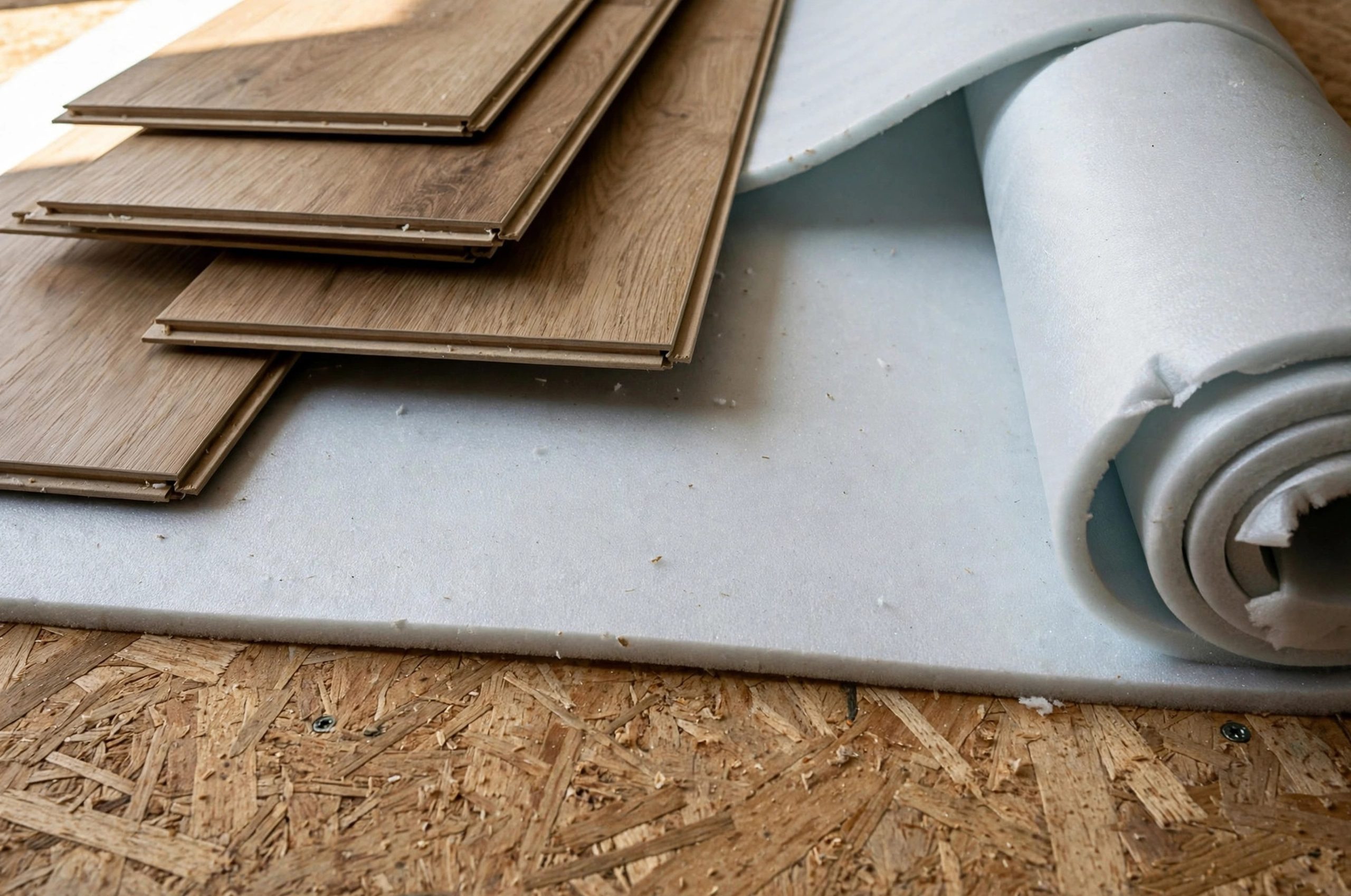
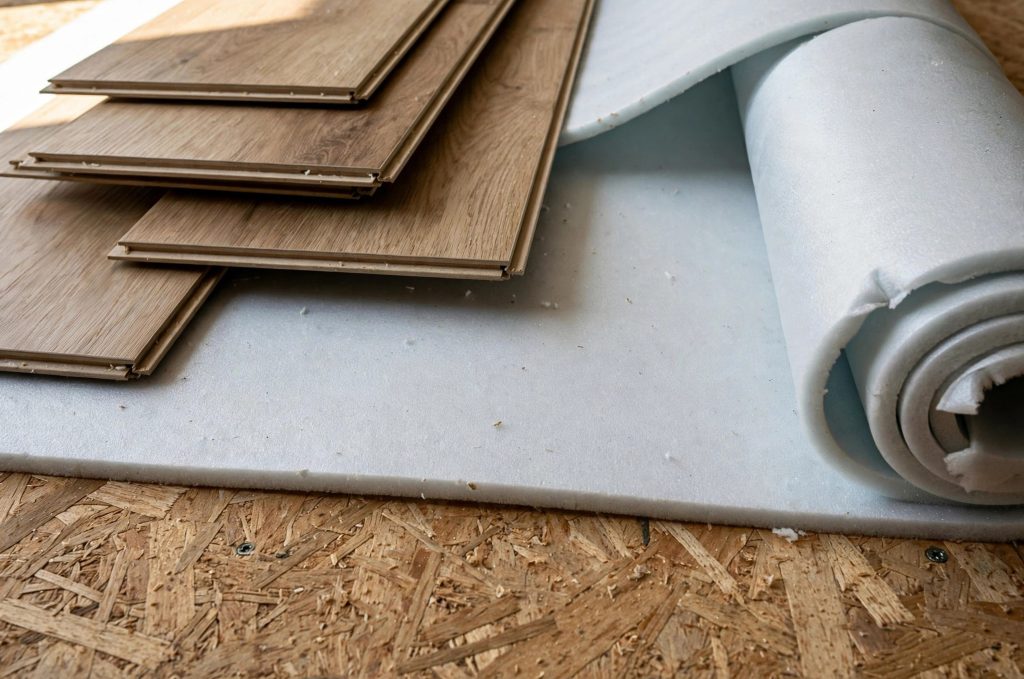
A foam pad is a thin roll of material that sits between the subfloor and the planks. It is not carpet pad. It is much thinner, usually 1 to 3 millimeters. Its job is small but real.
First, it quiets the floor. Vinyl plank over a hard subfloor can sound hollow and clicky. Foam padding takes the edge off that noise, both in the room and in the room below. This matters most in condos and upstairs bedrooms, where underlayment for laminate gets the same questions.
Second, it smooths tiny bumps. Subfloors are rarely perfect. A thin pad bridges small dips and grain so the planks lie flatter. It will not fix a wavy slab. It only hides the little stuff.
Third, some pads add a moisture barrier. A pad with an attached vapor film keeps ground moisture from reaching the planks. This is a big deal over concrete, which can breathe out moisture for years after it is poured. Guides like 2nd Flooring's underlayment breakdown note that foam with a vapor barrier is the standard pick over concrete.
Fourth, it adds a touch of comfort. Vinyl plank is hard. Foam padding will not turn it into carpet, but it takes the chill off a cold slab and softens each step a little.
The Main Types of Foam Padding
Many homeowners find that foam padding under vinyl plank floors is easier than they expected once they know the basics.
Many homeowners find that foam padding under vinyl plank floors is easier than they expected once they know the basics.
The key to foam padding under vinyl plank floors is choosing the right approach for your space and budget.
Not all foam padding is the same. The shelf holds several options, and each has a best use.
Standard Polyethylene Foam
This is the basic roll you see at every home center. It is cheap, light, and easy to cut. It gives basic sound reduction and smooths minor flaws. It offers no real moisture protection. It works best over plywood subfloors in dry rooms. The Floor Covering World guide lists thin foam plus a vapor barrier as the standard match for floating vinyl plank.
IXPE Foam
IXPE stands for cross-linked polyethylene. It is denser and springier than basic foam. It handles compression better, which means heavy furniture leaves less of a dent. Many makers ship it as the pre-attached pad on rigid core planks. Product listings from retailers like BuildDirect show attached 1.5 mm IXPE pads with published sound ratings. As a separate roll, IXPE costs more than basic foam but holds up longer.
EVA Foam
EVA foam is similar to the foam in running shoes. It is soft, springy, and resists mold and mildew well. It is a decent pick for kitchens and basements where damp air is common.
Foam With Attached Vapor Barrier
This is foam with a plastic film fused to one side. The film blocks moisture. If your install is over concrete, a slab on grade, or a damp basement, this is the type to buy. Over wood subfloors, the barrier is optional and sometimes skipped. As Titan Floors explains, pairing foam with a moisture barrier is the common answer for basements and ground floors.
When Your Planks Already Have a Pad Attached
The key to foam padding under vinyl plank floors is choosing the right approach for your space and budget.
With a little planning, foam padding under vinyl plank floors can fit even a busy schedule.
Many rigid core planks ship with a foam or cork pad glued to the back. This is pre-attached underlayment. It counts. If your planks have it, do not add another layer of foam on top.
Stacking padding is the number one mistake homeowners make. A click-lock floor is engineered to float on a firm base. Add a second soft layer and the planks flex at the joints. The locks work loose. Gaps open. The floor starts to creak and bounce. The EngineerFix guide on extra underlayment is blunt about it: almost every maker forbids stacked padding, and doing it voids the warranty.
A few makers allow one thin acoustic membrane on top of an attached pad. That is the rare exception, and the spec sheet names the exact product. If your sheet does not name one, assume it is not allowed.
Over concrete, the one extra layer you can still add is a plain plastic moisture film. Film is not foam. It adds no cushion, so it does not change the flex. Lay a 6-mil poly sheet under planks that already carry an attached pad, and you get moisture protection without the stacking problem. This is the setup The Flooring Guys recommend for concrete slabs.
The Warranty Problem
With a little planning, foam padding under vinyl plank floors can fit even a busy schedule.
Before you start, it helps to understand how foam padding under vinyl plank floors works in real homes.
Read the warranty rules before you buy the pad. Makers test their locks on a specific base. Many spec sheets cap total underlayment thickness, often around 1.5 mm for rigid core products. Go thicker and the warranty is gone. That matters because warranties cover wear, defects, and joint failure for years.
Keep your receipt and the pad packaging. If a joint fails later, the maker's first question will be what sits under the floor. The Vinyl Flooring UK guide makes the same point: match the pad to the product, not the other way around.
How to Pick the Right Thickness
Before you start, it helps to understand how foam padding under vinyl plank floors works in real homes.
A good plan for foam padding under vinyl plank floors saves time, money, and frustration.
Thinner is safer for click-lock floors. Most makers want 1 to 2 mm. Thicker pads feel nicer underfoot but let the planks move more at the joints. That movement is what breaks locks over time.
Ask three questions. Does the pad meet the maker's max thickness? Does it include a vapor barrier if the subfloor is concrete? Is it rated for the floor type, rigid core or flexible? If the answer to all three is yes, you have a winner.
Avoid carpet pad under vinyl plank. Carpet pad is thick and soft. It is the single most common reason DIY vinyl installs fail, as noted in the Floor Covering World underlayment chart.
Installing Foam Padding Without Mistakes
A good plan for foam padding under vinyl plank floors saves time, money, and frustration.
For most people, foam padding under vinyl plank floors comes down to a few smart choices.
Installation is simple, but the small details decide how long the floor lasts.
Start with a clean, dry subfloor. Sweep and vacuum. Fill wide cracks. Foam padding hides small flaws, not big ones.
Roll the pad out in the same direction as the planks will run. Butt the seams tight. Overlap is worse than a small gap. Tape the seams with the maker's tape so the pad does not shift while you work.
Trim the pad a hair short of the walls, about a quarter inch. The planks need an expansion gap around the room. If the pad pokes out past the planks, it can bunch and telegraph through.
If the pad has a vapor barrier, face the film down toward the subfloor on concrete. On wood subfloors, follow the maker's arrow. Some pads are one-sided.
Do not run the pad under cabinets that will be bolted down later. Heavy fixed loads can pinch floating floors. Leave the pad and planks out from under islands and vanities, and use shoe molding to cover the gap at the edges.
When you get to the stairs, do not try to run foam padding up the risers. Stair pieces need solid glue-down install. Our guide to stair nose for vinyl plank covers the right moldings for that job.
When to Skip Extra Padding
For most people, foam padding under vinyl plank floors comes down to a few smart choices.
You can skip a separate pad in a few cases. If the planks carry a good attached pad and the subfloor is plywood in a dry room, extra foam buys you almost nothing. If the maker bans added padding, skip it. If the room needs every fraction of height, for example under a door that barely clears, skip it.
Also skip padding under glue-down vinyl plank. Glue-down floors bond straight to the subfloor. Padding has no place in that sandwich.
Cost and Shopping Tips
If you are new to foam padding under vinyl plank floors, start with the simplest option and build from there.
A basic foam roll runs a few cents per square foot. IXPE costs more, sometimes double. A roll with an attached vapor barrier sits in between. For a typical bedroom, the whole pad costs less than one box of planks.
Buy the pad from the same store as the planks if you can. Staff can check the maker's spec sheet on the spot. Keep the spec sheet with your flooring paperwork. If you shop online, product pages from sellers like Element Flooring list the attached pad type and sound ratings, which tells you whether you need anything extra.
Do not buy more thickness than the sheet allows. Do not mix two different pads in one room. And do not let a leftover roll of carpet pad talk you into using it. Your future self will thank you.
Common Questions
When it comes to foam padding under vinyl plank floors, getting the details right makes all the difference.
Do I need foam padding under vinyl plank on plywood?
Often no, but it helps with sound. On dry plywood, a thin 1 mm foam roll quiets footfall without risking the joints. Check the spec sheet first.
Can I use foam padding over old tile?
Yes, if the old tile is flat and well bonded. The pad bridges grout lines up to a point. Deep grout joints may still telegraph through thin planks. A floor-leveling skim coat fixes that.
Does foam padding stop water leaks?
No. A vapor barrier slows moisture vapor. It will not stop a leak from a dishwasher or a flooded basement. Fix the water source first.
Will foam padding make the floor warmer?
A little. Foam adds a small thermal break over cold concrete. In a basement, it takes the edge off. It is not a substitute for insulation or radiant heat.
How long does foam padding last?
Under a floating floor, good foam lasts as long as the floor. Cheap foam can compress and flatten in high-traffic lanes over the years. IXPE and dense EVA hold up best.
The Bottom Line
Many homeowners find that foam padding under vinyl plank floors is easier than they expected once they know the basics.
Foam padding under vinyl plank floors is a support player, not the star. Pick a thin pad that matches the maker's spec, add a vapor barrier over concrete, and never stack padding on top of an attached pad. Do that, and the pad will quietly do its job for the life of the floor. If you are still shopping for the floor itself, start with our guide on where to buy vinyl plank flooring in the USA. With these steps, foam padding under vinyl plank floors stays simple and safe.
References
The key to foam padding under vinyl plank floors is choosing the right approach for your space and budget.
2nd Flooring. (n.d.). Underlayment for vinyl plank flooring guide. https://2ndflooring.com/blog/underlayment-for-vinyl-plank-flooring/
Titan Floors. (n.d.). Underlayment for vinyl plank flooring: Tips, types, and how to install. https://titanfloors.ca/underlayment-for-vinyl-plank-flooring/
Floor Covering World. (n.d.). Flooring underlayment guide: Types, uses and best options. https://floorcoveringworld.com/specialty-flooring-underlayments/
Vinyl Flooring UK. (n.d.). What do you put under vinyl flooring? https://www.vinylflooringuk.co.uk/blog/what-do-you-put-under-vinyl-flooring.html
EngineerFix. (n.d.). Can you put extra underlayment under vinyl plank flooring? https://engineerfix.com/can-you-put-extra-underlayment-under-vinyl-plank-flooring/
The Flooring Guys. (n.d.). Boost your vinyl flooring's performance: What to put underneath. https://theflooringguys.com.au/boost-your-vinyl-floorings-performance-what-to-put-underneath/
BuildDirect. (n.d.). XL Proteak waterproof 7mm rigid core luxury vinyl plank flooring. https://www.builddirect.com/products/vinyl-planks-7mm-spc-click-lock-xl-proteak-collection?variant=45522328682793
Element Flooring. (n.d.). Rigid core standard waterproof luxury vinyl plank flooring. https://elementflooring.us/products/rigid-core-standard-waterproof-luxury-vinyl-plank-flooring?variant=49696099631354
With a little planning, foam padding under vinyl plank floors can fit even a busy schedule.
Was this guide helpful?

About My Garden US
The My Garden US editorial team writes practical, in-depth home and garden guides for American homeowners — tested advice, no fluff.
You May Also Like
How to Stop Area Rugs From Sliding: 7 Proven Fixes
November 6, 2026 9 views
Tub to Shower Conversion Cost Calculator USA: A Plain 2026 Guide
April 2, 2026 20 views
Recaulking Bathtub Cost Near Me: A Plain Guide to Prices and Choices
September 16, 2026 19 views