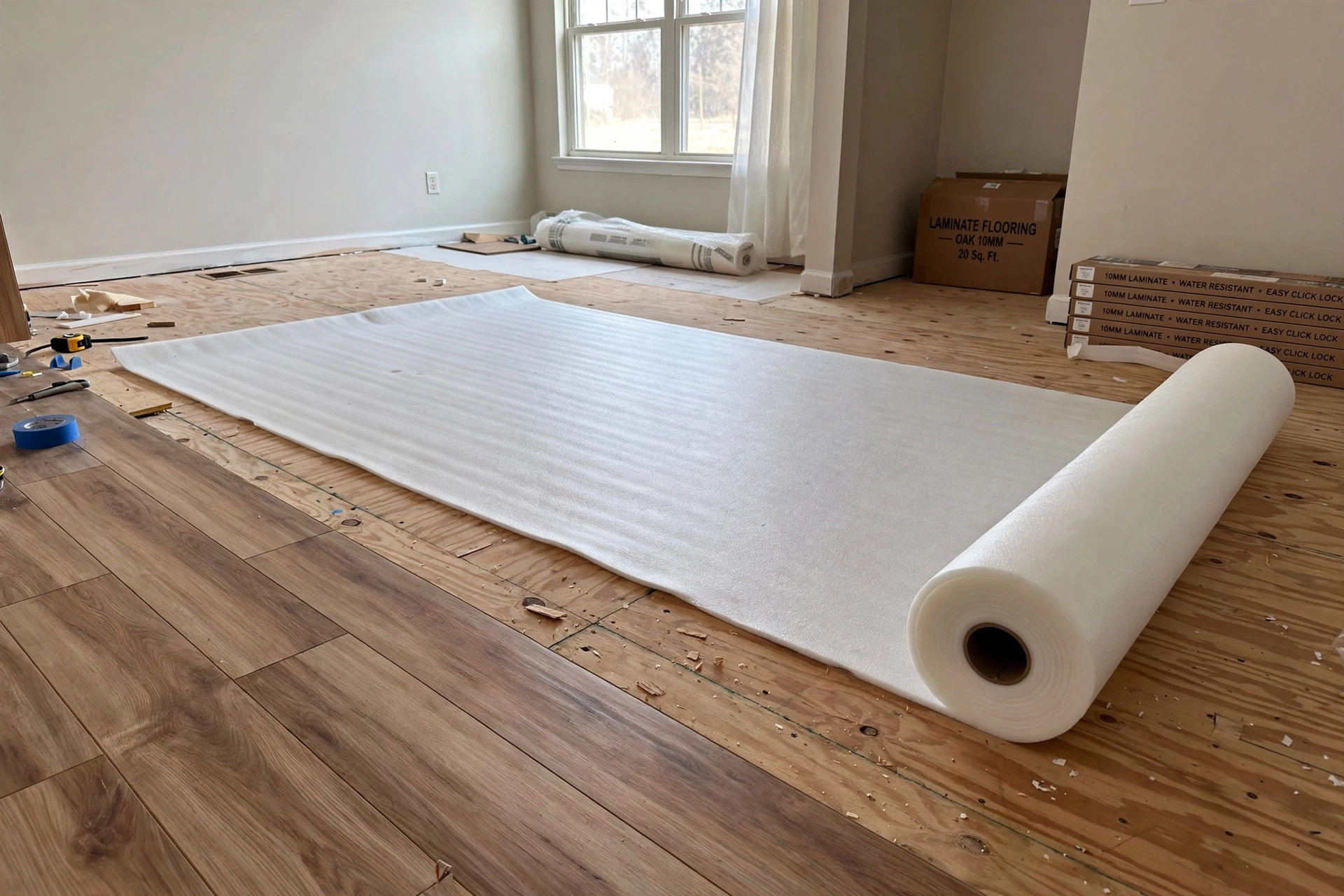

Most people shop for laminate flooring by color and pattern. They walk into a store, pick a wood tone they like, and walk out. The underlayment gets almost no thought. That thin layer between the floor and the subfloor seems too small to matter. But it matters a great deal. If you want to pick the best underlayment for laminate flooring usa shoppers can buy, you need to understand what this layer does, and how it changes the way your floor feels, sounds, and lasts.
Laminate is a floating floor. It does not get nailed or glued down. The planks lock together and rest on top of the underlayment. This means the underlayment carries the weight, cushions each step, and guards against moisture from below. A poor choice here can lead to hollow sounds, squeaks, and even damaged boards. A good choice makes the floor quiet, firm, and comfortable for many years.
Why Underlayment Matters for Laminate Floors
A laminate plank is thin and hard. Without a soft layer beneath it, every footstep makes a sharp tapping sound. The room echoes. The floor feels cold and rigid under bare feet. Underlayment solves these problems with a simple cushion of foam, cork, or felt.
It also handles the small bumps in a subfloor. No subfloor is perfectly flat. Plywood sheets have seams. Concrete slabs have dips. The underlayment fills these tiny gaps so the laminate boards sit level. When boards are level, the locking joints hold tight. When they are not, the joints flex with each step and may break over time.
Moisture is the third reason. Concrete floors can pass water vapor upward, even when they look dry. Wood subfloors in damp rooms can hold moisture too. Laminate is made of pressed fiber board, and it swells when it gets wet. A swollen floor buckles and ruins the whole job. A good underlayment with a vapor barrier blocks this moisture and protects your money. Many flooring makers describe this on their product pages, including brands such as Pergo, Shaw Floors, and Mohawk Flooring.
What to Look for When You Choose: Best Underlayment for Laminate Flooring Usa
Not every roll on the shelf will suit your home. Here are the main traits to compare.
Moisture Protection
Look for a vapor barrier or a built-in moisture film. On concrete, this is not optional. Concrete draws water from the ground through a process called wicking, and a thin plastic layer stops it. Some foam underlayments come with the film attached. Others are foam only, and you must lay a separate plastic sheet first. Big-box retailers like Home Depot and Lowe’s carry both kinds, and the package will say clearly whether a vapor barrier is included.
Sound Control
Underlayment is often rated for sound with numbers called STC and IIC. These numbers measure how much sound is blocked between rooms and floors. A higher number means less noise. This matters most in apartments, condos, and upper floors, where your steps can bother the people below. Cork and rubber underlayments tend to score best for sound. Thick foam is also good. Standard thin foam is the weakest.
Thickness and Firmness
Most laminate underlayments run from 2 to 4 millimeters thick. Thicker is not always better. If the pad is too soft, the laminate planks will bend at the joints when you walk on them. This bending wears out the locking edges. Aim for a pad that cushions but stays firm. A good rule is to follow the flooring maker’s own limits. Many will void the warranty if the underlayment is thicker than 3 millimeters. Specialty retailers such as LL Flooring and Floor & Decor list thickness and warranty rules on their product pages, which helps when you compare.
The Main Types of Laminate Underlayment
Shoppers in the United States will meet four common types. Each has its own strengths.
Standard Foam Underlayment
This is the cheapest and most common option. It is a thin sheet of polyethylene foam, usually 2 millimeters thick. It smooths out small bumps and softens foot noise. It does not block moisture on its own. Use it on a wood subfloor in a dry room above ground level. It is cheap, light, and easy to install. For a spare bedroom or a hallway on the second floor, it is often enough.
Combination Foam with Vapor Barrier
This type takes standard foam and adds a plastic moisture film on one side. The film faces down toward the subfloor. It is the standard choice for laminate over concrete. It handles both cushioning and moisture in a single step. It costs a bit more than plain foam, but it saves you from buying and taping a separate plastic sheet. For ground-floor rooms, this is the safe default pick.
Cork Underlayment
Cork is a natural material cut from tree bark. It is a strong sound blocker and a good insulator against cold floors. It is thicker and denser than foam, so it feels firm and solid underfoot. It costs more, but it is a favorite for condos and apartments with strict noise rules. Cork can handle some moisture, but it is not a vapor barrier. On concrete, you should still put a plastic sheet under the cork. Home improvement guides such as This Old House and The Spruce often point to cork as a top upgrade for sound.
Felt and Rubber Underlayment
Recycled felt pads are thick, heavy, and very quiet. They are made from compressed fabric fibers. Rubber underlayment, sometimes blended with cork, is the top choice for serious sound control. These are the most costly options. They are worth it in a home office, a music room, or anywhere foot noise must be kept low. They are firm, so the laminate joints stay safe. Check the thickness against your flooring warranty before you buy.
Choosing for Your Room
The right underlayment depends on where the floor will go. Let us walk through the common cases.
On a Concrete Slab
Many first-floor rooms in American homes sit on concrete. Here, moisture is the main worry. Choose a combination foam with a built-in vapor barrier, or pair cork or felt with a separate plastic film. Overlap the seams of the film and tape them shut. If you plan basement flooring for concrete slabs, the same rules apply, only more so, since basements carry more damp.
On Upper Floors
On a second floor or in an apartment, sound is the main worry. People below you will hear every step. Cork or thick felt gives the best results. Check with your building first. Many condo boards set a minimum sound rating for new floors. If you live above a neighbor, do not pick the cheapest thin foam. It will not pass their rules, and you may be asked to tear the floor out.
In Bathrooms and Wet Areas
Standard laminate is not made for standing water. If your room sees splashes, look at waterproof laminate flooring or switch to another surface like luxury vinyl plank flooring. Even with waterproof boards, the underlayment must include a moisture barrier. No underlayment can save a floor that sits in a puddle, so wipe up spills quickly.
Cost and Price
Prices vary by type and brand. Expect these rough ranges in the United States, per square foot:
– Standard foam: 10 to 20 cents. A full room costs very little. – Combination foam with vapor barrier: 25 to 40 cents. Still a small part of the project budget. – Cork: 50 cents to 1 dollar. A clear step up in price. – Felt and rubber: 75 cents to 1.50 dollars. The premium tier.
A typical room of 300 square feet may cost 30 to 450 dollars in underlayment, depending on type. This is small compared to the cost of the laminate itself and the labor. Many stores sell it in rolls that cover 100 square feet. Buy a little extra. You will need about 5 to 10 percent more than the room size to cover cuts and mistakes.
Do not pick underlayment on price alone. A failed floor costs far more than a better pad. Flooring brands such as Armstrong Flooring and Daltile publish detailed guides on matching underlayment to floor type, and reading them can help you avoid a costly error.
Care and Upkeep
Underlayment needs almost no care once it is under the floor. You cannot reach it without pulling the laminate up. Still, a few habits protect it over time.
Keep water off the laminate. Underlayment can slow moisture, but it cannot stop a flood. Place mats at entry doors and near sinks. Fix leaks right away. Run a dehumidifier in damp basements so the air stays below 60 percent humidity.
Watch the seams. If you hear new squeaks or feel soft spots, the underlayment may have shifted or worn thin under heavy furniture. Felt pads can compress under a piano or a heavy bookcase. Use wide furniture cups to spread the load.
When you replace the laminate years from now, pull up the old underlayment too. Foam flattens with age and loses its cushion. Cork and felt last longer but should still be checked for mold or damage. Start fresh with a new pad for the new floor.
Safety Notes
Underlayment work is simple, but keep a few safety points in mind.
Wear a dust mask when cutting foam or felt. The fine dust can irritate your nose and throat. Wear knee pads. You will spend hours kneeling, and hard subfloors hurt bare knees.
If you glue down any part of the job, work in a ventilated room. Open windows and run a fan. Read the glue label and follow its drying times.
Check for radon in basements before you seal a concrete floor with plastic film. A tight vapor barrier can trap radon gas under the floor if the basement is not tested and vented. Test kits are cheap and easy to use.
Finally, keep the manufacturer’s warranty sheet. Most laminate warranties spell out the allowed underlayment type and thickness. If you stray from those rules and the floor fails, the maker may refuse to pay. Keep your receipts and the product name so you can prove you followed the rules.
Frequently Asked Questions
Do I really need underlayment under laminate flooring?
Yes, in almost every case. A few laminate products come with a pad already attached to the back of each plank. In that case, you should not add a second layer of soft foam, since doubling up can make the floor too springy and void the warranty. For all other laminate, underlayment is needed for sound, comfort, and moisture control.
Can I use carpet padding under laminate?
No. Carpet padding is too thick and too soft. Laminate joints will flex and break over it. It also holds moisture against the fiber board. Use only underlayment made for laminate or hard-surface floating floors.
What is the best underlayment for laminate flooring over concrete?
A combination foam with a built-in vapor barrier is the standard answer. It is simple to install and it meets the moisture needs of concrete in one step. Cork over a separate plastic film is a good upgrade if you want better sound and warmth. Keep the total thickness within your flooring maker’s warranty limit.
How thick should laminate underlayment be?
Most makers allow 2 to 3 millimeters. Some allow up to 4. Thicker pads feel softer at first, but they let the planks bend at the joints, which shortens the life of the floor. When in doubt, pick a thinner, denser pad over a thick, soft one.
Does underlayment help with cold floors?
Yes. Cork and foam add a layer of insulation between your feet and a cold concrete or tile subfloor. The room will feel warmer in winter, and the floor will be more pleasant to walk on barefoot. For the best result, pair a good pad with laminate rated for the room’s temperature range.
A Final Word
The best underlayment for laminate flooring usa homeowners choose is not always the most costly one. It is the one that fits the room. A dry upstairs bedroom needs only simple foam. A concrete ground floor needs a vapor barrier. A noisy apartment needs cork or felt. Match the pad to the problem, stay within the warranty limits, and your laminate floor will be quiet, level, and long-lasting. A little care at this hidden step pays off every day you walk across the room.
References
Armstrong Flooring. (n.d.). Resilient and hardwood flooring. https://www.armstrongflooring.com Daltile. (n.d.). Ceramic and porcelain tile. https://www.daltile.com Floor & Decor. (n.d.). Tile, wood, and stone flooring. https://www.flooranddecor.com LL Flooring. (n.d.). Hardwood, vinyl, and tile flooring. https://www.llflooring.com Lowe’s. (n.d.). Home improvement products. https://www.lowes.com Mohawk Flooring. (n.d.). Flooring products. https://www.mohawkflooring.com Pergo. (n.d.). Laminate flooring. https://www.pergo.com Shaw Floors. (n.d.). Flooring products. https://www.shawfloors.com The Home Depot. (n.d.). Home improvement products. https://www.homedepot.com The Spruce. (n.d.). Home and garden advice. https://www.thespruce.com This Old House. (n.d.). Home renovation guidance. https://www.thisoldhouse.com
Was this guide helpful?

About David Wilson
The My Garden US editorial team writes practical, in-depth home and garden guides for American homeowners — tested advice, no fluff.
You May Also Like
Luxury Vinyl Plank Flooring Reviews 2026: What to Know Before You Buy
September 26, 2026 0 views
Berber vs Frieze Carpet: A Full Comparison for USA Homes
September 9, 2026 0 views
Flagstone Patio Installation Cost Near Me: A Homeowner’s Guide
July 25, 2026 0 views