
The electrical panel is the heart of a home. Every wire runs back to it. When people ask about span panel vs traditional panel cost usa, they want one clear answer: what does each choice cost, and is the smart panel worth the extra money. This guide walks through both options in plain terms.
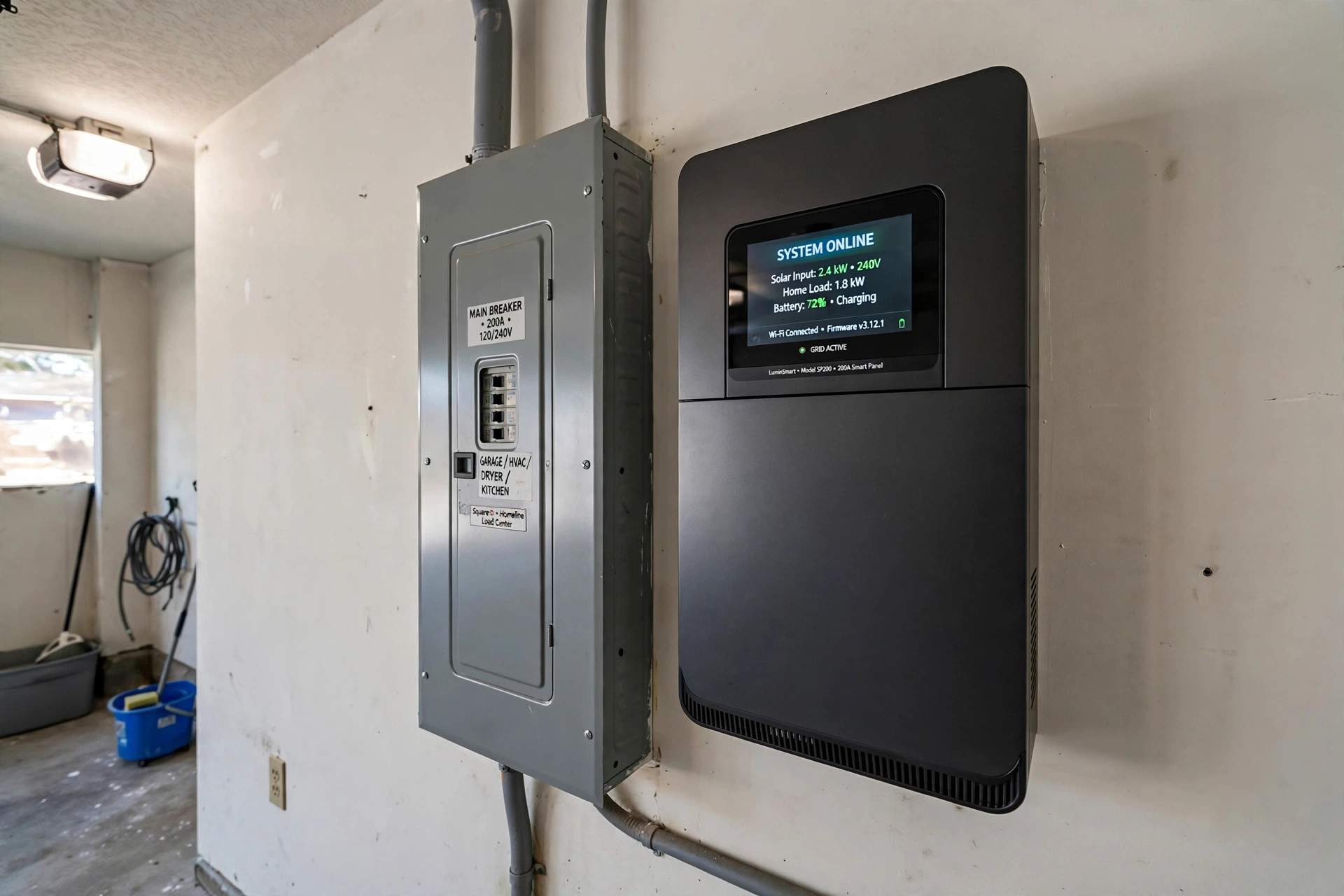
The Span panel is a smart electrical panel made by the company Span. It replaces the old metal box with breakers and adds circuit level control, real time power use data, and phone app control. A traditional panel is the standard breaker box that has served homes for decades. It protects each circuit with a breaker. It has no screen, no app, and no smart features. Both are legal. Both meet code. The difference is cost and control.
Why the Choice Matters
An electrical panel is not a small purchase. It shapes what a home can do for the next thirty to forty years. When a panel is too small, the homeowner pays for an upgrade later. When a panel lacks smarts, adding solar or an electric car charger gets harder and more costly.
The Span panel draws interest because homes now use more power in new ways. Heat pumps, induction stoves, EV chargers, and home batteries all want room on the panel. A smart panel lets the homeowner see each circuit and turn loads on and off from a phone. This can delay or remove the need for a bigger service. The traditional panel costs less up front. For many homes, it does the job well.
Money is the real question. The smart panel costs several thousand dollars more than a standard panel. The homeowner must weigh that gap against the gains. Consumer reviewers at CNET advise buyers to check smart home claims against real daily use. In the same spirit, this guide compares real numbers.
What a Span Panel Is: Span Panel vs Traditional Panel Cost Usa
The Span panel is an all in one smart electrical panel. It looks like a modern cabinet. It comes with breakers and a built in controller. The owner opens the Span app on a phone. The app shows power use for each circuit. The owner can name each circuit, such as kitchen, garage, or heat pump. The owner can turn circuits off and on from anywhere.
Span also sells an add on for EV charging. The panel can slow a car charger when the house nears its service limit. This keeps the home safe from overload. Reviews at PCMag have covered how home energy gear is getting smarter. The Span panel is one clear example.
A traditional panel holds breakers that trip when a circuit draws too much current. That is all it does. To know how much power a circuit uses, the owner needs a separate meter. To turn a circuit off, the owner must walk to the panel and flip the breaker by hand.
What a Traditional Panel Is
The traditional panel is the gray metal box found in most American homes. It holds rows of breakers. Each breaker guards one circuit. When a breaker trips, the owner resets it. Simple and proven.
Most homes carry a 100 amp or 200 amp service. New homes often get 200 amps. The panel itself costs a few hundred dollars. The breakers add more. Electricians know this work well. Parts are easy to find. Any licensed electrician can install one.
Traditional panels meet the National Electrical Code. Local inspectors see them every day. Permits move fast. This keeps labor cost down. For a homeowner on a tight budget, this path is hard to beat. A look at The Verge smart home coverage shows how much hype follows new gear, but the old gear still does the core job: safe power.
How to Choose Between Them
Start with the home. List the big loads: air conditioner, water heater, stove, dryer, EV charger, solar, battery. Note the service size. A 200 amp service with room to spare favors the traditional panel. A 100 amp service with plans to add an EV or heat pump favors the Span panel.
Next, weigh interest in control. Some owners like to watch each circuit and manage loads from a phone. They enjoy data. For them, the smart panel fits. Others want a box that just works. For them, the traditional panel is enough.
Budget matters most. If the gap of several thousand dollars breaks the project, pick the traditional panel. It is safe and legal. If the budget allows, and the home plans to grow, the Span panel can save a costly service upgrade later. Many owners of automatic washing machine shutoff valve reviews style smart devices find they like app control, but a panel is a bigger step.
Ask the electrician. A licensed pro can say whether the home needs a service upgrade. Sometimes a traditional panel plus a few smart breakers gives most of the benefit at lower cost.
Types and Options
The Span panel comes in set sizes. The most common is rated for 200 amp service. It fits up to 32 breaker positions. The unit ships with the smart controller built in. The app is free. No monthly fee is required for the core features.
Traditional panels come from many brands. Common names are Square D, Eaton, and Siemens. Sizes range from small sub panels to large 40 space main panels. The owner can add arc fault and ground fault breakers where code requires them. These cost more than plain breakers but add safety.
Hybrid options exist. Some panels accept smart breakers that report power use to an app. These sit between the two worlds. They cost more than plain breakers but far less than a full Span panel. For owners of wireless outdoor security camera reviews 2026 style smart gear, this middle path feels familiar.
Service size also matters. A home with 100 amp service may need an upgrade to 200 amps. That work can cost as much as the panel itself. A smart panel can sometimes avoid this. By managing loads, it lets a 100 amp service do more work safely. Span markets this as a key benefit. Homeowners adding a best smart floodlight for backyard usa and an EV charger at once may feel this pinch first.
Cost and Price in the USA
Now the core question of span panel vs traditional panel cost usa. Prices below reflect typical US market ranges in 2026. Labor varies by city. Permits vary by town. Treat these as guides, not quotes.
A traditional 200 amp panel swap costs about 1,500 to 3,000 dollars for parts and labor. The panel and breakers cost 400 to 800 dollars. The rest is labor, permit, and small parts. A panel upgrade from 100 to 200 amps runs about 2,500 to 5,000 dollars, because the meter base and service wires must change too.
A Span panel unit costs about 3,500 to 4,500 dollars for the hardware. Installed, the total often lands between 5,500 and 8,500 dollars. This covers the unit, breakers, labor, and permit. If the home also needs a service upgrade, add the same 2,500 to 5,000 dollars. But Span buyers often skip the service upgrade, since the smart panel manages loads on a 100 amp service.
So the gap is real. A traditional panel swap may cost 2,000 dollars. A Span panel swap may cost 7,000 dollars. The difference is about 5,000 dollars. What does the owner get for that extra money? Circuit level data, remote control, load management, and a modern look. What is lost? Nothing in safety. Both panels are listed and code compliant.
Value over time softens the gap. If the Span panel lets a home avoid a 4,000 dollar service upgrade, the true gap falls to about 1,000 dollars. If the home adds solar and a battery, the smart panel helps manage them. Energy data can cut waste. Some owners report lower bills. The Google Store smart home pages show how energy dashboards are now a common selling point. Panels are joining that trend.
Incentives can help. The US Department of Energy publishes guidance on home electrification at Energy.gov. Some utilities and states offer rebates for panel work tied to heat pumps or EV chargers. Tax credits may cover part of the cost when the panel supports clean energy. Check local rules before buying.
Care and Upkeep
Both panels need little care. Keep the area around the panel clear. Never stack boxes against it. Check that the door closes. Look for signs of heat: a burnt smell, warm breakers, or buzzing. These are warning signs. Call an electrician.
The Span panel needs a home WiFi link for its smart features. If the WiFi drops, the panel still works as a breaker box. The app just stops updating. Keep the app updated. Set strong passwords. A Simplisafe guide on smart home care makes the same point: secure the network first.
Traditional panels need no updates and no network. Breakers wear out over decades. If a breaker trips often with no clear cause, have it checked. Tighten nothing yourself. Leave the cover on. Only a licensed electrician should work inside.
Label circuits well. This matters for both panels. Clear labels save time in an outage. The Span app lets owners name circuits in software too. Good labels help the next owner of the home.
Safety
Electricity demands respect. Panels carry lethal voltage. Never open a panel cover unless trained. Never touch bus bars. Water and panels do not mix.
The US Consumer Product Safety Commission tracks electrical hazards at CPSC.gov. Old fuse boxes, damaged panels, and DIY wiring cause fires each year. If the home has a very old panel, an upgrade is a safety move, not just a cost choice.
The Span panel is UL listed. It meets the same safety standards as traditional panels. Its software does not replace the breaker. The breaker still trips on faults. Load control only shifts when power is used. It never bypasses protection.
Hire a licensed electrician for either job. Pull a permit. Get an inspection. These steps protect the home and the warranty. Unpermitted panel work can void insurance. It can also block a home sale. The ADT home safety pages stress the same rule for security gear: pro install matters.
Keep smoke detectors working. A panel upgrade is a good time to check them. Test each one. Replace batteries. These small steps matter more than any panel choice.
Frequently Asked Questions
How much does a Span panel cost installed in the USA? Most installed jobs land between 5,500 and 8,500 dollars. The unit itself runs about 3,500 to 4,500 dollars. Labor, permit, and breakers make up the rest. Prices vary by region and by the state of the existing wiring.
How much does a traditional panel cost installed? A like for like 200 amp panel swap costs about 1,500 to 3,000 dollars. An upgrade from 100 to 200 amp service costs about 2,500 to 5,000 dollars. Parts are cheap. Labor is the main cost.
Is the Span panel worth the extra money? It can be, if the home plans to add an EV charger, heat pump, solar, or battery. The smart panel can manage loads so the home avoids a costly service upgrade. It also gives useful energy data. If the home will stay simple, the traditional panel gives better value. Reviews from Consumer Reports remind buyers to match the product to real needs.
Does the Span panel work without WiFi? Yes. It works as a normal breaker panel without a network link. Only the app features pause. Power stays on. Breakers still protect each circuit. Reconnect WiFi and the app updates again.
Can any electrician install a Span panel? A licensed electrician can install it, but Span trains and certifies installers. A certified installer knows the setup and the app. This helps the commissioning go well. Ask Span for a certified pro in the area. Span’s own site at Span lists installer resources.
Which panel is better for solar and batteries? The Span panel pairs well with solar and batteries because it can watch and shift loads. It helps the home use stored power wisely. A traditional panel works fine with solar too. The inverter and the utility meter do most of the solar work. The smart panel adds a layer of control on top.
A Short Final Word
The span panel vs traditional panel cost usa debate comes down to needs and budget. The traditional panel is cheap, proven, and easy. The Span panel is costly, smart, and future ready. For a simple home, save the money. For a growing home with big electric plans, the smart panel can pay back its premium. Either way, hire a licensed electrician, pull the permit, and keep the panel clear and dry.
References
ADT. (n.d.). Home security and automation. https://www.adt.com CNET. (n.d.). Technology news and reviews. https://www.cnet.com Consumer Reports. (n.d.). Product reviews and ratings. https://www.consumerreports.org Google Store. (n.d.). Smart home devices. https://store.google.com PCMag. (n.d.). Technology product reviews. https://www.pcmag.com SimpliSafe. (n.d.). Home security systems. https://www.simplisafe.com Span. (n.d.). Smart electrical panel for the modern home. https://www.span.io The Verge. (n.d.). Technology news and reviews. https://www.theverge.com U.S. Consumer Product Safety Commission. (n.d.). Product safety information. https://www.cpsc.gov U.S. Department of Energy. (n.d.). Energy efficiency and renewable energy. https://www.energy.gov
Was this guide helpful?

About Robert Taylor
The My Garden US editorial team writes practical, in-depth home and garden guides for American homeowners — tested advice, no fluff.
You May Also Like
Best Keypad Lock for Garage Door USA: What to Buy and Why
September 8, 2026 0 views
EV Charger Tax Credit 2026 for Homeowners in the USA: A Plain Guide
July 24, 2026 0 views
Package Lock Box for Porch Reviews USA: What Homeowners Should Know
March 25, 2026 0 views