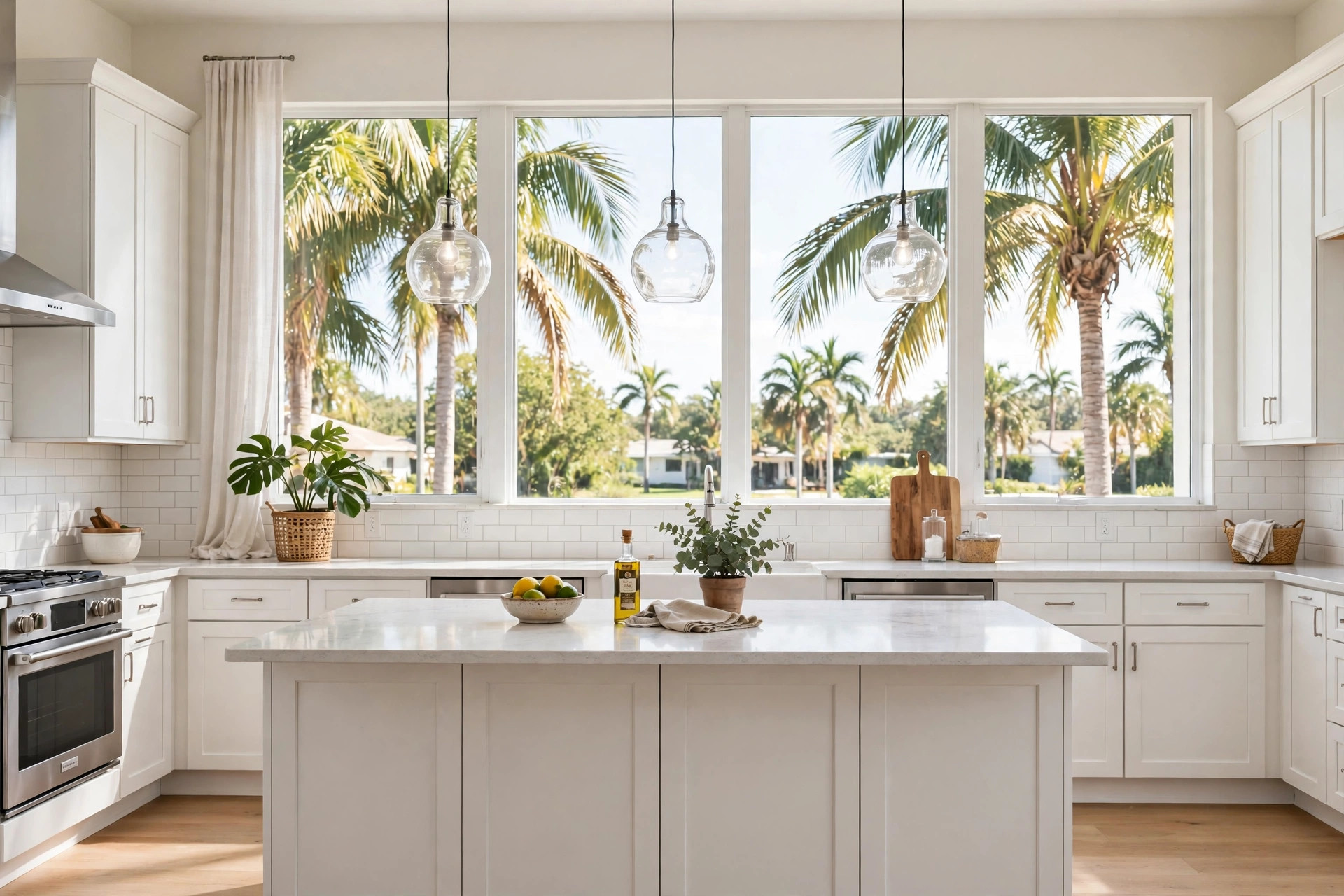

The kitchen island has become the center of the American home, and in Florida it serves still more purposes than in most states. Families gather around it for breakfast before school. Guests gather around it during the long holiday season. Work happens there in the afternoon when the sun is too strong to sit outside. For all of these uses, the question of kitchen island hanging lights florida homes usa is worth careful thought. The right lights do not merely brighten the counter. They set the mood of the room, they make food preparation safe, and they add real value to the house when the time comes to sell.
Why the Lights Over the Island Matter
The kitchen island is a work surface first. Chopping, mixing, reading a recipe, helping a child with homework: all of these tasks need clear, even light. A ceiling fixture at the center of the room throws light from too far away, and it is often blocked by the body of the person standing at the counter. Hanging lights solve this by bringing the source down to the right height. The island gets a pool of bright light exactly where the hands are working.
There is also a matter of appearance. The kitchen is the room that buyers notice first. Real estate agents in Tampa, Orlando, and Fort Lauderdale report that updated lighting is among the small changes that help a house show well. A row of well chosen pendants tells a buyer that the kitchen has been cared for. For the cost of a few fixtures and an afternoon of work, the room looks modern and intentional.
Comfort counts as well. Florida kitchens receive strong daylight through large windows and sliding doors. That is pleasant at noon and harsh at other hours. Hanging lights let the homeowner take over when the daylight fails. In the early morning and in the evening, they give a warm, controlled glow that overhead recessed cans alone cannot match.
How to Choose the Right Lights: Kitchen Island Hanging Lights Florida Homes Usa
Choosing lights is not difficult when it is done step by step. The size of the island, the height of the ceiling, and the amount of light already in the room are the three facts that decide the answer.
Size and Number
A rule that electricians use is one light for every two feet of island length, with the row centered over the counter. Large islands of eight feet or more can take four pendants or one long linear fixture.
The diameter of each shade matters as much as the count. Shades between ten and sixteen inches across suit most islands. Smaller shades look lost over a wide counter. Larger shades crowd the space and hang too close to the heads of people seated nearby.
Height is the point where mistakes are most often made. The bottom of the shade should hang thirty to thirty-six inches above the counter top. Lower than thirty inches, and the lights block the view across the island and glare in the eyes of seated guests. Higher than thirty-six inches, and the light spreads too thin for real work. In kitchens with tall or vaulted ceilings, common in newer Florida construction, adjustable cords or rods let the installer set the height exactly.
Light Color and Brightness
Light is measured in color temperature, stated in kelvins. A range of 2700 to 3000 kelvins gives a warm white light that suits wood cabinets and stone counters. A range of 3500 to 4000 kelvins gives a cleaner, brighter white that suits food preparation. Many homeowners now choose fixtures that let the color be adjusted with a switch, so the kitchen can be bright at dinner preparation and warm at dinner time.
Brightness is measured in lumens. For task work at the island, plan on 35 to 50 lumens per square foot of counter surface. Most medium pendants deliver 800 to 1100 lumens each, and two or three cover a standard island well. Dimmer switches are worth the small extra cost, since they extend the life of the bulbs and let the light suit the hour of the day.
Types and Styles of Island Lights
Florida kitchens lean toward bright, open designs. White cabinets, light stone counters, and wide windows are common. The best fixture is the one that fits the style already in the room. A detailed kitchen island hanging lights buying guide usa covers the same ground in more depth, but the main types are described below. Manufacturers such as Whirlpool and GE Appliances set appliance trends, but the lighting choice belongs to the homeowner.
Pendant Lights
Pendants are the most common choice and the most forgiving. A single cord or rod drops from the ceiling to a shade that aims the light down. Glass shades spread the light softly and suit coastal and farmhouse kitchens. Metal shades aim the light sharply downward and suit modern kitchens. Woven rattan shades suit the Florida look well and throw attractive patterns of light.
Pendants are easy to replace one at a time, and they are the cheapest of the types. Their main fault is that one pendant lights a small circle, so the row must be planned so the circles overlap and leave no dark gaps.
Linear Bars and Small Chandeliers
A linear fixture is a single long bar that carries several lights in a row. It is the right choice for islands longer than seven feet. It gives even light with no gaps, and it looks clean above a long slab of stone. Small chandeliers with three to five arms are a traditional choice for larger kitchens. They give a softer, more decorative light.
Where the Lights Meet the Seating
The island is not only a work counter. In many Florida homes it is also the daily dining table. The choice of kitchen island seating florida homes usa and the choice of lights should be made together. Bar stools need clear space beneath the lights, and the glare of a bare bulb is uncomfortable for anyone sitting under it for a meal. Frosted or fabric shades cut glare while keeping the light level high enough for reading and conversation.
Cost and Price
Prices vary widely, and the range is honest to report. A single simple pendant shade and socket sells for twenty to sixty dollars at large retailers. A well made designer pendant runs one hundred to four hundred dollars. A linear fixture of good quality runs three hundred to one thousand dollars. Installation by a licensed electrician adds roughly one hundred fifty to three hundred fifty dollars per fixture when new wiring is needed. Replacing existing fixtures on the same boxes is simpler and often costs half as much.
Bulbs are a small but recurring cost. LED bulbs cost more at the counter than the old incandescent kind, but they last ten to twenty times longer and cut the power bill. A kitchen that runs its island lights four hours a day will recover the cost of LED bulbs within a year. Dimmers that work with LED bulbs cost twenty to forty dollars each. Retailers such as Home Depot and Lowe’s carry the full range, and their websites show installed prices alongside the fixture price, which helps with honest budgeting.
Florida Conditions: Humidity, Salt Air, and Bright Sun
Florida kitchens ask more of their fixtures than kitchens in drier states. Humidity is high for most of the year. Homes near the coast add salt air to the mix. Both attack metal finishes. Chrome and polished nickel spot and pit within a year or two in an oceanfront condo. Brushed brass, oil rubbed bronze, and powder coated black hold up far better. The product pages at Bosch Home and the buying guides at This Old House both note that finish choice is a durability decision, not only a style decision, in coastal states.
The sun is the second local fact. Rooms with south and west windows take in strong light all afternoon. Shades that face upward bounce that light around and add to the glare. Shades that aim downward keep the light where it is needed. If the kitchen has no window shades, this matters more. The advice at The Spruce on layering light sources is sound: island pendants for the task, recessed cans for the fill, and a dimmer on each so the room can be tuned through the day.
Outdoor kitchens are common in Florida as well. If the island sits under a lanai roof, choose fixtures rated for damp locations. A damp rating is marked on the box and on the socket. Indoor fixtures rust and fail in the open air, and they void their own warranty. Homeowners who compare notes across state lines will find that kitchen island hanging lights texas homes usa face the same heat and humidity questions.
Care and Upkeep
Hanging lights are easy to keep if they are kept on a simple schedule. Glass and metal shades collect a film of cooking grease over time. A monthly wipe with a soft cloth and a mild dish soap solution keeps them clear. Do not spray cleaner directly onto the socket. Remove the shade if it comes off easily, wash it in the sink, and let it dry fully before it goes back. Woven shades do not take water. Dust them with a dry cloth or a soft brush.
Bulbs should be checked twice a year. A bulb that flickers or takes long to reach full brightness is near the end of its life. Replace all the bulbs in the row at once so the color stays even. The energy guides at ENERGY STAR explain which LED bulbs carry the rating for long life and true color, and the rating is worth looking for.
Cords and rods need an occasional look. In humid kitchens, check once a year that the canopy at the ceiling sits tight and that the cord shows no wear. A loose canopy is usually fixed with a single screw. Anything beyond that is a job for an electrician.
Safety
Electrical work in the kitchen deserves respect. The island lights share a circuit with outlets and appliances that draw real power. If the breaker trips when the microwave and the lights run together, the circuit is overloaded and an electrician should separate the loads. The safety pages at Bob Vila and the product tests at Consumer Reports both stress the same point: a fixture is only as safe as the box and the wiring behind it.
When a fixture is being installed, the power at the breaker must be off, not merely off at the switch. A non contact voltage tester costs little and removes all doubt. Heavy linear fixtures must hang from a fan rated or fixture rated box screwed into a joist, not from a thin ceiling box held by the drywall alone.
Water and electricity do not mix. Keep pendant cords clear of the path of the range hood steam and away from the reach of a sink sprayer. Fixtures over an island that holds a cooktop should be rated for the heat and kept to the sides of the cooking zone, never directly above an open flame.
Frequently Asked Questions
How many hanging lights does a six foot island need? Three pendants are the standard answer for a six foot island. Space them about two feet apart, centered on the counter. Two larger pendants can also work if their shades are at least fourteen inches across.
What height should the lights hang above the counter? Thirty to thirty six inches from the counter top to the bottom of the shade is the accepted range. Taller people and taller ceilings lean toward the higher end. Sit on a stool at the island and check that the shades do not block the line of sight across the counter.
Are LED bulbs really better for island lights? Yes. They use a fraction of the power, they run cool enough to touch, and they last for years. For a kitchen used daily, the savings on the power bill and on replacement bulbs are real. Choose bulbs marked dimmable if the lights are on a dimmer.
Do hanging lights work with sloped or vaulted ceilings? They do. Choose fixtures with a pivoting canopy or an extra long cord so the shades still hang level. Swag hooks can center a pendant over the island when the ceiling box is off center. An electrician can add a proper box in the right place for a modest fee.
What finish lasts longest near the Florida coast? Powder coated finishes and solid brass with a brushed or aged look resist salt air best. Polished chrome and bright nickel need frequent polishing and still spot. Stainless steel of marine grade holds up well but costs more.
Can I install island lights myself? A straight replacement of one fixture for another on the same box is within the skill of a careful homeowner who turns off the breaker and tests the wires. New wiring, new boxes, or heavy fixtures call for a licensed electrician.
A Final Word
The market for kitchen island hanging lights florida homes usa is wide, and that is good news. There is a sound fixture at every price, from the plain glass pendant to the long sculpted bar. The rules do not change with the price. Measure the island. Hang the shades at the right height. Choose warm light with a dimmer. Pick finishes that stand up to humidity and salt. Do the wiring safely or hire the person who can.
Done this way, the lights become one of the quiet strengths of the house. The island is brighter for the cook, warmer for the family, and more attractive to the buyer who walks through one day.
References
Bob Vila. (n.d.). Home improvement advice. https://www.bobvila.com Bosch. (n.d.). Home appliances. https://www.bosch-home.com Consumer Reports. (n.d.). Product reviews and ratings. https://www.consumerreports.org ENERGY STAR. (n.d.). Energy efficient products. https://www.energystar.gov GE Appliances. (n.d.). Kitchen and home appliances. https://www.geappliances.com Lowe’s. (n.d.). Home improvement products. https://www.lowes.com The Home Depot. (n.d.). Home improvement products. https://www.homedepot.com The Spruce. (n.d.). Home and garden advice. https://www.thespruce.com This Old House. (n.d.). Home renovation guidance. https://www.thisoldhouse.com Whirlpool. (n.d.). Home appliances. https://www.whirlpool.com
Was this guide helpful?

About Robert Taylor
The My Garden US editorial team writes practical, in-depth home and garden guides for American homeowners — tested advice, no fluff.
You May Also Like
Under Counter Wine Fridges Deals Near Me: A Buyer’s Guide
September 1, 2026 0 views
Butcher Block Countertops Deals Near Me: How to Find Quality Wood Counters at Low Prices
February 22, 2026 0 views
French Door Refrigerators Reviews Buying Guide USA
May 2, 2026 0 views