
Why Kitchen Island Seating Matters in Florida Homes
The kitchen is the center of most Florida homes. The weather is warm for much of the year, and family life often spills from the kitchen out to the lanai or patio. Many homeowners find that the dining room goes quiet while the kitchen island takes over as the main place to eat, work, and talk. This is why kitchen island seating florida homes usa has become such a common search. People want seats at the island that fit their home, their climate, and their way of living.
A good island seat turns a work surface into a gathering place. Children do homework there in the afternoon. Guests perch there with a drink while dinner cooks. In the morning, one person may eat a quick breakfast there before heading out to work. The seating you choose shapes how the kitchen is used every day.
Florida homes bring their own conditions. The air is humid. Salt may drift in from the coast. Light is strong and direct. Many kitchens have open plans that join the living room, so the island sits in plain view all day. The stools or chairs you pick must stand up to this climate and still look right in the room.
How to Choose Kitchen Island Seating: Kitchen Island Seating Florida Homes Usa
Start with the counter. Measure the overhang, which is the part of the counter that extends past the base of the island. A standard seat needs at least 12 inches of knee room. A comfortable seat needs 15 inches. If the overhang is too shallow, people will sit with their knees pressed against the island wall. That grows tiresome fast.
Counter height matters just as much. A kitchen island is usually 36 inches high, which is the same as a counter. Some islands rise to 42 inches, which is bar height. Measure from the floor to the top of the counter before you shop. A stool made for a 36-inch counter will leave you too low at a 42-inch island, and the other way around it will leave you perched too high.
Plan the spacing between seats. Each seat needs about 24 to 26 inches of width along the island edge. This gives elbows room and keeps people from feeling crowded. A six-foot island edge holds three seats in comfort. A longer island may hold four. Do not squeeze in extra seats just because they fit edge to edge. Comfort is worth more than capacity.
Think about the shape of the seat. Stools with backs give more support and work well when people linger over coffee. Backless stools tuck fully under the counter and leave the floor line clean. Swivel stools let a seated person turn toward the living room or the stove with ease. Each form has a place. Many Florida families pick swivel stools with low backs, which strike a middle path.
Types of Island Seating for Florida Homes
Wood Stools
Wood stools bring warmth to the kitchen. They suit Florida homes that lean toward a coastal or farmhouse look. Look for hardwoods or wood treated for moisture, since humidity can swell cheap wood and loosen joints. A sealed finish helps. Solid wood costs more, but it lasts longer than pressed board.
Metal Stools
Metal frames are strong and slim. Steel and aluminum stools suit modern kitchens. In Florida, pick finishes that resist rust, such as powder-coated metal or stainless steel. Bare iron will pit and stain in damp air. Metal stools can feel hard, so many owners add a thin cushion that can be removed and washed.
Woven and Rattan Stools
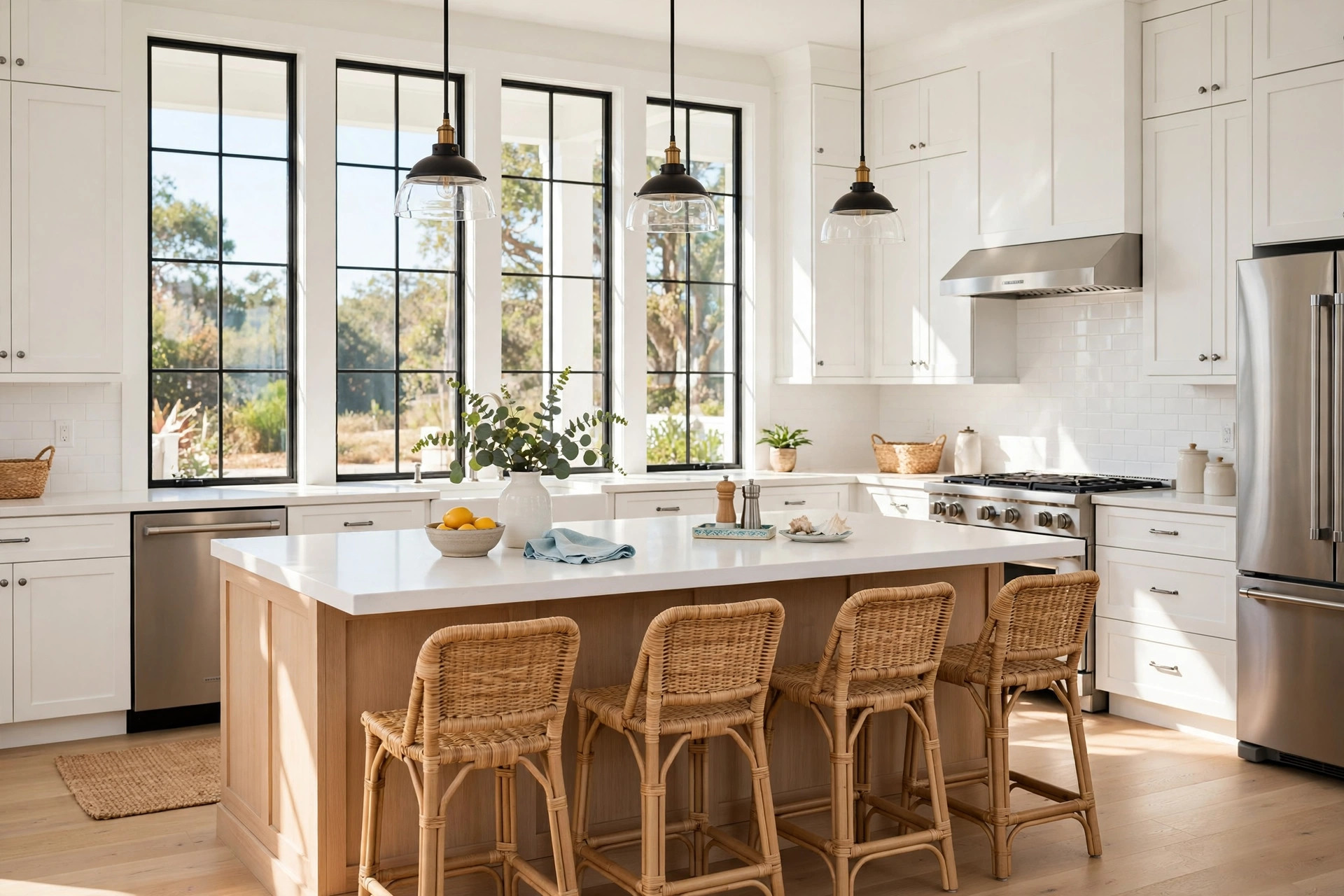
Rattan and woven seats read as classic Florida. They pair well with bright rooms, light counters, and sea tones. Real rattan is handsome but needs care in humidity. Newer all-weather weaves mimic the look and hold up better in damp air. These stools are light and easy to move, which helps when the island doubles as a serving line during a gathering.
Upholstered Counter Chairs
Upholstered seats bring softness and color. They work best in homes where the kitchen stays dry and the chairs are used daily. Choose fabrics that resist stains and can be wiped clean. Performance fabrics, sold by many Home Depot and Lowes stores, hold up well to spills. Avoid thick fabrics in hot months if the house runs warm, since they trap heat.
Counter Height vs Bar Height: Which Fits Your Island
Most Florida kitchens built in the last thirty years use counter-height islands at 36 inches. Seat height for these is 24 to 26 inches. Bar-height islands at 42 inches call for seats of 29 to 31 inches. A few homes have a raised eating bar on one side of the island at bar height while the work side stays at counter height. This split design gives each side its own seat height.
Measure carefully before you order. A stool that is one inch too tall or too short makes daily use awkward. Feet dangle. Legs cramp. If the island top is thick stone, measure from the floor to the underside of the counter, not just to the top surface, so you know the true knee clearance. Thick quartz counters can take a full inch off the room for knees.
Materials That Last in Florida Weather
Humidity is the main force working against your seating. It swells wood, weakens glue, and feeds mildew on fabric. Salt air adds rust to the list near the coast. Sunlight through big windows can bleach color and dry out leather.
Choose materials with these forces in mind. Powder-coated metal resists rust. Sealed hardwood resists swelling. All-weather wicker resists damp. Outdoor-rated fabrics resist mildew and fading. None of these materials needs to look plain. The This Old House site shows how traditional designs can be built in modern durable materials without losing their look.
Floor protection is part of the plan. Tile floors are common in Florida, and stool legs can scratch them. Felt pads under the legs cut the noise and spare the floor. Check the pads twice a year, since grit wears them down. On wood floors, the same pads stop the slow grind that dulls the finish.
Cost and Price Range
Prices for island seating spread wide. A set of four simple backless stools may cost 120 to 250 dollars. Mid-range swivel stools with backs run 100 to 200 dollars each, or 400 to 800 dollars for four. High-end designer chairs can reach 300 to 500 dollars each. These ranges match the pricing tests published by Consumer Reports, which judges seating on frame strength and finish wear.
Custom seating built by a carpenter costs more, often 400 to 800 dollars per seat, but it can match the island exactly in height and wood tone. For many buyers, a ready-made set from a trusted maker such as Whirlpool or GE Appliances kitchen lines, paired with stools from a home store, is the sensible middle.
Think about the long cost, not just the sticker price. A cheap stool that wobbles in a year costs more in the end than a solid one that lasts a decade. Check the weight limit on the label. Check the warranty. A one-year warranty on a stool used three times a day is short. This is the same kind of math that Energy Star urges buyers to do with appliances: the price paid at the store is only part of the true cost.
Delivery and assembly add to the bill. Some stools arrive flat-packed and need an hour of work with a hex key. Others come fully built. If you are not handy, budget for assembly or pick stools that arrive ready to sit.
Care and Upkeep
Wipe seats down each week with a soft cloth and mild soap. Keep harsh cleaners away from wood finishes and powder-coated metal. They strip the coating and open the door to damage. For upholstered seats, vacuum the crevices where crumbs hide. Blot spills at once instead of rubbing them in.
Once a year, tighten every bolt and screw on each stool. Daily use loosens hardware, and a stool that rocks will wear its joints fast. A drop of wood glue in a loose dowel, or a new bolt from the maker, adds years of life. This kind of simple upkeep is the same advice found on Bob Vila and The Spruce, which both stress that furniture lasts when small repairs are made early.
Store spare cushions in a dry place during the rainy season. Mildew grows fast on damp fabric left in a hot garage. If a cushion picks up a musty smell, wash the cover in warm water and let it dry in full sun before it goes back on the seat.
Safety Around Island Seating
Stability comes first. A stool with a narrow base can tip when someone leans to reach across the island. Wide bases and low centers of gravity are safer, above all in homes with children. Tip-over tests for furniture are covered in plain terms on This Old House guides.
Watch the weight rating. Most stools carry 250 to 300 pounds. Heavier users should look for commercial-grade frames rated higher. The rating is printed on the box and often on a sticker under the seat.
Keep the floor around the island clear. A stool pushed back into a walkway becomes a trip hazard, more so at night. In open Florida kitchens, the island often sits in the main path between rooms, so teach the household to push stools back under the counter after use. Backless stools that slide fully under the overhang help keep the path open.
Hot surfaces need care. If the island holds a cooktop, keep seating away from that side. Arms and sleeves brush hot pots fast. The safe practice, noted by GE Appliances in their kitchen planning notes, is to seat people only at the sides and ends that stay clear of heat.
Lighting and the Island Seat
Good light makes the seats inviting. Kitchen island hanging lights set over the island give each seat its own pool of light for reading or eating. Hang pendants so the bottom of the shade sits 30 to 36 inches above the counter. Lower than that, and a standing person blocks the light; higher, and the light spreads too thin.
Layer the light. Overhead pendants handle tasks. A dimmer lets the same pendants turn soft in the evening.
Matching the Island to the Rest of the Kitchen
The stools should speak to the rest of the room. Wood stools tie to wood floors or open shelves. Metal stools tie to stainless appliances. Woven stools tie to a coastal palette of sand and sea glass. You do not need a perfect match. You need a calm agreement of tone.
Counter material plays a part. A thick stone island wants sturdy, grounded stools. A thin wood top suits lighter chairs. If you are planning the counters and the seating together, read the notes on quartz counters and butcher block tops to see how each surface pairs with different seat styles.
Frequently Asked Questions
How many seats should I put at my kitchen island?
Allow 24 to 26 inches of island edge per seat. A six-foot edge fits three seats well. A longer island may fit four. Leave room for elbows. Crowding the edge makes meals less pleasant, even if the seats technically fit.
What seat height do I need for a 36-inch island?
You need a counter stool with a seat height of 24 to 26 inches. That leaves about 10 to 12 inches between the seat and the counter underside, which suits most adults. Taller people may prefer 26 inches.
Can I use dining chairs at a kitchen island?
You can, if the height is right and the chair legs clear the island base. Dining chairs are usually 18 inches high, which is too low for a 36-inch island. Counter-height dining chairs exist and work well. Check that the chair backs clear the counter edge when pushed in.
Are swivel stools a good idea for Florida kitchens?
Yes. Swivel stools let people turn from the island toward the living room or the television, which suits open Florida floor plans. Pick a swivel base with a wide footprint for stability, and check the swivel joint once a year for wear.
What is the best material for stools in a humid climate?
Powder-coated metal, sealed hardwood, and all-weather wicker hold up best in humidity. Each resists a different kind of damp damage. Avoid raw iron and untreated softwood, which rust and swell. If you love upholstery, pick a fabric rated for moisture and mildew resistance.
How do I keep stools from scratching tile floors?
Fit felt or rubber pads on every leg and replace them when they wear thin. Lift, do not drag, stools across tile. Keep grit off the floor with regular sweeping, since sand under a leg acts like sandpaper on tile glaze.
A Short Final Word
Choosing kitchen island seating florida homes usa style comes down to a few plain facts. Measure the counter. Match the seat height. Give each person room. Pick materials that can stand up to heat, humidity, and salt air. Spend enough for a frame that lasts, and keep up with small repairs. Do these things, and the island becomes what it should be: the warm, busy heart of a Florida home, with a good seat for everyone who gathers there.
References
Bob Vila. (n.d.). Home improvement advice. https://www.bobvila.com Consumer Reports. (n.d.). Product reviews and ratings. https://www.consumerreports.org ENERGY STAR. (n.d.). Energy efficient products. https://www.energystar.gov GE Appliances. (n.d.). Kitchen and home appliances. https://www.geappliances.com Lowe’s. (n.d.). Home improvement products. https://www.lowes.com The Home Depot. (n.d.). Home improvement products. https://www.homedepot.com The Spruce. (n.d.). Home and garden advice. https://www.thespruce.com This Old House. (n.d.). Home renovation guidance. https://www.thisoldhouse.com Whirlpool. (n.d.). Home appliances. https://www.whirlpool.com
Was this guide helpful?

About James Carter
The My Garden US editorial team writes practical, in-depth home and garden guides for American homeowners — tested advice, no fluff.
You May Also Like

Where to Find the Best Undermount Stainless Sinks for Sale USA
February 27, 2026 0 views
Under Counter Wine Fridges: Where to Buy Them in the USA
March 15, 2026 0 views
Dual Fuel Ranges for California Homes USA: A Practical Buyer’s Guide
July 9, 2026 0 views