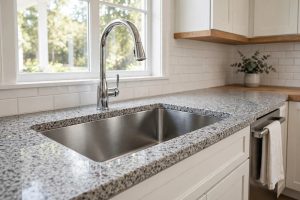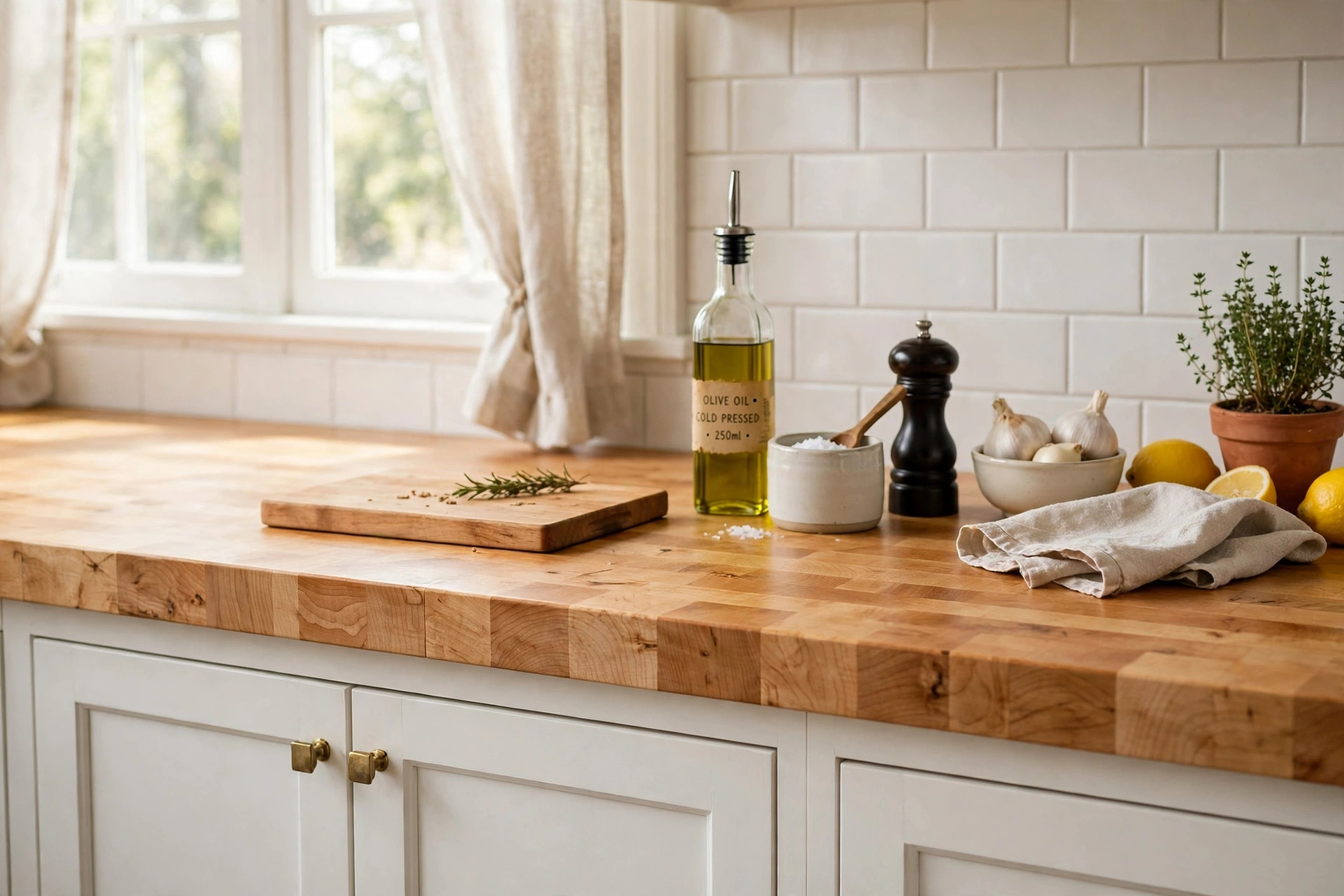

A good countertop changes the way a kitchen feels. This butcher block countertops buying guide USA will help you shop with care. Wood counters are warm. They are strong. They bring a natural look that stone and tile cannot match. Many American homes now use butcher block in kitchens, pantries, and laundry rooms. Before you buy, you should know the types of wood, the costs, and the care that wood counters need. Read on to learn each point in plain terms.
Why Butcher Block Countertops Matter
Butcher block counters have a long past. Butchers used thick wood tops for cutting meat. Cooks found that wood was kind to knife blades. The surface was easy on hands. It could be sanded and renewed. Those same traits make wood counters a smart pick for a home kitchen today.
Wood gives a kitchen a warm tone. It pairs well with painted cabinets, with tile, and with steel. Many buyers mix wood with stone. They use wood on an island and stone around the sink. This mix adds charm without raising the bill too much.
Wood is also a green choice in many cases. Much of the stock comes from managed forests in the United States. A wood top can be sanded and refinished many times. When a stone top is chipped, it may need full repair or replacement. When wood is scarred, a quick sanding can bring it back. That long life matters to buyers who plan to stay in a home for years.
What to Look For When You Buy: Butcher Block Countertops Buying Guide Usa
Shopping for wood counters is not hard, but a few points make a big difference. Keep this list close when you compare products at the store or online.
Wood Species
The kind of wood sets the color, the grain, and the strength. Maple is the most common pick in the United States. It is hard, light in color, and it takes oil well. Many guides at Lowe’s show maple as a top seller for kitchen counters.
Oak is another fine choice. Red oak is strong and has a bold grain. White oak is a bit more water resistant. Walnut gives a rich dark tone that suits modern kitchens. Cherry darkens with age and adds a deep red glow. Birch and beech are less costly but softer, so they show dents sooner.
Ask the seller which species is in stock and where the wood came from. Domestic woods such as maple, oak, and walnut are easy to find in the United States. Exotic woods may cost more and may be hard to match if you need a repair later.
Construction Style
Butcher block is made in three main styles. Edge grain shows long strips of wood with seams along the length. This style is the most common and often the least costly. Face grain shows the flat face of boards. It has broad grain patterns and a casual look. End grain shows the cut ends of the wood. It looks like a checkerboard. End grain is very strong and kind to knives, but it costs more and can move more with humidity.
For a full kitchen counter, edge grain is the usual pick. It is stable, it looks clean, and the price is fair. End grain suits a small cutting station or a butcher island.
Thickness and Size
Most wood counters are one and a half inches thick. This thickness gives a solid feel and holds fasteners well. Thicker tops, up to two inches or more, suit islands and work tables. Thinner tops can work for laundry rooms or desks but may flex if the span is long.
Measure your base cabinets with care. A standard counter is about twenty five inches deep and runs the length of the cabinets. Islands may be larger. Many stock tops come in set sizes. Custom shops can cut to fit. Leave a small gap at the wall for seasonal movement of the wood.
Finish
The finish sets how the top will be used and how often you must oil it. Food-safe mineral oil is the most common finish. It soaks into the wood and keeps it from drying out. An oiled top can be used for cutting food right on the surface.
Some buyers want a harder finish. Water-based polyurethane or a hard wax oil adds a tough coat. These finishes resist stains and need less oiling. But they sit on top of the wood. They can show wear lines, and they are harder to renew by sanding. Think about how you cook. If you cut on the counter, oil is the better path. If you want a low-care surface, a hard finish may suit you.
Types and Options
Wood counters come in several forms. Each one suits a different plan and budget.
Stock tops. Home centers sell stock butcher block in set lengths. These are the least costly. They come in maple, oak, and birch. You can find them at The Home Depot and other stores across the country. Stock tops work well for straight runs and simple plans.
Custom slabs. Custom shops mill tops to your exact size and shape. You can pick the species, the grain style, and the edge profile. Custom work costs more, but it fits odd corners and wide islands.
Butcher block islands. A thick wood top on an island base is a classic look. It gives extra work space and a spot for casual meals. Pair it with a strong base and good lighting.
Wood with other materials. Many kitchens mix wood and stone. Use quartz countertop installation around the range and sink, and wood on the island. The mix looks rich and keeps costs in check.
Reclaimed wood. Some shops sell tops made from old barns or gym floors. These have deep color and a story. They cost more and need a skilled installer.
Cost and Price
Price is a big reason many buyers choose wood. Butcher block often costs less than stone. In the United States, stock tops may run from forty to one hundred dollars per square foot, not counting install. Custom tops may run from seventy five to one hundred fifty dollars per square foot or more. Exotic woods and end grain sit at the top of the range.
Installation adds to the bill. A simple straight run is easy. Cutouts for an undermount stainless sink add labor. Long seams, cooktop cutouts, and wall scribing raise the price too. Some handy homeowners install stock tops themselves with basic tools. This can save several hundred dollars.
Compare the full cost before you decide. Add the price of the top, the finish oil, fasteners, sealant, and labor. A test report from Consumer Reports reminds buyers to count upkeep costs too, since oil and sandpaper add up over the years.
Watch for sales at large stores. Holiday weekends often bring price cuts on stock tops. Local lumber yards may beat big store prices on custom work.
Installation Basics
A wood counter must sit on flat, level cabinets. Check the cabinets with a level before the top arrives. Shim low spots. Secure the top with screws through the cabinet rails into the underside of the wood. Leave the screw holes slightly loose or use slotted brackets so the wood can move with the seasons.
Seal all cut edges at once. Raw wood drinks up water. Apply oil or finish to sink cutouts, faucet holes, and end grain right away. A bead of silicone at the wall joint keeps water out.
Keep a gap of about one eighth of an inch between the top and the wall or tall cabinets. Wood swells in damp air and shrinks in dry air. That gap lets it move without cracking.
If you are not sure about the work, hire a pro. Guides from This Old House and Bob Vila show each step and list the tools you will need. A bad install can warp a fine top.
Care and Upkeep
Wood counters ask for steady, simple care. The work is small but it must be done on time.
Oil often. New tops need oil once a day for the first week, then once a week for a month. After that, oil once a month or when the wood looks dry. Use food-grade mineral oil. Warm oil soaks in faster. Wipe off the extra after each coat.
Clean with care. Wash with warm water and mild soap. Dry the top after washing. Never let water stand on the wood. Do not use harsh cleaners or bleach. They strip the oil and dull the grain.
Sand out marks. Small cuts and stains sand out with fine sandpaper. Sand with the grain. Wipe the dust away. Apply fresh oil to the sanded spot. The repair will blend in with time.
Use trivets. Hot pots can scorch wood. Set a trivet or pad under hot pans. Cut on a board when you can, to keep the main top smooth.
Watch the sink area. The wood near the sink takes the most abuse. Wipe splashes right away. Some owners add a stone or steel section at the sink and keep wood on the rest of the run. This split plan cuts upkeep a lot.
Store oil, sandpaper, and soap in nearby kitchen pantry cabinets so the care steps stay easy to do.
Safety
Wood counters are safe when they are made and kept the right way.
Use only food-safe finishes on a top that touches food. Plain mineral oil and beeswax blends are common safe picks. Check the label before you buy. Some hard finishes are safe once fully cured, but read the maker notes first.
Keep raw meat work clean. Wash the top with hot soapy water after it touches raw meat, poultry, or fish. Let it dry fully. A well-oiled top resists germs, but good kitchen habits still matter. Safety pages from the U.S. Consumer Product Safety Commission give sound rules for safe kitchen work.
Mind the weight. A thick wood top is heavy. Get help to lift it. Use proper bracing under long spans. A sagging top can crack or pull away from the wall.
Keep the range area in mind. Wood near a gas range must meet local codes for clear space. Check the rules in your state before you plan the layout. Appliance makers such as Whirlpool, GE Appliances, and Bosch list the clear space each unit needs.
How Butcher Block Compares to Other Counters
It helps to see wood next to the other common picks.
Stone tops such as granite and quartz resist heat and stains and need little care, but they cost more. Laminate is the least costly choice, but it chips and cannot be sanded. Tile is tough and low in cost, but grout lines need scrubbing.
Butcher block sits in the middle. It costs less than stone, it feels warm, and it can be renewed. Its weak points are water and heat. With steady oiling and quick wipe-ups, it can last for decades. The Spruce notes that mixed kitchens are on the rise: wood on the island and stone on the main run gives the best of both worlds.
Shopping Tips
Buy from a seller who will answer hard questions. Ask about the species, the glue, and the moisture content of the wood. Good shops dry their stock to the right level for indoor use.
Look at the top in person when you can. Check for flat boards, tight seams, and even color. Reject pieces with deep checks or loose joints.
Read the warranty and keep your receipt and the care sheet the maker gives you. For big remodel plans, the ENERGY STAR site has tips on efficient kitchen design that pair well with a wood counter project.
FAQ
How long do butcher block countertops last? With steady care, a wood counter can last twenty to thirty years or more. Sanding and oiling renew the surface. The top may outlast the cabinets under it.
Can I cut food right on the counter? Yes, if the finish is food safe. Mineral oil and beeswax blends are common. Keep the top clean and dry. Use a separate board for raw meat to be safe.
Do butcher block counters stain easily? They can stain if spills sit. Wipe up juice, wine, and coffee at once. A fresh coat of oil helps the wood resist spots. Deep stains often sand out.
Are butcher block countertops cheaper than granite? In most cases, yes. Stock wood tops cost far less per square foot than granite or quartz. Custom wood can cost as much as mid-range stone, so get quotes for both.
How often must I oil the wood? Oil new tops often in the first month. After that, oil about once a month. Oil when the wood looks pale or when water no longer beads on the surface.
Can I put a hot pot on butcher block? It is best not to. Heat can scorch the wood and burn off the oil. Use a trivet or a hot pad under every hot pan.
A Short Final Word
Butcher block countertops bring warmth, value, and long life to an American kitchen. Pick the right wood. Seal every cut. Oil on a steady plan. Wipe spills fast. Do these small things and the top will serve you well for many years. Take these notes to the store, ask good questions, and choose with care.
References
Bob Vila. (n.d.). Home improvement advice. https://www.bobvila.com Bosch. (n.d.). Home appliances. https://www.bosch-home.com Consumer Reports. (n.d.). Product reviews and ratings. https://www.consumerreports.org ENERGY STAR. (n.d.). Energy efficient products. https://www.energystar.gov GE Appliances. (n.d.). Kitchen and home appliances. https://www.geappliances.com Lowe’s. (n.d.). Home improvement products. https://www.lowes.com The Home Depot. (n.d.). Home improvement products. https://www.homedepot.com The Spruce. (n.d.). Home and garden advice. https://www.thespruce.com This Old House. (n.d.). Home renovation guidance. https://www.thisoldhouse.com U.S. Consumer Product Safety Commission. (n.d.). Product safety information. https://www.cpsc.gov Whirlpool. (n.d.). Home appliances. https://www.whirlpool.com
Was this guide helpful?

About Michael Thompson
The My Garden US editorial team writes practical, in-depth home and garden guides for American homeowners — tested advice, no fluff.
You May Also Like
Where to Find Kitchen Island Seating in the USA: A Buyer’s Guide
July 8, 2026 0 views
Shaker Cabinet Doors Buying Guide USA: What to Know Before You Buy
September 29, 2026 0 views
Dual Fuel Ranges USA Online Deals: What to Know Before You Buy
April 12, 2026 0 views