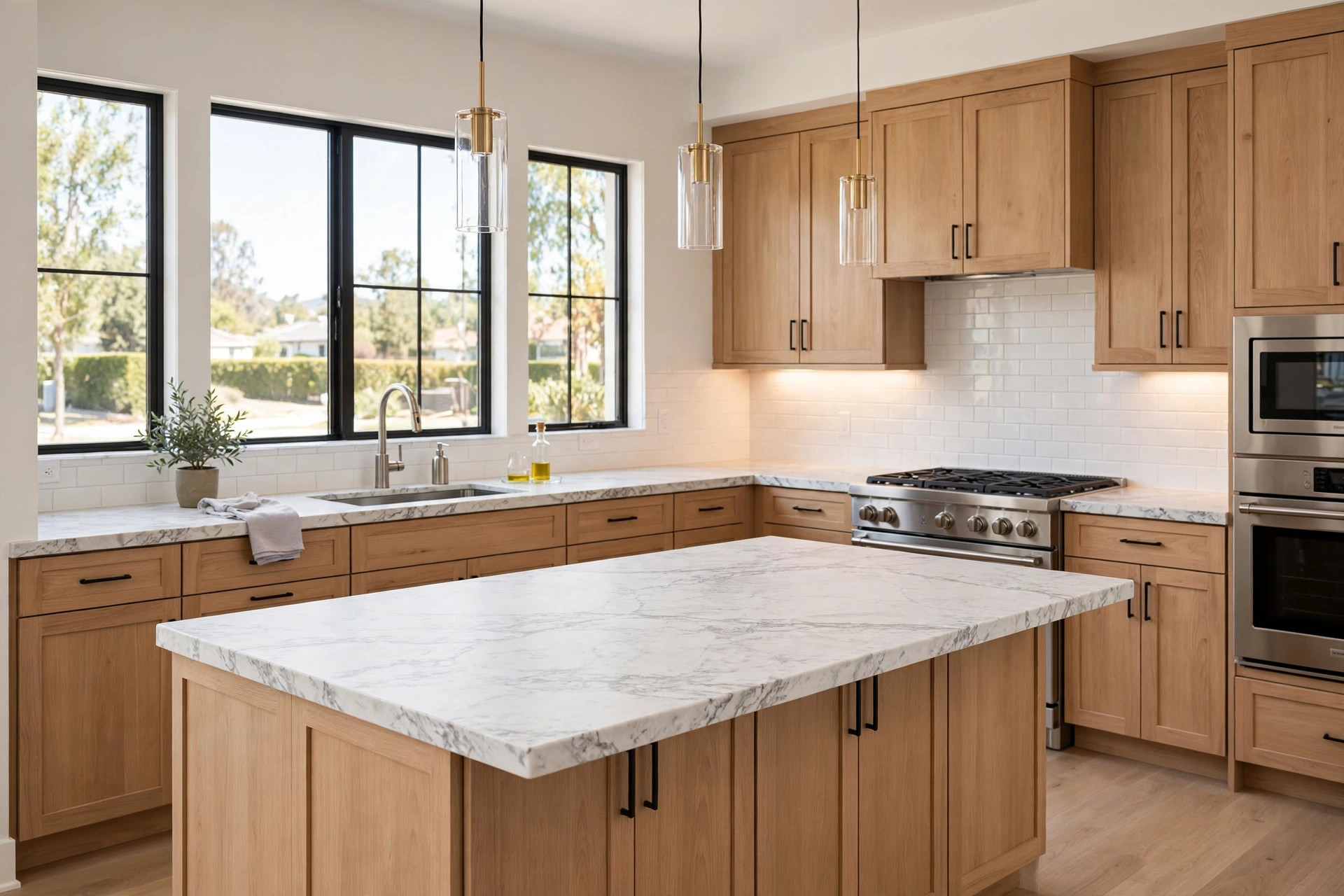

A kitchen counter sees more use than any other surface in the house. It holds hot pots, wet dishes, schoolbooks, and holiday meals. This quartz countertop installation buying guide usa readers rely on starts with a simple fact: a countertop is a long-term purchase. Most quartz counters last for decades. The slab you pick, the fabricator you hire, and the way you care for the stone will shape your kitchen for years to come.
This guide walks through the whole process. It explains what quartz is, how to choose a slab, what installation involves, what it costs, and how to keep the surface in good order. Read it before you sign a contract.
Why It Matters
Countertops affect daily life in small ways. A rough or stained surface makes cooking feel like work. A smooth, even surface makes cleanup quick. Quartz gives you that smooth surface at a price many families can afford.
Quartz is an engineered stone. It is made from about 90 percent ground quartz mixed with resin and color. The result is harder than many natural stones. It resists stains and does not need sealing each year. That makes it popular in busy kitchens.
The choice of fabricator matters as much as the slab. A poor cut or a bad seam will show every day. A good installer will make the counters look like one piece. So buying quartz is really two purchases: the material and the workmanship.
What to Look for When You Buy: Quartz Countertop Installation Buying Guide Usa
Start with the look. Quartz comes in hundreds of colors. White and light gray sell well because they suit most cabinets. Dark slabs look rich but show crumbs and dust. Ask the dealer for a full-size sample, not a small chip. A small chip hides the pattern. A larger sample shows how the veins will look across your counter.
Check the finish. Polished is the most common. It reflects light and wipes clean. Honed has a soft matte look but shows marks more easily. Most homes do best with polished.
Check the thickness. Standard slabs are 2 centimeters or 3 centimeters thick. Three-centimeter slabs look more solid and need less support. Two-centimeter slabs cost less but need a plywood base. Ask which your installer plans to use.
Check the warranty. Good brands stand behind their slabs for 10 years or more. Read the terms. Some warranties cover stains and defects but not damage from heat. Keep the paperwork in a safe place.
Shop around. Prices differ a great deal from store to store. Big-box stores like The Home Depot and Lowe’s sell quartz and arrange installation. Local stone shops may offer better slabs and more personal service. Online guides from The Spruce and Bob Vila can help you learn the terms before you talk to a salesperson.
Types and Options
Standard quartz
Standard quartz is the most common choice. It comes in solid colors and simple patterns. It suits most kitchens and costs less than designer lines. For a first remodel, this is often the smart pick.
Veined quartz
Veined quartz imitates marble. Bold veins run through white or gray stone. These slabs look high-end but cost more. Veins also make seam placement harder. The installer must match the pattern across pieces. Ask to see a photo of past work with veined slabs before you order.
Textured and leathered quartz
Some brands offer textured finishes. These hide fingerprints well. They cost more than polished slabs and need a bit more care. Touch a sample before you decide. What looks good in a showroom may feel odd under your hands each day.
Prefabricated sections
Prefabricated pieces come in set sizes with finished edges. They cost less and install fast. They suit simple, straight counters. They do not suit curved counters or odd corners. Measure your kitchen and see if stock sizes fit.
Cost and Price
Quartz countertop installation cost in the United States usually runs from about 50 dollars to 150 dollars per square foot, installed. A typical kitchen of 50 square feet may cost between 2,500 and 7,500 dollars. These figures are rough. Your final bill depends on several factors.
The slab brand sets the base price. Well-known lines cost more than store brands. Veined and textured patterns cost more than plain ones.
The edge style adds cost. A simple eased edge is standard. Ogee and waterfall edges cost extra. A waterfall edge, where the slab runs down the side of an island, uses much more material.
Cutouts add cost. Each sink hole and cooktop hole takes time and skill. An undermount sink needs a polished cutout. Farmhouse sinks need special cuts.
Seams add cost. Large kitchens need more than one slab. Each seam is labor. The installer should plan seams where they show least.
Removal of the old counter costs extra. Some crews include it. Some charge a fee. Ask for the total price in writing.
Get three written quotes. Make sure each quote covers the same work. One low bid may skip the sink install or the old counter removal. Compare line by line. Ratings from Consumer Reports can help you judge brand quality, but local word of mouth is the best guide to a fabricator.
Installation: What Happens
Before the crew arrives
Measure day comes first. The installer visits your home and makes a template. The template follows the exact shape of your cabinets and walls. No two kitchens are exactly square. The template catches the small differences.
You must clear the counters. Remove small appliances, dishes, and decor. Shut off water to the sink. The crew will disconnect the plumbing if that is in the contract.
The install day
Most installs take one day. Larger kitchens may take two. The crew brings the cut slabs on a truck. They set the pieces in place and check the fit. They level the tops and join the seams with epoxy.
The installer cuts the sink hole if it was not cut at the shop. They set the sink and seal it. They caulk where the counter meets the wall. Then they clean up.
After the install
Wait before you use the counters. The seams and caulk need time to cure. Most installers ask you to wait 24 hours. Do not set heavy items on a fresh seam. Keep the room at a normal temperature.
Check the work before you pay the final bill. Look at each seam. Run your hand across it. It should feel smooth, not rough. Check that the sink sits level. Look for gaps at the wall. A good crew will fix small flaws on the spot.
Pairing new counters with new appliances makes the kitchen feel complete. If you are planning a full update, Bosch Home, GE Appliances, and Whirlpool all offer ranges and dishwashers that sit well with modern quartz. For kitchen project ideas, This Old House has long covered remodels step by step. If you are also updating the floor, see our guide to vinyl plank flooring deals.
Care and Upkeep
Quartz needs less care than natural stone, but it is not care-free. Follow these rules and the surface will stay bright for years.
Wipe spills the same day. Quartz resists stains, but coffee, wine, and oil can leave marks if they sit for days. Warm water and a soft cloth handle most messes.
Use mild soap. Harsh cleaners can dull the finish over time. Avoid bleach and oven cleaner. A drop of dish soap in warm water is enough for daily cleaning.
Use a cutting board. Quartz is hard, but a knife can scratch the resin. Boards also keep your knives sharp. This is a habit that pays off.
Use trivets for hot pots. Quartz can handle warm dishes, but a very hot pan can damage the resin and cause a mark. Keep a trivet by the stove.
Do not sit or stand on the counters. The stone is strong, but the seam points are weak. Extra weight can crack a seam.
Once a year, check the caulk line at the wall and around the sink. If it pulls loose, clean it out and apply new silicone. This keeps water from getting under the counter.
For deep marks that soap will not lift, use a cleaner made for stone surfaces. Test it on a hidden spot first. Never use scouring pads or steel wool. They leave fine scratches that catch dirt and dull the shine.
If you are remodeling the whole kitchen, efficient choices matter. ENERGY STAR lists appliances that save power and water, which can trim your bills after the remodel. And if you plan to match the new counters with a new cooktop, read our dual fuel ranges guide.
Safety
Quartz is safe in a home kitchen. The slab is nonporous, so it does not harbor germs the way a scratched wooden board can. It is also low in emissions once installed and cured.
During cutting, quartz dust needs care. The fine dust can harm lungs. This is a job for the shop, not your garage. Professional fabricators cut with water and use dust controls. Never try to cut a slab yourself with a dry saw.
Heavy slabs can injure people. Leave lifting to the crew. Keep children and pets out of the work area on install day. The slabs are heavy and the tools are sharp.
Check that the installer seals the sink and caulk well. Standing water can seep into the cabinet wood below. That leads to mold and rot over time.
FAQ
How long does quartz countertop installation take?
Most homes take one day for the install itself. The full process, from measuring to install, takes two to four weeks. The shop needs time to cut and polish the slabs after the template is made.
Can I install quartz counters myself?
This is not a do-it-yourself job. Slabs are heavy and brittle. One wrong move can snap a piece worth hundreds of dollars. Seams need skill to look right. Hire a trained crew.
Does quartz need to be sealed?
No. Unlike granite or marble, quartz does not need sealing. The resin makes it nonporous. Wipe it clean and you are done.
What is the best edge for a family kitchen?
The eased edge is best for most homes. It has soft corners that are easy to clean. Bullnose edges feel smooth but can chip. Sharp modern edges look clean but hurt when you bump them.
Will a white quartz counter stain?
White quartz can stain if strong liquids sit on it for a long time. Coffee, red wine, and curry paste are the usual culprits. Wipe spills the same day and white quartz will stay white.
How do I match my new counters with my appliances?
Bring a sample of the quartz when you shop for appliances. Stainless steel suits most quartz colors. If you are buying a new fridge too, our article on French door refrigerators covers what to look for.
A Short Final Word
Buying quartz counters is a project worth doing right. Pick a color you will love for years, not just this season. Hire a fabricator with good reviews and past work you can see. Get the price in writing. Care for the stone with simple habits. Do these things and your kitchen will serve you well for a long time. This quartz countertop installation buying guide usa homeowners can trust ends where it began: the counter is the hardest-working surface in your home, so give it the care it deserves.
References
Bob Vila. (n.d.). Home improvement advice. https://www.bobvila.com Bosch. (n.d.). Home appliances. https://www.bosch-home.com Consumer Reports. (n.d.). Product reviews and ratings. https://www.consumerreports.org ENERGY STAR. (n.d.). Energy efficient products. https://www.energystar.gov GE Appliances. (n.d.). Kitchen and home appliances. https://www.geappliances.com Lowe’s. (n.d.). Home improvement products. https://www.lowes.com The Home Depot. (n.d.). Home improvement products. https://www.homedepot.com The Spruce. (n.d.). Home and garden advice. https://www.thespruce.com This Old House. (n.d.). Home renovation guidance. https://www.thisoldhouse.com Whirlpool. (n.d.). Home appliances. https://www.whirlpool.com
Was this guide helpful?

About David Wilson
The My Garden US editorial team writes practical, in-depth home and garden guides for American homeowners — tested advice, no fluff.
You May Also Like
Butcher Block Countertops: Where to Buy in the USA
August 25, 2026 0 views
Under Sink Filters Deals Near Me: A Plain Guide to Buying Well
June 12, 2026 0 views
Undermount Stainless Sinks: A Guide for American Homes
April 23, 2026 0 views