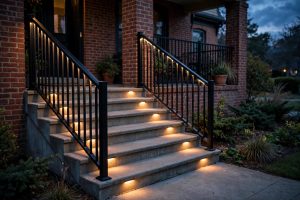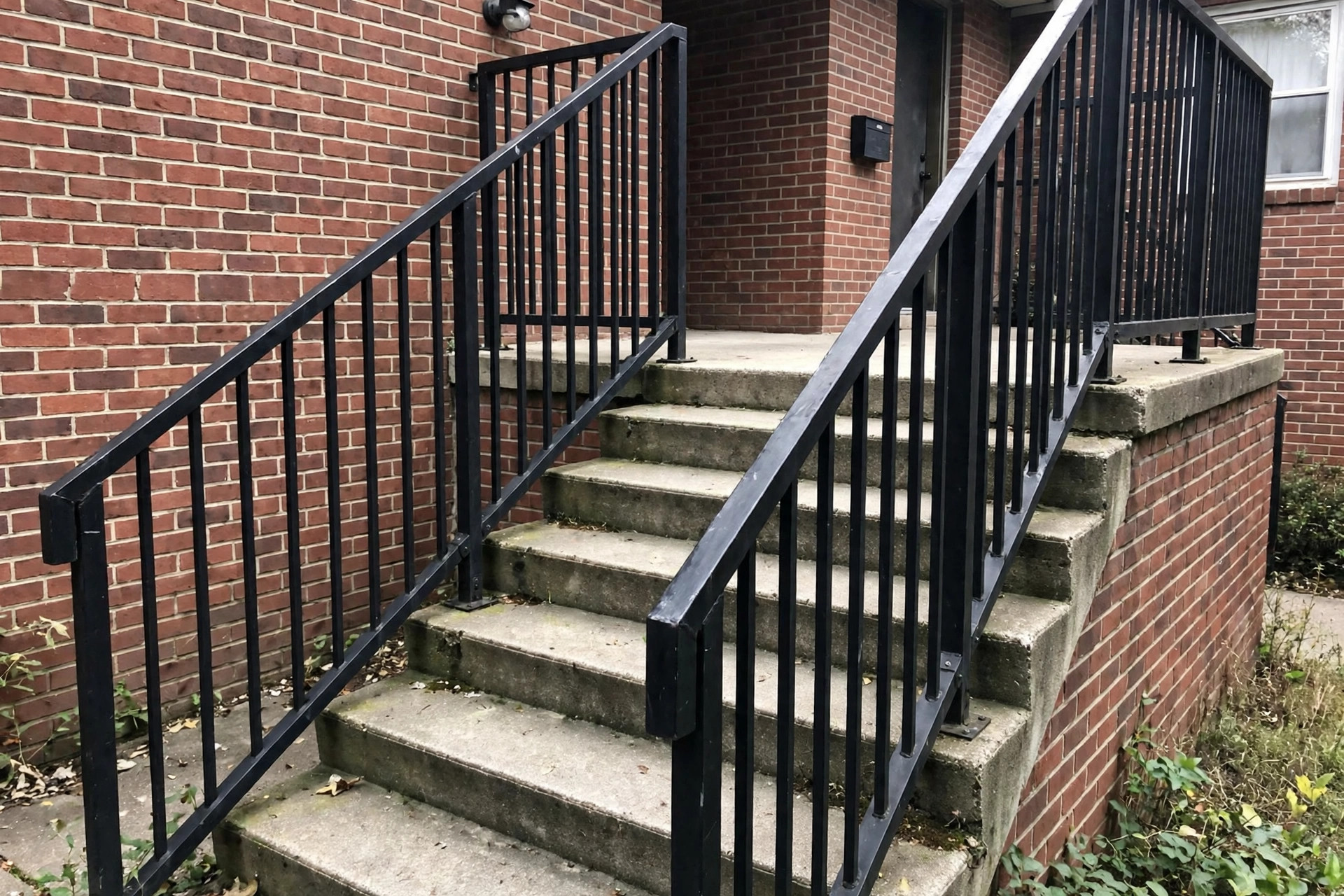

A stairway is the first thing a visitor meets at many small apartment buildings. When the railings are weak, rusted, or loose, the whole property looks tired. Worse, the steps become a danger for the people who use them every day. That is why owners and managers are now looking hard at durable exterior stair railings for small apartments. These railings must be strong enough to meet code, tough enough to survive weather, and neat enough to fit a small property that has little room for bulky parts.
Small apartment buildings face a special set of problems. The stairs sit outside all year. Tenants lean on the rails daily, sometimes with heavy bags in hand. Older residents need a firm grip. At the same time, the owner needs a fix that does not cost a fortune and does not take up half the walkway. This guide explains what matters, what to buy, what it costs, and how to keep it safe for years.
Why Sturdy Railings Matter on Small Apartment Stairs
Safety comes first. A fall on hard concrete or stone steps can cause broken bones and head injuries. A strong rail gives every person a solid handhold. Building codes across the country set the rules for this reason. They fix the height of the rail, the width of the gaps, and the force the rail must hold. An old wooden rail that wobbles in the hand fails these tests, and a failure can bring fines and legal trouble for the owner.
Looks matter too. Small apartment buildings live or die by first impressions. A clean, straight railing makes the entry look cared for. That helps keep good tenants and attract new ones. Many home improvement guides point out that the exterior is the face of the property, and a railing is one of its largest visible parts.
Weather is the third reason. Exterior stairs face storms, freeze and thaw, and hot summer sun. Cheap rails rot, rust, or warp. Then the owner pays twice: once for the cheap rail and once for the fix. Building products made for the outdoors hold up far better over time.
The special needs of small properties
Small apartment stairs are often narrow, so slim-profile rails that meet code yet leave room to pass are the best fit. Many come as kits sized for short runs, so there is little waste. Stairs at rentals also see heavy daily use, which wears rails faster than at a single-family home. A product rated for high traffic saves the owner from doing the job twice.
How to Choose the Right Railing: Durable Exterior Stair Railings for Small Apartments
Start with the code. Local building codes set the minimum rail height, usually 34 to 38 inches above the stair nosing. The gaps between balusters must be small enough that a four-inch ball cannot pass through. The rail must hold a set side load without bending. Call the city building office before you buy anything. A product that is legal in one town may fail in another.
Measure with care. Measure the total run of the stair, the rise, and the angle. Count the steps. Note where posts can sit on the tread or the stringer. For small apartment stairs, most jobs need only four to eight feet of rail per side. Bring these numbers to the store or the installer. Many home improvement retailers sell pre-cut kits in common lengths, and Lowe’s carries the same kits online for easy price comparison.
Check the grip. The handrail section is the part people hold. It should be smooth and rounded enough to grasp with one hand. Flat, wide tops look fine but give a poor grip. Code often sets a minimum and maximum size for the gripping part. Test a sample if you can.
Think about weight and fixing. Heavy steel rails need posts set in concrete or bolted deep into masonry. Lighter aluminum rails can mount to wood or steel with lag bolts. Know what your stair is made of before you choose.
Ask the seller for the load rating and the finish warranty, and check that the fasteners are rated for outdoor use. Galvanized or stainless hardware is a must near the coast or in wet climates. Ask if the product meets the current version of the local code. A short call saves a costly mistake.
Types of Railings for Small Apartment Stairs
Steel railings
Steel is the strongest common choice and resists dents. Plain steel rusts fast outdoors, so good products are galvanized, powder-coated, or both, lasting 15 to 20 years with care. The downside is weight: a crew of two is often needed to set them. Steel is also the priciest metal choice, though for short apartment stairs the total cost stays modest.
Aluminum railings
Aluminum is the most popular pick for apartment stairs today. It does not rust, and it weighs little, so one worker can carry a long section. Modern aluminum rails come in many colors, from plain black to wood-grain finishes. The metal is softer than steel and can dent if struck hard, but it needs almost no care beyond a wash now and then. Prices sit in the middle range.
Wrought iron style
True wrought iron is rare now, but the term still covers heavy ornamental metal rails. They suit older brick buildings and are very strong, but they are heavy, costly, and rust if the paint fails. The work often needs a welding shop.
Vinyl and PVC railings
Vinyl never rusts and never needs paint, and it costs less than metal. But it fades in strong sun and can crack in very cold weather. It also flexes more than metal. It suits mild climates and tight budgets, but not stairs that see heavy use.
Wood railings
Wood is cheap and easy to work, and pressure-treated wood holds up for a while. But even treated wood checks, splits, and grays with age, and it needs staining every few years. In a busy apartment stair, wood rails loosen at the joints. It is fine as a short-term fix, not as a long-term answer for a rental.
Composite railings
Composite mixes wood fiber with plastic. It looks like wood but needs less care. It resists rot and insects. Quality composite rails cost as much as aluminum. They work well for apartment stairs in damp climates. Many home and garden resources note that composite parts are a good fit for rental properties because tenants cannot damage them easily with water.
How the types compare
For pure strength, steel wins. For the best mix of strength, low upkeep, and price, aluminum wins for most small apartments. Vinyl and wood are budget choices with shorter lives. When in doubt, ask a contractor what he sees lasting in your neighborhood.
Cost and Price Guide
Price depends on material, length, and who does the work. For a small apartment stair, most jobs cover two short runs of rail, four to eight feet each. Material prices per linear foot run about as follows. Vinyl starts near twenty dollars. Wood runs about twenty-five to forty dollars. Aluminum runs forty to seventy dollars. Steel runs sixty to one hundred dollars or more. Wrought iron style work is often priced by the job and can top one hundred dollars per foot.
Labor adds a large share. A simple kit set on existing posts may cost only a few hundred dollars in labor. A full tear-out and new install on concrete steps can run from one thousand to three thousand dollars for a small stair. Always get three bids, with materials and labor on separate lines.
Remember the long view. A cheap rail that lasts seven years costs more per year than a strong rail that lasts twenty. For rental property, the owner also loses rent when stairs are torn up for repair. A ten-year finish warranty is worth real money on a rental.
Ways to keep the bill down
Order standard lengths instead of custom sizes. Choose a kit that mounts to the steps you already have. Schedule the work in fair weather so the crew moves fast. If the budget is tight, bundle the job with other exterior work. If you are also planning fence installation or repairs, contractors often cut the per-job price when they can do two tasks in one trip.
Care and Upkeep
Good railings need little care, but they need some. Wash the rails twice a year with mild soap and water. A garden hose and a soft brush are enough. This clears salt, dirt, and bird droppings before they eat the finish. In winter, keep de-icing salt off painted metal. Salt speeds rust. Shovel the steps rather than letting ice melt with chemicals when you can.
Check the fasteners every spring. Tighten any bolt that has worked loose. A loose rail is a dangerous rail, and the fix takes five minutes with a wrench. Look at the paint or powder coat. Touch up chips right away, because bare metal rusts fast. Small bottles of matching touch-up paint are cheap insurance.
Many DIY project guides show how to strip and repaint a metal rail in a weekend. For wood parts, stain or seal every two to three years. For aluminum, a yearly wash is usually enough. For steel, watch the joints and welds, since rust starts in corners. Tell tenants to report a wobbly rail right away, just as they would a broken lock.
Safety Rules and Code Basics
Codes exist to keep people safe, and they change over time. The basics are stable. Guardrails on open sides of stairs must be at least 34 inches high, measured from the nose of the step. The space between balusters must block a four-inch sphere. The handrail must be graspable, and it must run the full length of the stair, ending in a way that does not snag clothes. The whole rail must stand firm under the weight of a person who slips and grabs it.
In rental property, the owner carries the duty. If a tenant is hurt on a stair that broke code, the owner may pay for the injury. Insurance may also refuse to pay if the stair was not kept up to code. Keep records of the install date, the product used, and every repair. Photos help. A file of these papers can settle a dispute fast.
Some older buildings are grandfathered under old codes, but a replacement rail almost always must meet the current code. If the stair serves a rental unit, the city may check it at each new tenancy. Plan for that.
Making stairs safer for all tenants
Add non-slip treads on the steps. Keep the stair well lit, with a light at the top and the bottom. Trim plants that push through the rails. In winter, clear snow fast. These small steps cut falls more than any single product can. For more exterior upgrade ideas, see our notes on weather resistant composite decking and brick veneer siding.
Frequently Asked Questions
How long do exterior stair railings last?
It depends on the material. Aluminum can last 20 years or more with a simple wash. Powder-coated steel lasts 15 to 20 years if chips are touched up. Wood lasts five to ten years. Vinyl lasts ten to 15 years but fades.
What is the best material for a rental apartment stair?
Aluminum is the best all-round pick for most small apartments. It does not rust, it weighs little, it needs almost no care, and it meets code in standard sizes. Many home improvement experts rank it first for rental stairs. Steel is stronger but costs more to buy and set. Wood is cheap but wears out fast under tenant use.
Do I need a permit to replace stair railings?
Most cities require a permit when the rail is part of a rental building stair. Some allow a straight like-for-like swap without one. Call the building office and ask. The call is free, and it keeps you clear of a stop-work order. Bring the product cut sheet so the clerk can see the code marks.
Can I install the railing myself?
A handy owner can set a light aluminum kit on wood or steel posts. Heavy steel or wrought iron work needs two people and sometimes a welder. Concrete anchors need a hammer drill and the right bit. If the stair is the main exit for tenants, a pro install is worth it. A rail that fails under a falling person is no saving at all.
How much space will the railing take up on a narrow stair?
Slim-profile rails take about two to three inches off each side. On a 36-inch stair, that leaves about 30 inches of walking width, which still meets code. Wide ornate posts take more. Measure your stair first, then shop. Kits made for small stairs often use slim posts on purpose. Many siding and exterior brands and rail makers now list exact width loss in the specs.
How do I match the railing to the building style?
Black or dark bronze metal suits most brick and siding buildings. White vinyl or composite suits light siding. For a historic look, pick an ornamental pattern with simple lines. Keep the color the same on every stair at the building. One style for the whole property looks neat and cuts the cost of touch-up paint.
Final Word
Durable exterior stair railings for small apartments are not a luxury. They are a working part of the building, as vital as the roof or the lock on the door. They keep tenants safe, they please the eye, and they save the owner from repeat repair bills. Pick a strong material, check the code first, buy the right size for a small stair, and keep up with simple care. Do that, and the stairway will serve the building for many years with little trouble.
References
Bob Vila. (n.d.). Home improvement advice. https://www.bobvila.com CertainTeed. (n.d.). Building materials and exterior products. https://www.certainteed.com Family Handyman. (n.d.). DIY home repair and maintenance. https://www.familyhandyman.com James Hardie. (n.d.). Fiber cement siding and exterior products. https://www.jameshardie.com Lowe’s. (n.d.). Home improvement products. https://www.lowes.com The Home Depot. (n.d.). Home improvement products. https://www.homedepot.com The Spruce. (n.d.). Home and garden advice. https://www.thespruce.com This Old House. (n.d.). Home renovation guidance. https://www.thisoldhouse.com
Was this guide helpful?

About Emily Rodriguez
The My Garden US editorial team writes practical, in-depth home and garden guides for American homeowners — tested advice, no fluff.
You May Also Like

Budget Friendly Seamless Gutter Guards With Free Shipping
April 24, 2026 0 views
Top Rated Retaining Wall Builders Reviews: A Homeowner Guide
March 6, 2026 0 views
Energy Efficient Concrete Driveway Resurfacing for Homeowners
August 14, 2026 0 views