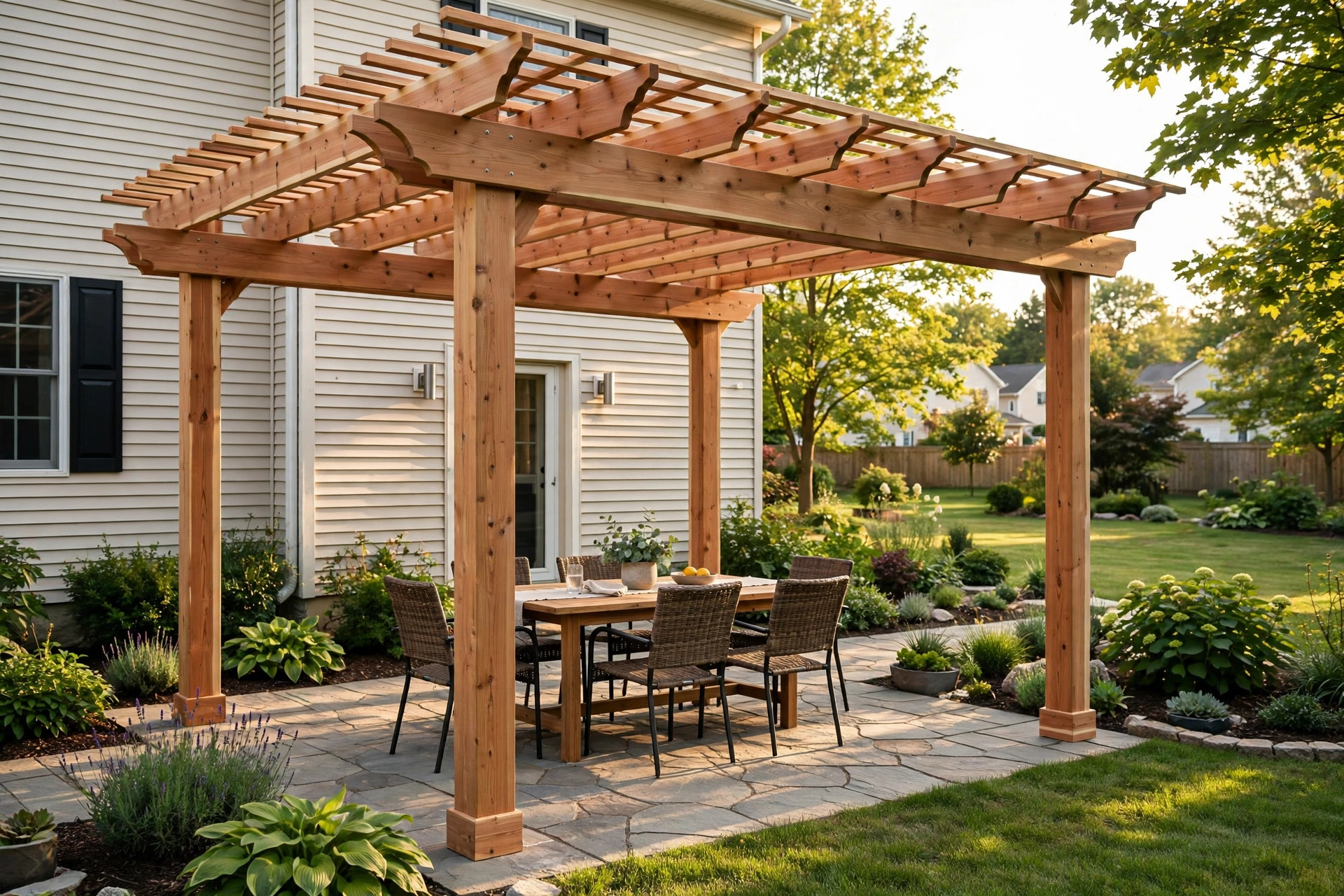

A patio without shade can feel empty on a hot summer day. Many homeowners dream of a pergola but fear the cost. The good news is that budget friendly pergola installation kits with free shipping have made this project far more affordable. These kits arrive at your door with cut lumber or metal parts, hardware, and step-by-step plans. When the shipping is free, the total price stays close to the sticker price, which makes budgeting simple.
A pergola is an open-frame structure with posts and beams that creates partial shade. It can stand over a deck, a patio, or a garden path. It does not have a solid roof, but it gives a room-like feel to outdoor space. Plants can grow up the posts. String lights can hang from the beams. For a modest investment, a homeowner can turn a plain yard into a place where the family wants to gather.
This guide explains why these kits are worth the money, what to look for before you buy, the main types on the market, what they cost, how to care for them, and how to install them safely. By the end, you will know how to choose budget friendly pergola installation kits with free shipping that fit your yard and your budget.
Why a Pergola Kit Is Worth the Money
A custom-built pergola from a contractor can cost several thousand dollars. A kit costs far less because the parts are cut in a factory and sold in volume. The design work is already done. The instructions are written for the average homeowner, not a master carpenter. That keeps labor out of the picture if you are willing to do the work yourself.
Free shipping matters more than it may seem. Pergola parts are long and heavy. Freight charges on a single order can run into the hundreds of dollars. When a seller offers budget friendly pergola installation kits with free shipping, that charge disappears. The price you see is the price you pay. That makes it easier to compare offers and stay within a budget.
A pergola also adds value to a home. Real estate writers have long noted that a finished outdoor living space appeals to buyers. A neat, sturdy pergola over a patio suggests a home that has been cared for. It costs less than an addition or a full deck rebuild, yet it changes how the yard looks and feels.
Finally, a pergola extends the use of the yard. With partial shade, a patio stays cooler at midday. With a canvas shade sail or a few climbing vines, it can stay usable even on bright afternoons. Families eat dinner outside more often. Neighbors stop by. The yard becomes a living space rather than a view.
What to Look for in a Pergola Kit: Budget Friendly Pergola Installation Kits with Free Shipping
Not all kits are equal. A low price is attractive, but the details decide whether the kit will last. Here are the points that matter most.
Materials
Most budget kits are made from one of three materials. Cedar is the classic choice. It smells pleasant, resists rot and insects, and takes stain well. It costs more than pine but less than exotic hardwoods. Pressure-treated pine is the least expensive option. The treatment protects it from rot and termites, but it can twist or crack as it dries, so check the boards when they arrive. Vinyl and aluminum kits cost more up front but need almost no maintenance and will not rot or rust. For a budget buyer, pressure-treated pine or cedar usually gives the best balance of price and life.
Ask what grade the lumber is. Number one or number two grade boards have fewer knots and straighter grain. Some very cheap kits use lower grades to cut costs. Also ask whether the wood is pre-cut, pre-drilled, and pre-sanded. Pre-drilled holes save hours of work and reduce mistakes.
Size and Fit
Measure your space before you shop. Common kit sizes run from eight feet square to twelve by sixteen feet. Leave at least two feet of clearance around the posts for walking and for furniture. Check the height as well. Most kits stand eight to ten feet tall. A taller pergola feels more open but needs deeper footings in windy areas.
Think about what will sit under the structure. A dining table needs more room than two lounge chairs. If you plan to add a hot tub or an outdoor kitchen later, size the pergola for that future use. Moving posts after the concrete has set is not a job anyone enjoys.
Hardware and Plans
Good hardware is the backbone of a safe pergola. Look for hot-dipped galvanized or stainless steel brackets, bolts, and screws. Plain steel will rust within a season or two. The kit should include all anchors and fasteners, with spares for the small pieces. Count the parts against the packing list on delivery day.
Clear instructions matter just as much. The best kits include printed plans with large diagrams, a numbered parts list, and a realistic estimate of how many people and hours the job takes. Video guides from the manufacturer are a helpful bonus. If the reviews mention missing pages or confusing drawings, take that as a warning.
Types of Pergola Installation Kits
Kits come in several styles. Each has its own look and its own cost.
Freestanding pergolas stand on four or more posts and can sit anywhere in the yard. They are the most common kit type. They suit patios, decks, and garden corners.
Attached pergolas connect to the house on one side. They need fewer posts and less lumber, so they often cost less. They must be fastened to the wall with proper ledger hardware. This type is a good fit over a back door patio.
Arched or curved pergolas have bent top beams that give a softer look. They cost a little more and can be harder to assemble, but they suit cottage and garden settings.
Metal pergolas use powder-coated steel or aluminum. They arrive in smaller boxes, which is one reason sellers can offer free shipping on them. They assemble with bolts and need no staining. They suit modern homes.
Retractable canopy kits include a fabric shade that slides open and closed. The frame is usually wood or metal, and the canvas top adds real rain and sun protection. The fabric will need replacement every few years, so factor that into the long-term cost.
When you compare options, a pergola installation kits price comparison usa page can help you see how these types differ in price. Reading a pergola installation kits reviews and buying guide will also show what other buyers liked and what they would change.
Cost and Price Guide
Prices for budget friendly pergola installation kits with free shipping vary by size and material. A small pressure-treated pine kit, eight by eight feet, often sells for between three hundred and six hundred dollars. A mid-size cedar kit, ten by twelve feet, usually runs from eight hundred to fifteen hundred dollars. Large cedar or redwood kits, twelve by sixteen feet or bigger, can reach two thousand dollars or more. Metal kits fall in the middle of these ranges.
Free shipping changes the math in your favor. A kit that ships free saves you the freight fee, which on a long lumber package can be one hundred fifty to three hundred dollars. Watch for sellers who raise the kit price to cover the shipping. Compare the final delivered price across sellers rather than the headline price alone.
Budget for extras beyond the kit itself. Concrete for the post footings, gravel, and a few bags of quick-set mix can add fifty to one hundred dollars. Stain or sealer for a wood kit adds another forty to eighty dollars. Tools you may need include a post-hole digger, a level, a drill, and a ladder. If you must buy tools, that can add one hundred dollars or more, though borrowed tools cost nothing.
Many homeowners finish the job in one or two weekends. Two adults can handle most kits. Larger kits may need three people to lift the beams into place. If you hire help for a day, expect to pay a few hundred dollars, which is still far less than a full contractor build.
Care and Upkeep
A pergola needs only modest care to last for years. Wood kits should be sealed or stained within a few weeks of assembly. The sun and rain will gray untreated wood quickly. Reapply sealer every two to three years, or sooner if water stops beading on the surface.
Inspect the structure each spring. Tighten any bolts that have worked loose. Look for cracked boards, soft spots that suggest rot, and insect damage. Replace a damaged board before it weakens the frame. Keep soil and mulch pulled back from the base of the posts so moisture does not sit against the wood.
Vinyl and metal kits need less work. Wash them once a year with soap and water. Check the fasteners the same way you would on a wood kit. If a powder-coated metal part chips, touch it up with matching paint to stop rust.
Plants add beauty but need control. Vines can grow heavy and pull on beams. Trim them each year and keep them off any fabric canopy. Falling leaves should be cleared from the top beams so they do not trap moisture.
Lighting extends the use of a pergola into the evening. Many owners hang string lights or mount lanterns on the posts. If you shop for low maintenance outdoor wall lanterns for sale, choose fixtures rated for outdoor use and keep wiring away from climbing plants.
Safety
A pergola is a structure, and structures must be built to stand. Safety starts with the footings. Posts should sit in concrete footings that reach below the frost line in cold climates. A footing that is too shallow can heave in winter and tilt the whole frame. In windy regions, use post anchors rated for uplift and consider a kit with an engineering stamp.
Follow the plans exactly. Do not skip braces or substitute weaker fasteners. The diagonal braces on a pergola are not decoration; they keep the frame from racking in the wind. If a part arrives damaged, call the seller for a replacement rather than building around it.
Call 811 or your local utility marking service before you dig any post hole. Buried gas, electric, and water lines are a real danger. The service is free in most states, and it takes only a few days.
Check local rules before you build. Many towns require a permit for structures over a certain size, and some have setback rules that keep structures a set distance from property lines. Homeowner associations may have design rules as well. A quick call to the building office can save a costly teardown later.
Work safely during assembly. Wear gloves when handling lumber and safety glasses when drilling. Keep children and pets away from the work area. Do not stand on the frame until every bolt is tight. Government safety resources such as the U.S. Consumer Product Safety Commission offer general guidance on outdoor product safety that every do-it-yourselfer should review.
Frequently Asked Questions
How long does it take to install a pergola kit? Most homeowners finish in one to two weekends. A small metal kit can go up in a single day with two people. A large wood kit with concrete footings takes longer because the concrete must cure before the posts carry weight.
Do I need a permit to build a pergola? It depends on where you live. Many towns require a permit for structures above a certain size or height. Some exempt small freestanding structures. Check with your local building office before you order the kit.
Can one person install a pergola kit alone? It is not wise. The beams are long and heavy, and lifting them alone risks injury and a crooked frame. Most kits call for two adults, and large kits need three. Ask a friend or neighbor for a day of help.
Will a pergola survive a storm? A properly anchored pergola handles normal storms well. Deep concrete footings, strong brackets, and tight bolts are the keys. In hurricane or tornado zones, look for kits rated for high wind and follow the anchoring details to the letter. Take down fabric canopies before major storms.
How long will a budget pergola last? A pressure-treated pine pergola can last ten to fifteen years with regular sealing. Cedar often lasts fifteen to twenty years. Vinyl and aluminum kits can last twenty years or more with little care. Good footings and dry post bases add years to any of them.
Is free shipping really free on such a heavy item? Yes, when the seller states it plainly. The seller builds the freight cost into the business model, often by shipping from regional warehouses. Read the terms to confirm that the whole kit, not just small parts, ships free, and check whether remote or rural addresses carry a surcharge.
A Final Word
A pergola is one of the most rewarding projects a homeowner can take on. It costs less than most home improvements, it goes up in a weekend or two, and it changes daily life in the yard. Budget friendly pergola installation kits with free shipping remove the two biggest barriers: high cost and heavy freight charges. Measure your space, choose a sound material, compare delivered prices, and build exactly to the plans. Do that, and you will have a shaded retreat that serves your family for many years.
For planning help, the project guides at This Old House walk through deck and patio structures step by step, while Family Handyman offers clear diagrams for post footings and framing. Design ideas and material comparisons appear regularly on Bob Vila and The Spruce. Retailers such as Home Depot and Lowe’s list many kits with buyer reviews, and siding makers like James Hardie and CertainTeed show how exterior products can match a home’s existing style.
References
Bob Vila. (n.d.). Home improvement advice. https://www.bobvila.com CertainTeed. (n.d.). Building materials and exterior products. https://www.certainteed.com Family Handyman. (n.d.). DIY home repair and maintenance. https://www.familyhandyman.com James Hardie. (n.d.). Fiber cement siding and exterior products. https://www.jameshardie.com Lowe’s. (n.d.). Home improvement products. https://www.lowes.com The Home Depot. (n.d.). Home improvement products. https://www.homedepot.com The Spruce. (n.d.). Home and garden advice. https://www.thespruce.com This Old House. (n.d.). Home renovation guidance. https://www.thisoldhouse.com U.S. Consumer Product Safety Commission. (n.d.). Product safety information. https://www.cpsc.gov
Was this guide helpful?

About James Carter
The My Garden US editorial team writes practical, in-depth home and garden guides for American homeowners — tested advice, no fluff.
You May Also Like
Asphalt Driveway Sealing Cost Guide USA: What You Will Pay and How to Save
February 8, 2026 0 views
Best Fence Installation Contractors Near Me: How to Hire the Right Crew
January 14, 2026 0 views
Top Rated Insulated Garage Doors for California Apartments
February 3, 2026 0 views