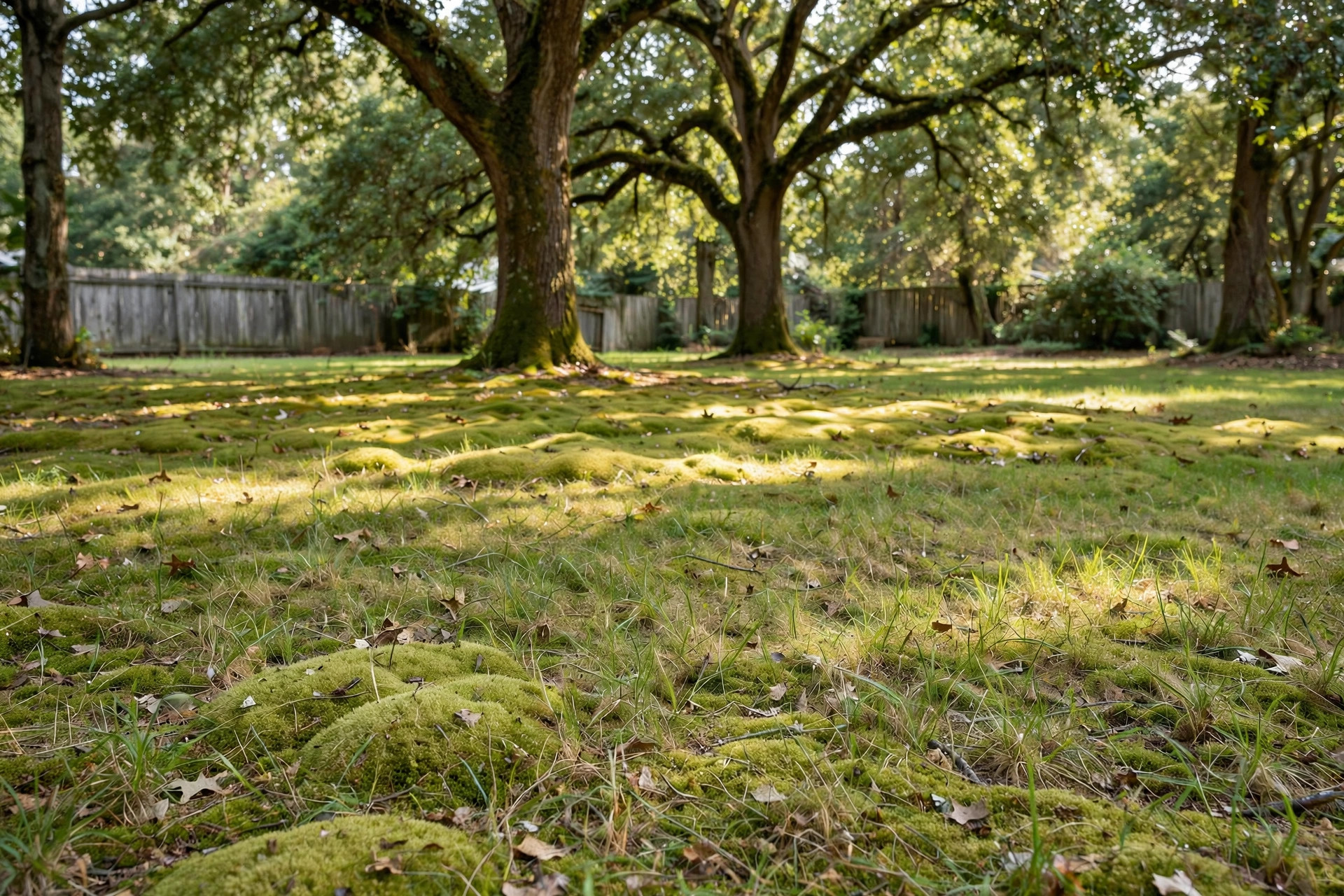
Moss is a common enemy of the shaded yard. It creeps in under big trees and along the north side of the house. It fills the bare spots where grass gives up. If you want green ground in these dim corners, you need a plan. The best moss killer for shaded lawns does not just kill the moss. It also helps you fix the reasons the moss came in the first place. This guide explains how moss killers work, which kinds fit a shaded lawn, and how to use them with care. It also covers cost, safety, and simple steps to keep moss from coming back.
Why Moss Loves the Shade
Moss is not a weed in the usual sense. It is a small, simple plant. It has no roots. It drinks water through its leaves. It does not need much light to live. Grass, on the other hand, is hungry for sun. Most lawn grasses grow thin and weak in deep shade. When grass grows weak, moss takes its place.
Shade is not the only cause. Moss also likes wet ground, low soil acid balance, and hard packed soil. A shaded lawn often has all three. Water sits longer in the shade because the sun cannot dry it. The soil turns sour because dead leaves fall and rot. Foot traffic packs the soil down. All of this makes life easy for moss and hard for grass.
To beat moss for good, you must treat the moss and fix these causes. A moss killer takes care of the first part. Good lawn habits take care of the rest.
How Moss Killers Work: Best Moss Killer for Shaded Lawns
A moss killer harms the soft body of the moss plant. It burns or dries the small leaves. The moss turns black or brown within a few days. It then dies and can be raked away. The treatment does not kill grass the way a weed killer does. Most products are safe for lawn grass when used as the label says.
Iron-Based Moss Killers
Many lawn moss killers use iron, often in the form of ferrous sulfate. Iron is rough on moss but mild on grass. In fact, grass likes small amounts of iron. That is why many of these products are sold as moss killer plus lawn food.
Iron products work well in shaded lawns. They come in granular form for spreaders and in liquid form for sprayers. The liquid form acts fast. The granular form lasts longer. Both need the moss to be wet or damp for best effect. Rain or dew helps the iron stick to the moss.
One warning: iron can stain. It leaves rust marks on concrete, stone, fences, and light colored siding. Rinse walks and driveways right after you spread it. Keep the product off patios and porches.
Soap-Based Moss Killers
Soap based products use fatty acids from plants. These are the same kinds of acids found in soap. They dry out the moss on contact. They work fast, often within hours. They are gentle on grass and break down quickly in the soil.
These products suit small patches of moss. They are a good pick for shaded spots near gardens and flower beds. They cost more per square foot than iron products. For a large shaded lawn, the price adds up fast.
Zinc and Copper Products
Some moss killers use zinc sulfate or copper sulfate. These metals are hard on moss. They are less common for lawns than iron products. They can build up in the soil if used too often. High metal levels can harm soil life. Most home owners do better with iron or soap based choices for a shaded lawn.
What to Look for When You Buy
The best moss killer for shaded lawns matches your yard and your habits. Read the label before you buy. Look for these points.
First, check that the label lists moss on lawns. Some products are made for roofs and walks only. Roof products may be too strong for grass.
Second, look at the size of the bag or bottle. Labels state how many square feet one pack treats. Measure your shaded area. A lawn that is 2,000 square feet needs a product that treats at least 2,000 square feet. Buying too little is a common waste of money.
Third, note the form. Granules spread with a rotary or drop spreader. Liquids spray with a hose end sprayer or a pump sprayer. Pick the form you already own the tools for. If you have a spreader, granules are simple. If you like to spot treat, a spray bottle works.
Fourth, look for lawn food in the mix. A moss killer with iron and slow release nitrogen feeds thin shaded grass while it kills moss. For more on feeding after treatment, see how overseeding your lawn in the fall helps thicken weak shaded turf.
Fifth, check the wait time for pets and children. Some products are safe once dry. Others need a full day before use. Pick a product that fits your family life.
Last, look at honest reviews. Sources like Consumer Reports test lawn products and rate them for value. A short read can save you from a weak product.
Types and Options for Shaded Lawns
Granular Moss Killer
Granular products look like small brown or gray pellets. You load them in a spreader and walk the lawn. They are the best pick for large shaded areas. They spread even and last for weeks. Most need watering in after you spread them, unless rain is on the way. They cost less per square foot than liquids.
Liquid Concentrate
Liquid concentrates mix with water in a hose end sprayer. You spray the whole shaded area. They act fast, often in one day. They are the best pick for heavy moss that needs a quick knock down. They cost more per square foot. They also need calm weather, so the spray does not drift onto flower beds.
Ready to Spray Bottles
These bottles hook right to the garden hose. There is no mixing. They suit small lawns and spot jobs. For a few moss patches under one tree, they are easy and fine.
Natural and Pet Safe Choices
Some brands sell moss killers as pet safe. These often use iron or soap. No product is fully safe while wet. Always keep pets off the lawn until the treatment dries. After that, most iron and soap products are fine. If your dog eats grass, pick a soap based product and rake up dead moss before you let the dog out.
How to Apply Moss Killer, Step by Step
Good timing matters more than brand. Follow these steps for the best result.
1. Pick a damp, cloudy day in spring or fall. Moss grows fast in cool wet weather. Hot summer sun weakens these products. 2. Mow the lawn a bit short, about two inches. This lets the product reach the moss under the grass blades. 3. Water the moss if it is dry. Damp moss takes up iron and soap much better than dry moss. 4. Spread or spray as the label directs. Walk in even lines. Overlap each pass a little so you miss no spots. 5. Keep the lawn damp for a day or two after treatment if the label asks for it. Some iron products need watering in. 6. Wait seven to ten days. The moss will turn black or dark brown. This means it is dead. 7. Rake out the dead moss with a stiff rake or a dethatcher. This step is key. Dead moss left in place blocks new grass. For large lawns, renting a lawn dethatcher makes this job far faster. 8. Fix the bare spots. Spread shade tolerant grass seed, cover lightly with soil, and water daily until it sprouts.
Do not apply moss killer and grass seed on the same day. Wait at least two weeks after treatment before you seed. Iron leftovers can burn young seedlings.
Cost and Price
Moss killers for lawns are not costly. A bag of granular iron based product that treats 5,000 square feet often sells for 15 to 30 dollars. Liquid concentrates that treat the same area sell for 20 to 40 dollars. Ready to spray bottles cost 10 to 15 dollars but treat only 1,000 to 2,000 square feet.
A shaded lawn of 2,000 square feet may need 10 to 25 dollars of product per treatment. Most lawns need one treatment in spring and one in fall until the moss is gone. Once the shade problems are fixed, one yearly treatment is often enough.
Think of the moss killer as part of a larger plan. Grass seed, lime, and soil food add to the cost. A full season of shade lawn repair often runs 60 to 120 dollars for a small yard. That is still far less than the cost of new sod.
Care and Upkeep After Treatment
Killing moss is only half the job. If you change nothing, the moss will come back. Shaded lawns need steady care.
Test your soil. Moss likes sour soil. A simple soil test shows the acid level. If the soil is sour, lime sweetens it. Read a guide on how to apply lime to a lawn before you spread. Lime works slowly, so give it a season.
Loosen hard soil. Air gets packed out of shaded lawns by foot traffic and rain. A core aerator pulls small plugs from the soil. This lets air, water, and food reach the grass roots. Aerate in the fall for the best result.
Prune low branches. More light reaches the ground if you lift the lower limbs of trees. You do not need to cut the tree down. Raising the canopy by six to eight feet can change a dark spot into a bright spot. Grass can then grow thick enough to crowd out moss.
Mow high and mow often. Keep shade grass at three to three and a half inches. Tall grass shades its own roots and holds water in the soil. Sharp blades matter too. Dull blades tear grass and open it to disease. Brands like Toro and Briggs & Stratton sell mowers and sharp replacement blades made for steady home use.
Water deep and rare. Shaded lawns need less water than sunny lawns. Water once a week, about one inch, and let the soil dry between. Daily light watering keeps the surface wet and feeds moss.
Feed in the fall. A fall feeding builds strong roots for spring. Use a slow release lawn food. Shade grass needs less nitrogen than sun grass, so use the low rate on the bag.
Safety for Children, Pets, and Plants
Moss killers are safer than most weed killers, but they still need care. Keep children and pets off the lawn until the product dries or until the label says it is safe. Store the bag or bottle in a locked shed or high shelf. Never mix more than you need.
Iron products can harm nearby plants if spray drifts. Cover flower beds with a sheet before you spray on a windy day. Rinse any iron off stone and concrete within minutes to stop rust stains.
Soap based products can burn soft plants if sprayed in hot sun. Apply them in the cool of the morning or evening. They are gentle on bees once dry.
Read the whole label, not just the front. The label is the law. It tells you the right rate, the right weather, and the right wait time. When in doubt, use less product, not more.
Frequently Asked Questions
How long does it take for moss killer to work on a shaded lawn? Most iron based products show results in five to ten days. The moss turns black, then brown. Soap based sprays can brown moss within hours. Full death takes about a week either way. Heavy moss may need a second treatment after three weeks.
Will moss killer hurt my grass? When used at the label rate, iron and soap moss killers are safe for common lawn grasses. Too much product or spraying in hot sun can burn grass tips. Measure your lawn and mix with care. Do not guess the rate.
Can I apply moss killer in the shade? Yes. Moss killers work fine in shade. In fact, shade is where they are needed most. Apply on a cloudy, damp day. Avoid very hot days. Heat dries the product too fast and can burn the grass.
Should I rake moss before or after treatment? Treat first, then rake. Live moss is hard to rake out. Dead moss pulls up easy. Wait seven to ten days after treatment, then rake with a stiff garden rake or a power dethatcher.
What grass grows best in deep shade? Fine fescue blends are the best pick for deep shade in cool regions. They need less sun than bluegrass or ryegrass. In warm regions, St. Augustine grass handles shade better than most warm season grasses. Match the seed to your region and your sun level.
How do I stop moss from coming back? Fix the causes. Sweeten sour soil with lime. Loosen packed soil with aeration. Prune low tree limbs for more light. Mow tall and water deep but rare. Overseed thin spots each fall. Moss cannot take hold where grass grows thick.
A Short Final Word
The best moss killer for shaded lawns is the one you use at the right time, at the right rate, and as part of a wider plan. Iron based granules suit large lawns. Soap sprays suit small patches and garden edges. Both work. What matters most is what comes after: rake out the dead moss, sweeten the soil, let in more light, and sow shade strong seed. Do this for two seasons. Your dim corners will turn green with grass, not moss.
References
Briggs & Stratton. (n.d.). Outdoor power equipment and lawn care. https://www.briggsandstratton.com Consumer Reports. (n.d.). Product reviews and buying guides. https://www.consumerreports.org The Toro Company. (n.d.). Lawn mowers and yard equipment. https://www.toro.com
Was this guide helpful?

About James Carter
The My Garden US editorial team writes practical, in-depth home and garden guides for American homeowners — tested advice, no fluff.