
Why Your Lawn May Need Help
Every lawn has thin spots. Grass wears down where children play. It thins out under tree shade. It weakens after a hot summer. A yard that once looked full can start to look patchy and tired.
Overseeding is the answer. It means spreading new grass seed over an old lawn. The new seed fills bare patches and adds young, strong grass plants.
Most homeowners spread seed by hand. Seed that sits on the surface often dies. Wind blows it away. Birds eat it. Hot sun dries it out. Only a small share of surface seed ever grows.
That is why finding the best overseeding machine rental near me makes such a difference. An overseeding machine does more than scatter seed. It cuts thin slices into the soil. It drops seed straight into those slices. The seed stays covered. It stays moist. Far more of it grows. Rental yards across the country carry these machines, so a good result does not require buying one.
What an Overseeding Machine Does: Best Overseeding Machine Rental near Me
An overseeding machine goes by several names. The most common is a slit seeder. Some rental counters call it an overseeder. A few call it a renovation seeder. All of them work the same way.
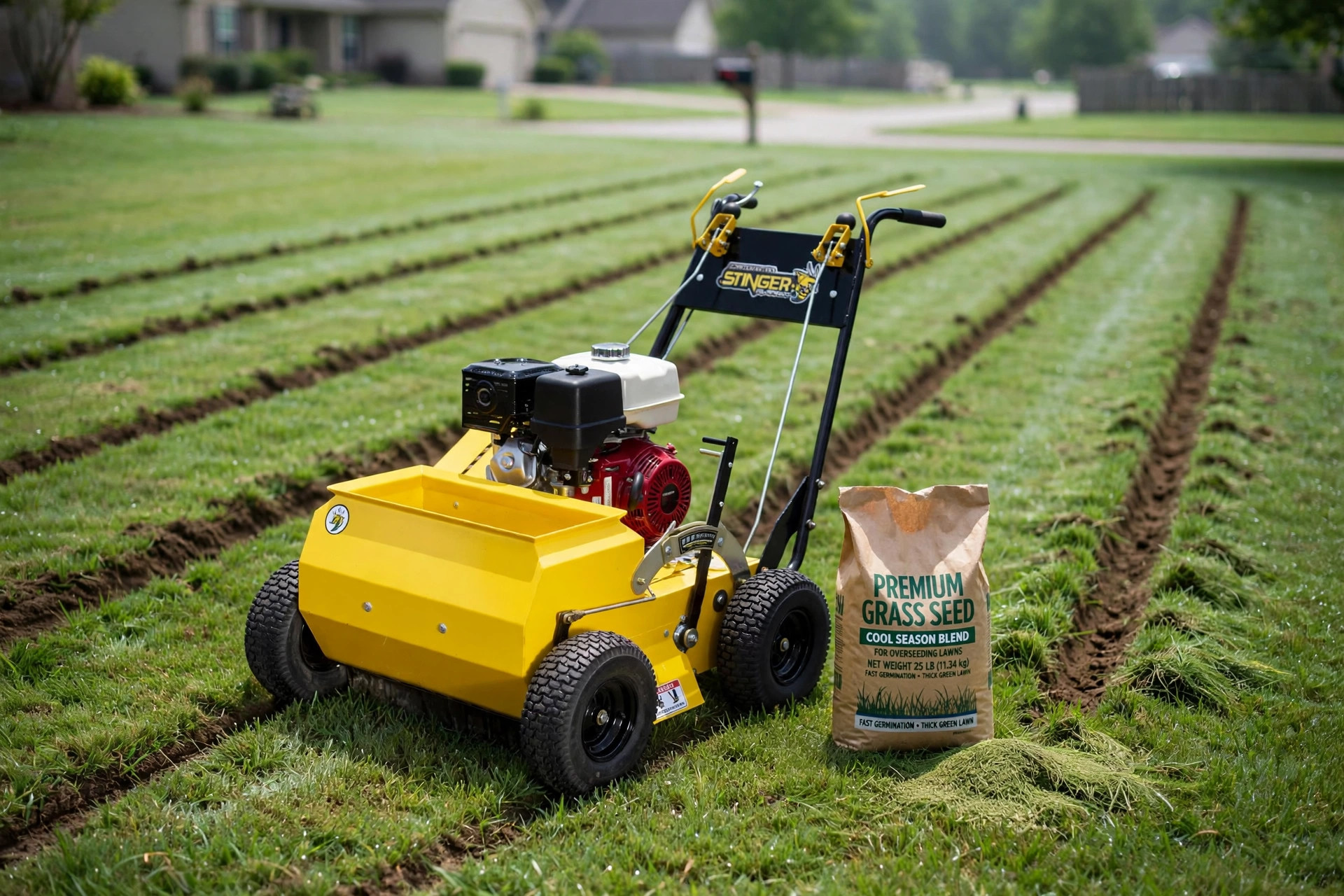
The machine has two parts. The front part holds rows of sharp steel blades. These blades spin and cut shallow lines in the turf, about a quarter inch deep. Behind the blades sits a seed box. The box meters seed through a drop tube into each fresh cut.
Some machines add a third part: a rear roller or drag chain. This presses the seed into the cut and closes the soil around it. The result looks like thin green rows within a day or two of watering.
The walk-behind slit seeder is the type most rental yards stock. It looks like a heavy push mower. The engine drives the blades and the wheels. You walk behind it and guide it in straight lines. A full-size walk-behind machine can cover about half an acre in a day. That is enough for most suburban lawns.
Larger self-propelled models exist for big yards and sports fields. For the average homeowner, the walk-behind model is the right choice. It fits through a standard gate. It fits in the back of a pickup truck.
Why Rent Instead of Buy
A new slit seeder costs two thousand dollars or more. A good one can cost far more. Most homeowners use it once a year, or once every few years. That makes purchase a poor bargain.
Renting costs far less. Most rental yards charge between sixty and one hundred and fifty dollars per day. Some charge a half-day rate that runs lower. You return the machine when the job is done. You do not store it. You do not repair it.
There is another benefit. Rental machines get regular service. The blades are kept sharp. A dull blade tears grass instead of cutting it. Rental shops maintain their stock because broken machines cost them money.
How to Choose the Best Rental Near You
Start with location. Search for the best overseeding machine rental near me online, but do not stop at the search results. Call two or three rental yards. Ask what they carry. Ask the daily rate. Ask if they rent by the half day. Ask about the deposit. Some shops place a hold on your credit card. Others ask for cash.
Ask the age and condition of the machine. Ask when the blades were last changed. Sharp blades cut clean slices. Dull blades tear the turf and leave ragged lines.
Ask about weight and size. A full walk-behind slit seeder can weigh over two hundred pounds. Make sure it will fit your vehicle. A pickup truck bed works well.
Ask about instructions. Good rental yards give a short lesson. They show how to set the seed depth and fill the seed box. Take notes if you have never used one.
Ask what seed they sell. Many rental yards sell grass seed at the counter. Their staff know which seed suits your area.
Finally, check reviews. Other homeowners leave notes about which shops keep good stock. A shop that rents a lot of lawn equipment tends to keep it in better shape.
Rental Costs and Pricing
Prices vary by region and season. The numbers below are typical for most of the United States.
A half-day rental often runs forty to eighty dollars. A full-day rental runs sixty to one hundred and fifty dollars. A weekend rate may run one hundred and twenty to two hundred dollars. A full week, if you have a very large lawn, may run two hundred and fifty to four hundred dollars.
Deposits are extra. Many shops place a hold of two hundred to five hundred dollars on a card. The hold drops off when the machine comes back undamaged. Some shops ask for a valid driver license and proof of insurance for the tow vehicle.
There are ways to save money. Fall is the peak season, and demand runs high. Book midweek if your schedule allows. Weekends book up fast in September and October. Some shops give a small discount for a multi-day rental. Ask.
Remember the cost of seed. You will need to buy seed separately. A fifty-pound bag of good grass seed costs thirty to sixty dollars. Most lawns of half an acre need twenty to forty pounds. Ask the shop how much seed the machine holds so you can plan refills.
What to Look For in the Machine
Not every slit seeder is built the same. Check a few details before you sign the rental form.
Blade spacing matters. Most machines cut rows about one and a half to two inches apart. Closer spacing gives a thicker result. Wider spacing works for rough repair work.
Depth control matters. The machine should let you set blade depth easily. A quarter inch is right for most lawns. Too deep and you tear up the old grass. Too shallow and the seed sits on the surface again.
The seed box should feed evenly. Turn the drive by hand and watch the seed fall. It should drop in a steady stream, not in clumps.
The engine should start easy. Pull the cord and listen. Ask the shop to start it in front of you.
Check the handles and controls. They should move freely. The machine is heavy, and you will push it for hours.
When to Overseed Your Lawn
Timing matters as much as the machine. For cool-season grasses, early fall is best. The soil is still warm. The air is cool. Weeds grow slowly. New seed gets a long season to root before winter. Late August through September works in most of the country. If you want local timing advice, read our guide to the best time to aerate lawn in midwest states, since aeration and overseeding often happen in the same season.
For warm-season grasses, late spring is best. Late April through June works in the South.
Do not overseed in deep summer. Heat kills young grass. Do not overseed right before winter. Frost kills new sprouts.
Watch the weather. Pick a stretch with mild days and no hard rain. Heavy rain washes seed out of the cuts. Light rain and soft watering help it grow.
How to Use the Machine: Step by Step
Prepare the lawn first. Mow it to about one and a half inches. Bag the clippings. Clear sticks and stones. Flag sprinkler heads so you do not hit them.
Set the depth. A quarter inch suits most lawns. If your soil is very hard, go a little deeper. If your soil is soft and sandy, stay shallow.
Fill the seed box. Use fresh seed from a sealed bag. Old seed from last year may grow poorly. Set the seed rate on the dial. The bag label gives a rate for overseeding, usually lower than the rate for new lawns. Follow it. More seed is not always better. Too much seed makes crowded, weak grass.
Work in straight lines. Start at one edge of the yard. Walk at a steady pace. Overlap each pass by about an inch so no strip gets missed. Empty the seed box and refill as needed.
After seeding, water lightly. The soil should stay moist, not soaked. Water once or twice a day in the first two weeks. New grass needs steady moisture to root.
Keep foot traffic off the new seed. Children and dogs should use another part of the yard for a few weeks. Their feet crush young sprouts.
Care and Upkeep After Overseeding
The new grass needs help for about a month. Water is the main job. Short, gentle watering twice a day works best. As the grass grows, water less often but deeper. This trains the roots to grow down.
Wait to fertilize. Give the new grass two to three weeks before feeding it. A starter fertilizer made for new grass works well. Do not use weed killer on new grass. Wait until the new grass has been mowed three or four times before using any weed product.
Mow high. Set your mower to three inches or more. Taller grass shades the soil. It keeps moisture in. It crowds out weeds. It also makes the lawn look fuller while the new grass fills in.
Be patient. Full results take six to eight weeks. The lawn may look thin and rough in the first weeks. That is normal.
Safety Notes
A slit seeder has spinning steel blades and a small engine. Treat it with care.
Wear boots, not sandals. Wear work gloves. Wear eye protection. Small stones can fly from the blades. Keep children and pets away from the work area.
Never lift the machine while the blades turn. Never reach under it. If seed clumps in the drop tube, stop the engine before you clear it.
Check the fuel outdoors. Let the engine cool before refueling. A hot engine can ignite spilled fuel.
If the machine strikes a rock or a root, stop at once. Check the blades for damage. A bent blade vibrates and cuts poorly. Tell the rental shop about any damage when you return the machine. Honest reporting keeps your deposit safe.
Store the machine upright during your rental. Do not tip it on its side. Oil can leak into places it should not go.
Related Work Worth Doing at the Same Time
Overseeding pairs well with other lawn work. If your yard has bumpy ground, consider renting a roller too. Read our notes on the best lawn roller for leveling uneven ground before you decide. Rolling after seeding presses the seed into the soil and smooths small bumps.
Dethatching pairs well too. Thatch is the layer of dead stems between the grass and the soil. A thick thatch layer blocks seed from reaching the soil. If your lawn has more than half an inch of thatch, dethatch first, then overseed. See our notes on lawn dethatcher rental prices near me to budget the second machine.
Aeration is another good partner. Aerating pulls small plugs of soil from the lawn. The holes let air, water, and seed reach the roots. Many homeowners aerate and overseed on the same weekend. The two jobs together give the best results for tired lawns.
Frequently Asked Questions
How much does it cost to rent an overseeding machine? Most shops charge sixty to one hundred and fifty dollars per day. Half-day rates run lower. Weekend rates run one hundred and twenty to two hundred dollars.
What is the difference between a slit seeder and a broadcast spreader? A slit seeder cuts grooves in the soil and places seed inside them. A broadcast spreader throws seed on top of the soil. Slit seeders give much better germination. Broadcast spreaders are cheaper and fine for small touch-ups, but for a whole lawn, the slit seeder wins.
Can I rent an overseeding machine for just a few hours? Many shops offer a half-day rate. Call ahead and ask. For a small lawn, a half day may be all you need.
How much seed will I need? Check the seed bag label. Most overseeding rates call for three to six pounds per thousand square feet. A half-acre lawn is about twenty thousand square feet, so plan for sixty to one hundred and twenty pounds. Buy a little extra. Running out mid-job wastes time.
Is overseeding hard for a beginner? No. The machine does the hard part. Your job is to walk in straight lines and keep the seed box filled. The rental shop will show you the controls. Most first-time users get the hang of it in the first fifteen minutes.
Should I buy or rent? Rent, unless you own a large property or run a lawn business. A new machine costs two thousand dollars or more. Renting costs under two hundred dollars per project.
A Short Final Word
A thick green lawn does not need to cost a fortune. A rented overseeding machine, a bag of good seed, and a weekend of steady work can change the look of your yard. Start with a phone call to the shops near you. Do the job in the right season. Water the new grass and give it time.
Makers of lawn equipment publish useful guides on their sites. Toro offers homeowner advice on lawn care machines at Toro. Deere covers grounds equipment and maintenance at John Deere. Briggs and Stratton explains small engine care, which helps when running any rental machine, at Briggs & Stratton.
References
Toro. (n.d.). Lawn care equipment. https://www.toro.com Deere & Company. (n.d.). Grounds care equipment. https://www.deere.com Briggs & Stratton. (n.d.). Small engines and outdoor power equipment. https://www.briggsandstratton.com
Was this guide helpful?

About Robert Taylor
The My Garden US editorial team writes practical, in-depth home and garden guides for American homeowners — tested advice, no fluff.
You May Also Like
Best Compost Topdressing for Lawns Reviews
August 17, 2026 0 views
Best Riding Mower for Hills Reviews: What to Know Before You Buy
September 10, 2026 0 views
Buffalo Grass Seed for Texas Lawns: A Practical Guide for Hot, Dry Summers
January 31, 2026 0 views