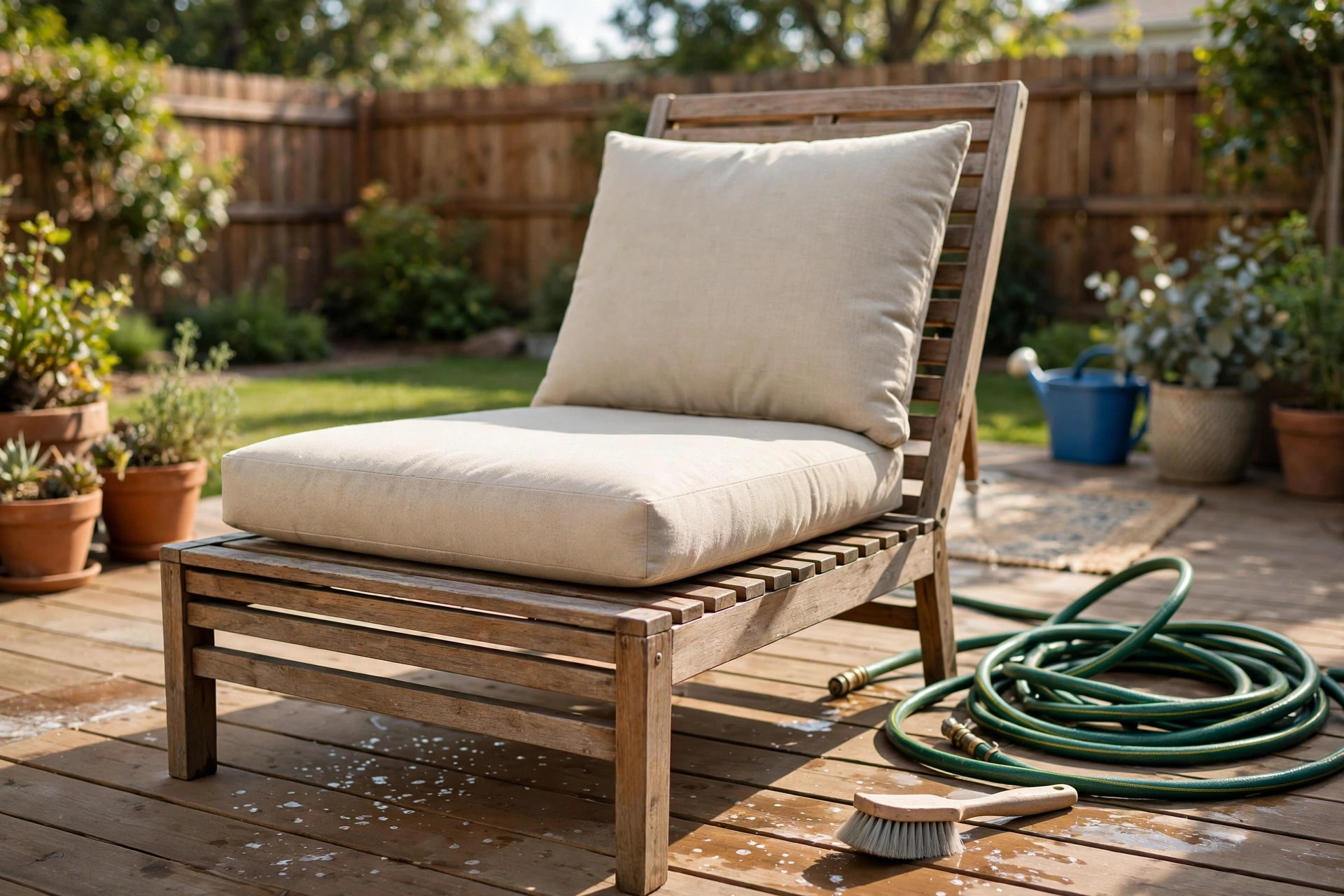

Learning how to clean outdoor furniture cushions is one of the simplest ways to keep a patio looking fresh. Patio cushions spend their days in sun, rain, and dust. Over time they pick up pollen, droppings, mildew spots, and food stains. Many owners throw them away when they look tired. That is a waste. Most cushions can be brought back with soap, water, and a little care. This guide shows the full job step by step, from a light weekly brush-off to a deep wash that removes mold and tough stains.
Why Clean Cushions Matter
Outdoor cushions cost more than most people think. A full set for a patio sofa can cost as much as the frame itself. When dirt sits on fabric for months, it works its way deep into the fibers. Sunlight then bakes the stains in. The fabric fades and weakens. Foam inside the cushion can grow mold in damp climates, and mold is hard to remove once it has spread through the whole pad.
Regular cleaning protects your money. It also protects your health. Mold spores and mildew can bother people with allergies and asthma. A clean cushion is simply nicer to sit on. Guests notice a fresh patio. They also notice a dirty one. A short cleaning routine, done a few times each summer, keeps the seating bright and extends its life by years. Most good cushions, cared for well, can last five to ten seasons.
Know Your Cushion Before You Wash: How to Clean Outdoor Furniture Cushions
Not all outdoor cushions are made the same way. Before you use water or soap, check the care tag. It is usually sewn into a seam or tucked inside the zipper of the cover. The tag tells you if the cover can be removed and washed, and what kind of cleaning the maker allows.
There are three common types. The first is the removable cover. You unzip it, take out the foam, and wash the cover alone. This is the easiest type to clean. The second is the one-piece cushion with no zipper. You must clean the whole cushion, foam and all, and you must dry it fully so no water stays inside. The third is a specialty fabric like Sunbrella or a coated canvas. These fabrics resist water and stains, but they still need washing to remove surface dirt.
Also note the foam inside. Some foam is plain polyurethane. Some is quick-dry foam made for rain. Quick-dry foam lets water pass through, so it dries fast. Plain foam holds water longer. If your cushions sit out in the rain, quick-dry foam is the better choice. If you do not know what kind you have, clean gently and dry well.
What You Need to Clean Outdoor Furniture Cushions
You do not need special tools. Most of the work is done with things already in the house. Gather these before you start:
– A soft-bristle brush or an old toothbrush for small spots – A garden hose with a spray nozzle – A bucket of warm water – Mild dish soap, about one teaspoon per quart of water – White vinegar for mold and mildew spots – Baking soda for odors – Clean white towels or rags – A tarp or clean driveway to work on – Sunscreen shade or a breezy spot for drying
Do not use bleach on colored fabric. Bleach eats color and weakens fibers. Do not use a pressure washer. The hard stream can tear seams and push dirt into the foam. Keep the cleaning simple and gentle.
The Basic Wash: Soap and Water
This is the standard method for how to clean outdoor furniture cushions, and it works for most dirt. Start by shaking each cushion hard to knock off loose dust and leaves. Stand it up and brush the whole surface with the soft brush. Pay extra care to the seams and the zipper area, where grit collects.
Mix your soapy water in the bucket. Dip the brush in and scrub the fabric in small circles, one side at a time. Let the soapy water sit for ten to fifteen minutes so the soap lifts the dirt. For a one-piece cushion, scrub both sides and the edges.
Now rinse well with the hose until the water runs clear and no suds remain. Soap left in the fabric draws more dirt later, so rinse twice if you are not sure. Stand the cushion on its edge in a sunny, breezy spot so water runs out. If the cover is removable, you can unzip it and wash the cover in the machine on a gentle, cold cycle, then air dry. Never put outdoor foam in a dryer.
Removing Mold and Mildew Spots
Mold shows up as black or green spots, often on the shady side of the cushion. Mildew smells musty. Both grow where water sits too long. To remove them, first brush the dry spots off outdoors. Wear a mask if you are sensitive.
Mix a solution of one part white vinegar to one part water. Spray or dab it onto the spots. Let it sit for twenty minutes. Vinegar kills most mold on fabric. Scrub the spots with the brush, then rinse with clean water. For heavy spots, make a paste of baking soda and water. Spread it on, wait thirty minutes, then brush and rinse.
Check the inside foam if the mold went through. Open the cover and look. If the foam has black patches deep inside, you may need to replace it. A local shop can cut new foam to size for a fair price.
Handling Tough Stains
Food and drink stains need quick action. Ketchup, wine, and grease soak in fast. Blot fresh spills at once with a clean towel. Do not rub, because rubbing spreads the stain. Lift the spill by pressing and lifting the towel.
For grease, sprinkle baking soda or cornstarch on the spot. Leave it for an hour. It pulls the oil out of the fabric. Brush it off, then wash with soapy water. For wine or fruit juice, dab with a mix of one tablespoon of dish soap and two cups of cold water. Rinse well.
Tree sap and bird droppings are common on patio furniture. Let droppings dry, then brush them off before washing. For sap, rub a little rubbing alcohol on the spot with a cloth, then wash as normal. Test any cleaner on a hidden corner first.
How to Clean Outdoor Furniture Cushions With a Machine
Removable covers can go in the washing machine if the tag allows it. Use cold water and a gentle cycle. Add a small amount of mild detergent. Do not add fabric softener. Softener coats the fibers and reduces the water resistance of outdoor fabrics.
Wash only a few covers at a time so they have room to move. Close the zippers first so the teeth do not snag other fabric. After the wash, shake the covers out and air dry them. Do not use the dryer. Heat can shrink covers and melt some synthetic fibers. Put the covers back on the foam only when both are fully dry. Damp foam inside a clean cover grows mold fast.
Drying Cushions the Right Way
Sun and wind are the best dryers. A hot, breezy day can dry a cushion in four to six hours. If the weather is humid, move the cushions to a covered porch with a fan. Do not stack wet cushions together. Do not put them back on the furniture until they feel dry all the way through. Press your hand into the middle. If it feels cool or damp, give it more time.
Keep Cushions Clean Longer
A little habit saves a lot of scrubbing. Brush cushions off once a week during the season. Wipe up spills the same day they happen. Store cushions in a dry place when heavy rain is coming. A deck box or a covered bin near the patio works well.
Many owners protect their cushions with heavy duty patio furniture covers sized for their frames, bought from large home retailers such as IKEA or Wayfair. Covers keep off rain, pollen, and bird droppings between uses. Pair the covers with good patio furniture storage ideas for winter so the whole set sleeps through the cold months in a clean, dry spot. If you live in a wet climate, tilt chairs and sofas slightly so water runs off instead of pooling on the seats.
For metal frames, rust stains can bleed onto cushions. Read up on metal patio furniture rust prevention tips and treat frames each spring. A teak frame needs oil from time to time. Our teak patio set maintenance tips guide explains the full routine. Keep the frame in good shape and the cushions stay cleaner with less work.
Cost and Price of Cleaning
Cleaning patio cushions yourself costs very little. Dish soap, vinegar, and baking soda cost a few dollars total, and they handle many cleanings. A good soft-bristle brush costs under ten dollars and lasts for years. A spray bottle for the vinegar mix costs about two dollars.
A local upholstery cleaner may charge thirty to seventy dollars per cushion, depending on size and stain level. A full set of six to eight cushions can cost several hundred dollars to clean this way. Most home owners find that do-it-yourself cleaning works just as well for routine dirt.
Replacing foam is cheaper than replacing the whole cushion. A custom-cut foam pad for a standard chair cushion often costs twenty to forty dollars. New covers can cost as much as new cushions, so wash the old ones well before you decide to buy new.
Care and Upkeep Through the Seasons
Spring is the main cleaning season. Take the cushions out of storage, brush them off, and give them a full wash before the first use. Check the seams and zippers for winter damage. Small tears can be sewn now, before they grow.
In summer, brush the cushions weekly and wash them once a month. After pool days or cookouts, wipe them down the same evening. Chlorine and food acid break down fabric if left sitting.
In fall, do one deep wash before storage. Make sure every cushion is fully dry. Store them in a dry garage, shed, or deck box. Add a few cedar blocks or a moisture absorber to the storage bin to fight musty smells. Check stored cushions once during winter for any sign of mold, so a small problem does not spread.
Safety Notes
Cleaning is simple, but take a few safety steps. Wear gloves when you scrub with vinegar on heavy mold. Wear a dust mask if you brush off large patches of mold or mildew. Work outdoors or in a well-aired space so fumes do not build up.
Keep all cleaners away from children and pets while you work. Rinse the work area after you finish, so no soapy water stays on the deck or patio stones. Soap makes surfaces slippery. If you use any store-bought fabric cleaner, read the label first and follow its directions. Test new products on a hidden spot. Keep bleach far away from colored outdoor fabric.
Watch the weather too. Do not start a full wash late in the day if the night will be cool and damp. Cushions need hours of sun and air to dry. A cushion left damp overnight is a cushion that grows mildew.
FAQ
How often should I clean my outdoor cushions? Brush them off weekly during the season and wash them fully once a month. Do one deep wash in spring and one before winter storage. If you live near trees or a dusty road, wash more often.
Can I use bleach on outdoor furniture cushions? No. Bleach strips color from outdoor fabric and weakens the fibers. It can also leave white marks that never come out. Use mild dish soap and white vinegar instead. They are safe for almost all outdoor fabrics.
Can outdoor cushion covers go in the washing machine? Yes, if the care tag allows it and the cover has a zipper. Use cold water, a gentle cycle, and a small amount of mild detergent. Skip fabric softener. Always air dry. Never put foam pads in the washer or dryer.
How do I get mildew smell out of outdoor cushions? Sprinkle dry baking soda over the whole cushion and leave it for several hours or overnight. Brush it off, then wash with soapy water and rinse well. Let it dry fully in sun and wind.
What is the best way to dry cushions after washing? Stand them on edge in direct sun with good air flow. Flip them once so both sides dry. A hot, breezy day works best. Do not stack wet cushions. Do not put them back on the furniture until the middle feels fully dry to the touch.
Should I throw away cushions with mold inside the foam? If the mold is only on the cover, clean it. If black patches run deep through the foam and the smell stays after cleaning, replace the foam. New foam costs far less than new cushions.
A Short Final Word
Learning how to clean outdoor furniture cushions is a small skill that pays off every summer. The method is plain: brush, wash with soap and water, rinse well, and dry fully. Mold and stains give way to vinegar and baking soda. A little weekly care keeps the big wash from ever being hard. Store the set well in winter, and your cushions will serve you for many seasons.
References
IKEA. (n.d.). Outdoor furniture and accessories. https://www.ikea.com Wayfair. (n.d.). Outdoor furniture and patio. https://www.wayfair.com
Was this guide helpful?

About Robert Taylor
The My Garden US editorial team writes practical, in-depth home and garden guides for American homeowners — tested advice, no fluff.
You May Also Like
Outdoor Rug for Deck Waterproof Reviews: What Shoppers Should Know
August 22, 2026 0 views
Best Eucalyptus Outdoor Furniture Reviews: A Plain Guide for Buyers
May 27, 2026 0 views
Outdoor Dining Set With Umbrella Hole: A Practical Guide for the American Patio
August 23, 2026 0 views