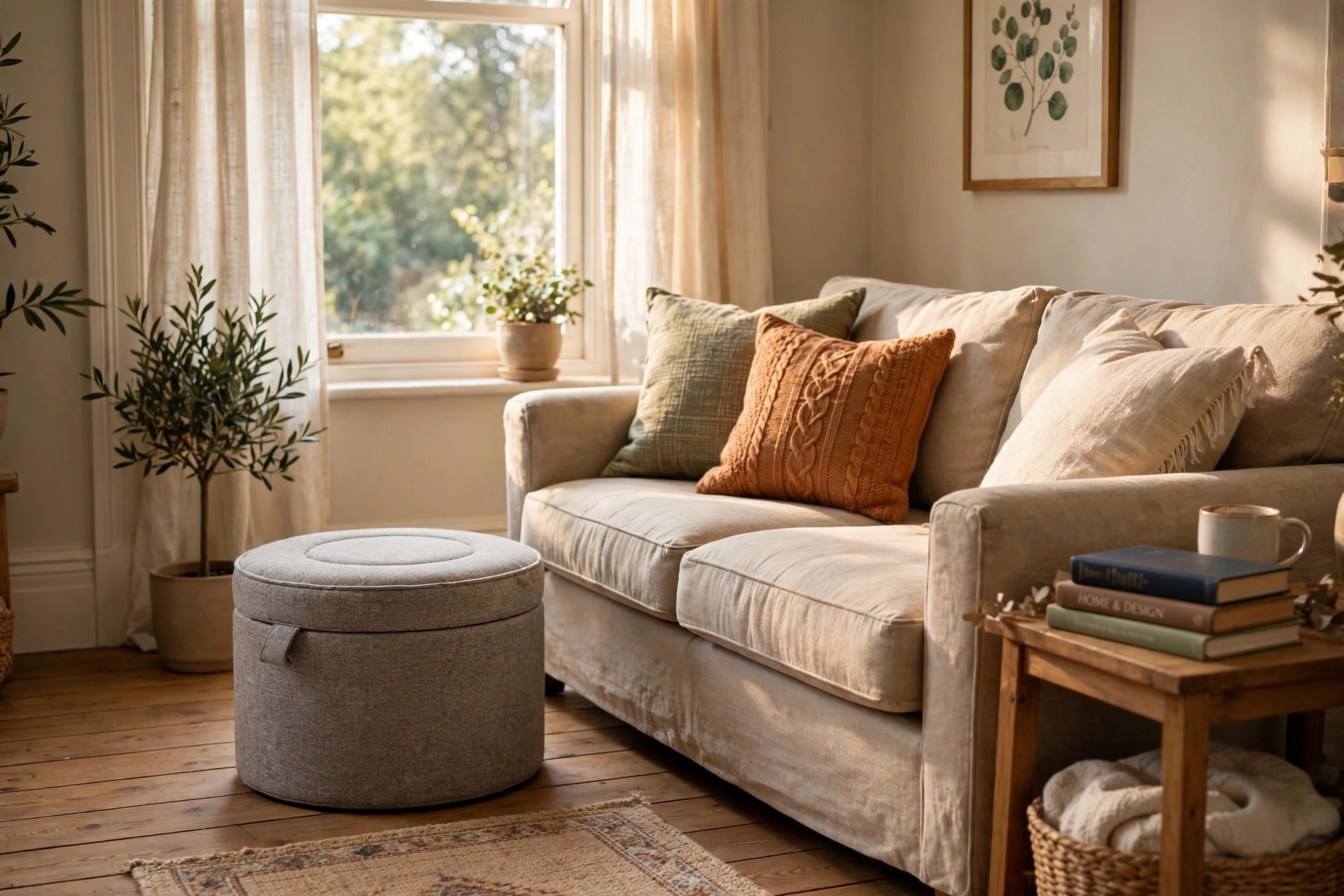
Many shoppers begin their search with the phrase living room ottomans deals near me. It is a practical way to start. An ottoman is one of the most useful pieces in a living room. It gives your feet a rest. It can hold blankets, toys, or remote controls. It can serve as extra seating when guests arrive. And when you find one at a fair price, it is a small victory for the whole household.
This guide walks you through the whole process. It explains why ottomans matter, what to look for, the types you will see in stores, and what they cost. It also covers care, safety, and the questions buyers ask most. Read it before you drive to the store or click the buy button. You will shop with more confidence and waste less money.
Why It Matters
A living room works best when it has a soft place to put your feet. Doctors and therapists have long noted that raising the feet eases pressure on the lower back. After a long day of standing or sitting at a desk, a footrest is not a luxury. It is a small comfort that the body appreciates.
An ottoman does more than hold feet. In a small living room, it can take the place of a bulky coffee table. A tray on top of a firm ottoman turns it into a table for coffee cups. Lift the lid of a storage ottoman, and you have a home for the throw blankets that used to lie on the couch. Some families use two small ottomans as side chairs. The piece bends to the needs of the room.
Price matters, too. Furniture costs have risen in recent years. A chair or sofa can cost a month of wages. An ottoman, by contrast, is often one of the least expensive seating pieces. When you search for living room ottomans deals near me, you are hunting for value in the right place. A well-made ottoman can last ten years or more, which makes a good deal even better.
What to Look For: Living Room Ottomans Deals near Me
Buying an ottoman is not hard, but a few details deserve your attention. Walk through this short list before you pay.
Size. Measure your space first. A standard ottoman is about 18 inches tall, 24 inches wide, and 18 inches deep. That size suits most sofas. A large room can take a big rectangular ottoman, sometimes called a cocktail ottoman. A small room is better with a round pouf. The ottoman should sit a little lower than your sofa seat. That keeps your knees at a comfortable angle.
Frame and weight. Press down on the ottoman in the store. It should feel firm, not hollow. A solid wood frame will outlast a frame made of thin particle board. Pick it up if you can. A sturdy piece has some weight to it. Very light ottomans often use cheap materials inside.
Fabric and cover. The fabric sets both the look and the life of the piece. Microfiber and tight-weave polyester resist stains and hold up to children and pets. Leather and faux leather wipe clean and look rich, though real leather costs much more. Linen and cotton blends look light and airy but stain more easily. If you have a dog or cat, skip loose weaves that catch claws.
Storage. Many ottomans open at the top. Inside you may find one open bin or a divided tray. Check the hinge. It should open smoothly and stay open without slamming shut. Storage ottomans are deeper than plain ones, so measure to be sure they fit your space.
Style. The ottoman should speak to the rest of the room. A tufted leather ottoman suits a classic room. A plain linen cube suits a modern one. Nailhead trim, wood legs, or a skirt can all change the feel. Bring a photo of your living room to the store on your phone. It helps.
Comfort test. Sit in the chair or sofa you will pair it with, if the store carries the same line. Rest your feet on the ottoman for a full minute. Rock it gently side to side. A good ottoman feels steady and supportive, not springy. Check the height against your knees. If your heels lift off the cushion or your thighs press hard into the seat edge, the size is wrong. This one-minute test saves more regret than any online review.
If you want more detail on choosing the right piece, the design guides at Houzz show how ottomans fit into real American living rooms, and the buying advice at The Spruce covers fabric choices in plain language.
Types and Options
Stores carry many kinds of ottomans. Here are the ones you will meet most often.
Standard ottoman. A single cushion on short legs, made to match a chair or sofa. It is the classic footrest. Prices are modest.
Storage ottoman. The top lifts to reveal space inside. Great for blankets, games, and toys. It costs a bit more than a plain ottoman but replaces a storage box.
Coffee table ottoman. A large, flat-topped piece that stands in for a coffee table. Add a tray and it holds drinks. It anchors the middle of the room.
Round pouf. Soft, low, and light. Poufs work well in playrooms and casual rooms. They are easy to move but offer no support for heavy use.
Tufted ottoman. Deep buttons pull the fabric into a quilted pattern. It looks formal and old-fashioned in a good way. The tufting collects dust, so plan to vacuum it.
Leather ottoman. Covered in real or bonded leather. It looks sharp and cleans with a damp cloth. Real leather can last decades. Bonded leather peels after a few years, so check the label.
Oversized bench ottoman. Long enough for two people to rest their feet. It doubles as a bench at the foot of a bed or along a wall.
Online catalogs let you compare these types side by side. Retailers like Wayfair and IKEA list dozens of styles with measurements, while CB2 and West Elm lean toward modern designs. For classic American styles, browse Crate and Barrel and Article.
Cost and Price
What should you expect to pay? Prices vary by size, fabric, and store, but these ranges hold for most American markets.
– Basic fabric ottoman: $40 to $90 – Storage ottoman: $70 to $160 – Leather or faux leather ottoman: $90 to $250 – Large coffee table ottoman: $150 to $400 – Designer or solid wood piece: $300 and up
Deals appear in predictable seasons. January brings clearance on holiday stock. Late summer brings floor-sample sales as stores make room for fall lines. The weekend after Thanksgiving is famous for furniture markdowns. If your search for living room ottomans deals near me turns up little, try again in one of these windows.
Clearance corners and outlet stores are worth a visit. A small scuff on the back of an ottoman can cut the price in half. Ask the salesperson about floor models. They often sell for 20 to 40 percent off, and the store may deliver them the same week.
Online prices can beat store prices, especially with free shipping. But measure twice. A photo can make a small ottoman look large. Check the return policy before you order. Some sellers charge a restocking fee on furniture.
For shoppers comparing listings, our guide to living room ottomans for sale usa walks through national options, and the roundup of living room ottomans usa online deals covers web-only markdowns. Texas readers may like the local notes in living room ottomans texas homes usa.
Care and Upkeep
An ottoman is easy to care for if you follow a few habits.
Vacuum fabric ottomans once a week with the upholstery tool. This keeps dust out of the weave. Blot spills at once with a clean cloth. Rubbing pushes the stain deeper. For dried spots, use a mild soap solution and test it on a hidden corner first.
Leather needs a damp cloth and a leather conditioner twice a year. Keep leather out of direct sun. Sunlight dries and cracks it over time.
Rotate a storage ottoman now and then so one side does not wear faster. Tighten the legs every six months. A loose leg wobbles and can strip its socket.
Keep the inside of a storage ottoman dry. Do not store damp items in it. A small packet of baking soda inside absorbs odors.
With steady care, a mid-range ottoman serves a family for eight to twelve years. The cleaning guides at Apartment Therapy offer step-by-step routines for different fabrics, and HGTV publishes seasonal home care checklists that include upholstered furniture.
Safety
Ottomans are safe pieces, but a few rules protect children and older adults.
Choose a storage ottoman with a soft-close hinge or a lid that stays open on its own. A heavy lid can pinch small fingers. Check that the piece does not tip when a child climbs on it. Wide, low ottomans are the most stable.
Place the ottoman where it does not block a walkway. In the dark, a low ottoman is easy to trip over. A light-colored fabric or a spot near a lamp helps.
If anyone in the home uses the ottoman to push up from the sofa, make sure it does not slide. Rubber pads under the legs grip hard floors. On carpet, a heavier piece stays put.
FAQ
How tall should a living room ottoman be? Match it to your seat height. Most sofa seats sit 17 to 19 inches off the floor. An ottoman of 15 to 18 inches works well. Your knees should bend at a soft angle, not point upward.
Are storage ottomans worth the extra money? For most families, yes. The added cost is usually $30 to $60 over a plain ottoman. In return you gain a full cubic foot or more of hidden storage. In a small home, that space is precious.
What fabric lasts longest with pets? Tight-weave microfiber and performance polyester last longest. They resist claws and clean easily. Avoid linen, silk blends, and loose knits. Leather holds up to claws but shows scratches.
Can an ottoman replace a coffee table? Yes, if you choose a firm, flat-topped model. Put a sturdy tray on top to hold drinks and protect the fabric. Soft poufs and round ottomans do not work well as tables.
How do I find living room ottomans deals near me in a small town? Check the furniture section of local classified ads and thrift stores first. Then widen your search to the nearest city. Many regional stores deliver within fifty miles for a small fee. Online sellers ship almost anywhere.
How long should a good ottoman last? A well-built ottoman lasts eight to twelve years with normal use. Solid wood frames and quality fabric stretch that further. Cheap particle-board frames may fail in two to three years.
A Short Final Word
The search for living room ottomans deals near me is really a search for comfort at a fair price. Measure your room. Pick a fabric that fits your life. Check the frame with your own hands. Buy in a sale season if you can wait. Then put your feet up and enjoy one of the simplest pleasures a living room can offer.
References
Apartment Therapy. (n.d.). Home design ideas and inspiration. https://www.apartmenttherapy.com Article. (n.d.). Modern furniture. https://www.article.com CB2. (n.d.). Modern furniture and decor. https://www.cb2.com Crate and Barrel. (n.d.). Furniture and home decor. https://www.crateandbarrel.com HGTV. (n.d.). Home and garden ideas. https://www.hgtv.com Houzz. (n.d.). Home design and remodeling. https://www.houzz.com IKEA. (n.d.). Home furnishings. https://www.ikea.com The Spruce. (n.d.). Home and garden advice. https://www.thespruce.com Wayfair. (n.d.). Furniture and home goods. https://www.wayfair.com West Elm. (n.d.). Modern furniture and home decor. https://www.westelm.com
Was this guide helpful?

About Jennifer Lee
The My Garden US editorial team writes practical, in-depth home and garden guides for American homeowners — tested advice, no fluff.