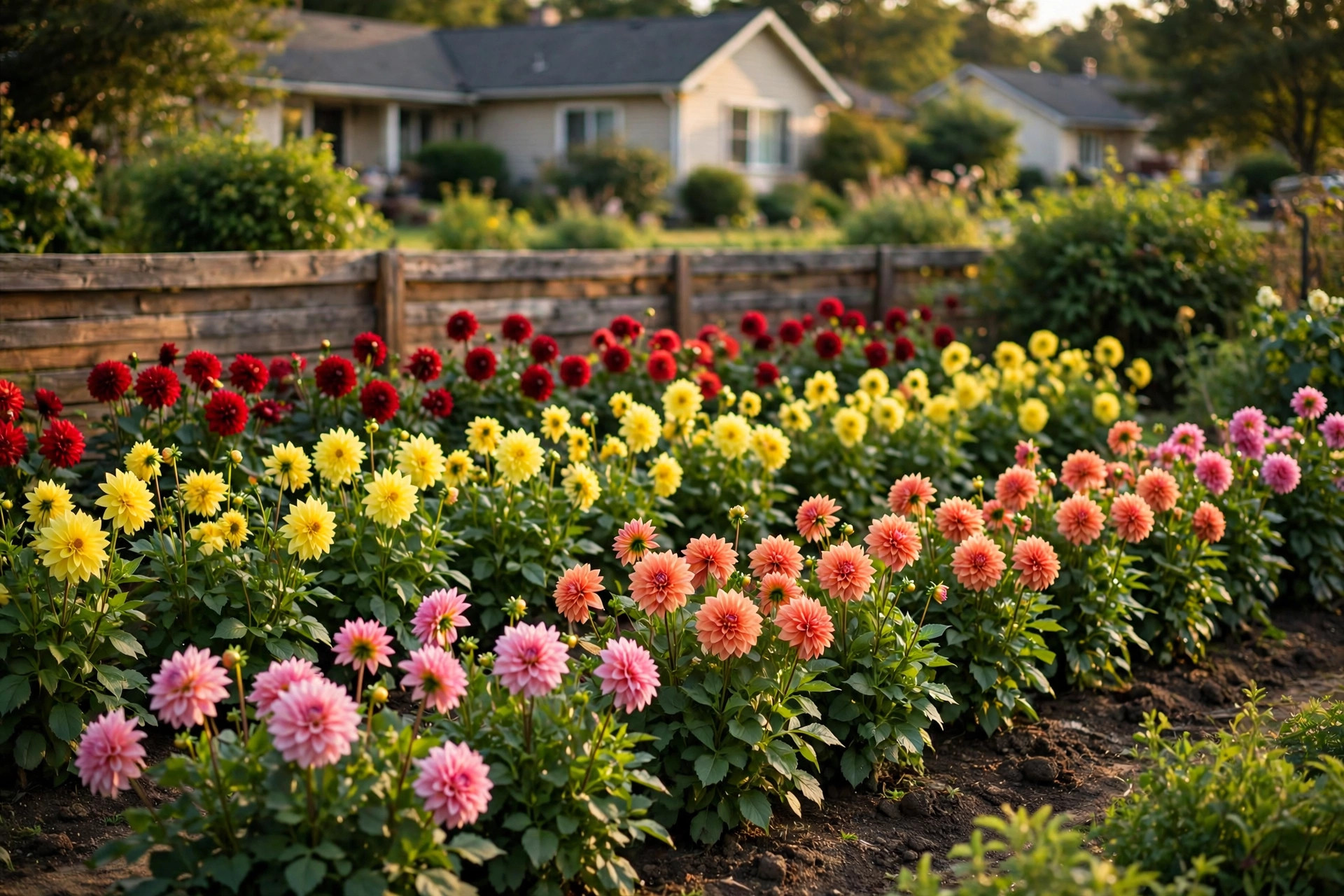

Dahlia bulbs bulk USA online deals have changed the way American gardeners plant these summer flowers. A bag of one hundred tubers once cost a small fortune at the garden center. Today a gardener can order the same count from an online dealer for half the price and have them shipped straight to the door in spring. This article explains how bulk buying works, what to look for in a dealer, which types suit large beds, and how to get the best price without losing quality.
A word of plain truth before we start: what the trade calls a “dahlia bulb” is in fact a tuber, a swollen root with an eye that sends up the shoot. The word bulb has stuck in common speech, and every online listing uses it. The planting advice here treats tubers exactly as they are, and the dahlia bulb planting notes at Gardening Know How give a plain account of the difference.
Why Buying Dahlia Bulbs in Bulk Matters
Dahlias repay scale. One plant gives a handful of stems. Thirty plants give buckets of cut flowers from July until the first hard frost. Most American gardens need at least two dozen tubers to fill a border that looks like the pictures in the seed catalogs. Buying that many one at a time is wasteful. Dahlia bulbs bulk USA online deals cut the per-tuber price by a third or more when the order passes fifty.
Bulk orders also solve a timing problem. Dahlia tubers keep poorly in warm weather, so American growers lift them in fall and store them cold all winter. The best varieties sell out of retail stores by May. Online dealers pack orders in early spring and ship by mail when the ground thaws in each zone. A gardener who orders a bulk lot in January or February gets first choice of varieties and receives tubers at the peak of freshness.
There is a second reason to buy big lots online. Many small American farms sell tubers in bundles of twenty-five or fifty to use up odd stock. These are the same healthy tubers sold singly, only packed loose. A careful buyer can find named varieties for the price of mixed lots.
What to Look for in Online Bulk Deals: Dahlia Bulbs Bulk Usa Online Deals
Not all bulk offers are equal. The honest ones share several marks of quality.
First, the listing should name the variety. “Mixed dahlias, 50 tubers” is fine for a cutting border where color does not matter. But “Cafe au Lait, 50 tubers” tells you exactly what will grow. Unnamed lots are often the leftovers of the packing shed. They grow well but will not match a plan.
Second, the listing should state the grade. Dealers grade tubers by size and eye count. Number one tubers are fat, firm, and show at least one growing eye. Number two tubers are smaller and slower to start. A deal that looks cheap often hides number two stock. Ask before you pay.
Third, the dealer should ship at the right time for your climate. Dahlias go into the ground after the last frost, from March in the Gulf states to June in the northern tier. A good online seller asks for your ZIP code or planting zone and holds the order until the weather is right. Frost-date charts by region, such as those at Gardening Know How, help plan the timing.
Fourth, the seller should say where the tubers were grown. Dutch-grown stock is cured and graded well and ships in large volume, which keeps prices down. American-grown stock is fresher off the field and often virus-tested. Both are fine. Vague listings that name no country should be skipped.
Finally, read the guarantee. Reputable bulk sellers replace tubers that arrive soft, broken, or eyeless. A store with no replacement policy is selling at a risk the buyer cannot see.
Types and Options for Large Orders
Dahlia catalogs list hundreds of named varieties, but bulk buyers care about a few groups that perform well in quantity.
Dinnerplate dahlias make flowers eight to ten inches across on tall stems. They are the show flowers of the county fair. They need staking and wide spacing, so they suit small numbers of big plants rather than mass beds. Buy dinnerplates in lots of ten or twenty for cutting.
Decorative and cactus dahlias are the workhorses of the cutting garden. Flowers run four to six inches, stems are long and stiff, and plants bloom from midsummer to frost without pause. Varieties in this group take bulk planting better than any other. Fifty plants of two or three colors fill a border and give weeks of flowers for the house.
Pompon and ball dahlias make small round flowers, two to four inches, that last long in a vase. They are the cheapest to grow from bulk lots because the tubers multiply fast and dealers sell them by the hundred. They suit edges, children gardens, and market bouquets.
Mignon and bedding dahlias grow low and flower early. Dealers sell them as cheap mixed tubers by the bag. They fill the front of a border for pennies per plant.
Mixed lots deserve a note of their own. A mixed bag of one hundred tubers at a dollar each is the cheapest way to fill ground. The flowers will be a surprise, which suits a wild cottage bed and does not suit a wedding plot. Buyers who want known colors should read the Park Seed company catalog of varieties to compare named stock against mixed prices.
Cost and Price: What Bulk Deals Really Cost
In the 2026 season, single named dahlia tubers at American retail run from four to twelve dollars each. The same varieties in lots of twenty-five usually run two to four dollars per tuber. Lots of one hundred can drop the price to a dollar fifty or less for standard varieties. The steepest dahlia bulbs bulk for sale USA offers, at houses like Gurney’s, reach these prices in January when dealers want early orders.
Shipping changes the math. A hundred tubers weigh eight to twelve pounds, and cold-pack shipping runs fifteen to thirty dollars depending on distance. Even so, a hundred-tuber order at one dollar fifty per tuber plus twenty-five dollars of shipping beats ten ten-dollar tubers from a garden center by a wide margin.
Dutch import lots are often the cheapest per tuber, because container shipping spreads the cost. American farm lots cost a little more but reach the door in days, not weeks, which keeps tubers firm. Both beat retail.
Watch for three hidden costs. Some dealers charge a small-order fee under fifty tubers. Some charge for insurance on live plants. And some sell “dahlia seeds” under bulb listings; seeds are far cheaper but grow into unknown flowers in the second year, not the first. Read the product line before the price line.
A plain way to compare offers: divide the total with shipping by the tuber count. Write down the per-tuber price. The lowest honest number wins, not the biggest headline discount.
Planting and Caring for a Bulk Order
A bulk order of a hundred tubers can feel like a mountain when the box arrives. Work through it in order.
Inspect the tubers the day they arrive. Firm tubers with a visible eye or a cut stem stub are good. Soft or moldy tubers go back under the guarantee. Keep good tubers in a cool dark place, around forty to fifty degrees, until planting time. The White Flower Farm growing advice gives a clear account of storing and waking tubers.
Plant after the last frost, when soil reaches sixty degrees. Dig a hole six inches deep and four inches wide, lay the tuber flat with the eye pointing up, and cover with two inches of soil. Fill the hole as the shoot grows. Space plants twelve to eighteen inches apart for full-size varieties, nine inches for small ones.
Water deeply once a week if rain is short. Dahlias hate wet feet, so heavy clay beds need compost dug in before planting. Feed with a low-nitrogen fertilizer when buds form. Too much nitrogen grows leaves and few flowers.
Stake tall varieties at planting time, before the roots spread. A bamboo cane and soft twine do the job. Pinch the growing tip when the plant stands a foot tall. This makes it branch and doubles the flower count.
Deadhead spent blooms every few days. Each cut flower is a message to the plant to make more. A border planted from bulk stock can give several hundred stems in a season.
In zones colder than zone eight, lift tubers after the first hard frost kills the tops. Cut stems to six inches, dig carefully with a fork, shake off soil, and dry them in a shed for a week. Store in peat moss or wood shavings at forty to fifty degrees. The federal NIFA research on plant care explains how proper storage keeps living plant material healthy through winter.
Safety Notes for Dahlia Gardeners
Dahlia tubers are not food. They contain compounds that upset the stomach, and dogs that dig them up can become sick. Plant them where pets do not dig, and keep stored tubers out of reach of children and animals. Most dealers print pet-safety notes on the variety page, so check before you order.
Work gloves are wise when dividing tubers, because old tubers can carry mold. A dust mask helps when shaking stored tubers out of peat. No special hazard attaches to dahlia pollen, but anyone with a flower allergy should deadhead with care.
Buy only from dealers who follow state plant shipping rules. A few states bar the import of nursery stock without an inspection stamp. The shipping page of any honest American seller states which states it cannot serve.
Frequently Asked Questions
How many dahlia bulbs do I need for a border ten feet long? For full-size varieties at fifteen-inch spacing, a ten-foot row holds about eight plants. A border three feet deep holds two staggered rows, or sixteen plants. Most gardeners double this for cutting, so a ten-by-three border wants about thirty tubers. This is exactly the size where a bulk lot of twenty-five or fifty pays for itself.
Are cheap bulk tubers the same quality as single tubers? Often yes, if the variety is named and the grade is stated. Dealers pack the same field-run tubers into singles and into bulk bags. The price difference comes from packing labor, not from the tuber. Unnamed mixed lots are the exception; they are healthy but unpredictable in color.
When is the best time to order dahlia bulbs online in the USA? Order in January or February for the widest choice and the deepest early-bird discounts. Dealers ship in spring by zone. Ordering late, in May or June, means picking through leftovers at full price. Pre-ordering also lets the dealer plan the packing shed, which is why the discounts exist.
Can I plant bulk dahlia tubers straight from the box? Yes, if the soil is warm and the frost is past. If the ground is still cold, hold the tubers in a cool dark place for a few weeks. Do not start them in warm rooms too early; soft indoor shoots break in the wind. A short head start in pots, two weeks before the last frost, works well for short-season zones.
Do bulk dahlia orders from Holland grow well in the USA? Yes. Dutch tubers are cured, graded, and shipped in large volume, and they perform well across American zones. They may wake a week or two later than American-grown stock after the long trip. Either source gives full bloom by midsummer in most of the country.
What is the difference between dahlia bulbs, tubers, and clumps? Gardeners say bulb, but the plant grows from a tuber, a thick root with an eye. A clump is several tubers joined at last year’s stem. Dealers split clumps into single tubers for sale. One good single tuber with an eye grows one full plant. The Monrovia plant library and the Proven Winners grower pages both describe this plainly for new growers.
A Short Final Word
Dahlia bulbs bulk USA online deals reward the gardener who plans ahead. Order early, buy named varieties in honest grades, count the shipping in the price, and plant after the frost. A hundred dollars of tubers becomes a summer of flowers that would cost ten times that at a florist. Start with one bulk lot, learn your soil and your season, and order bigger next year. The tulip bulbs fall for sale USA page on this site offers a similar plain method for fall-planted bulbs, and the dahlia bulbs bulk buying guide USA companion page walks through grading in more detail.
References
Burpee. (n.d.). Seeds, plants, and gardening supplies. https://www.burpee.com Gardening Know How. (n.d.). Gardening guides and plant care. https://www.gardeningknowhow.com Gurney’s Seed & Nursery Co. (n.d.). Seeds, plants, and garden supplies. https://www.gurneys.com Monrovia. (n.d.). Plants for home gardens. https://www.monrovia.com National Institute of Food and Agriculture. (n.d.). Agricultural research and extension. https://www.nifa.usda.gov Park Seed. (n.d.). Seeds, plants, and gardening supplies. https://www.parkseed.com Proven Winners. (n.d.). Plants and gardening inspiration. https://www.provenwinners.com White Flower Farm. (n.d.). Plants, bulbs, and garden supplies. https://www.whiteflowerfarm.com
Was this guide helpful?

About Jennifer Lee
The My Garden US editorial team writes practical, in-depth home and garden guides for American homeowners — tested advice, no fluff.
You May Also Like

Pothos Plants Bulk American Homes Guide: How to Buy, Grow, and Keep Them Green
March 22, 2026 0 views
How to Grow Raspberries: USA Berry Guide
October 6, 2026 4 views
Air Plants Bulk USA Online Deals: How to Buy More Plants for Less Money
January 3, 2026 0 views