
Every spring, the same bright scene returns to front yards across the country. Rows of red, yellow, and pink tulips rise from the soil after a long winter. The work that makes this scene happen does not start in spring. It starts in the fall, when the bulbs go into the ground. The search for tulip bulbs fall for sale usa begins in late summer and runs through autumn. This guide will help a home gardener buy the right bulbs, plant them at the right time, and care for them through the cold months.
Why Fall Bulb Shopping Matters
Tulips need a period of cold to bloom. The bulb holds a small flower bud inside it. Winter cold wakes the bud up. Without a cold spell, the bulb may send up leaves but no flower. This is why gardeners in most of the United States plant tulip bulbs in the fall. The cold ground does the work through the winter, and spring brings the reward.
Buying in the fall also means the best stock is still on the shelf. Seed companies and garden centers order their bulb supply early. By October, the popular colors and large sizes often sell out. A gardener who starts the search for tulip bulbs for sale in the fall season has more choice and better prices. Waiting until late November can mean slim pickings.
There is one more reason to buy in the fall. Fresh bulbs lose moisture as they sit. A bulb bought in September is plump and firm. The same bulb in December may feel soft and light. Fresh stock gives the best start, as bulb guides at Burpee point out in their fall planting advice.
What to Look for in a Good Tulip Bulb: Tulip Bulbs Fall for Sale Usa
A healthy tulip bulb feels firm and heavy for its size. The papery outer skin, called the tunic, should be dry and intact. A little surface mold is common and rarely a problem. But the bulb itself must be solid. Soft spots, dark rot, or a sour smell mean the bulb is spent.
Size matters. Bulbs are sold in centimeters, measured around the widest part. A 12+ cm bulb is the top grade. It carries a full flower bud and gives a big bloom. Bulbs of 11 to 12 cm are still good. Small bulbs under 10 cm may take another year before they flower well. The larger bulb costs more, but the flower is larger too.
Check the variety name on the package. Reputable sellers list the true variety name, not just the color. A named variety such as “Apeldoorn” or “Queen of Night” will behave as expected year after year. Mixed color bags are cheaper and fine for a wild look, but the results vary. Gardening reference pages at Gardening Know How explain how variety names help gardeners plan color groups in a bed.
Buy from sellers who store bulbs in cool, dry air. Good sellers ship early in the season so bulbs reach the garden before the soil freezes. The National Institute of Food and Agriculture supports research on crop storage and handling, and the same cool-dry principle protects home garden bulbs from rot before planting.
Types of Tulips to Consider
Tulips come in many classes. Each class has a different shape, height, and bloom time. Knowing the main types helps a buyer pick bulbs that fit the plan.
Single Early tulips bloom first, in early to mid spring. They are short, about ten inches tall, and work well in beds near paths. Triumph tulips bloom a little later. They have strong stems and hold up well in wind and rain. They are a common choice for cut flowers.
Darwin Hybrids are the big, tall tulips of mid spring. They reach up to two feet. They give one large flower per stem. They are strong and reliable, and they often return for a second or third year. This makes them a favorite for gardeners who want a long life from one planting.
Parrot tulips have twisted, feathered petals in bright colors. They bloom late in the season and draw the eye. Fringed tulips carry fine crystals along the petal edge. They look striking up close in a front bed.
Species tulips are small and wild in form. They bloom early and often naturalize, which means they spread and return each year with no help. For a low-care garden, species tulips are hard to beat. Nursery pages at Monrovia and White Flower Farm show the full range of these classes with photos to guide the choice.
When to Plant in the Fall
The right planting time depends on the local climate. In the northern states, plant from late September into October. The soil should feel cool but still be workable. In the middle states, October is the usual month. In warm southern states, plant from November into December.
In warm zones, tulips need extra help. The ground may never get cold enough to wake the bud. Many southern gardeners chill bulbs in a refrigerator for eight to ten weeks before planting. Keep them away from fruit, because fruit gases can damage the flower bud. Planting calendars at The Old Farmer’s Almanac give zone-by-zone timing that fits local weather.
A simple rule works almost everywhere. Plant about six to eight weeks before the ground freezes hard. The bulb needs time to grow roots before winter. Roots hold the bulb in place and pull in water. A bulb with no roots before the freeze may rot or fail.
How to Plant Tulip Bulbs
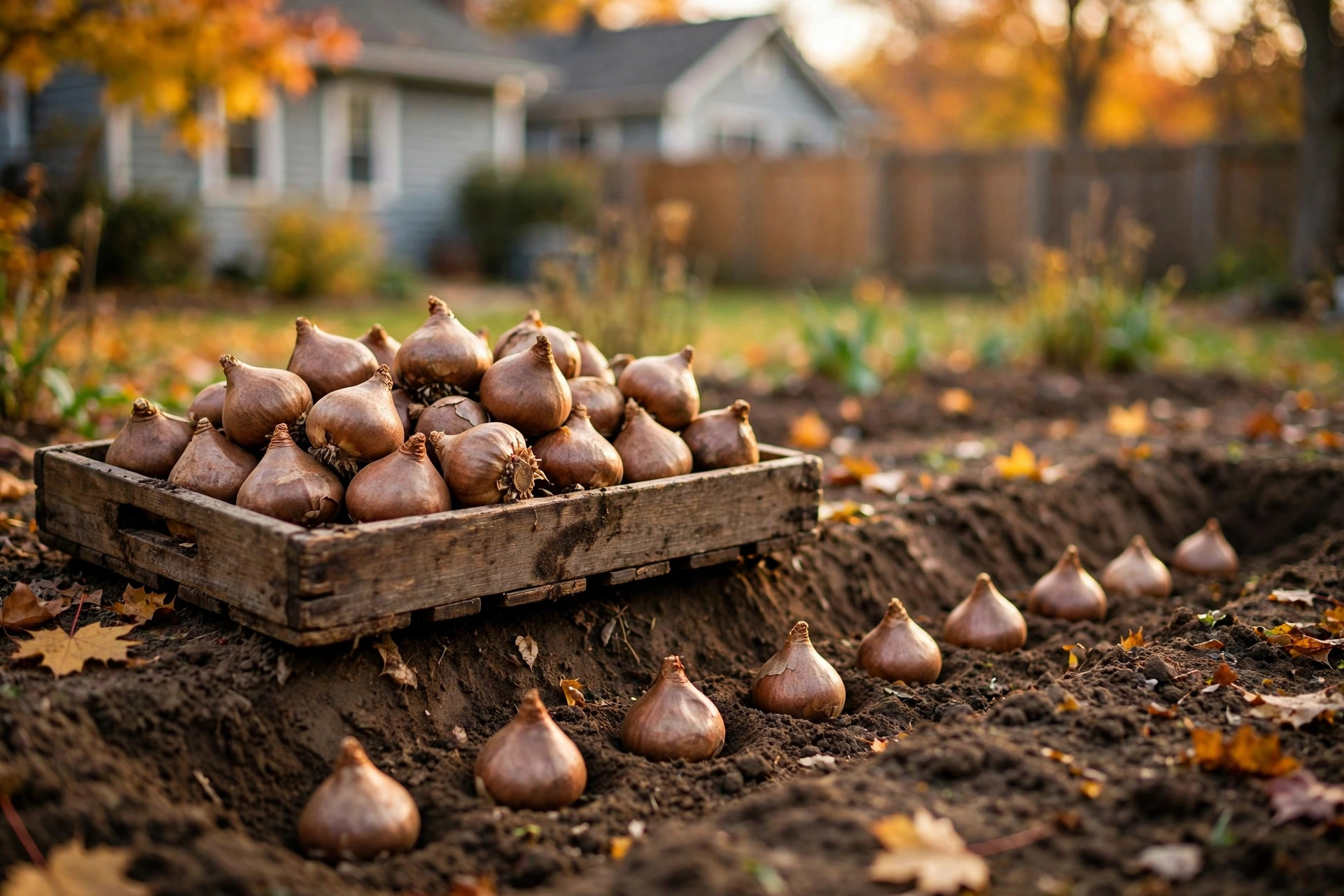
Planting is simple, but a few details make a big difference. Dig the hole three times as deep as the bulb is tall. For most tulips, that is about six inches deep. Place the bulb with the pointy end up and the flat base down. Cover it with loose soil and press it down gently.
Space the bulbs four to six inches apart. For a full look in a bed, plant in groups of ten or more. Single bulbs spaced far apart look thin. Tight groups look rich and full. Many gardeners plant in a zigzag row so the flowers do not line up like soldiers.
Water the bed well after planting. The water settles the soil around the bulb and starts root growth. If the fall is dry, water once a week until the ground freezes. After that, nature takes over. Snow and rain carry the bulbs through winter.
Good drainage is vital. Tulips rot in standing water. In heavy clay soil, add compost or coarse sand to the planting hole. Raised beds also work well. Raised soil drains fast and warms early in spring, which can bring blooms a few days sooner. Planting advice from The Spruce covers drainage fixes for heavy soils in plain terms.
Cost and Price in the USA
Fall tulip bulb prices vary by size, variety, and source. A bag of ten standard bulbs at a garden center often costs between five and twelve dollars. Premium Darwin Hybrids and named novelties run higher, sometimes fifteen to twenty-five dollars for a bag of ten.
Buying in bulk lowers the cost per bulb. Online sellers offer bags of twenty-five, fifty, or one hundred. A bag of fifty standard tulips may cost twenty-five to forty dollars. For a large bed, bulk bags are the best value. Mail-order nurseries such as Park Seed and Gurney’s list bulk prices side by side with single-bag prices so shoppers can compare.
Price is not the only cost to weigh. Shipping charges add up on mail orders. Local stores save the shipping cost but may have less choice. Weigh the total cost, not just the shelf price, before deciding where to buy. For gardeners shopping online this fall, a quick look at Proven Winners and other breeders shows how new varieties are priced against the old standards.
Care and Upkeep Through the Year
Tulips need little care after planting. In spring, let the leaves grow. The leaves make food for the bulb through sun and air. This food stores inside the bulb and powers next year’s flower. Cut the flower head off when the petals fall, so the plant does not waste energy on seed. Leave the leaves alone.
Let the leaves turn yellow and dry before removing them. This usually takes six weeks after bloom. Pulling green leaves early weakens the bulb. When the leaves are dry and papery, they pull away with a gentle tug.
Fertilizer is rarely needed in good soil. A light feeding of balanced bulb food at planting time is enough. Too much nitrogen grows weak, floppy leaves. Compost worked into the bed each fall feeds the soil slowly and keeps it loose.
After the second or third year, many garden tulips fade. The bulbs split into small offsets that give small flowers or none. Digging up and dividing the clumps every three years keeps them strong. Or simply plant fresh bulbs each fall for a full display. Many show gardens replant every year. For a deeper dive into bulb life cycles, the guides at Burpee explain renewal planting in simple steps.
Safety in the Garden
Tulip bulbs are not safe to eat. They contain compounds that can cause nausea, dizziness, and skin irritation. Keep bulbs away from children and pets during planting. Some people develop a skin rash, called tulip finger, from handling bulbs. Garden gloves prevent this problem.
Store bulbs out of reach of dogs and cats. Dogs sometimes dig up and chew bulbs in the garden. If a pet eats tulip bulbs, call a veterinarian right away. Pet care references at The Spruce list the signs of bulb poisoning in animals.
Label the planting bed. In spring, the first shoots look like many other plants. A simple marker with the variety name saves confusion later. It also helps when planning next fall’s order.
Frequently Asked Questions
How late can I plant tulip bulbs in the fall?
Plant as long as the soil can be dug. If a spade still goes in, planting is still possible. Late planting gives a shorter bloom, but a late bulb is better than no bulb. Bulbs planted in December in mild zones often still flower.
Do tulip bulbs come back every year?
Some do, some do not. Darwin Hybrids and species tulips are the most likely to return. Most large hybrid tulips fade after two to three years. For a sure show each spring, many gardeners add fresh bulbs every fall.
Can I grow tulips in pots?
Yes. Pots work well, but they need care in winter. Use a large pot, at least twelve inches deep. Plant bulbs closer together than in the ground. In cold zones, move pots into an unheated garage or bury them in mulch so the bulbs do not freeze solid.
Why did my tulips grow leaves but no flowers?
The usual cause is a weak bulb. Small or old bulbs may lack the energy to form a flower. Shallow planting, shade, or leaves cut too early in the prior spring can also weaken the bulb. Plant large, fresh bulbs and let the leaves feed them, and the flowers usually return.
Should I dig up tulip bulbs after they bloom?
Only if you want to. In well-drained soil, bulbs can stay in the ground. Digging up lets you sort out weak bulbs and replant only the strong ones. If the bed stays wet in summer, lifting the bulbs keeps them from rotting.
How many bulbs do I need for a full bed?
Plan on five to seven bulbs per square foot for a full look. A bed of four by six feet needs roughly one hundred twenty to one hundred sixty bulbs. Bulk bags make this size of project affordable, and it is a good time to compare a fall tulip bulb planting guide with a garlic bulbs planting buying guide usa since both are fall bulb crops.
A Short Final Word
A spring tulip bed is one of the great rewards of fall work. The steps are few: buy firm, large bulbs while the fall stock is fresh, plant them point-up at the right depth, and let winter do the rest. Gardeners who plan their color groups, check their zone timing, and give the leaves time to feed the bulb will see a stronger show each year. Whether the goal is a small pot on a city step or a long country border, the path starts with a good buy. And for those planning the whole garden at once, a look at monstera plants sale california homes usa and sunflower seed packs usa online deals can round out the season’s planting list.
References
Burpee. (n.d.). Seeds, plants, and gardening supplies. https://www.burpee.com Gardening Know How. (n.d.). Gardening guides and plant care. https://www.gardeningknowhow.com Gurney’s Seed & Nursery Co. (n.d.). Seeds, plants, and garden supplies. https://www.gurneys.com Monrovia. (n.d.). Plants for home gardens. https://www.monrovia.com National Institute of Food and Agriculture. (n.d.). Agricultural research and extension. https://www.nifa.usda.gov Park Seed. (n.d.). Seeds, plants, and gardening supplies. https://www.parkseed.com Proven Winners. (n.d.). Plants and gardening inspiration. https://www.provenwinners.com The Old Farmer’s Almanac. (n.d.). Gardening calendars and advice. https://www.almanac.com The Spruce. (n.d.). Home and garden advice. https://www.thespruce.com White Flower Farm. (n.d.). Plants, bulbs, and garden supplies. https://www.whiteflowerfarm.com
Was this guide helpful?

About Sarah Mitchell
The My Garden US editorial team writes practical, in-depth home and garden guides for American homeowners — tested advice, no fluff.
You May Also Like

How to Grow Bell Peppers: USA Gardener’s Guide
October 6, 2026 1 views
Garlic Bulbs Planting Texas Homes USA: A Complete Garden Guide
September 15, 2026 0 views
Pothos Plants Bulk Florida Homes USA: A Plain Guide for Buyers
February 5, 2026 0 views